


Still Life with Sheet Music
- Artist
-
Georges Braque (1882–1963)
- Period
-
1927
- Quality and quantity
-
Oil on canvas, one painting
- Size (cm)
-
H 50.0 × W 92.0
- Category
-
Painting (Overseas)
- Accession number
-
BK1#00856
-840x560.jpg)
Description
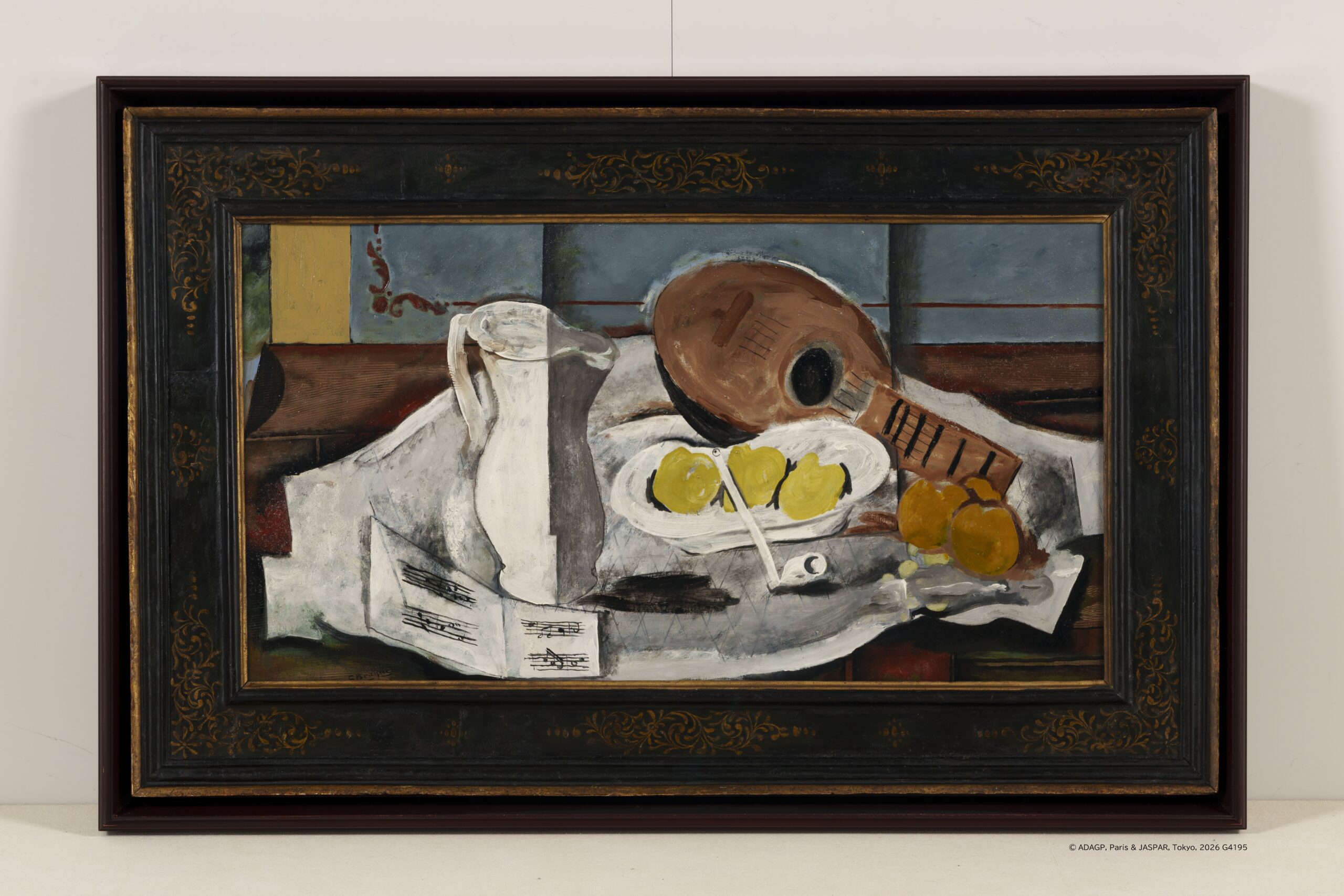
This still life is executed using the techniques of Cubism, boldly simplifying forms such as sheet music, a mandolin and fruit in vivid color alongside fragmented shadows from a water jug. He also experimented with surface texture by mixing sand into the paint and cutting linear marks into the layers of paint before they dried, creating a rich variety of tactile effects.
Born in France, Braque was initially drawn to Fauvist painting. In 1907, after encountering Pablo Picasso’s Les Demoiselles d’Avignon, he joined Picasso in pursuing Cubism, a mode of artistic practice based on the analysis and reconstruction of objects.