


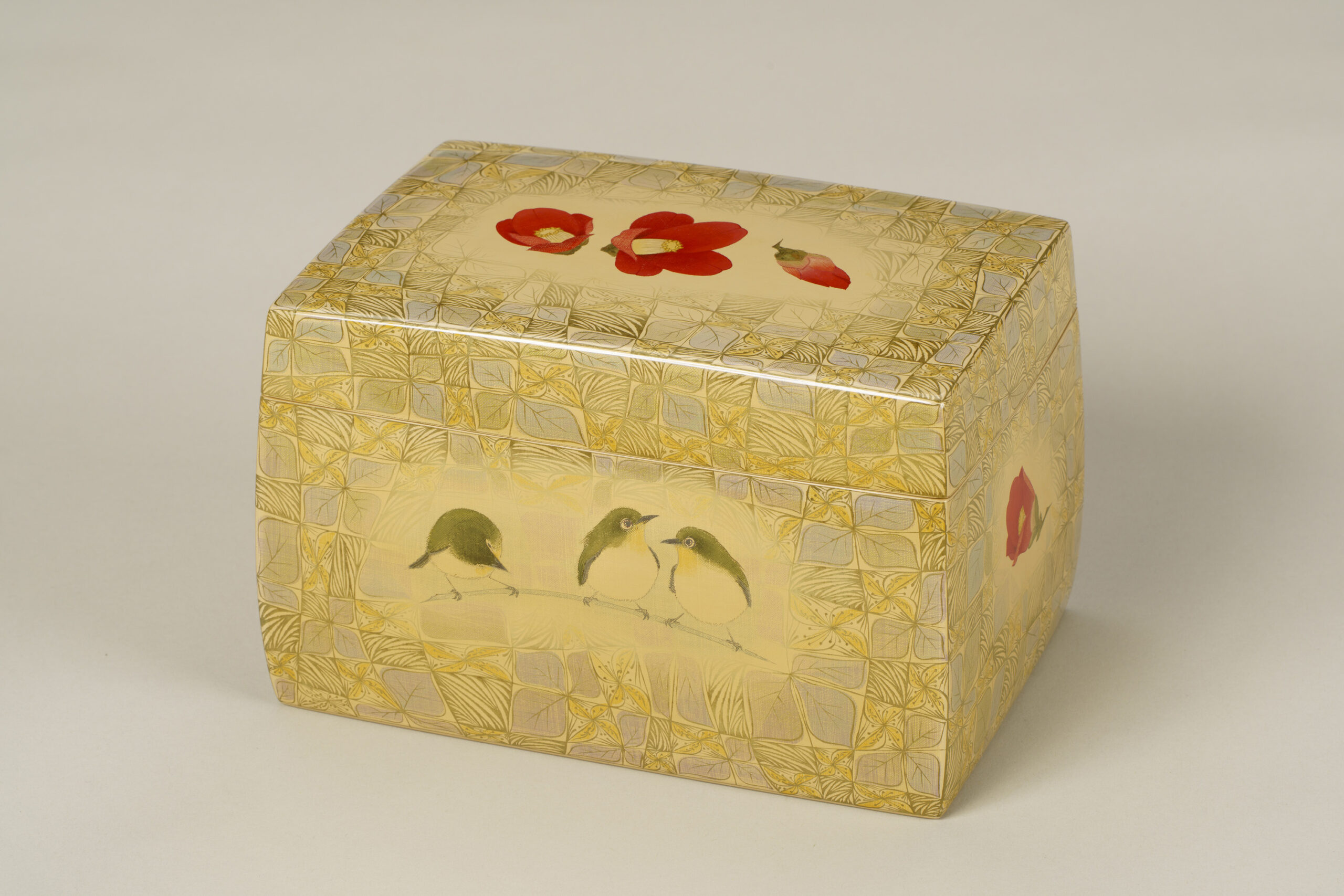
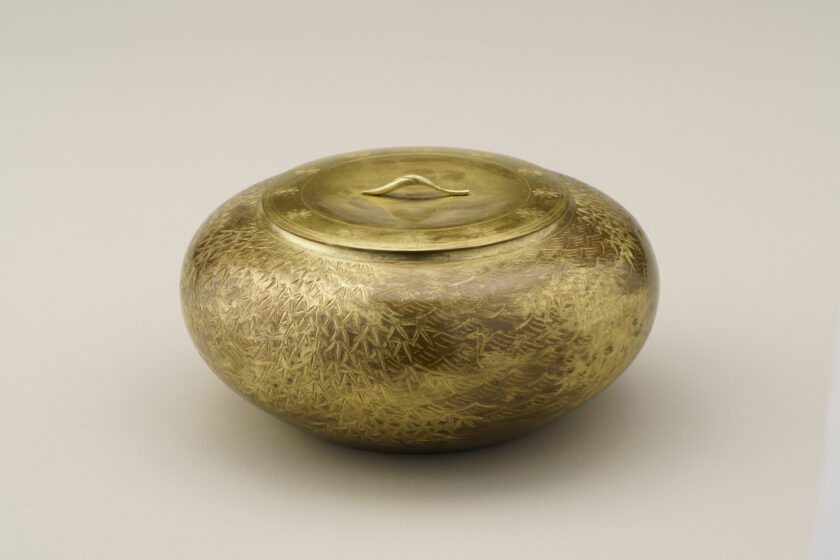
Basketry-Base Kinma Tea Caddy “Harukaze”
- Artist
-
Ōta Hitoshi (1931–2019)
- Period
-
1998 (Heisei 10)
- Quality and quantity
-
Lacquer, one box
- Size (cm)
-
H 15.7 × W 22.4 × D 14.6
- Category
-
Craftwork
- Accession number
-
BK1#01507
Description
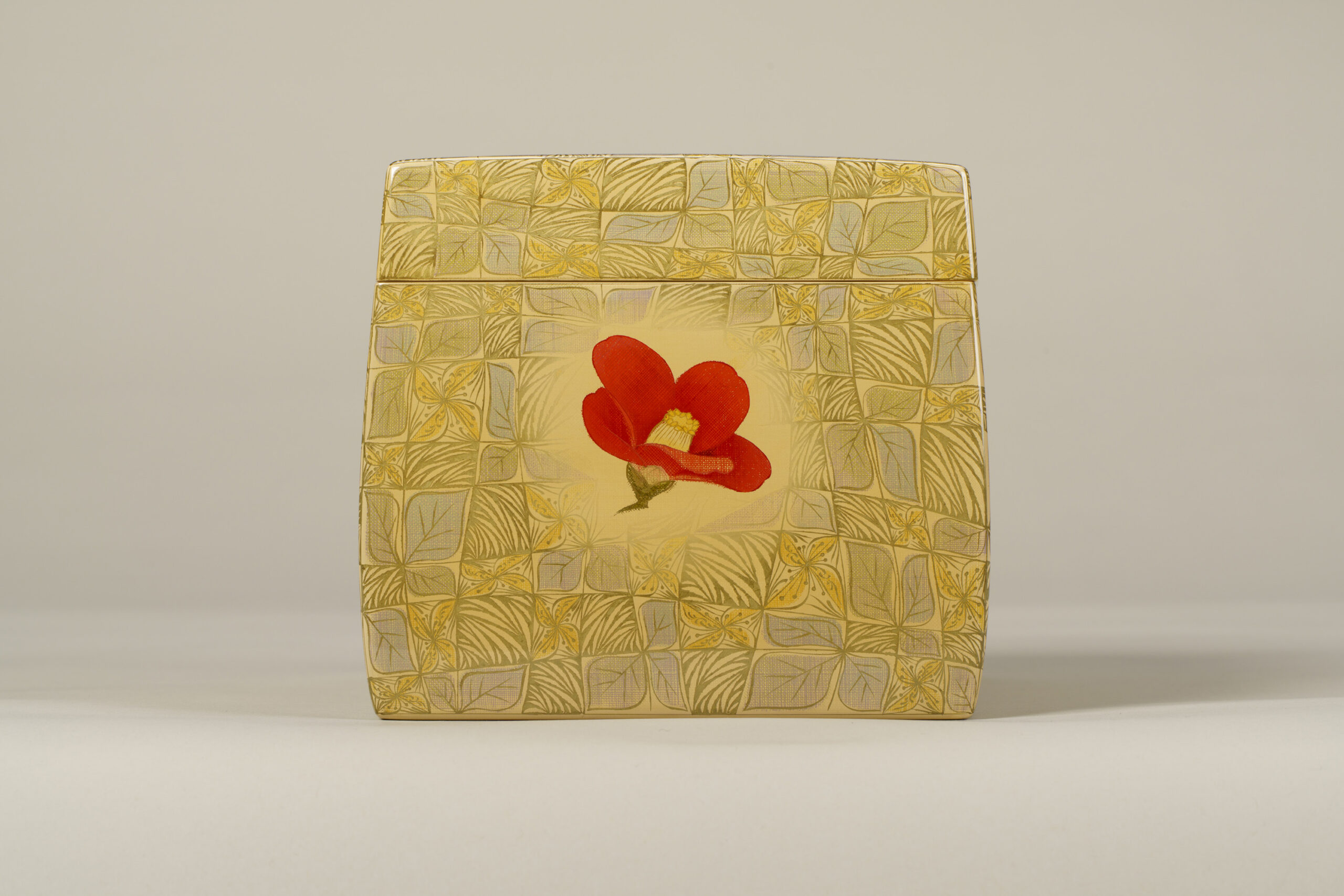
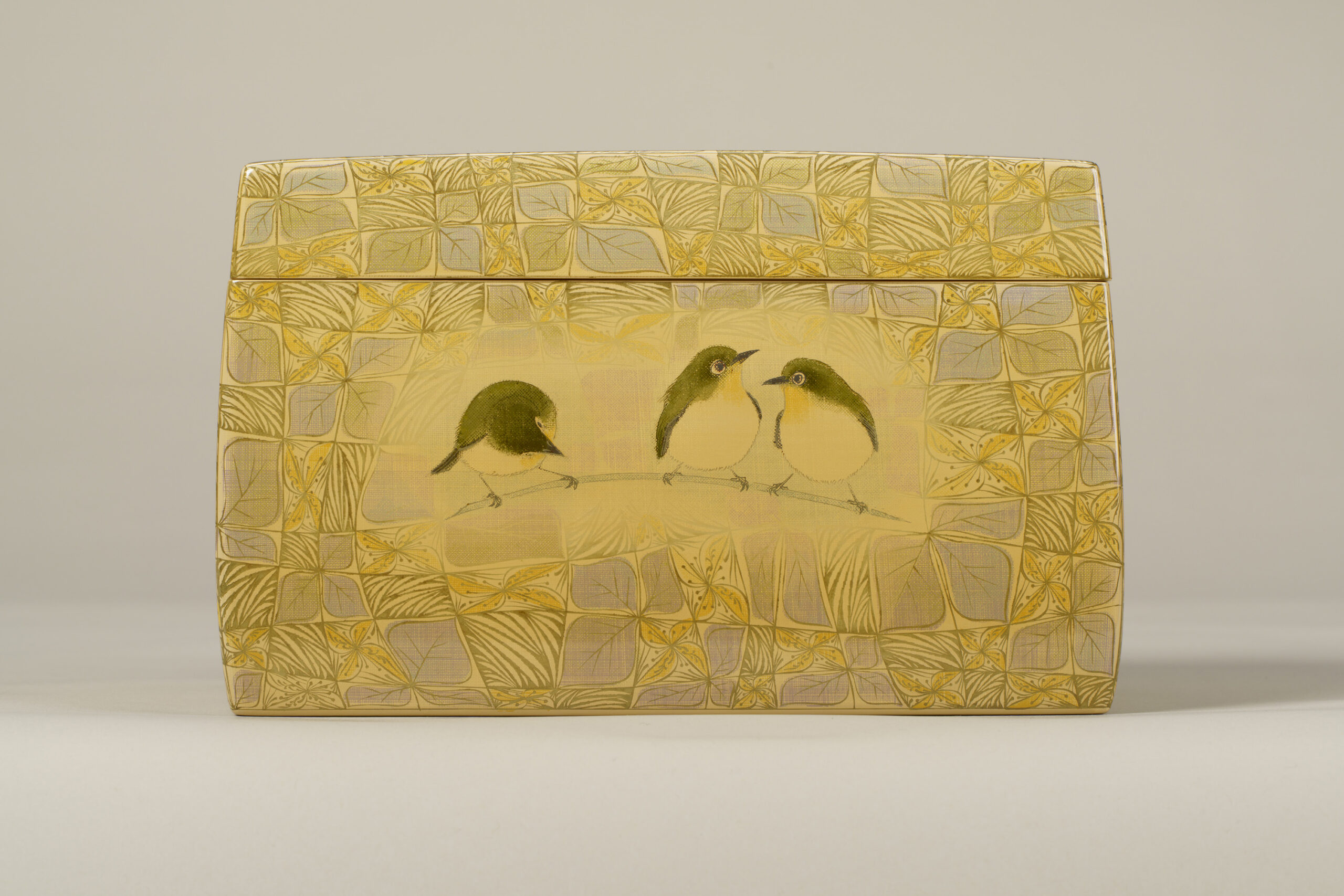
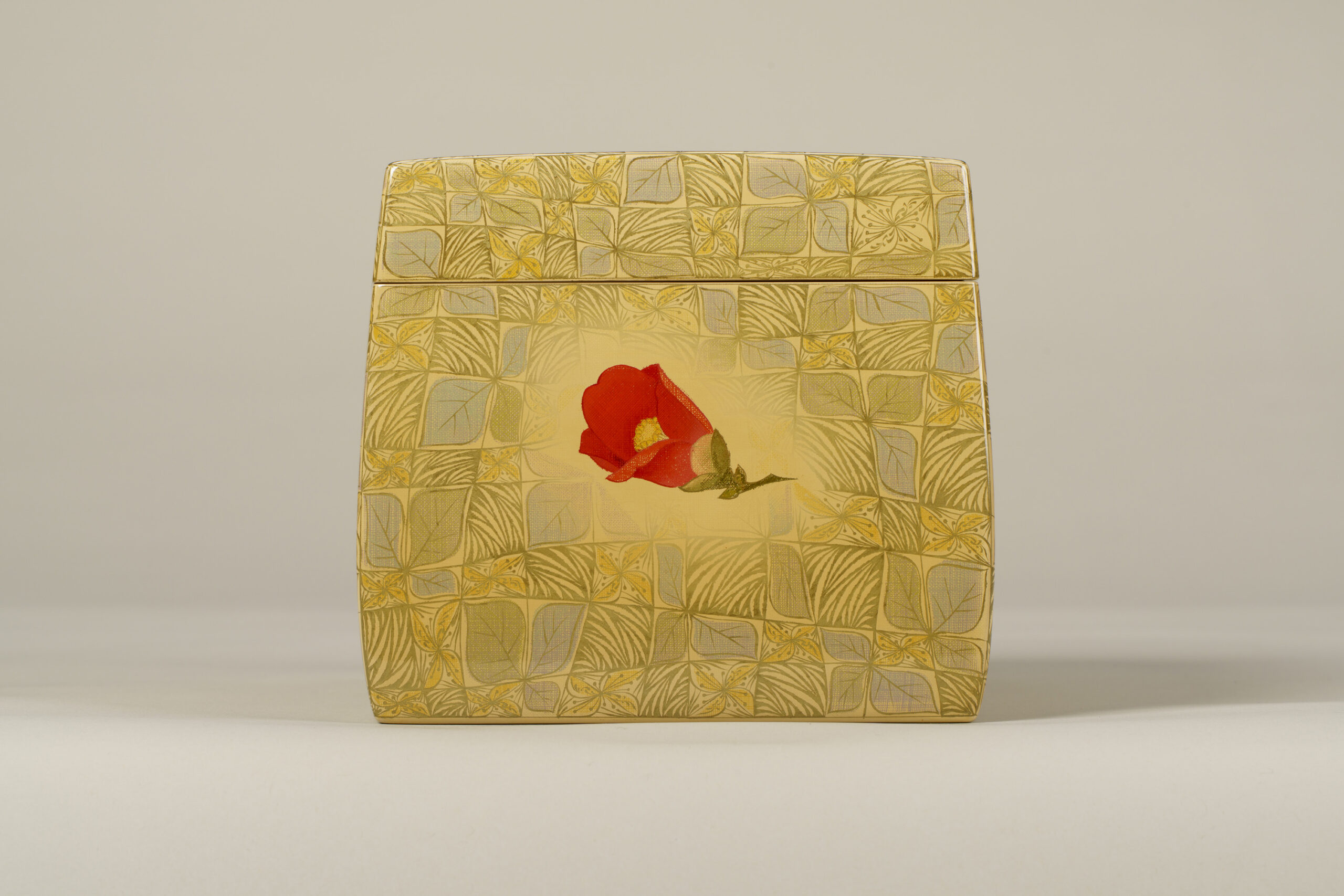
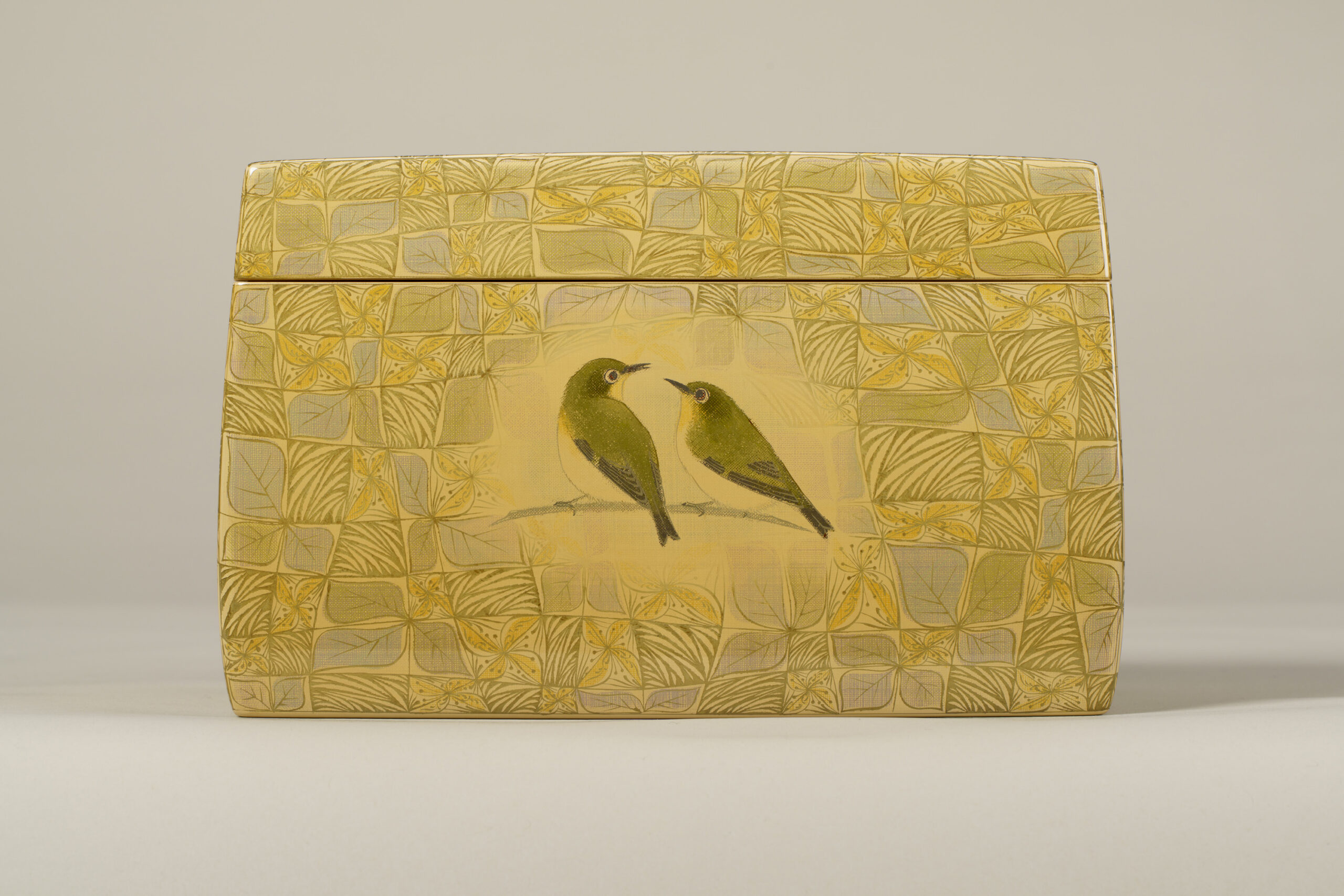
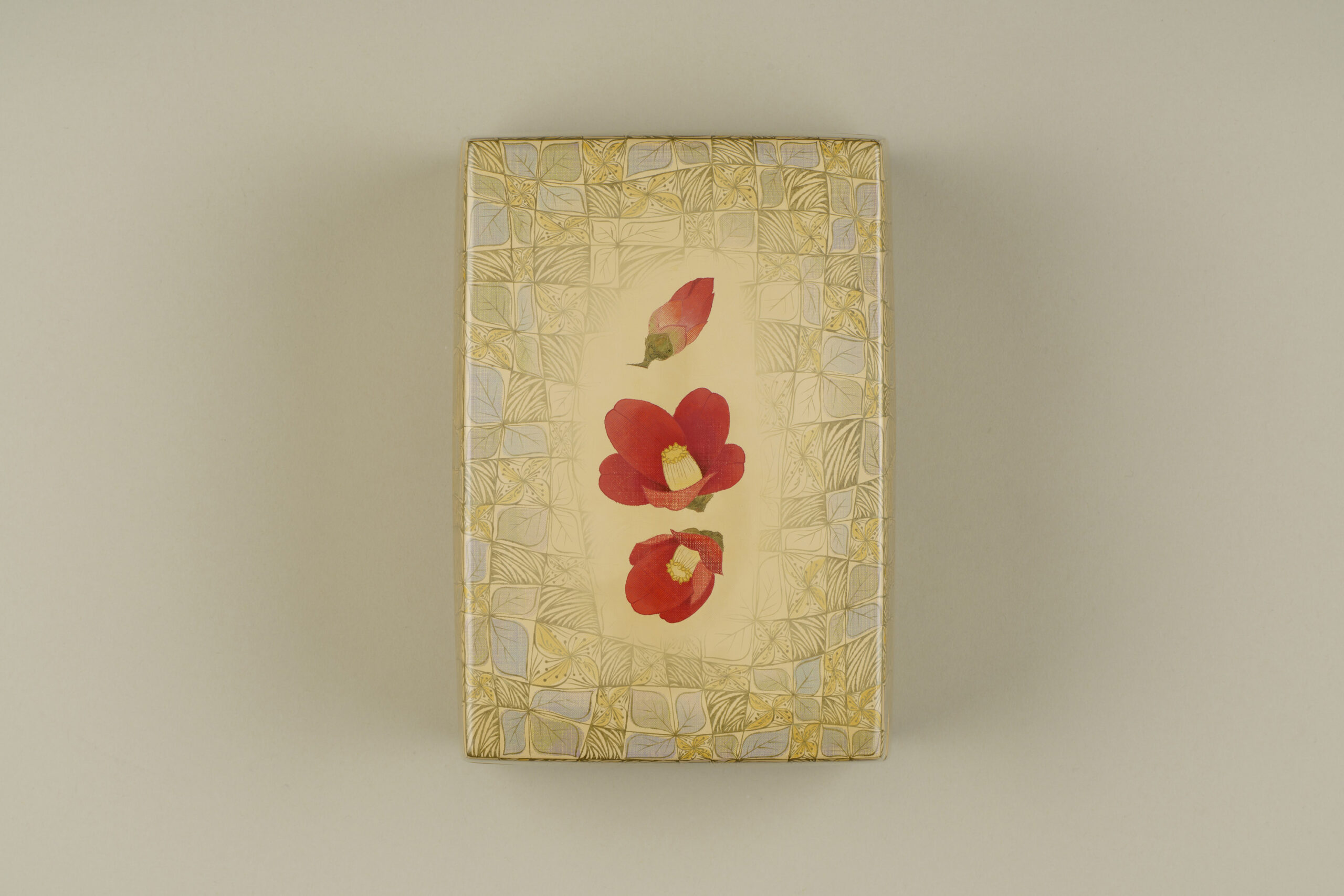
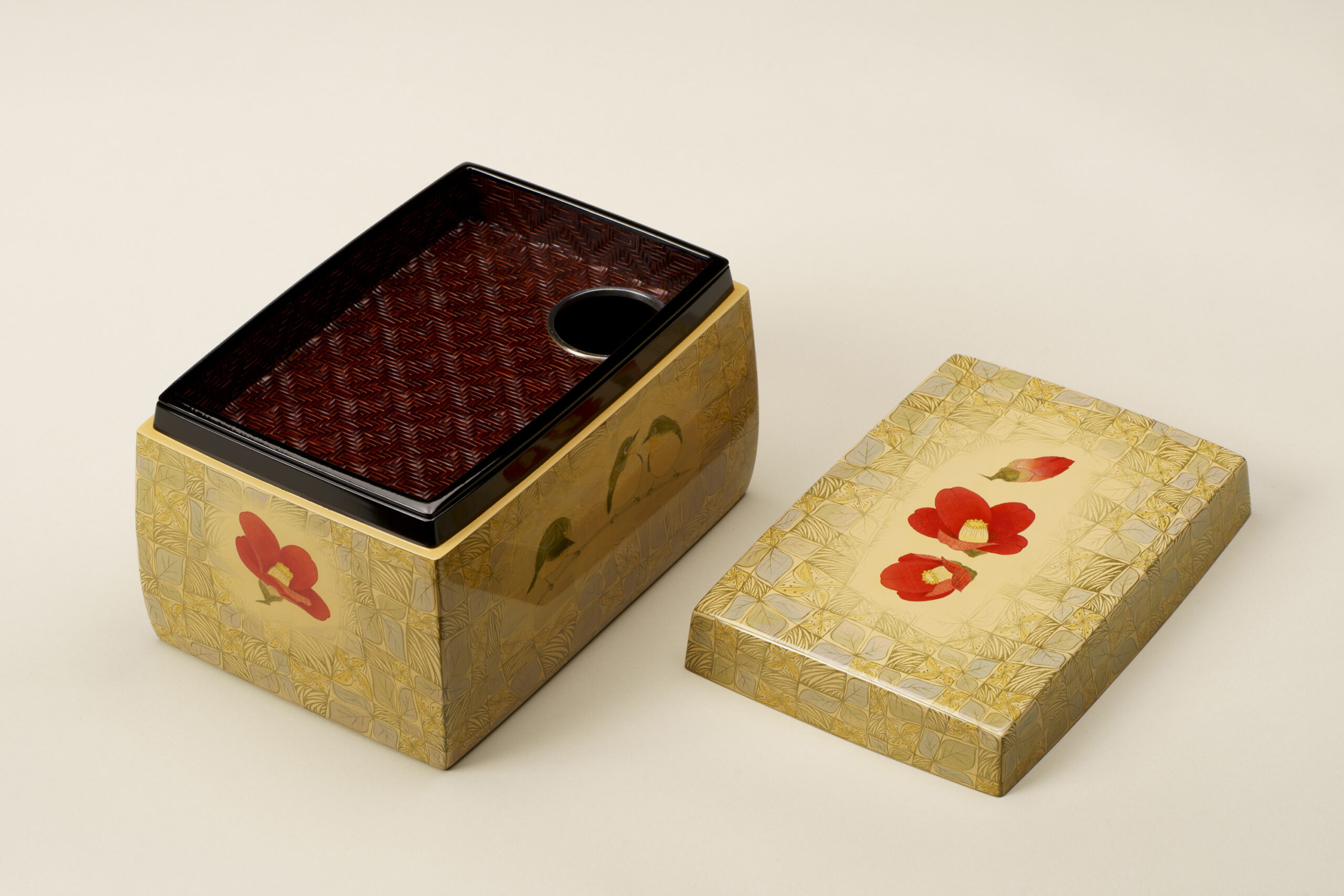
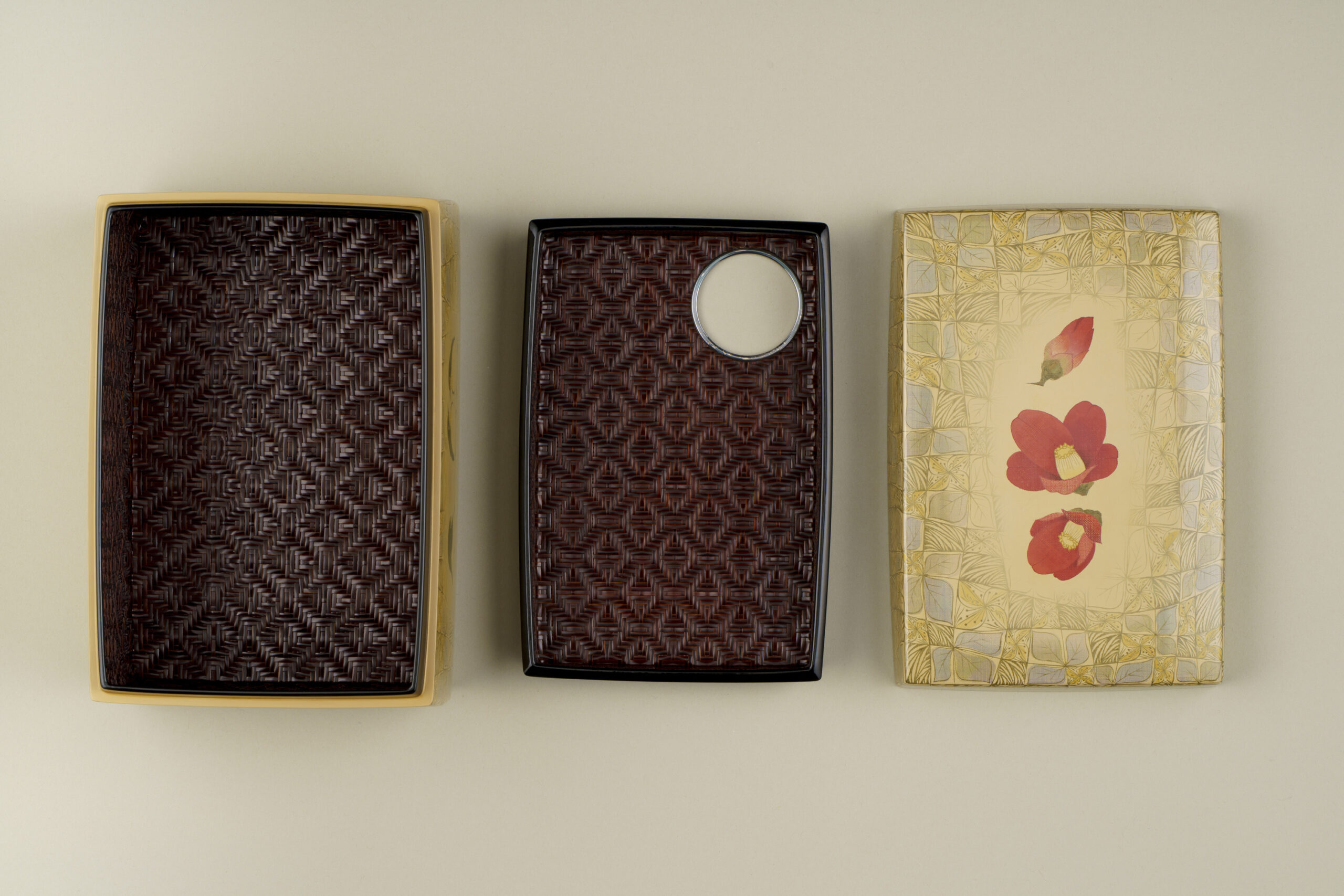
The base of this tea caddy is constructed from bamboo strips approximately 2 mm wide, woven into a basketry structure and reinforced through double layering. On the lid, a Japanese white-eye (mejiro) is depicted using the nunomebori kinma technique devised by the artist, and the interior reveals the intricate pattern formed by the woven bamboo strips of the rantai base. The flexibility of the bamboo structure protects the tea utensils stored within.
Ōta Hitoshi was born in Okayama Prefecture. He later became a close disciple of the lacquer artist Isoi Joshin, then a professor at Okayama University. After completing his studies, he relocated to Kagawa Prefecture. In 1994, he was designated a Holder of an Important Intangible Cultural Property, Kinma.
Through the extensive study of classical works, Ōta revived the rantai basketry base by developing a double-weaving method that enhanced the structural strength of the base. He then devised the nunomebori technique, which is characterized by repeated fine lines cut vertically, horizontally and diagonally to create a fabric-like pattern. Through the fusion of classical tradition and creative innovation, he opened the door to new possibilities for expression in lacquer art.