


Blue Iridescent Lacquered Scabbards and Paired Sword Mountings (Aogai Mijin-nuri Saya and Daishō Koshirae)
- Artist
-
Mitani Shigeyoshi (dates unknown)
- Period
-
Edo period, 18th century
- Quality and quantity
-
Sword mountings, one set
- Size (cm)
-
Long-sword mounting: overall length 100.0, Short-sword mounting: overall length 78.2
- Category
-
Craftwork
- Classification
-
Designated by the prefecture
- Accession number
-
TI0#00001、TI0#00002
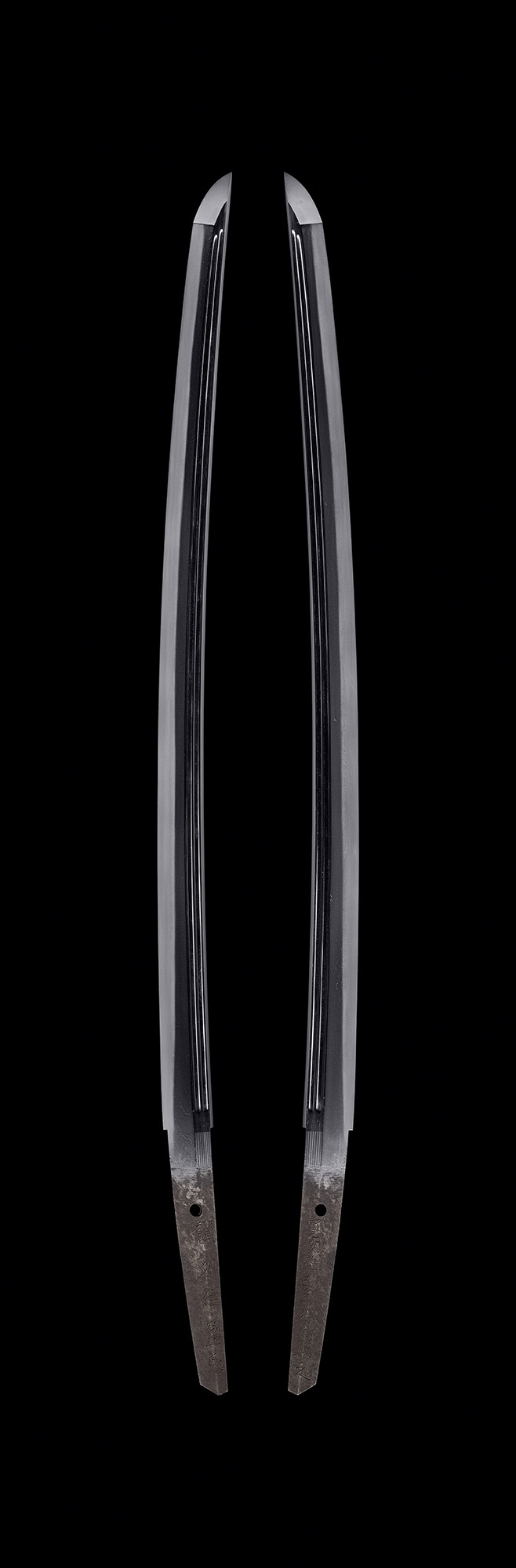
Description
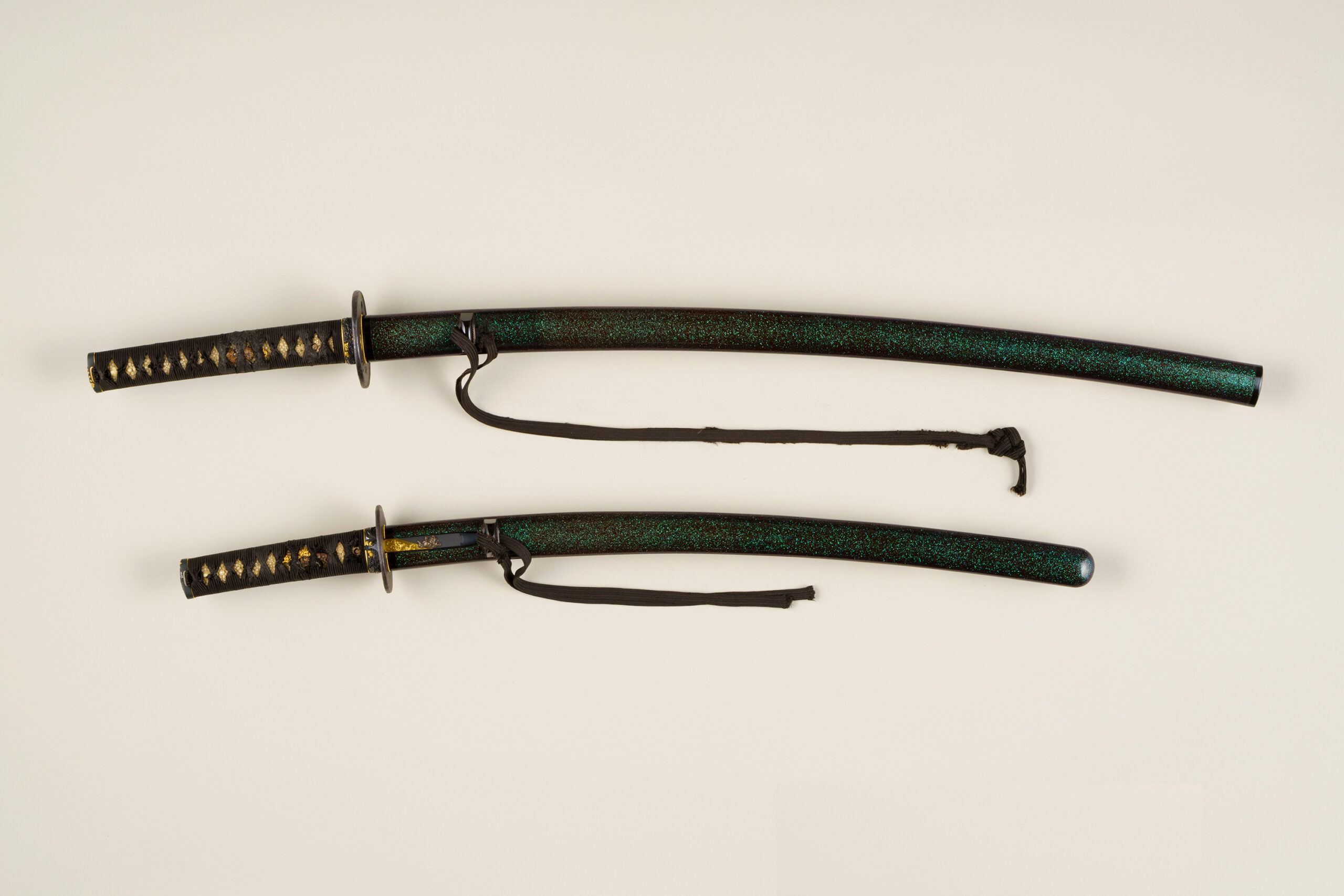
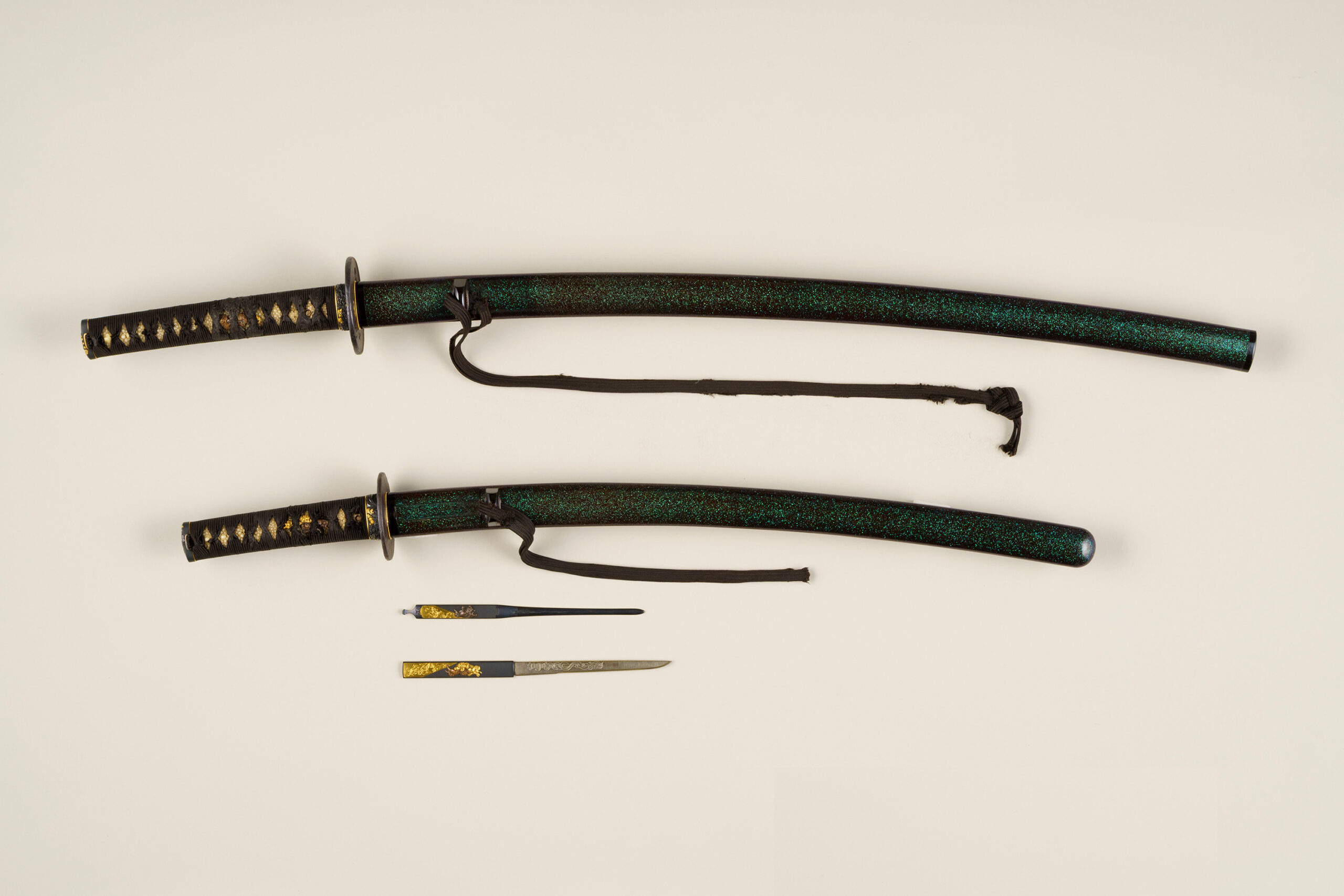
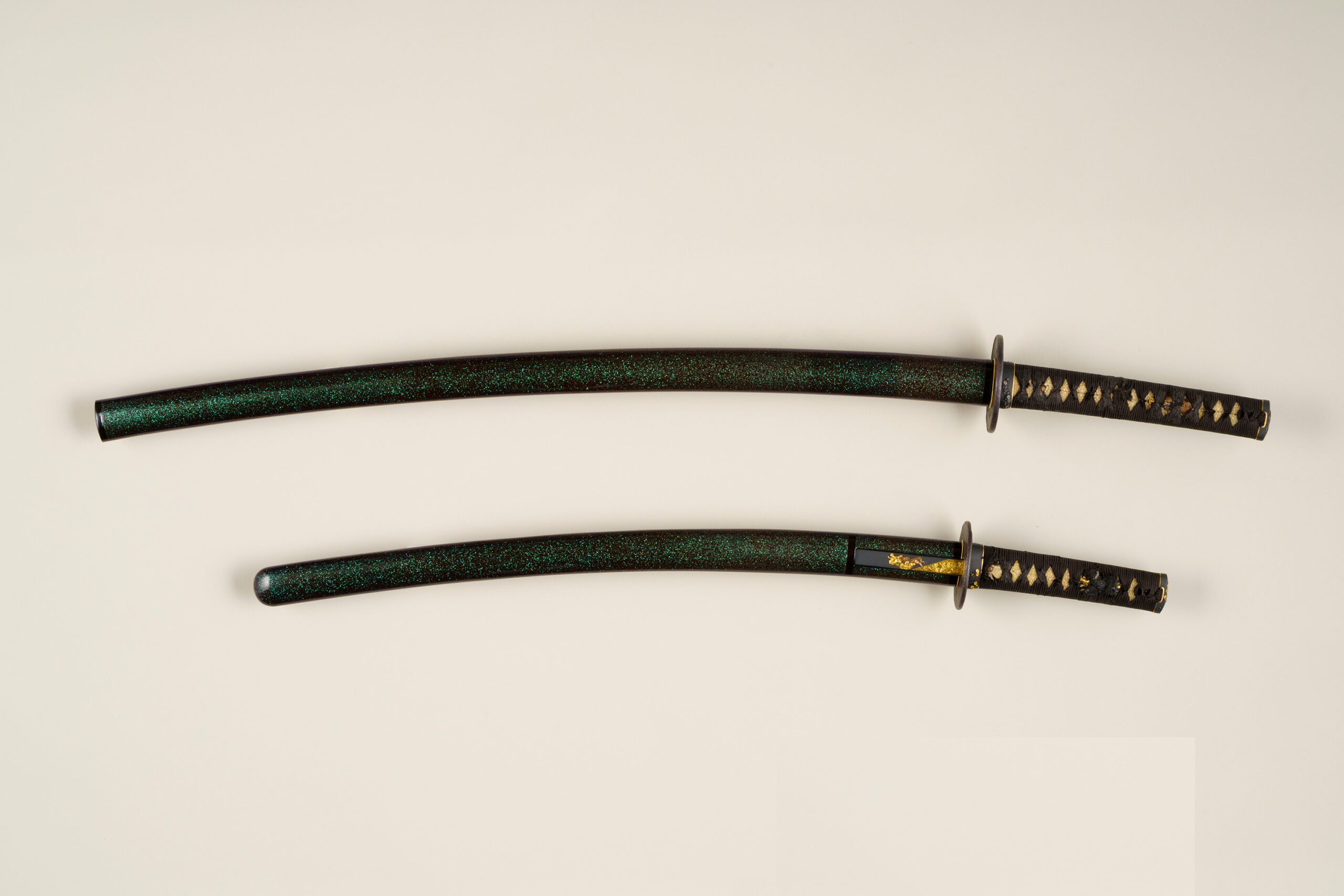
The fittings used to wear a sword, including the saya (scabbard), tsuka (hilt), and tsuba (guard), are collectively known as the koshirae. During the Edo period, samurai wore a matched pair of swords, composed of an uchigatana (long sword) and a wakizashi (short sword). When the mountings for both swords are made as a coordinated set in terms of their design and ornamentation, they are referred to as daishō koshirae.
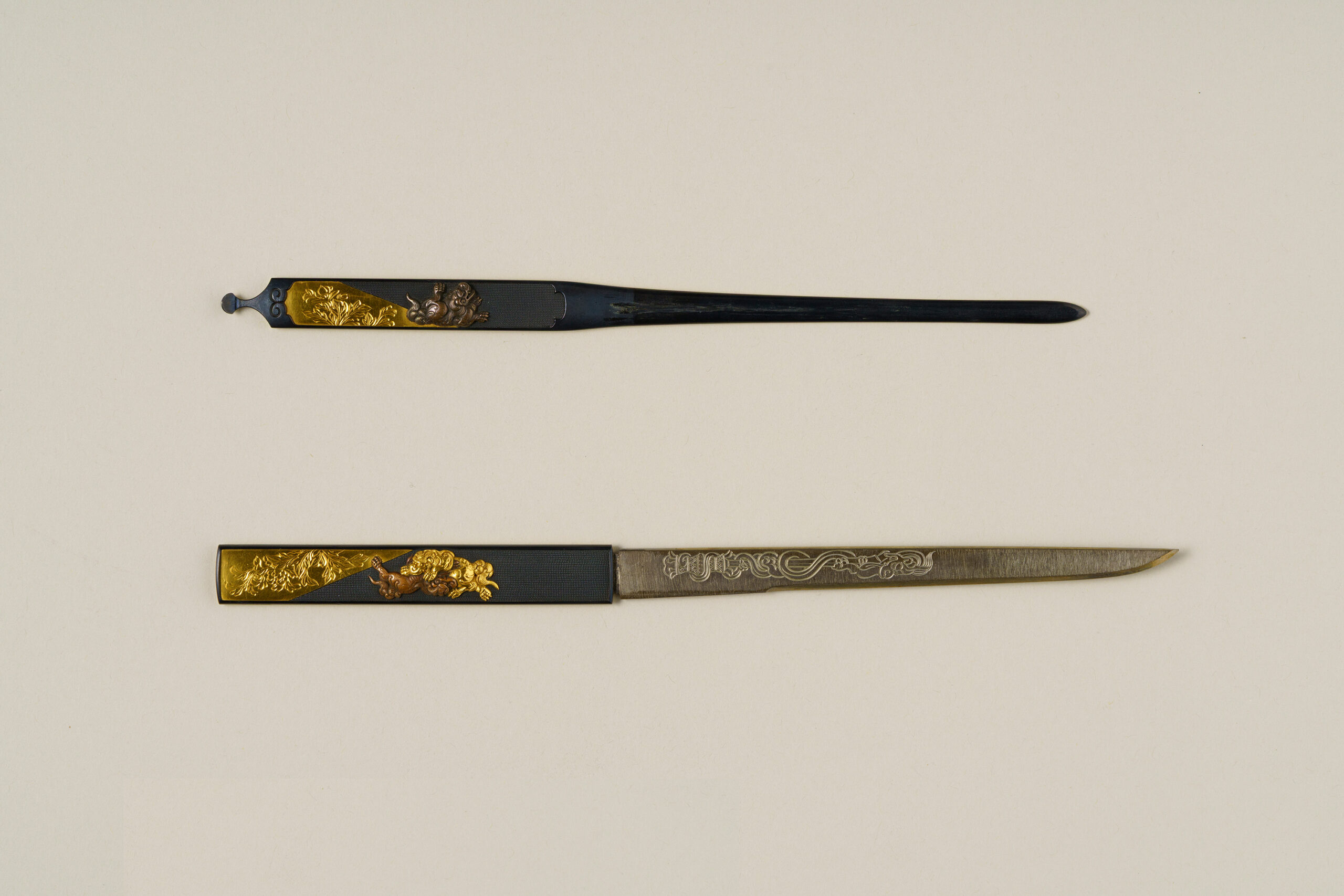
The saya that house the blades are coated with a lacquer that has been mixed with a finely crushed, blue iridescent shell, creating a shimmering surface that sparkles when struck by light—one of the work’s chief highlights. The metal fittings adorning this daishō koshirae were crafted by Mitani Shigeyoshi, and the motifs are carefully unified across the set.
Mitani Shigeyoshi was a metalsmith who served the Takamatsu domain and was active in the late Edo period. He was particularly renowned for nanako-ji, a technique featuring densely arranged, minute circular granules resembling fish roe. This hallmark technique is also employed in the metal fittings of this set.