


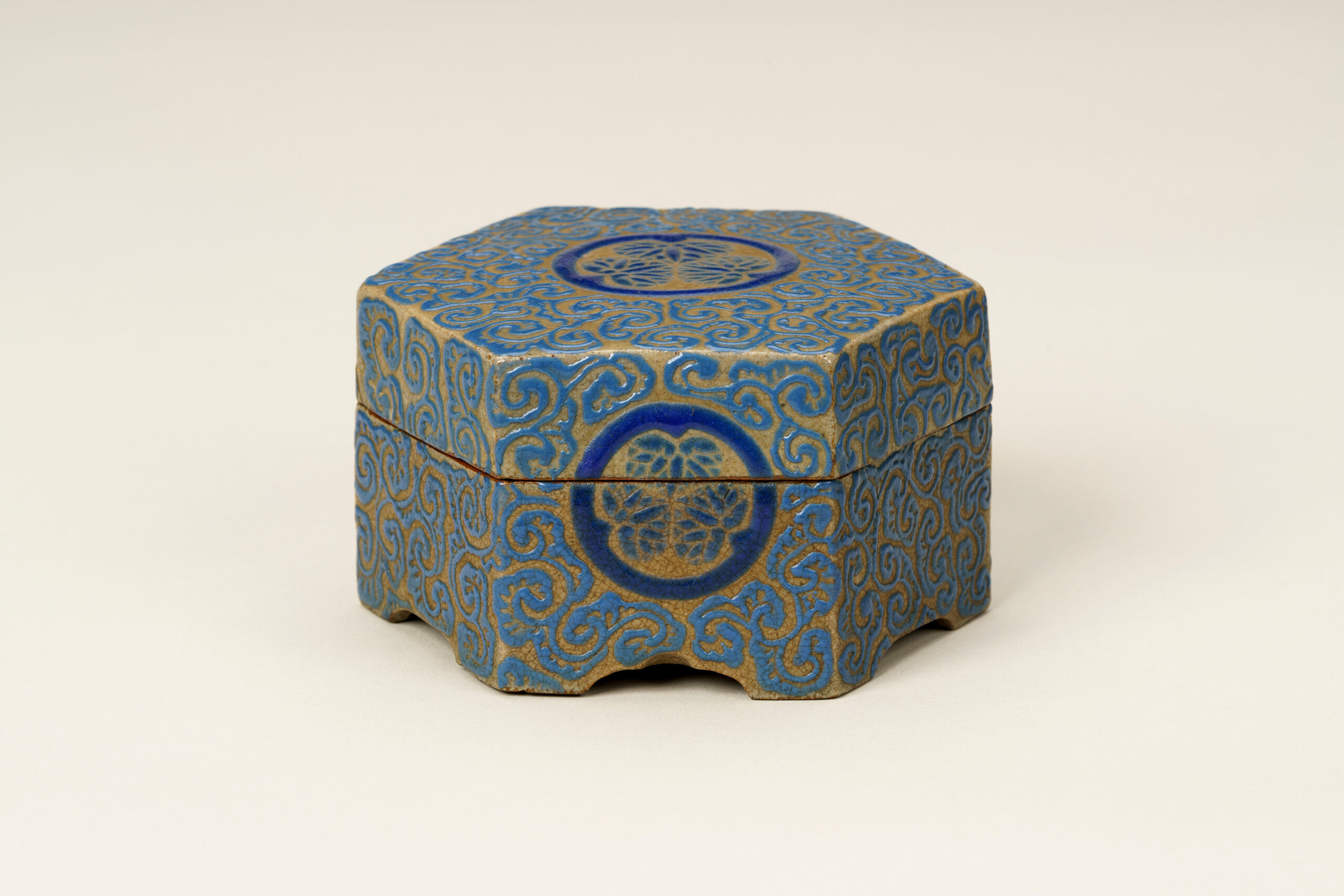
Hexagonal Incense Container (Kikkō Dai Kōgō)
- Artist
-
Kita Rihee (dates unknown)
- Period
-
Edo period, 17th century
- Quality and quantity
-
Ceramic, one piece
- Size (cm)
-
W 11.2 × H 6.3
- Category
-
Craftwork
- Accession number
-
MY0#00374
Description
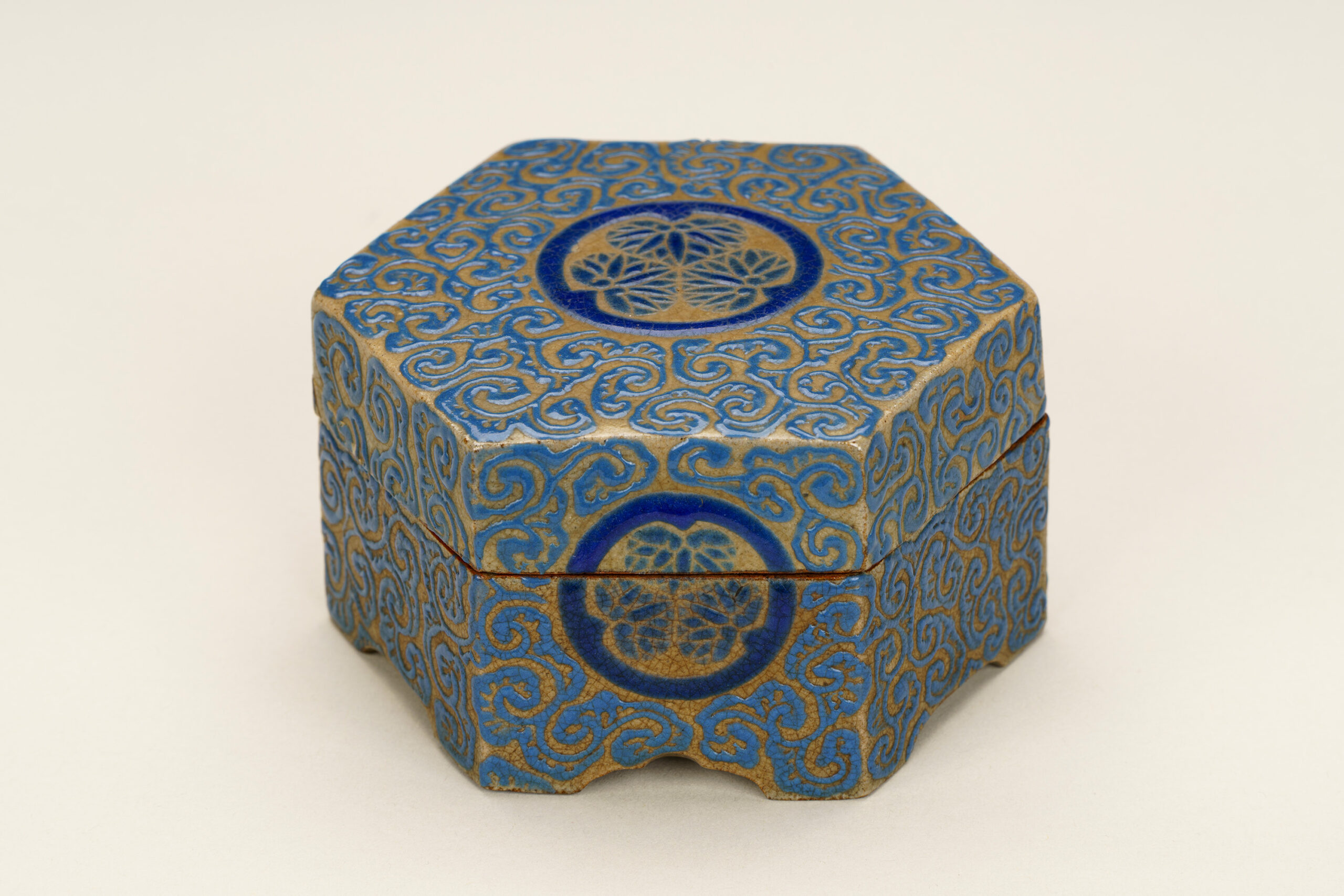
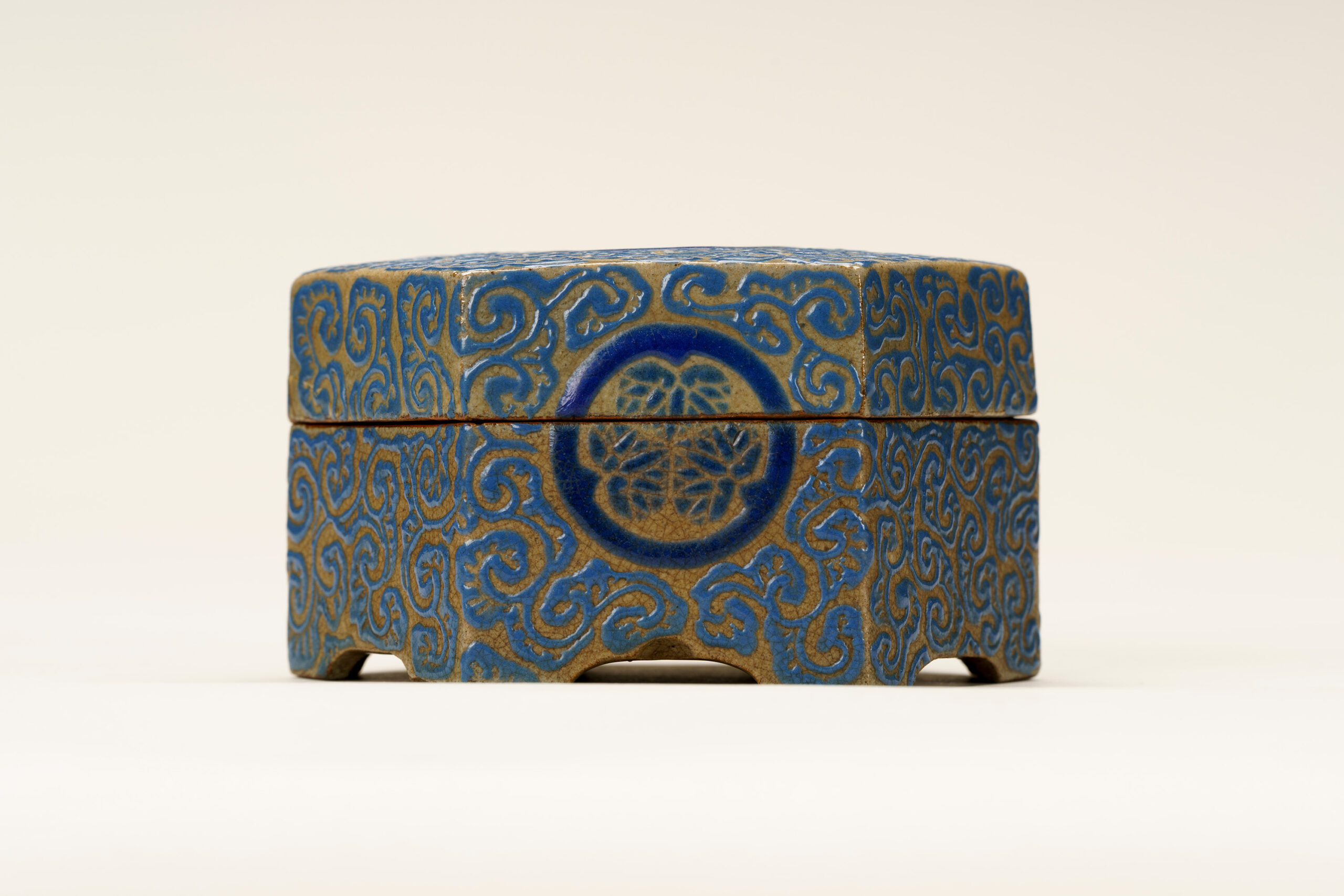
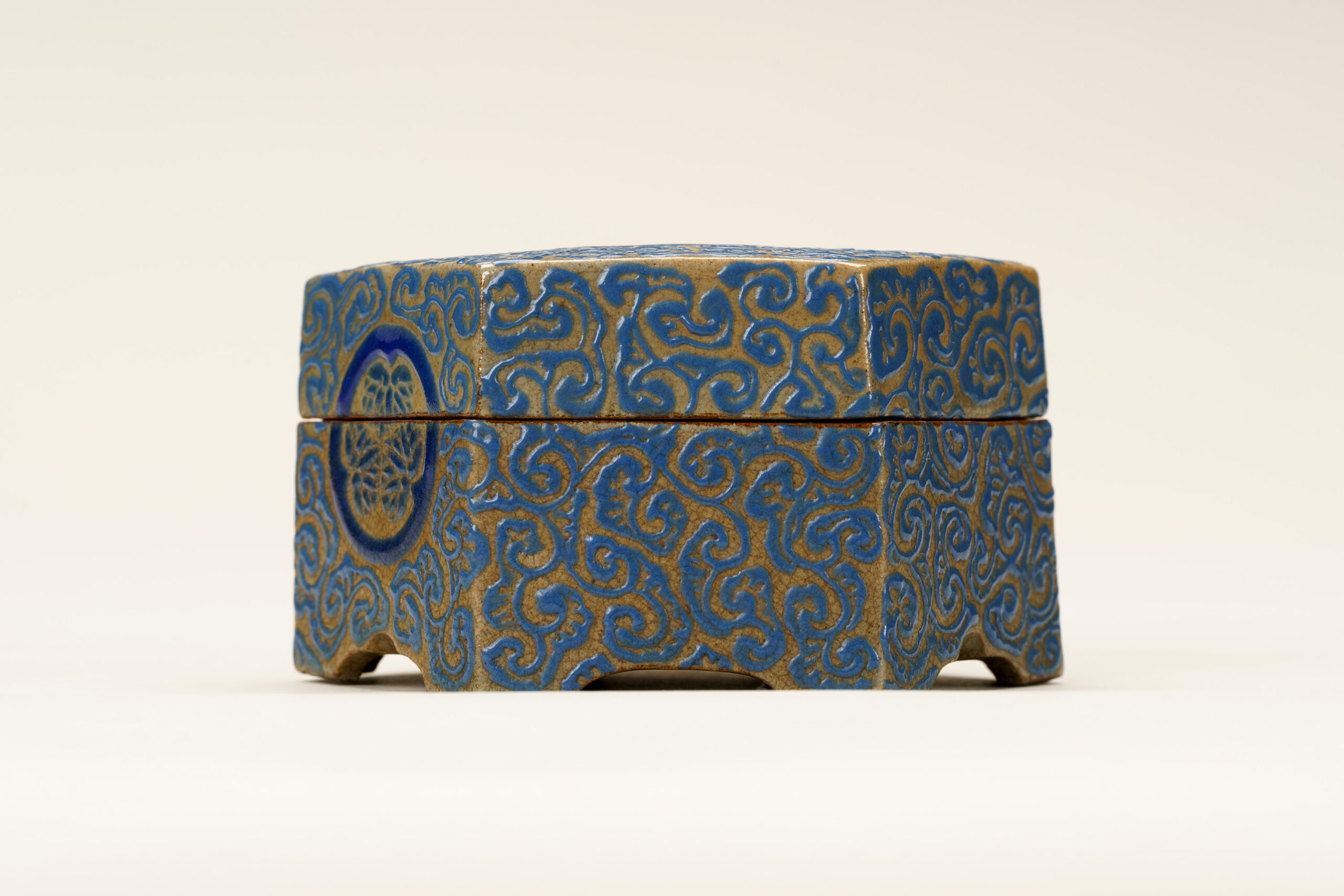
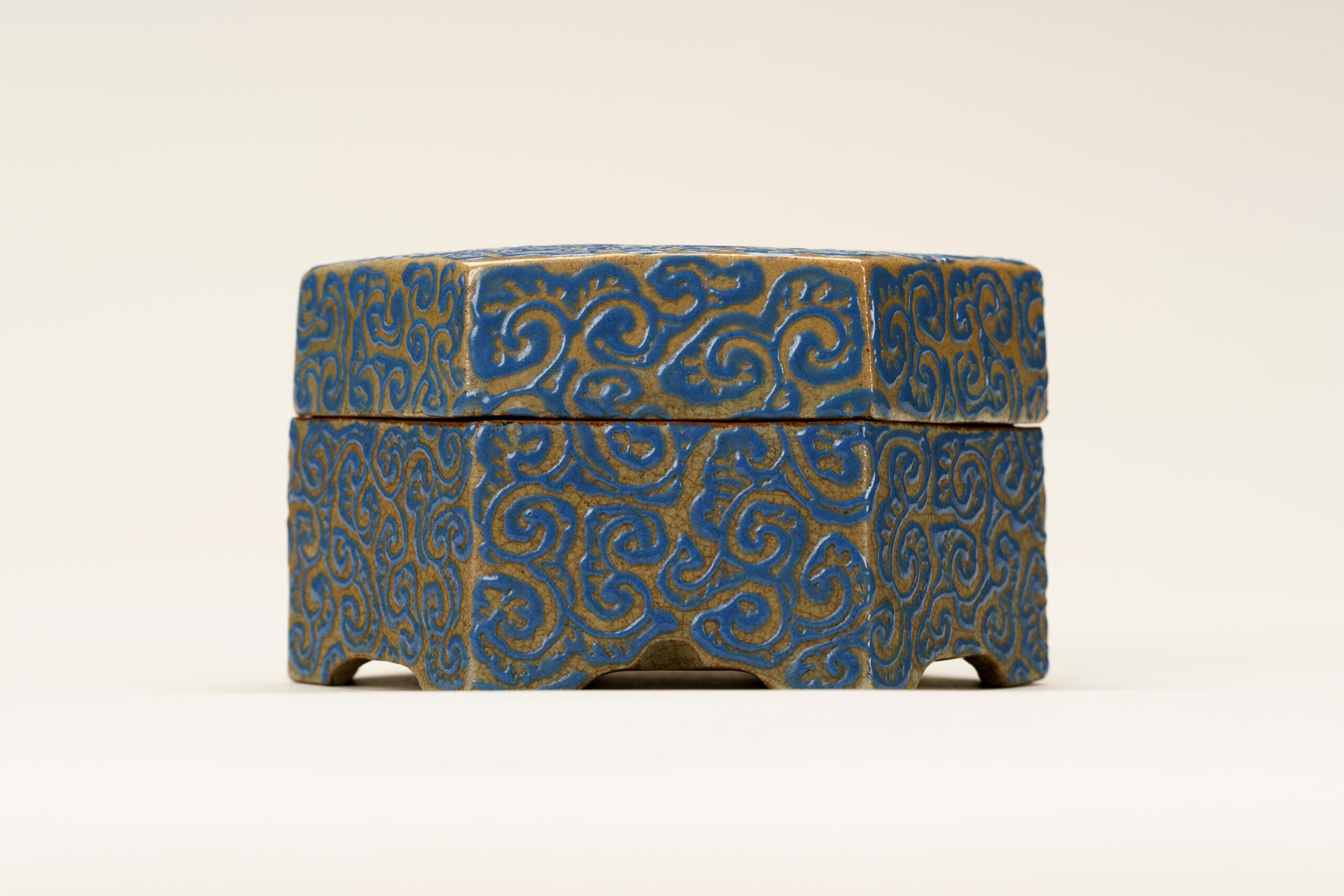
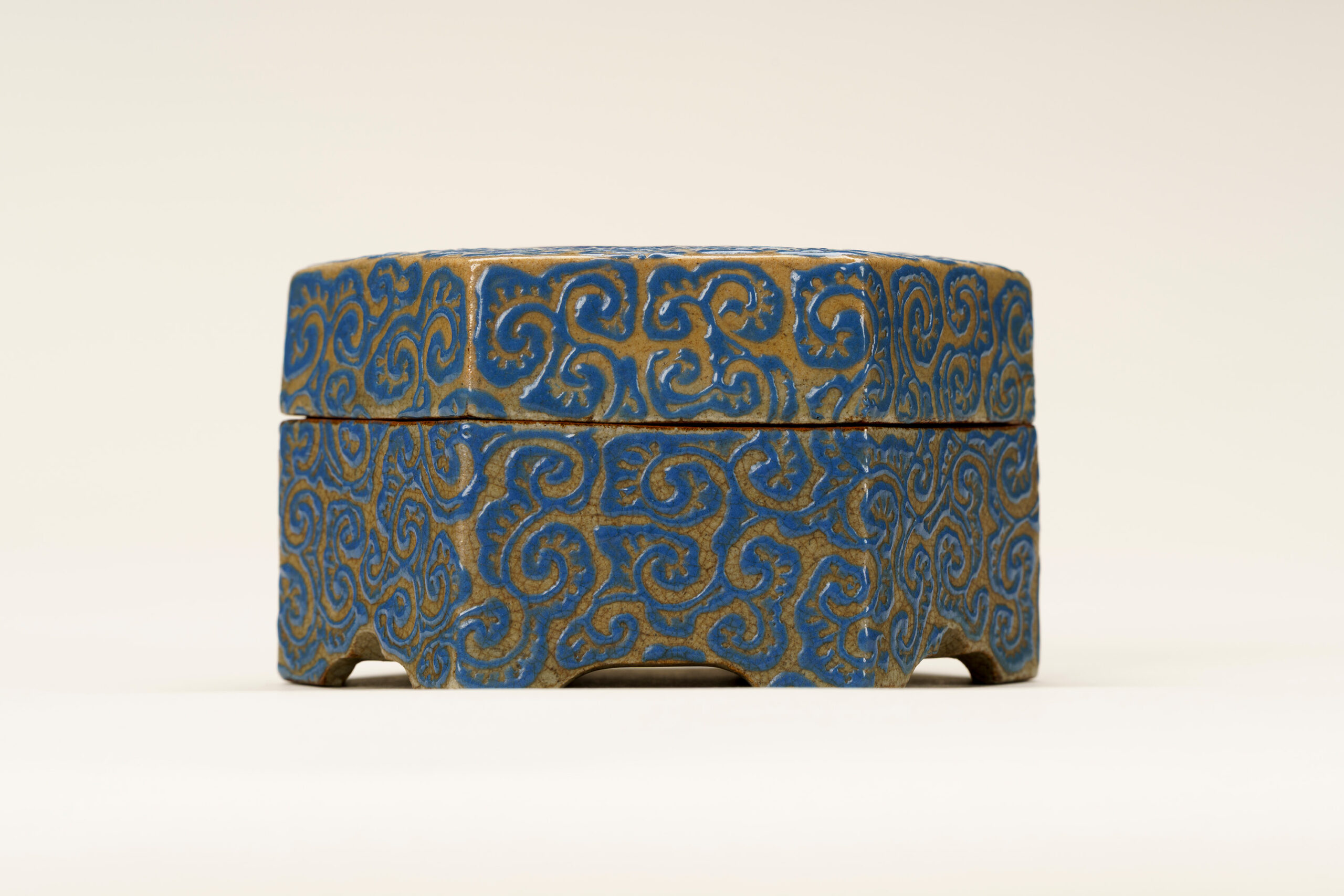
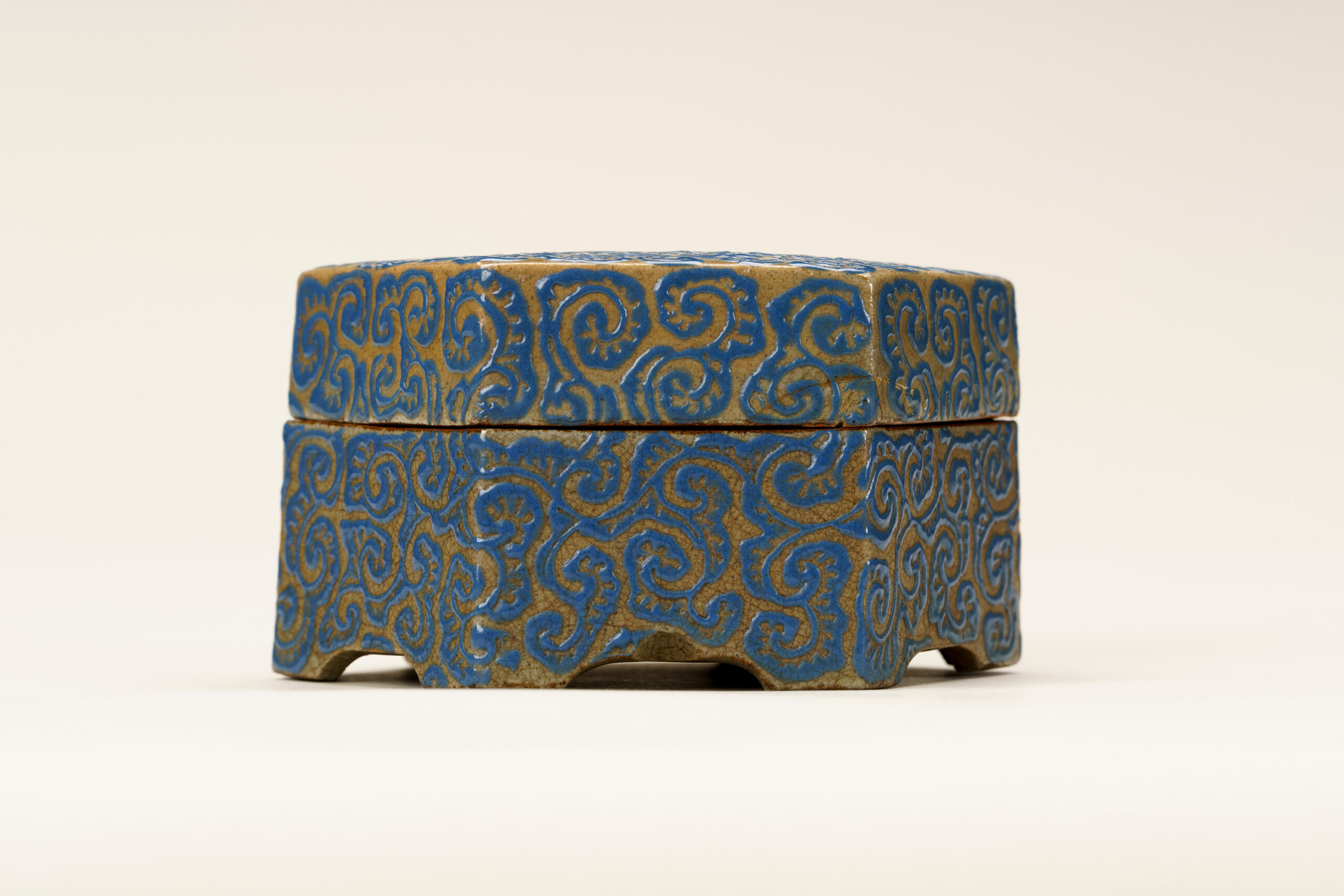
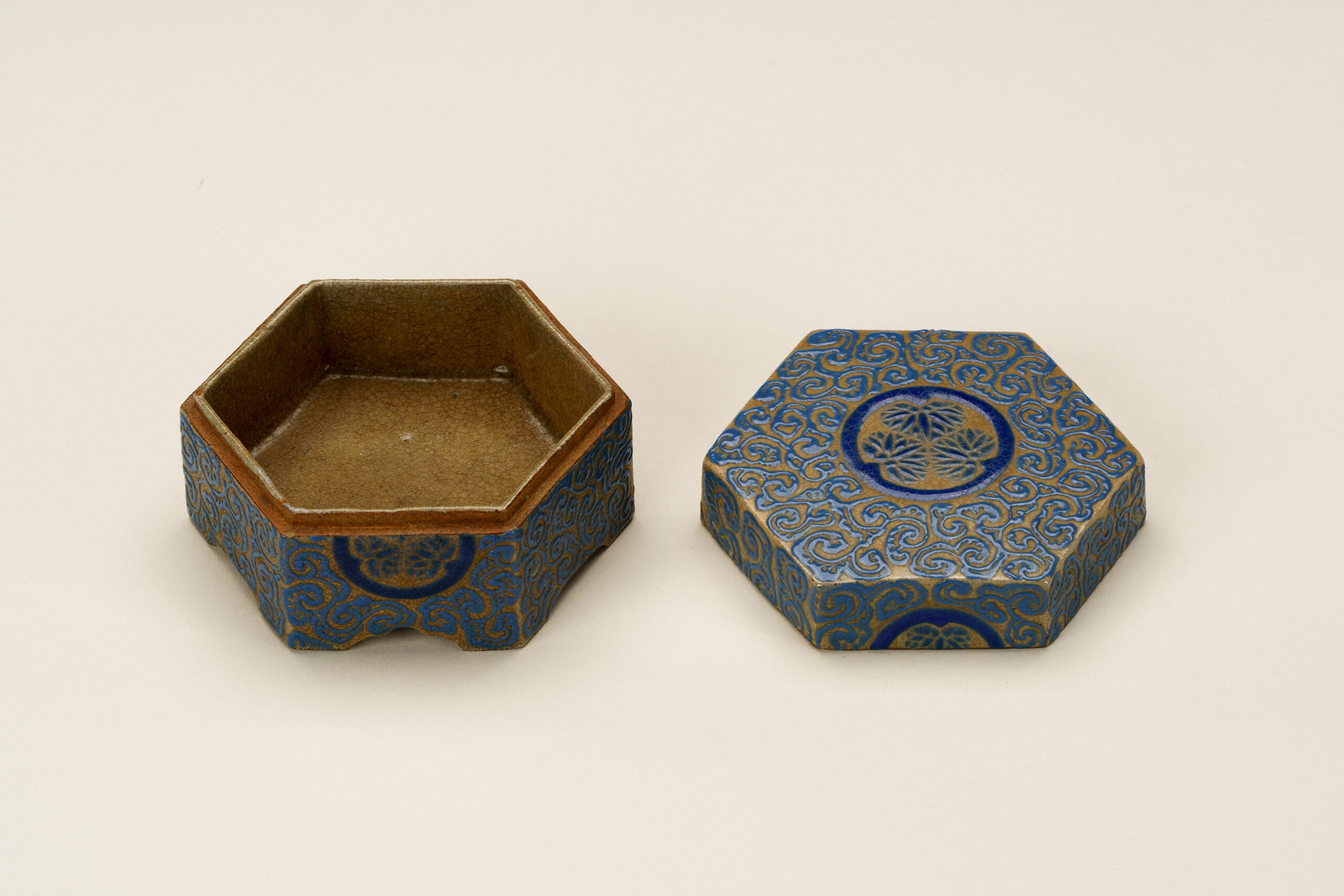
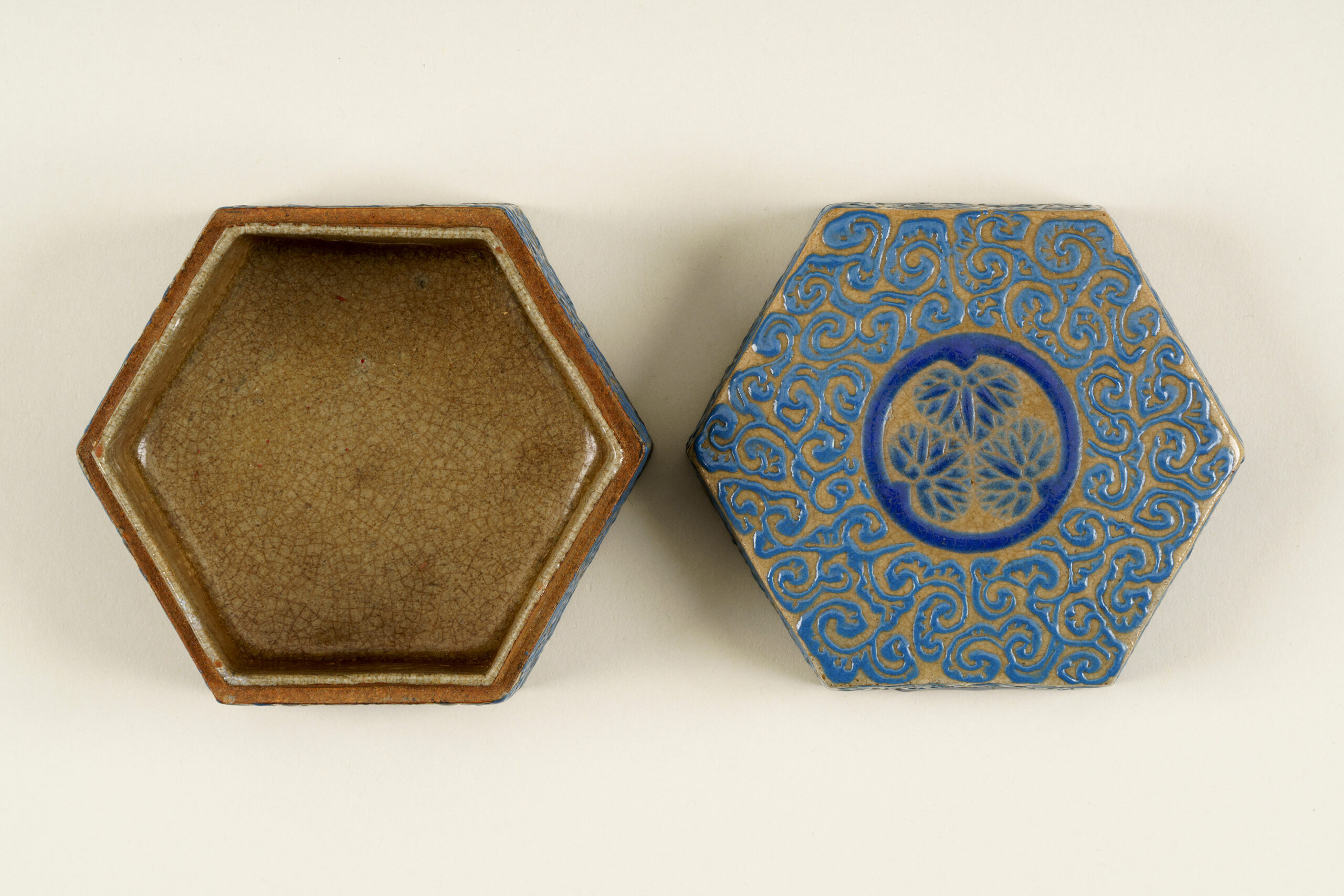
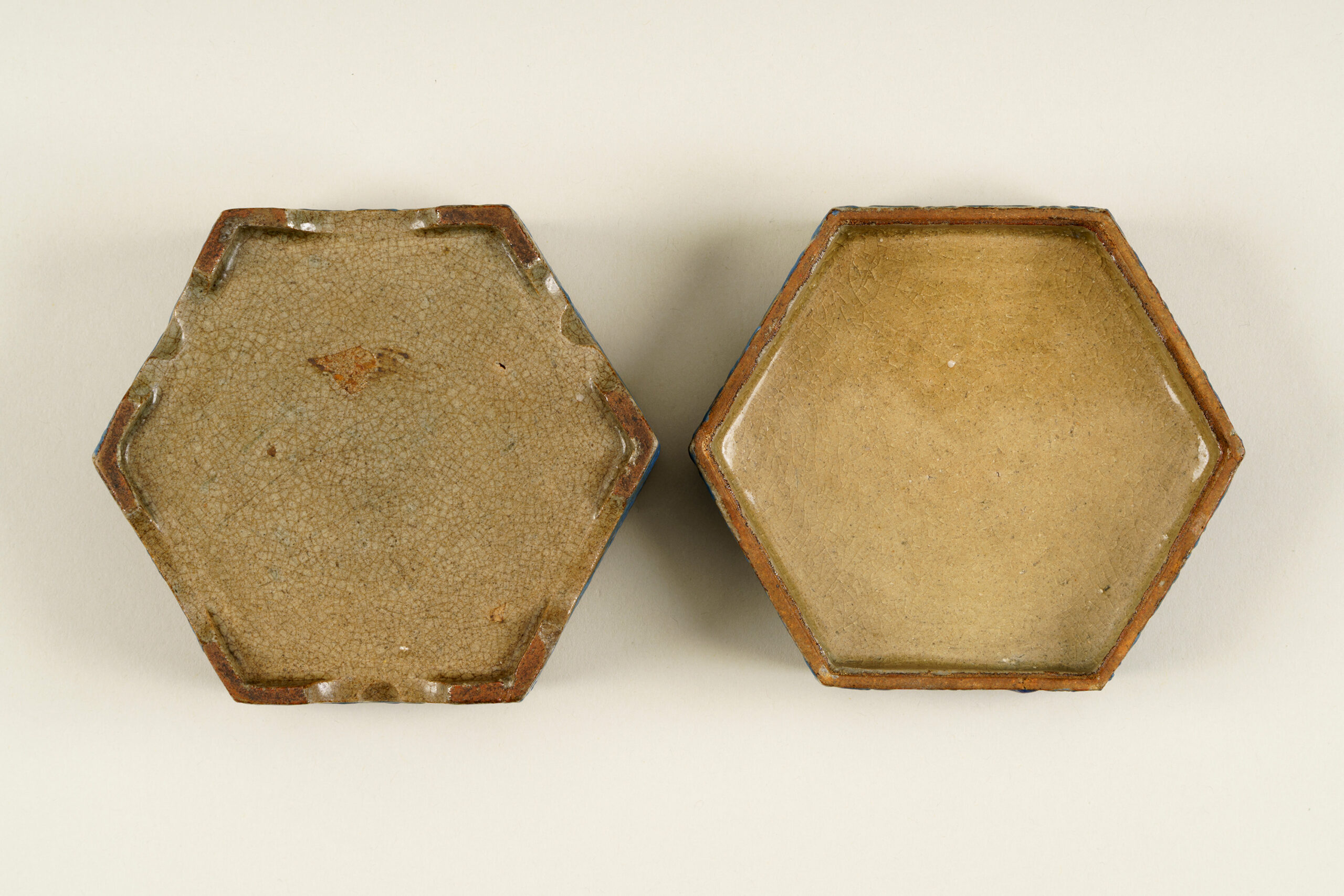
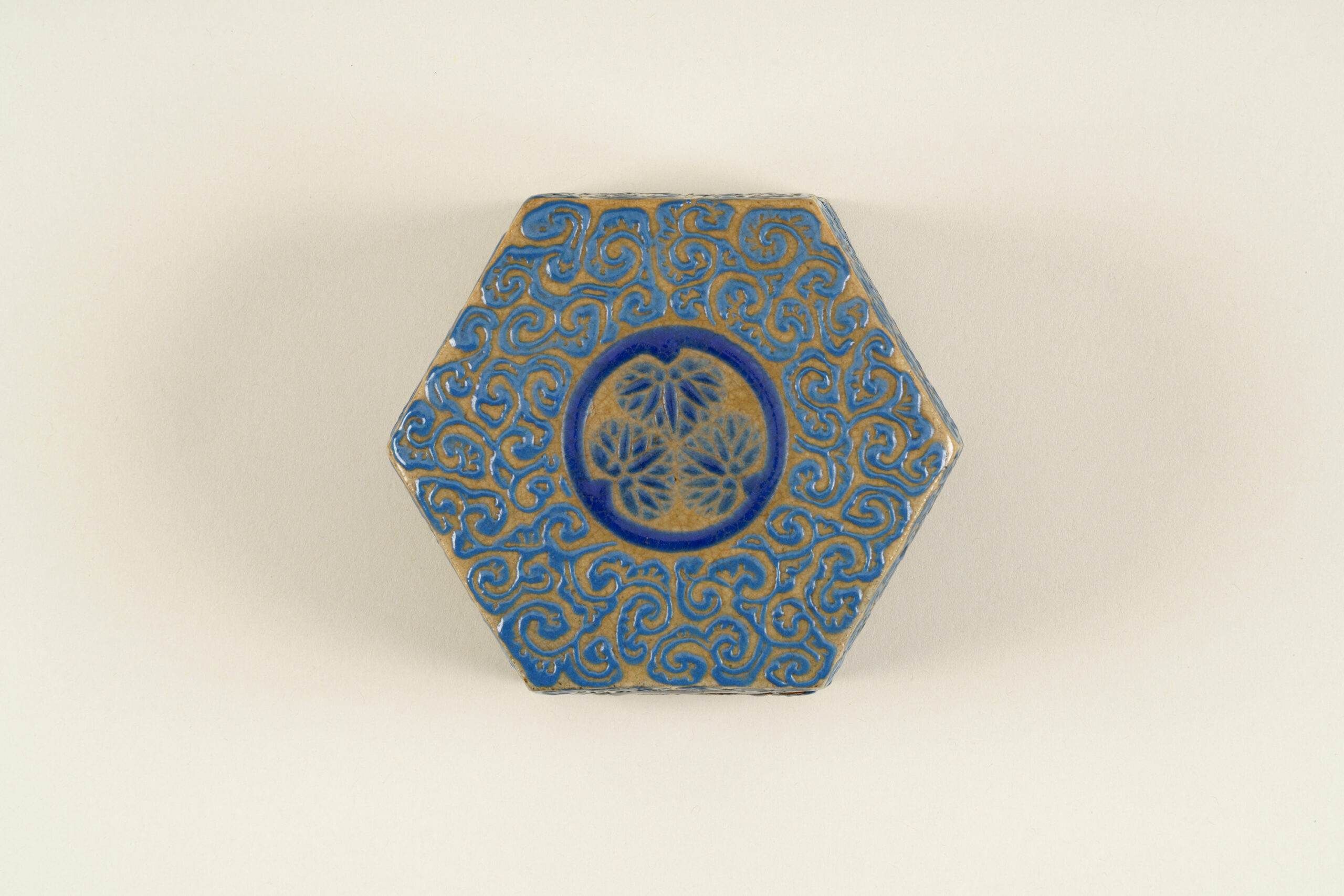
This incense container (kōgō) is an example of Rihei ware (historically known as Rihee-yaki), a style of ceramics produced as official ceramicware for the Takamatsu domain. The vessel is hexagonal in form, known as kikkō (tortoiseshell). Arabesque-style motifs are painted across the entire work in a deep blue glaze over a gray base. The crest of the Takamatsu Matsudaira family, the maru ni mitsu-aoi (three hollyhock leaves within a circle), appears at the center of the lid and on the front of the container.
An incense container is a lidded vessel used to hold incense. Typically, they are made of ceramic, but they are also made of lacquer and metal. These containers were valued as decorative utensils used in tea ceremonies. Although many examples are small, this piece is notable for its comparatively large size.
The origin of Rihei ware is in a potter who were invited from Kyoto by Matsudaira Yorishige, the first head of the Takamatsu Matsudaira family. Successive generations of potters adopted the name Rihee, so this style of ceramicware came to be known as Rihee-yaki. In the Meiji period, the kiln name was changed from “理兵衛 (Rihee)” to “理平 (Rihei),” and the tradition continues to this day.
From the mid-Edo period onward, Rihei ware typically bears a distinctive seal in the form of the kanji character “高,” known as a hafutaka, impressed on the base. This piece lacks that mark and is therefore thought to date from before the adoption of the hafutaka seal.