


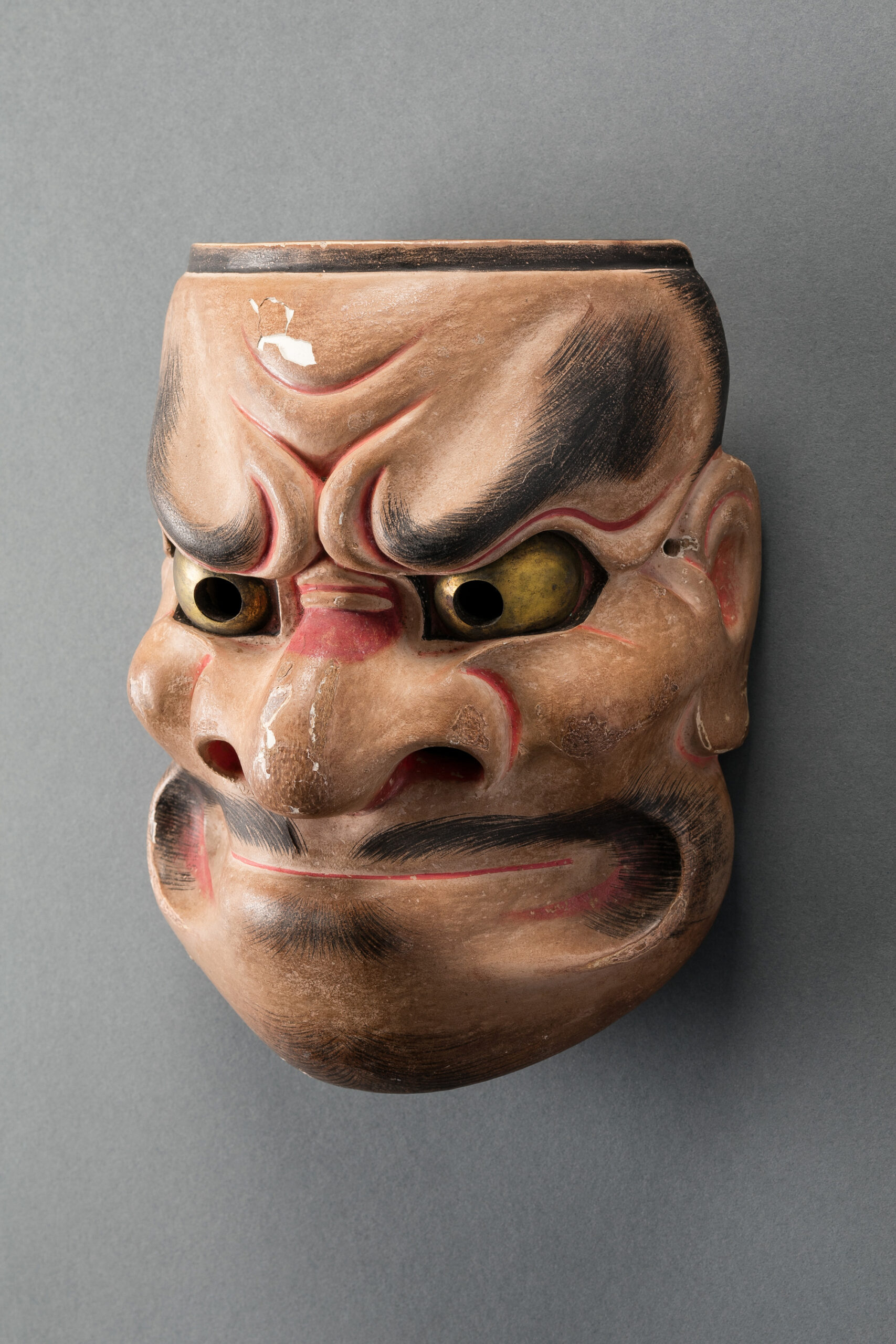
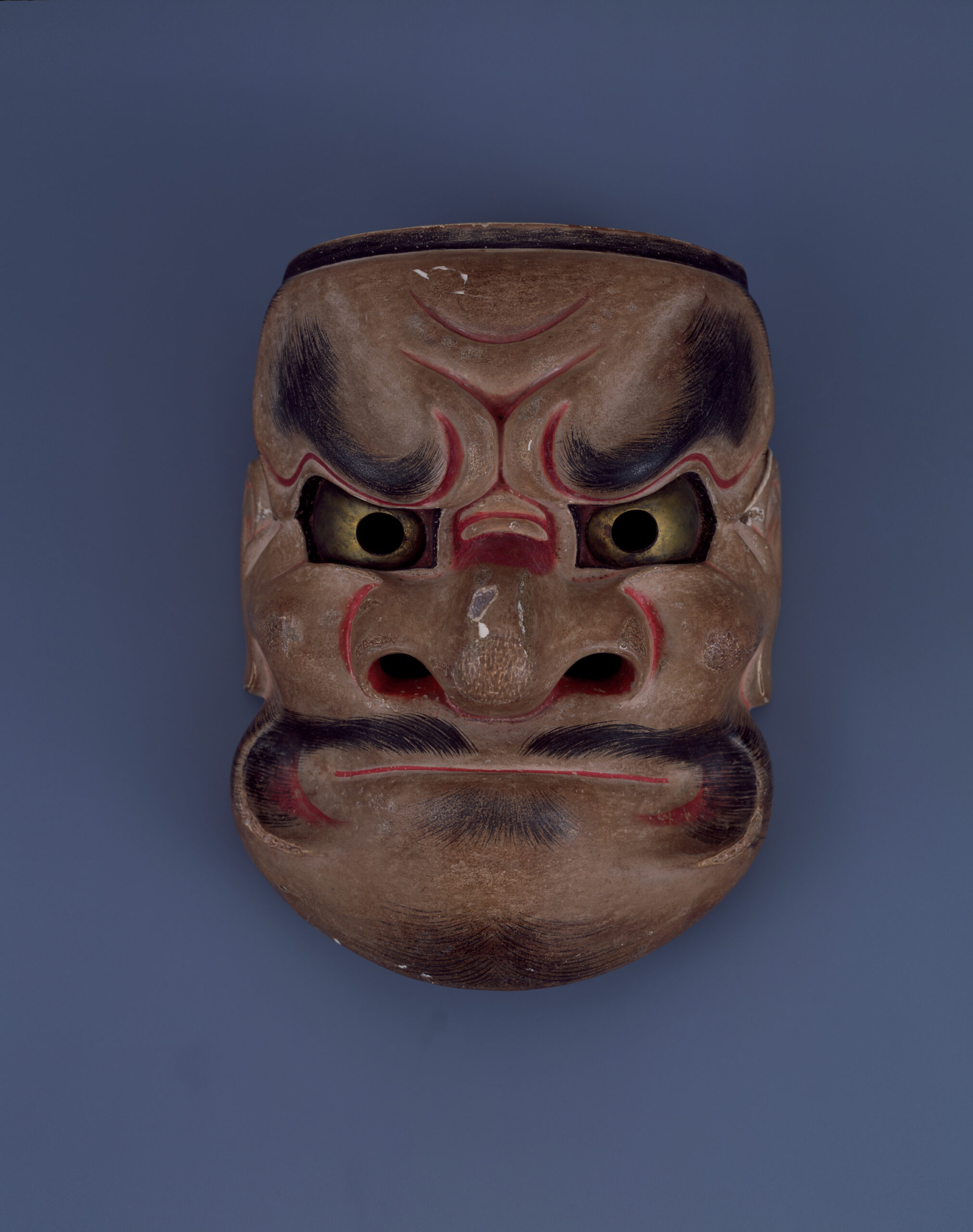
Noh Mask: Ōbeshimi
- Artist
-
-
- Period
-
Edo period, 17th–18th century
- Quality and quantity
-
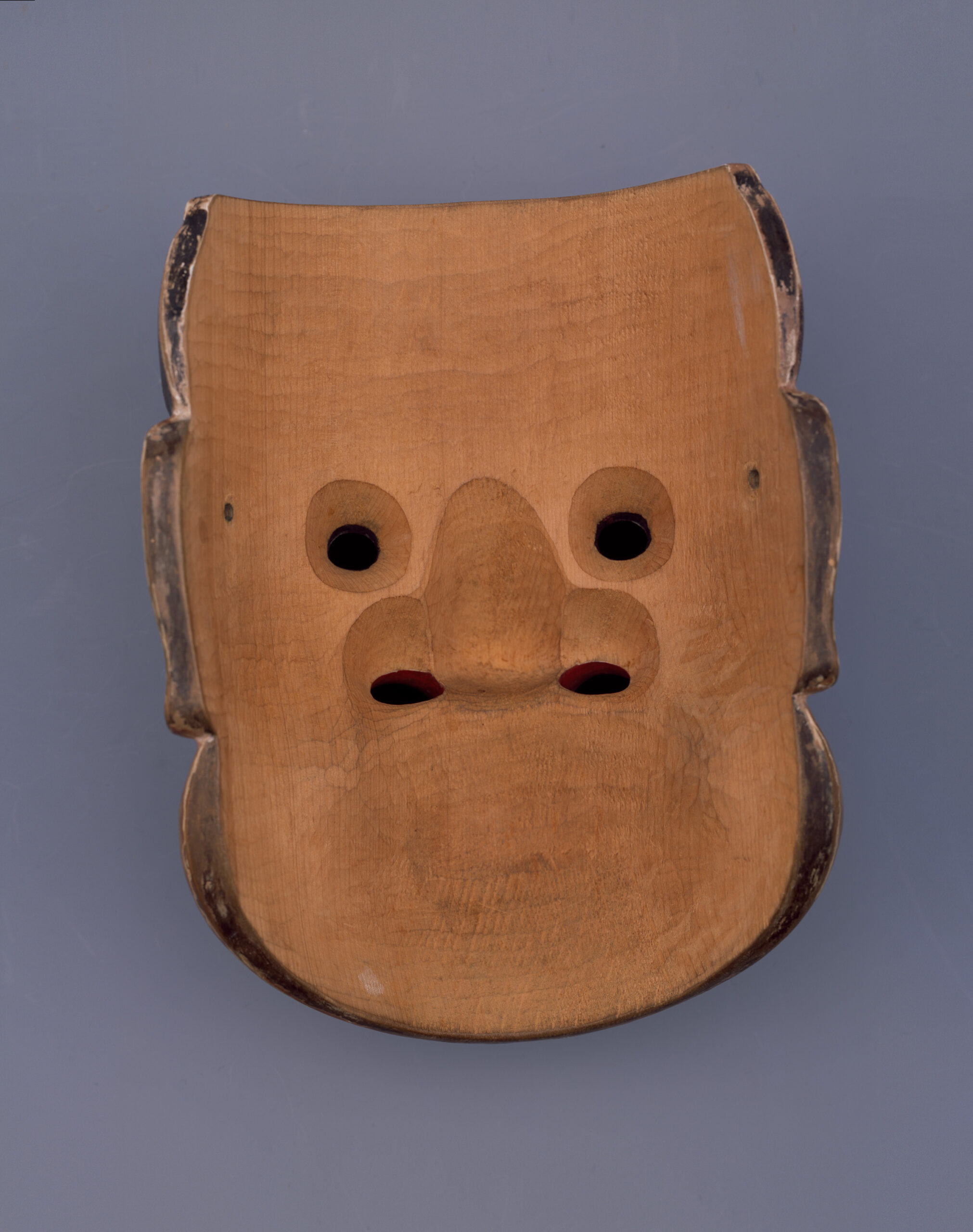
Wood, one mask
- Size (cm)
-
H 22.1 × W 16.9 × D 11.3
- Category
-
Sculpture
- Accession number
-
MY0#00372
Description
In the Edo period, the Tokugawa shogunate designated Noh as an official ceremonial performing art (shikigaku), and it became an indispensable part of annual events and rituals within warrior households. For this reason, each daimyo (region lord) family maintained a certain number of Noh-related implements which were necessary for performances, including chant books (utaibon), masks, instruments and costumes. The Takamatsu Matsudaira family practiced the Kita school of Noh, maintained a Noh stage within the castle, and retained their own actors and musicians.
The term beshimi derives from heshimu, meaning “to press the lips firmly together in a horizontal line.” The beshimi type of mask belongs to the Ungyō-style demon masks which are used for roles such as the Kurama Tengu.
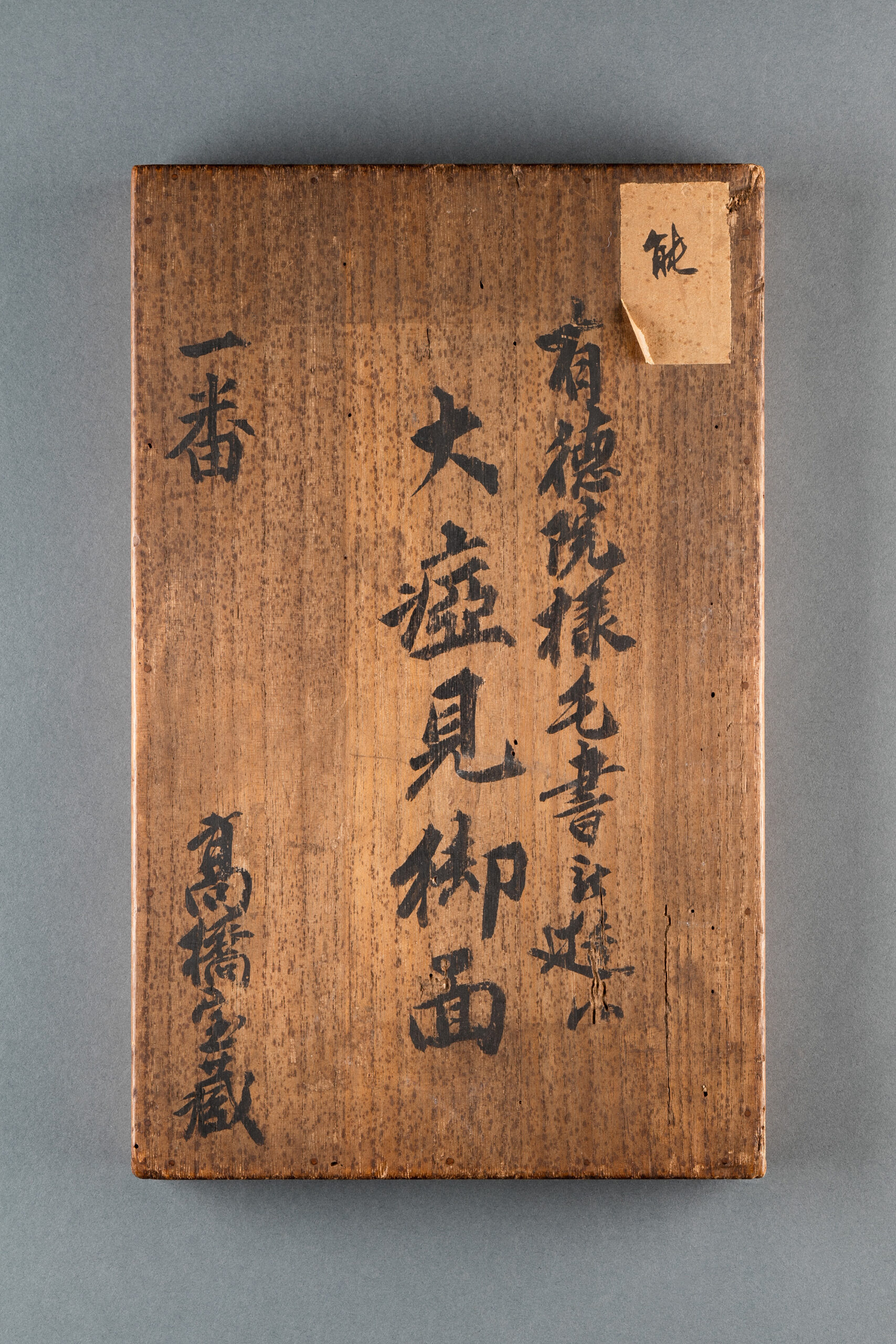
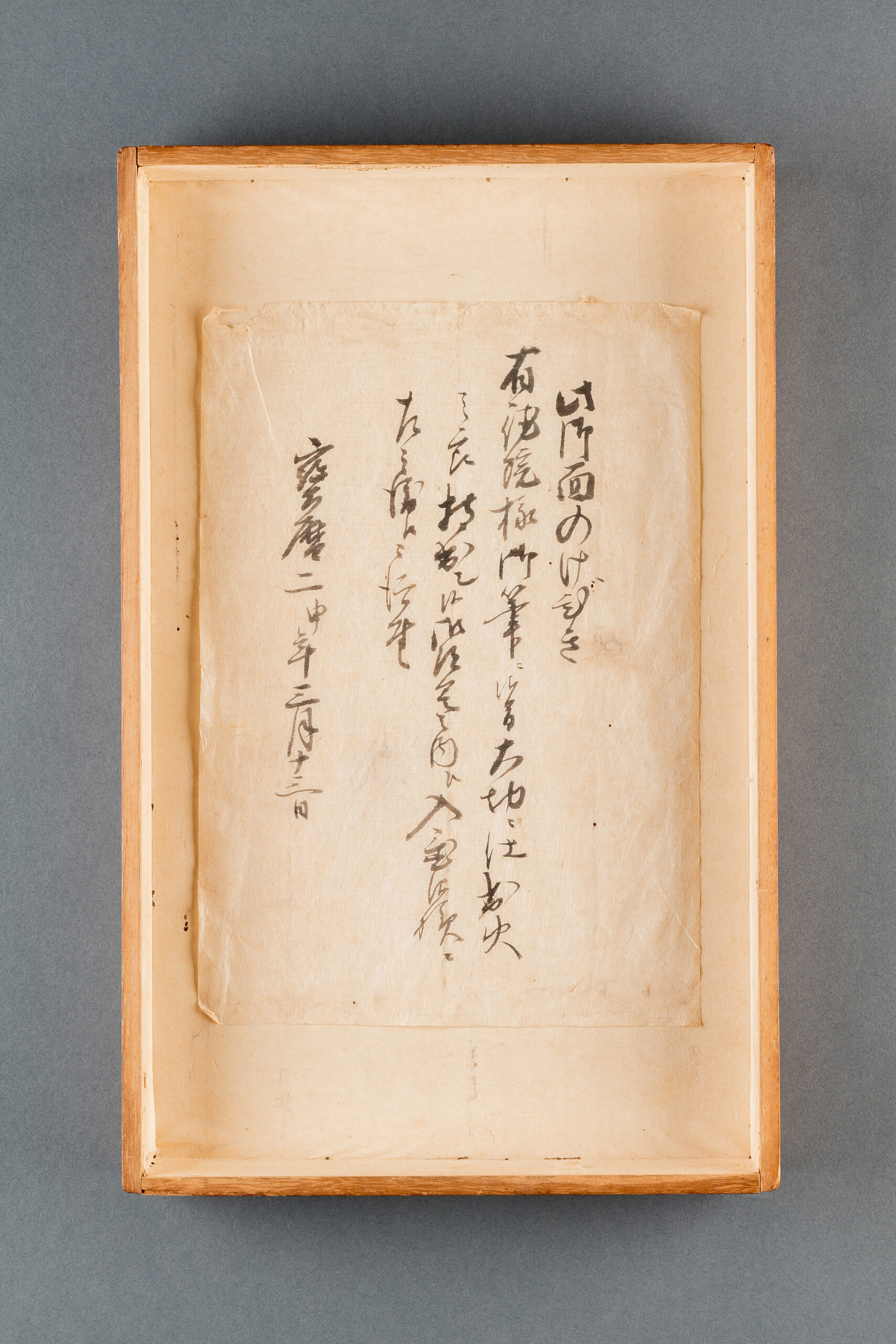
A document affixed to the inside of the lid of the storage box states that Tokugawa Yoshimune, the eighth shogun, personally painted the eyebrow and beard details (kegaki). Originally owned by the Tayasu Tokugawa family, one of the three branch houses (Gosankyō) founded by Yoshimune’s second son, Munetake, the mask was later acquired in the modern era by Matsudaira Yorinaga, the twelfth head of the former Takamatsu Matsudaira family and an avid supporter of the Hōshō school of Noh.