


Standing Shaka (Śākyamuni) at Birth
- Artist
-
‐
- Period
-
Asuka period, 7th century
- Quality and quantity
-
Gilt bronze, cast in one piece
- Size (cm)
-
H 10.1
- Category
-
Sculpture
- Classification
-
Designated by the prefecture
- Accession number
-
BK0-00001
Description
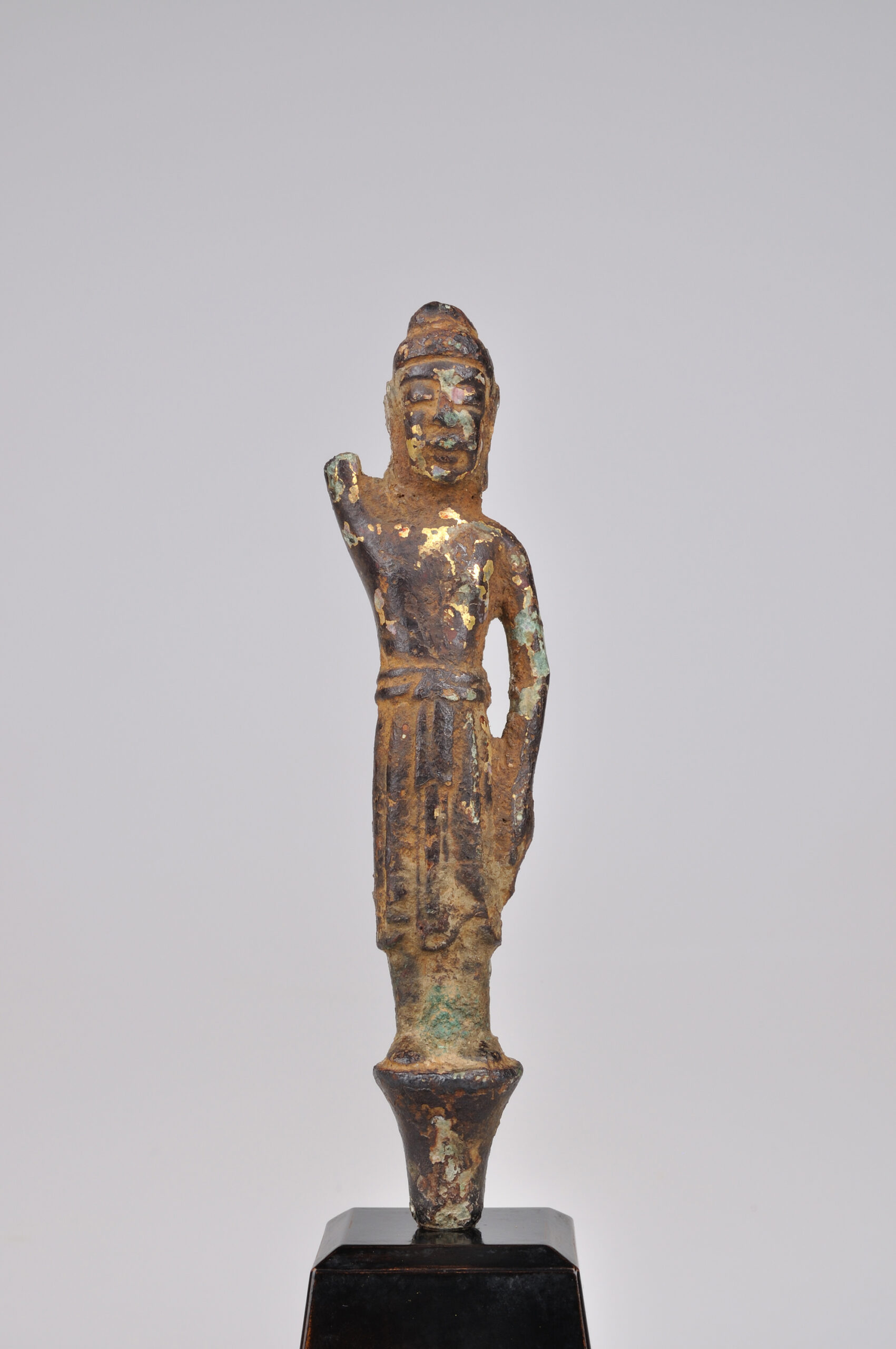
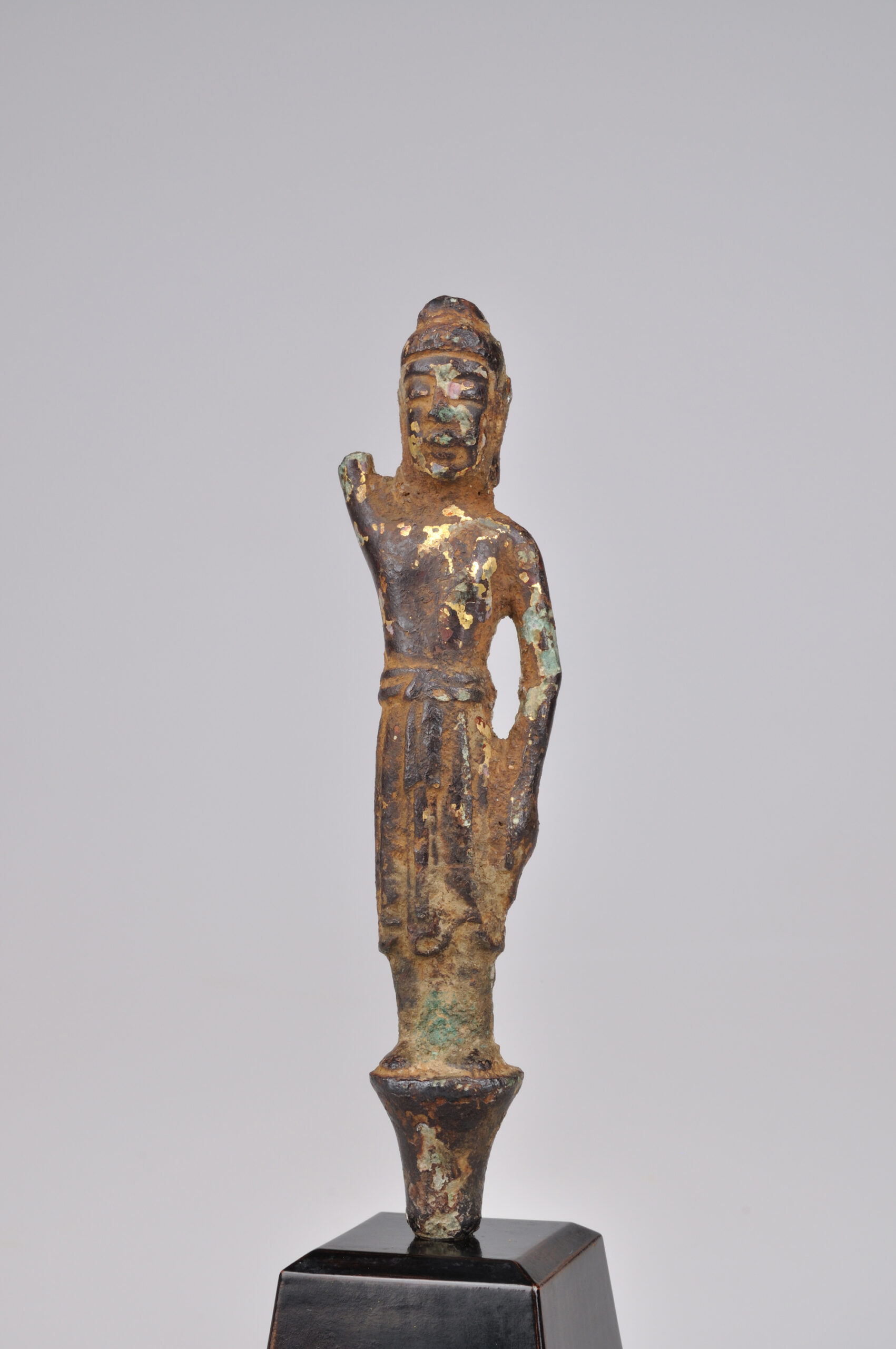
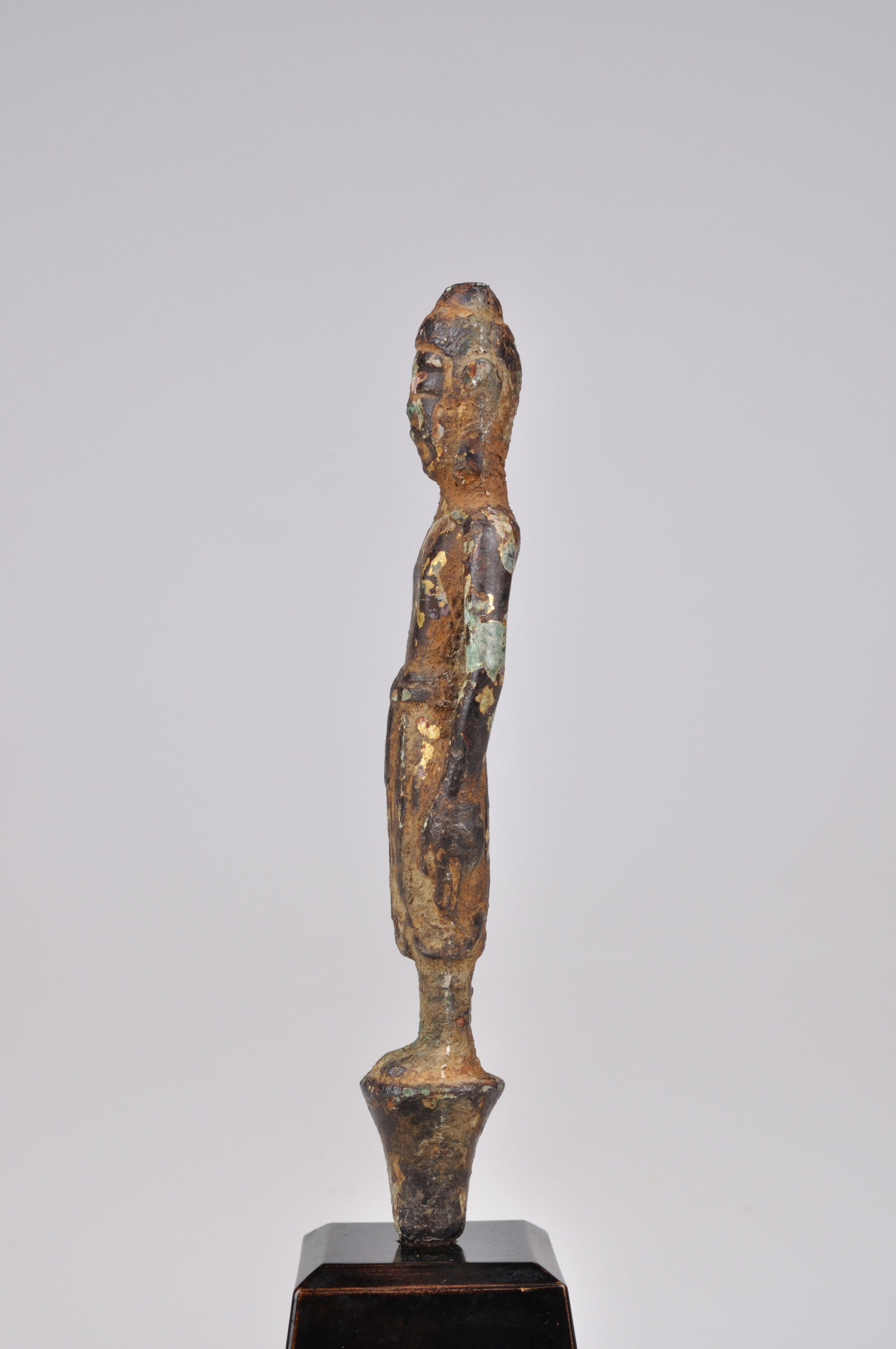
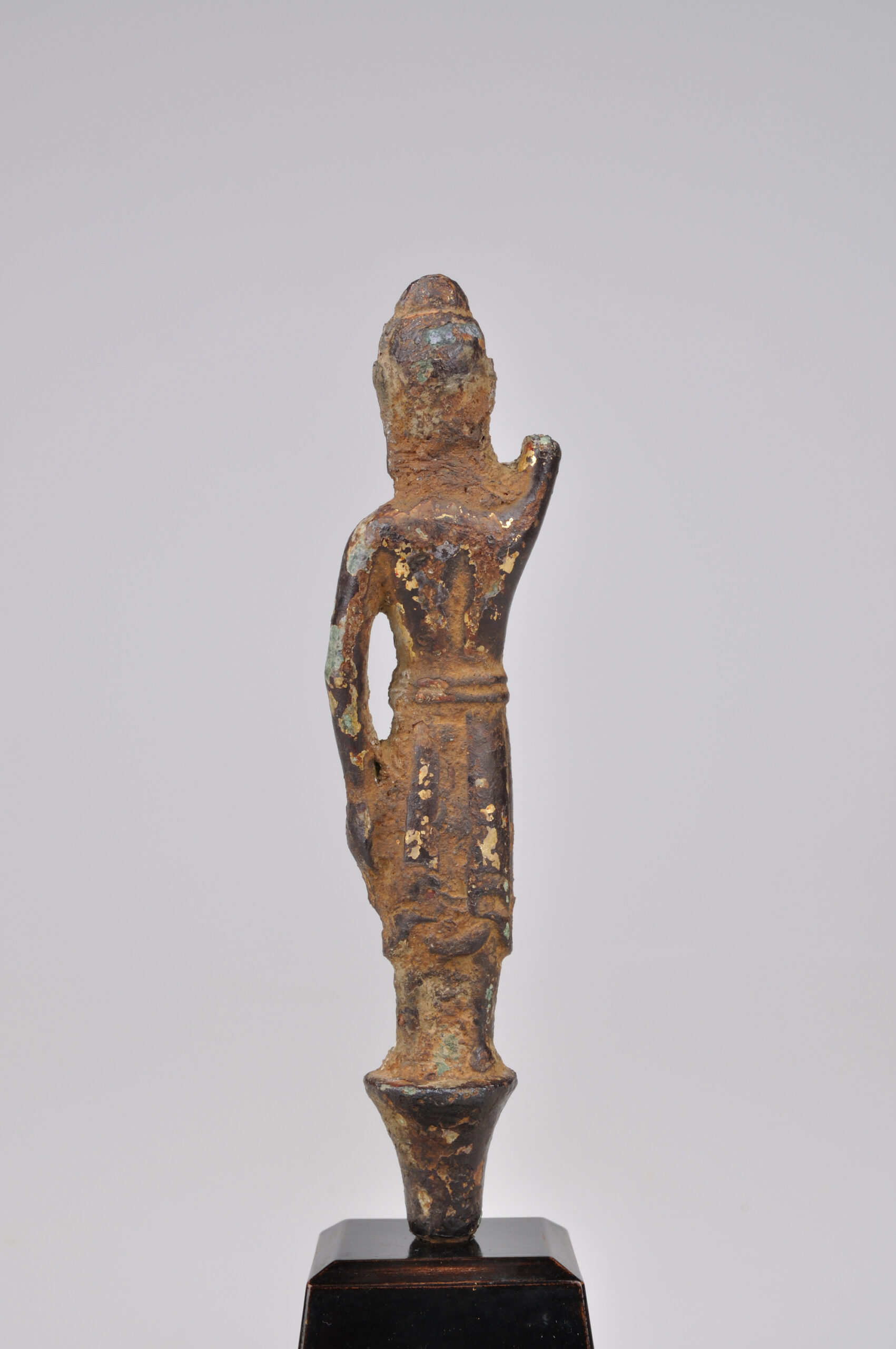
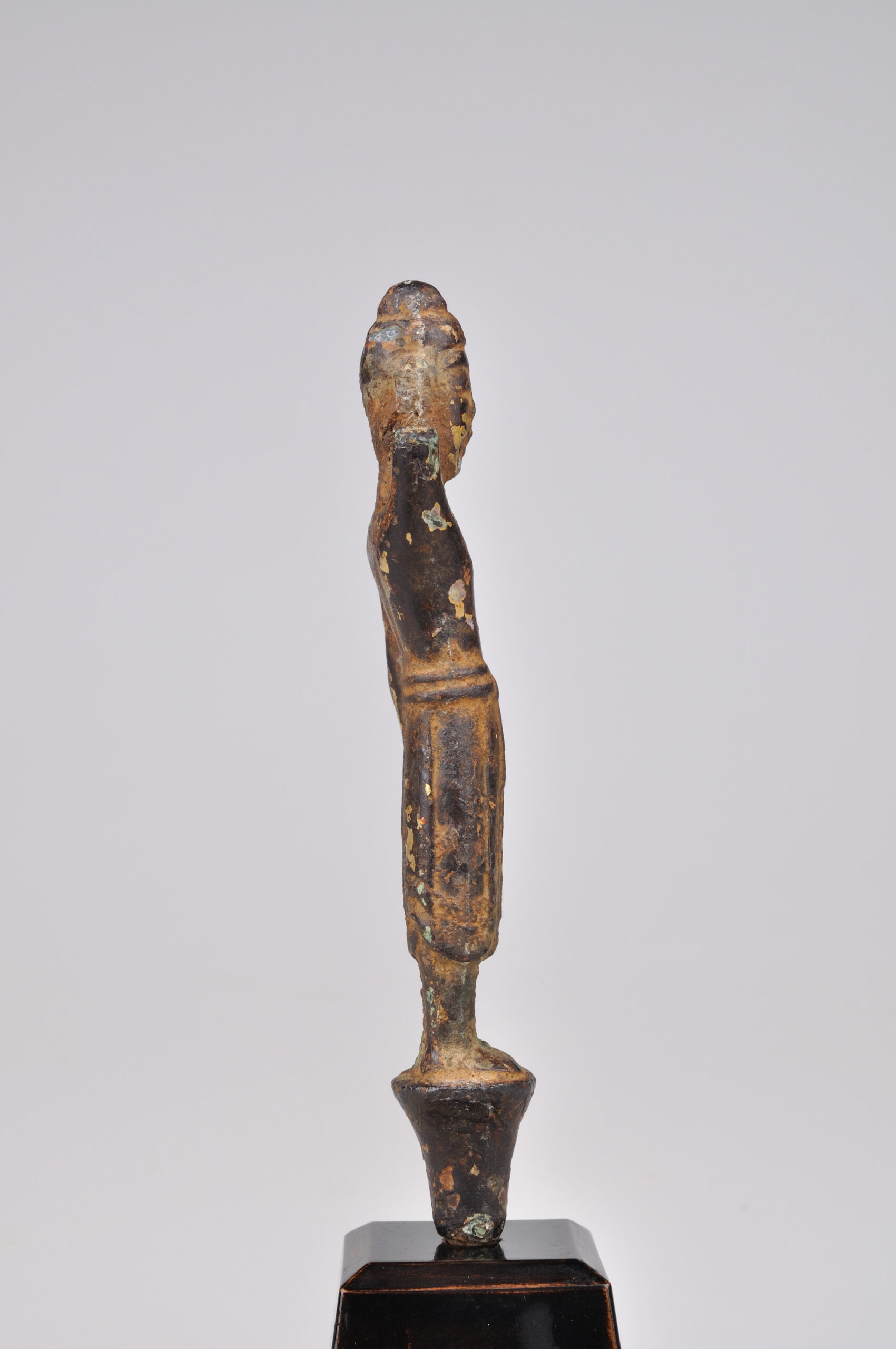
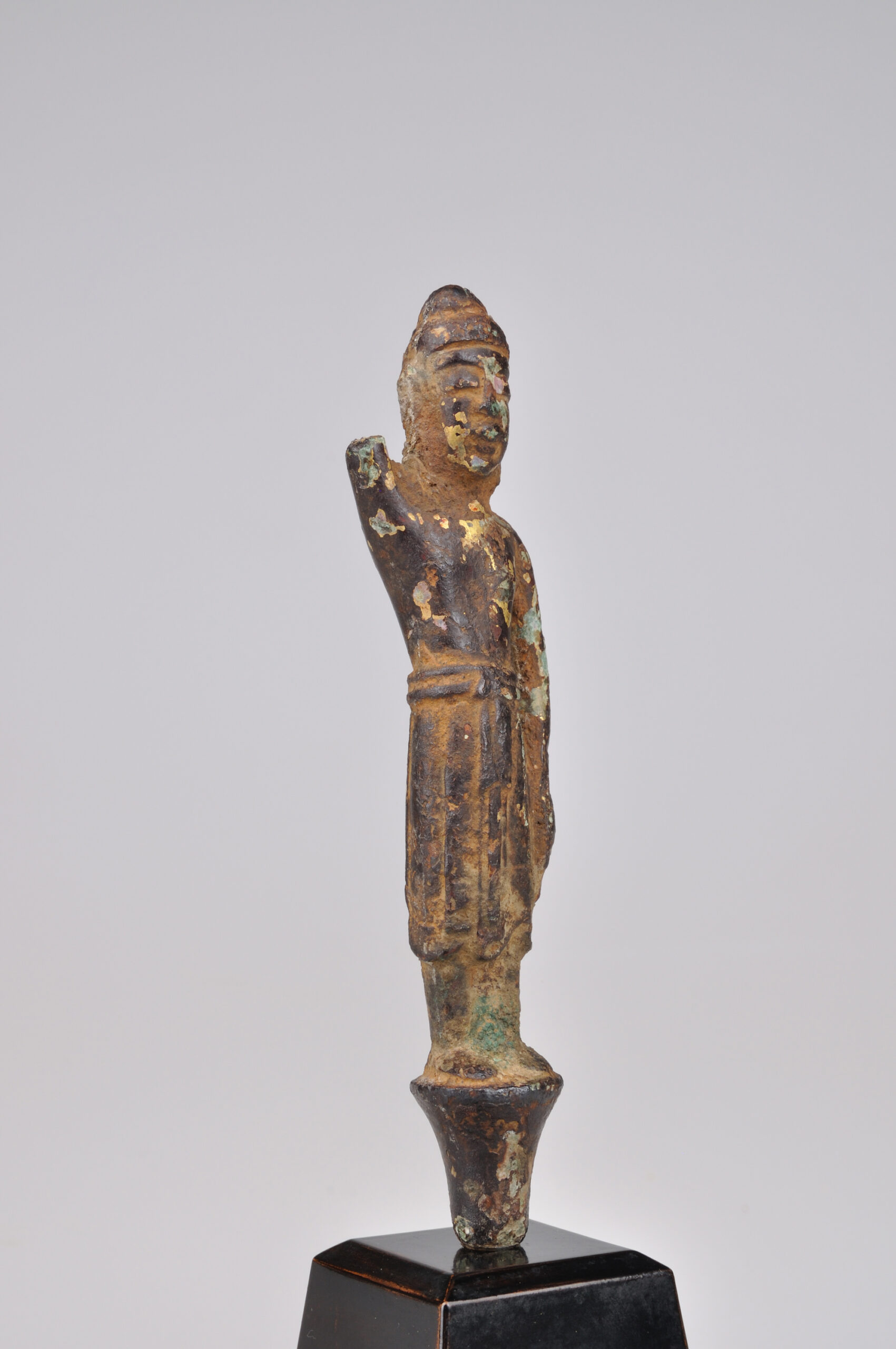
Shakyamuni (the Buddha), the historical founder of Buddhism, lived in ancient India approximately 2,500 years ago. The statue depicts the traditional story claiming that Buddha, immediately upon his birth, took seven steps, pointed his right hand toward the heavens and his left toward the earth, and proclaimed, “Above and below the heavens, I alone am the honored one.” The figure is bare-chested and wears a skirt-like kun garment around the waist. The right arm is raised (though now missing), while the left arm hangs down alongside the body. Although the exact dates of Shakyamuni’s birth and death remain uncertain, he is said to have been born on April 8. On this day each year, Buddhist temples throughout Japan hold the Flower Festival (Kanbutsu-e), a ceremony celebrating his birth in which halls are adorned with flowers and a small statue of the Buddha at birth is placed in a basin and bathed with sweet tea. This figure was cast in a single piece using the lost-wax process. The lotus base beneath the feet and the tenon used to secure the figure to its pedestal were created as an integral part of the casting. While verdigris corrosion now spreads across much of the surface, traces of gilding remain around the chest and waist, indicating that the entire figure originally shone with a golden luster. The celebration of Shakyamuni’s birth has been observed in Japan since the Asuka period, and many gilt-bronze Buddha images from that era survive. This piece is said to have been unearthed in 1964 at the site of the Sakata Temple in Nishikasuga-chō, Takamatsu City (the remains of a temple founded in the Asuka period). Today, it is an important artifact illustrating the history of Buddhist culture in Kagawa.