


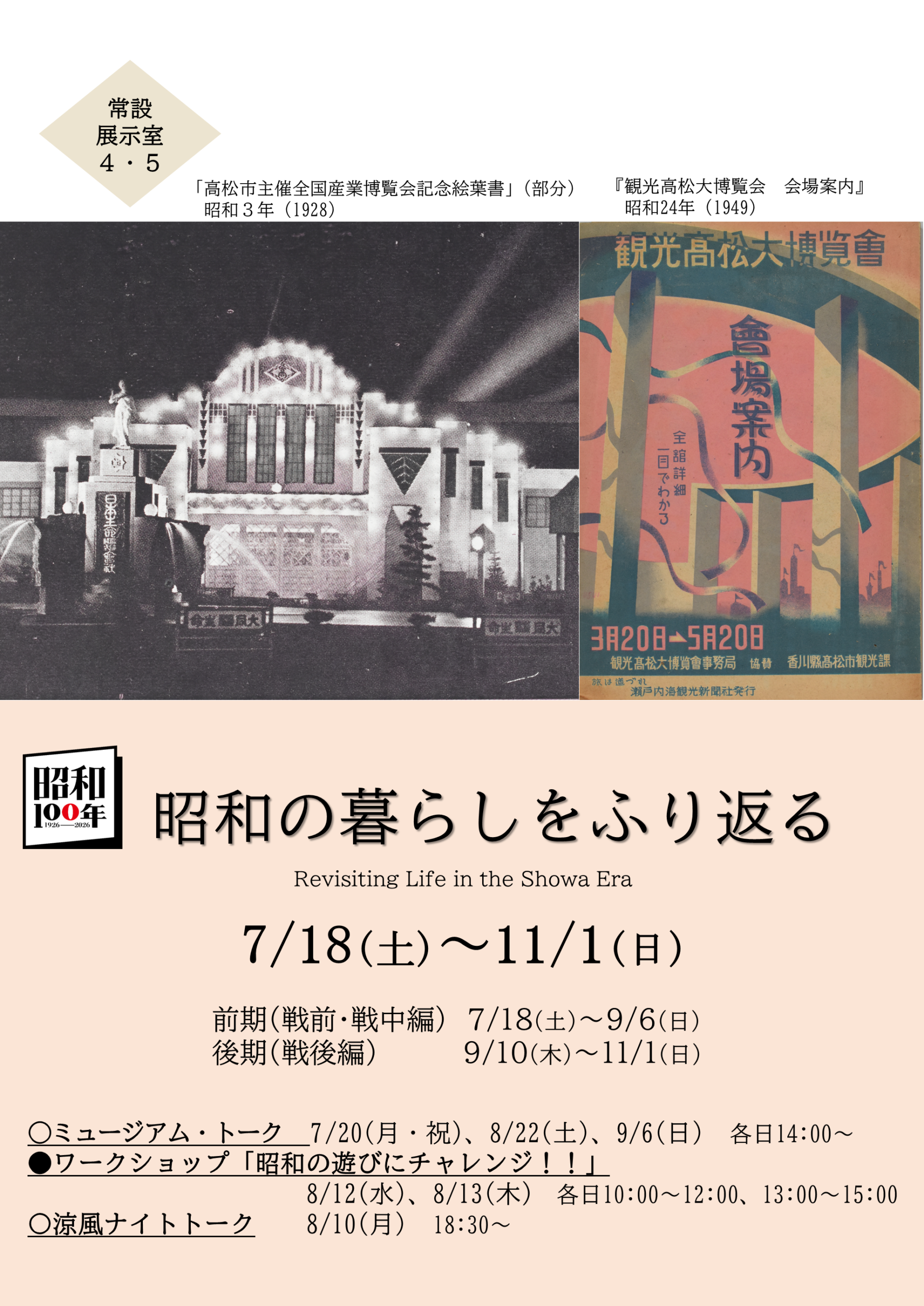
Looking back on life in the Showa era
What kind of era was the Showa period?
In the first period (July 18 – September 6), we highlighted social conditions—such as economic depressions and war—and their impact on daily life, showcasing what life was like in Kagawa Prefecture during the Showa era through materials related to everyday living.
In the second period (the post-war section), we look back at life in Kagawa Prefecture during the Showa era, focusing on how the spread of electricity transformed people's lives, again using materials related to daily living.
Dates
Hours of operation
9:00 AM – 5:00 PM (Last admission 30 minutes before closing)
*9:00 AM – 8:00 PM on days with extended evening hours
*Extended evening hours: September 19 (Sat) – 23 (Wed/Holiday)
Days closed
September 14 (Mon), September 24 (Thu), September 28 (Mon), October 5 (Mon),October 13 (Tue), October 16 (Fri) – October 21 (Wed), October 26 (Mon)
Venue
Permanent Exhibition Rooms 4 & 5
Admission fee
General: 500 yen / Groups (20 or more): 400 yen
*Admission is included with the special exhibition ticket during the special exhibition period.
*Free admission for: high school students and younger; Kagawa Prefecture residents aged 65 or older; and holders of a disability certificate, a certificate for specific medical expenses (designated intractable disease), or a certificate for medical expenses for specified pediatric chronic diseases (plus one accompanying caregiver). Please present proof of eligibility.
Selected Exhibits
Toshiba Electric Rice Cooker ER-5 (1956); museum collection.
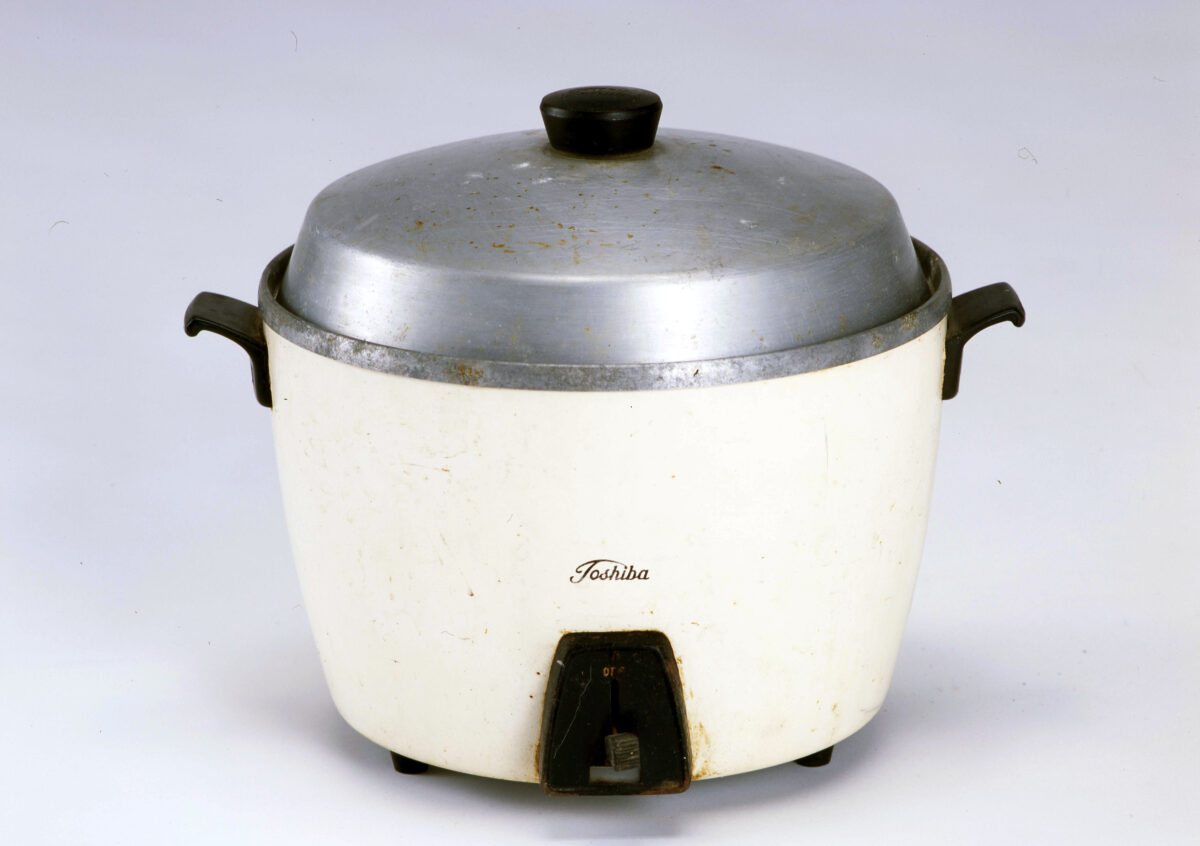
Anyone can cook delicious rice with it.
The ER-4, Japan’s first automatic electric rice cooker, was released by Tokyo Shibaura Electric in 1955; featuring a mechanism that automatically turned off the power once the rice was cooked, it reportedly became a massive hit. The ER-5 model shown here is a sister product released the following year and was used in a household in Ouchi-cho, Okawa-gun (present-day Higashikagawa City). Notably, the penetration rate of electric rice cookers in the Shikoku region rose from 10% in 1958 to 46% by 1962, indicating rapid adoption during that decade.