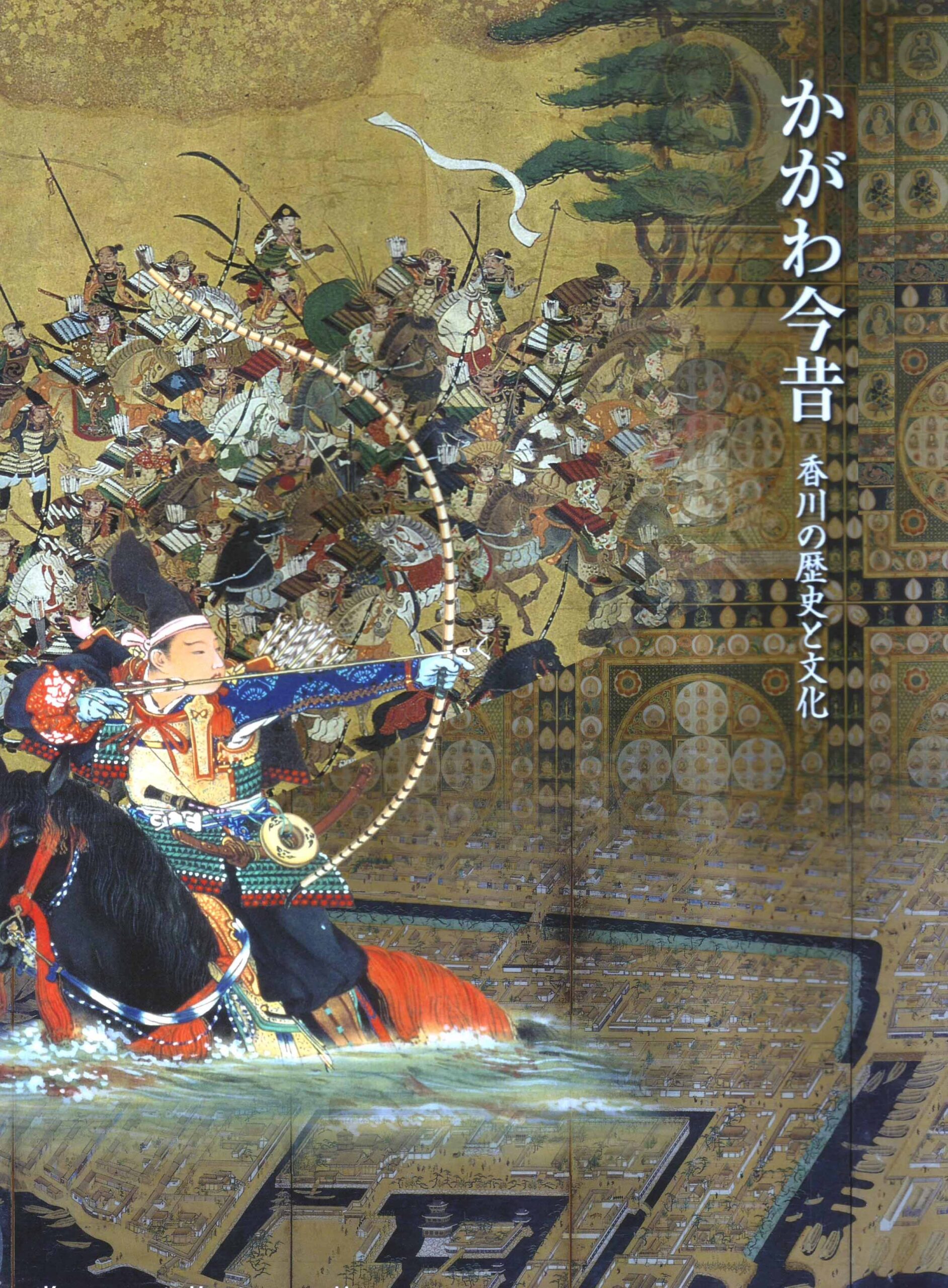
The Past and Present of Kagawa: The History and Culture of Kagawa
Dates
Hours of operation
Please refer to the Hours of operation/Days closed section for more information.
Days closed
Please refer to the Hours of operation/Days closed section for more information.
Venue
Admission fee
Please refer to the Admission fee section for more information.
Time Travel: Sanuki in the Last 20,000 Years
Large exhibits and videos enable people to learn about the development of Kagawa over the last 20,000 years, from prehistory to the modern era. Realistic three-dimensional exhibits faithfully depicting buildings and landscapes allow you to experience the unique atmosphere of each era.
Prehistory: Dawn of Sanuki
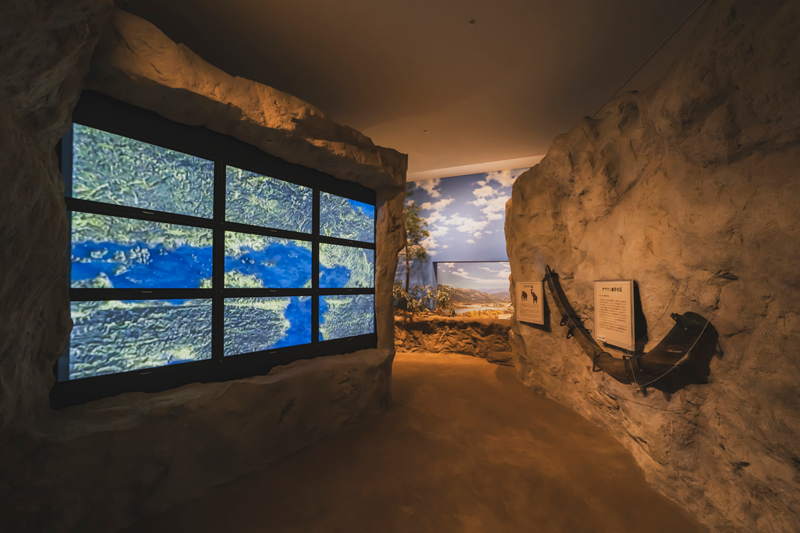
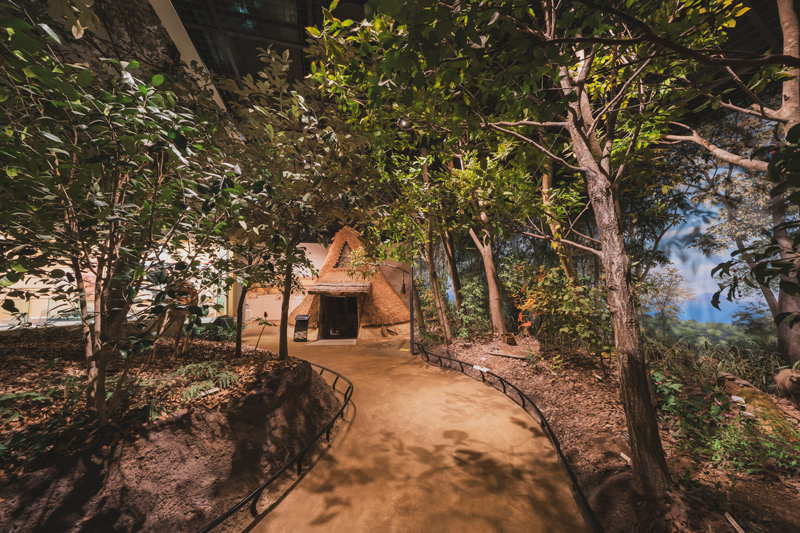
Visitors can explore the development of the region from the Old Stone Age 20,000 years ago to the Yayoi period 1,700 years ago. The Jomon forest is a reproductions of the plants and trees that grew at that time based on the plant fossils unearthed in ruins in Zentsuji, Kagawa. One of the largest fossilized Naumann’s elephant tusks ever discovered in Japan, which was caught in a fishnet, pottery and stone implements unearthed in Kagawa are also displayed here.
Highlights
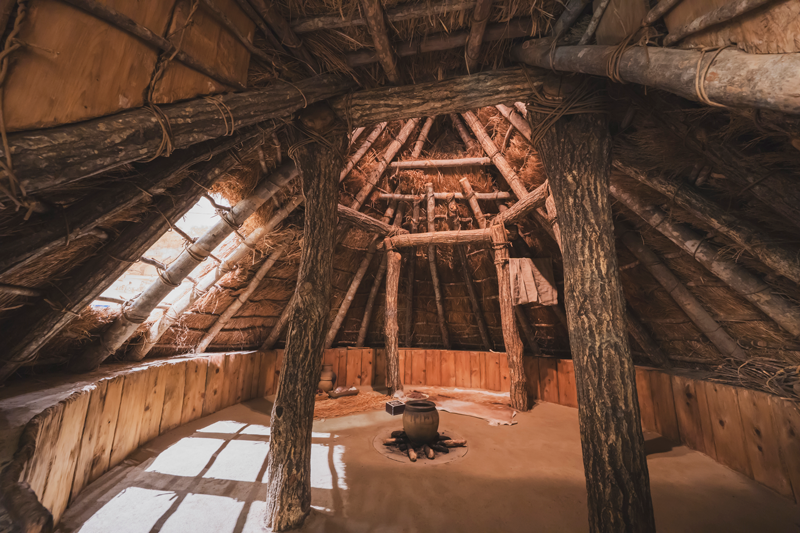
Pit house (reproduction)
Visitors can freely enter the reproduction pit house. Everyday items and food the Yayoi people used and ate are displayed inside. The latter includes rice, meat, fish, beans and acorns, which suggests that they actively sourced food from both land and sea.
Bell-shaped bronze vessel (reproduction)
A bell-shaped bronze vessel used in the Yayoi period is suspended from a tree by the pit house. Bell-shaped bronze vessels are thought to have been used during festivals and rituals. Why not ring the bell to listen to a sound heard by the Yayoi people?
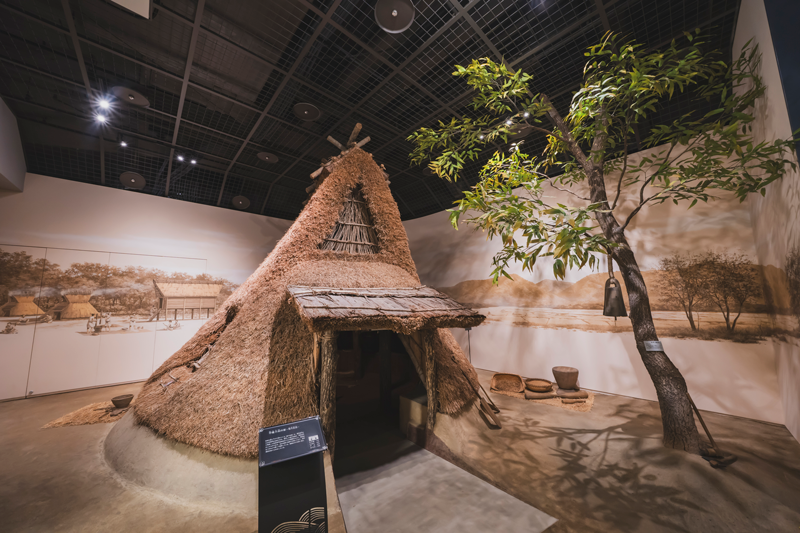
Ancient times: Sanuki in ancient times
This section explores the Kofun period, the Nara period when the Sanuki Province was established, and the Heian period. Well-known figures of the Heian period include Kobo Daishi (Kukai), a monk and the founder of the Shingon School of Buddhism, and Chisho Daishi (Enchin), a monk and the head of the Tendai Order. Pottery and bronze mirrors discovered in burial mounds in Kagawa and items related to Kukai are displayed here.
Highlights
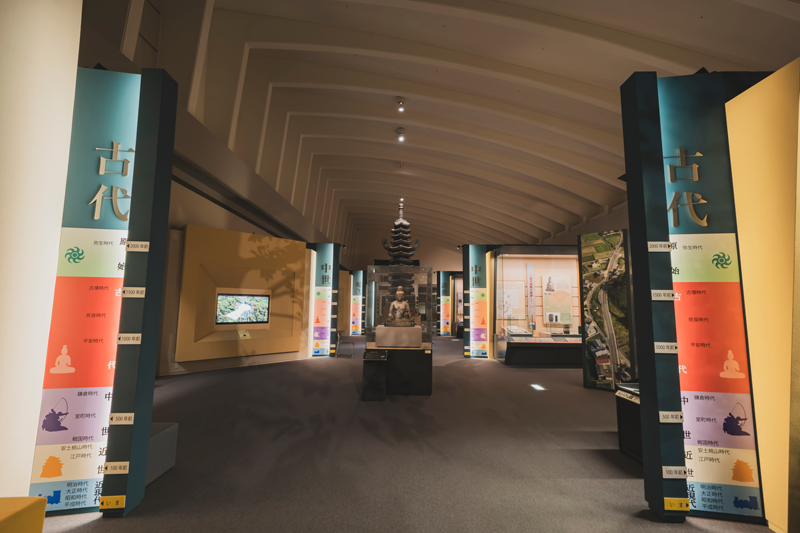
Assembled clay coffin discovered in the Imaoka burial mound
This earthen coffin was discovered in the Imaoka burial mound in Takamatsu. It is one of the oldest clay coffins ever found in an ancient tomb. Its unique features include fine decorations on the lid and holes used to secure the lid to the base.
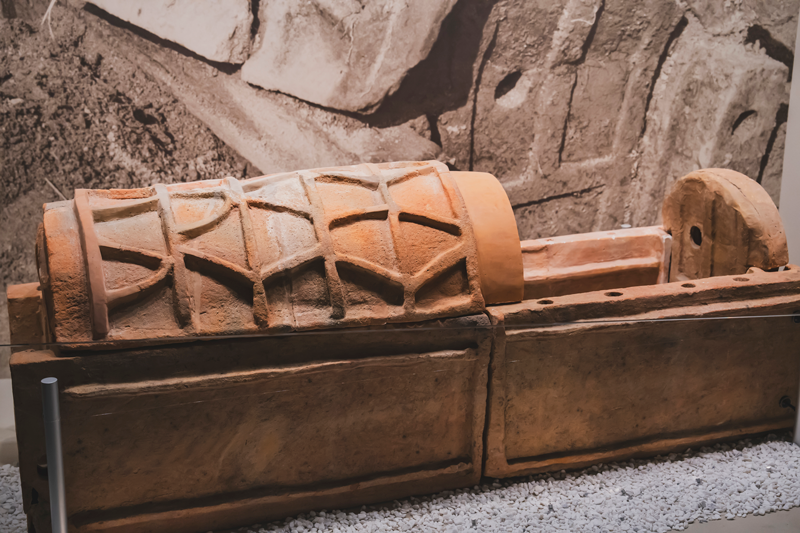
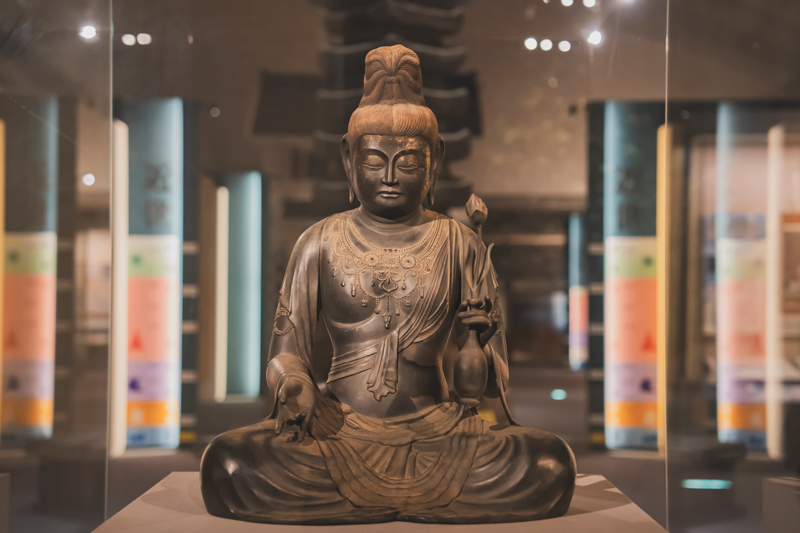
Dry Lacquer Seated Statue of Kannon (reproduction)
A method of applying strips of cloth using lacquer onto a sculptural base made of clay, which is later removed once the surface has hardened, is known as the hollow dry lacquer technique. This statue is a reproduction of an important cultural property kept at the Ganko-ji Temple in Sanuki, Kagawa. It was created using the same technique that was used to make the statue of Ashura at the Kofuku-ji Temple in Nara. People in Kagawa knew how to make dry lacquer statues because the technique had been brought from the nearby capital through the Seto Inland Sea. The artists figured out the techniques that were used at the time to create the reproduction.
Medieval Japan: The rise of the samurai and Sanuki
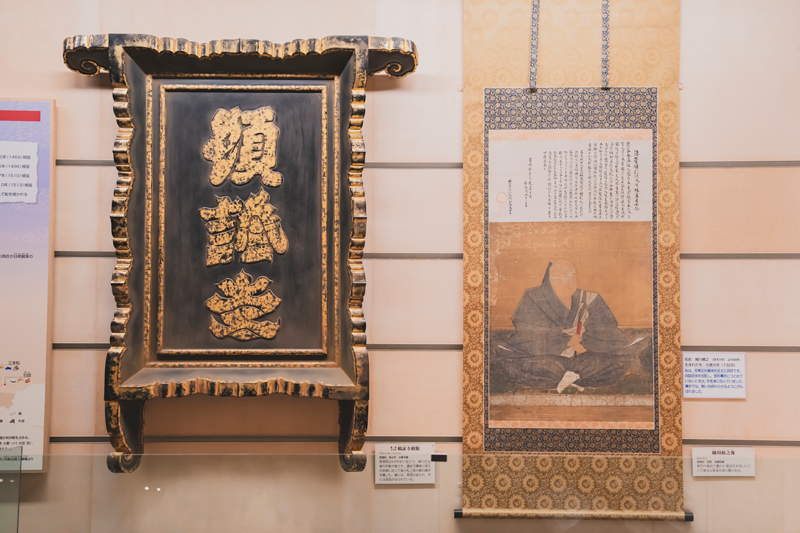
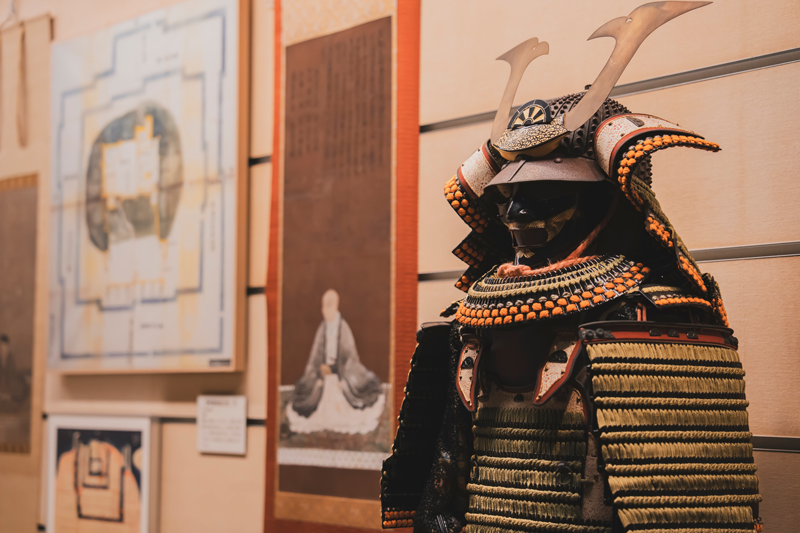
This section explores the late Heian period when the Genpei War that led to the rise of the samurai class occurred, the Kamakura period, the Muromachi period and the Sengoku period. There are about 400 mountain castle ruins in Kagawa, which suggests that the warlords here fought hard over land. Materials introducing a culture shaped by samurai and civil war offer a fascinating glimpse into medieval Kagawa.
Highlights
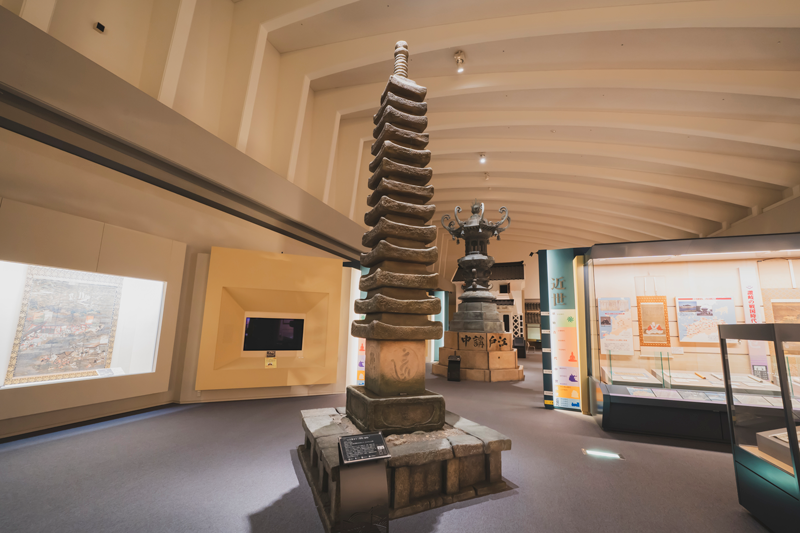
The East Tower of Shiromine-ji Temple, a thirteen-story stone pagoda (reproduction)
A reproduction of the east tower, one of a pair of stone pagodas built on the ground of Shiromine-ji Temple in Sakaide, Kagawa is on display here. Together with the west tower, the original stone towers are an important cultural property. Shiromine-ji Temple, the 81st sacred spot on the Shikoku 88 Temple Pilgrimage, is the burial place of Emperor Sutoku, and it has been a place of worship since ancient times. The east tower, comprised of granite, was built in 1278, in the later years of the Kamakura period. Scaffolding was erected around the original east tower to create a mold to create the faithful reproduction, which is 5.9 meters tall.
Early modern times: Society and life in the Edo period
This section explores Hideyoshi Toyotomi’s unification of Japan and the turmoil at the end of the Edo period. The Edo period was a time of lasting peace. People came to the region to do the pilgrimage to Shikoku and the shrines of Konpira. The production of the Sanuki sanpaku (the three whites of Sanuki; salt, cotton and sugar) also increased during this period. Visitors can learn about the unique religious culture and the industries that developed around this time which made use of the natural features of Kagawa.
Gennai Hiraga, known for demonstrating a friction-induced electrostatic generator for the first time in Japan, was born in Sanuki, Kagawa. He served Yoritaka Matsudaira, the fifth leader of the Takamatsu domain. He also helped the community flourish by studying plants and resources.
Highlights
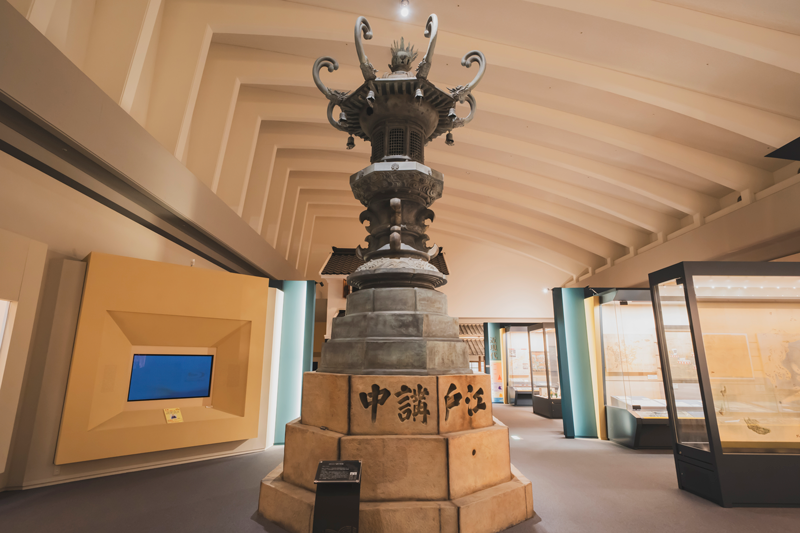
Edo Koju Lantern (reproduction)
A reproduction of the Edo Koju Lantern at the port of Shinbori in Marugame, Kagawa is on display here. During the Edo period, many ships carrying people wanting to visit the shrines of Konpira arrived at Marugame, and they contributed to the construction of a pier at the port. The group of people who contributed to the construction of the pier was called the Koju. The names of 1,385 contributors were engraved on the base of the lantern. The lantern is also called the Tasuke Lantern in honor of Tasuke Shiobara, who donated 80 ryo. The faithful reproduction was created based on a full-scale model.
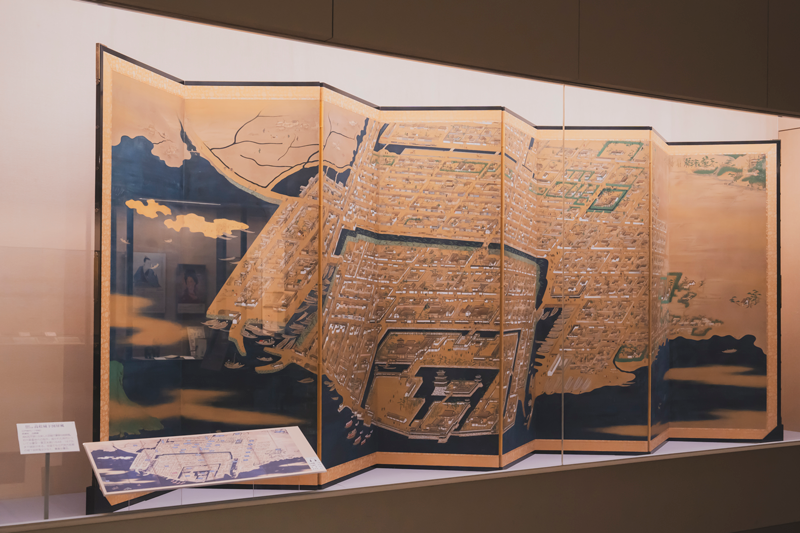
A folding screen depicting the castle town of Takamatsu (reproduction)
The folding screen depicts the castle and town of Takamatsu in the Edo period. It shows us that the sea castle stood directly on the coast, so that the moat was filled with seawater, and it shows the ways that people lived. It is a rare piece of art that is historically, artistically and culturally significant. A large format printing process in which colors were separated and printed over each other was used to create this accurate reproduction. In the final stages, color correction was done by hand. To make the original, pigments were applied to gold leaf. For the reproduction, gold ink was used for a realistic effect.
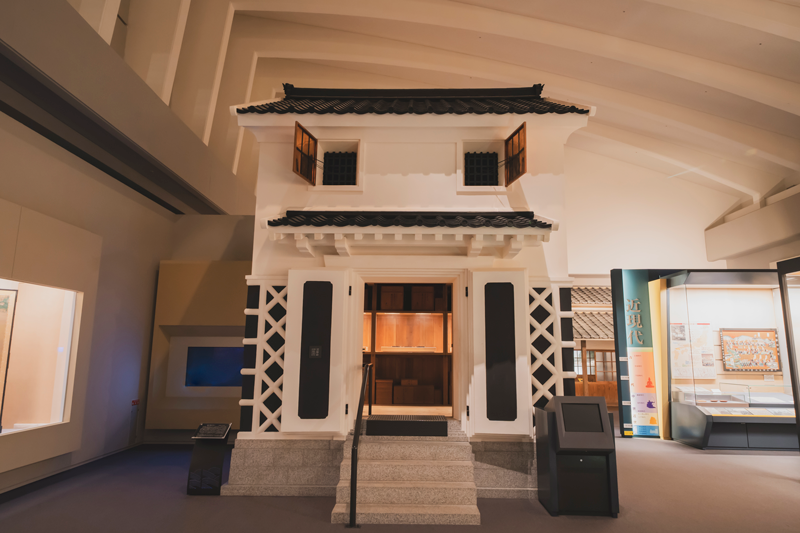
Village headman’s warehouse (reproduction)
This is a reproduction of a warehouse that belonged to a village headman that lived in western Kagawa. You can watch the video to see how furniture and tableware were stored inside it. The warehouse was built with exquisite craftsmanship using genuine building materials, including roof tiles treated to give them a worn appearance and namako walls made of plaster.
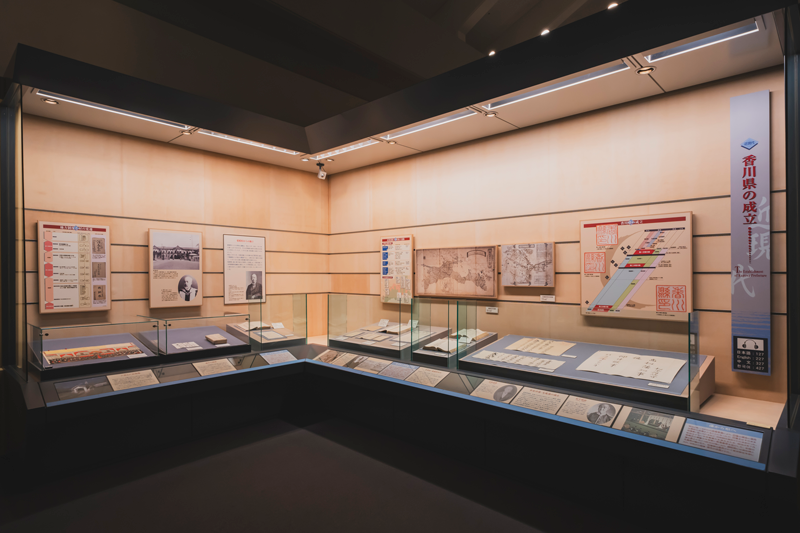
Modern times: The establishment and development of Kagawa
This section explores civilization and enlightenment, and how a new culture developed afterward. Materials telling the story of the establishment of Kagawa in the Meiji period and documents from the war period are displayed here. The reproductions of a classroom that was featured in the novel Twenty-four Eyes by Sakae Tsuboi and a large post-war public housing housing are worth seeing.
Highlights
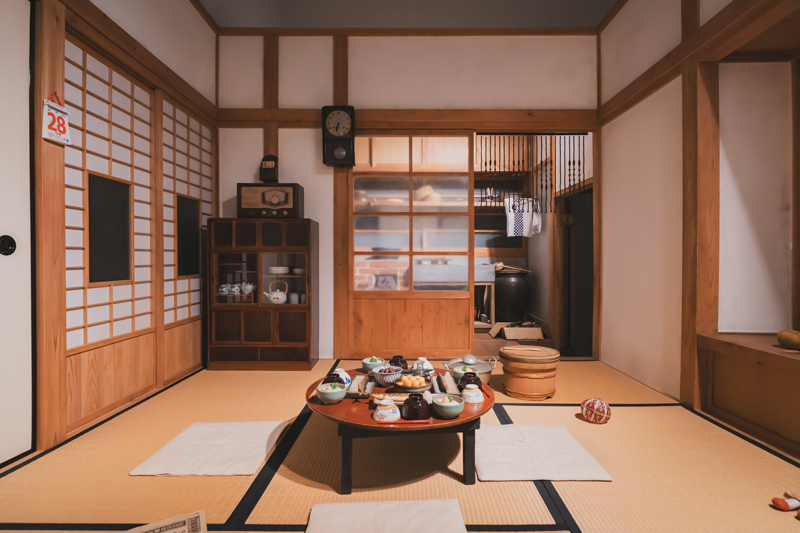
Postwar housing (reproduction)
The living room and kitchen within the public housing built in Kagawa in 1954 were faithfully reproduced based on an original blueprint. The kitchen had a wooden floor instead of an earthen floor because the house was located in a town. Charcoal-fueled cookstoves were used at the time. People, however, soon gained access to water and gas supplies, and electric appliances.
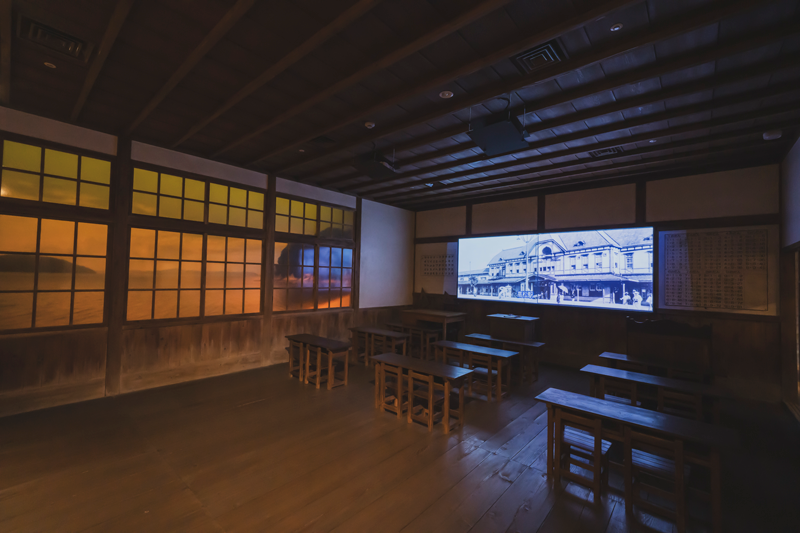
Early Showa period classroom (reproduction)
This is a reproduction of a classroom in the Shodoshima Tanoura Branch School, a school featured in the novel Twenty-four Eyes by Sakae Tsuboi, who was born in what is now Shodoshima-cho. The building was originally constructed in 1902 as Tanoura Ordinary Primary School, and it was in use until the school was closed in 1971. It is one of the few school buildings built in the Meiji period that still exists in Kagawa. You can watch the video that is played in the classroom to learn about the modern history of Kagawa.
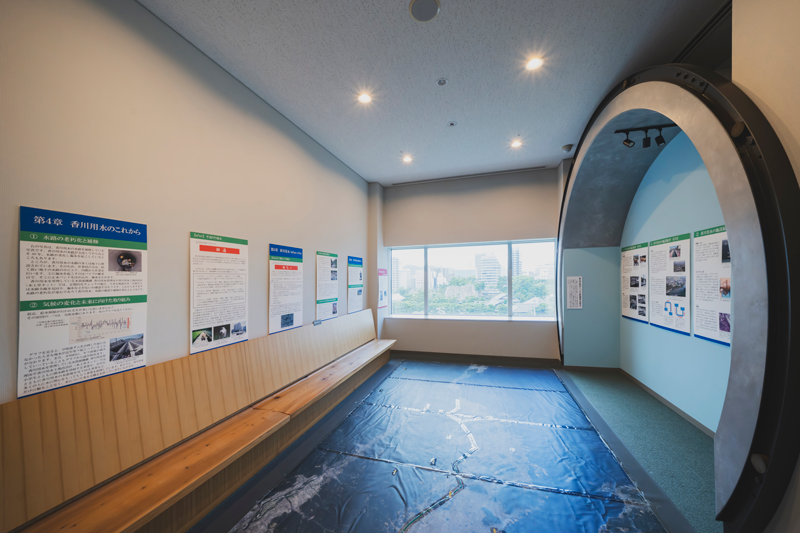
Kagawa Canal corner
You can learn about the history of the use of water in Kagawa. The annual rainfall in the area is low, and the Kagawa Canal project was set up to supply water from the Yoshino River to the interior of Kagawa. A full-scale model of the Asan Canal Tunnel and aerial photos of the canal are on display here. You can also enjoy the view across Tamamo Park from the room.