


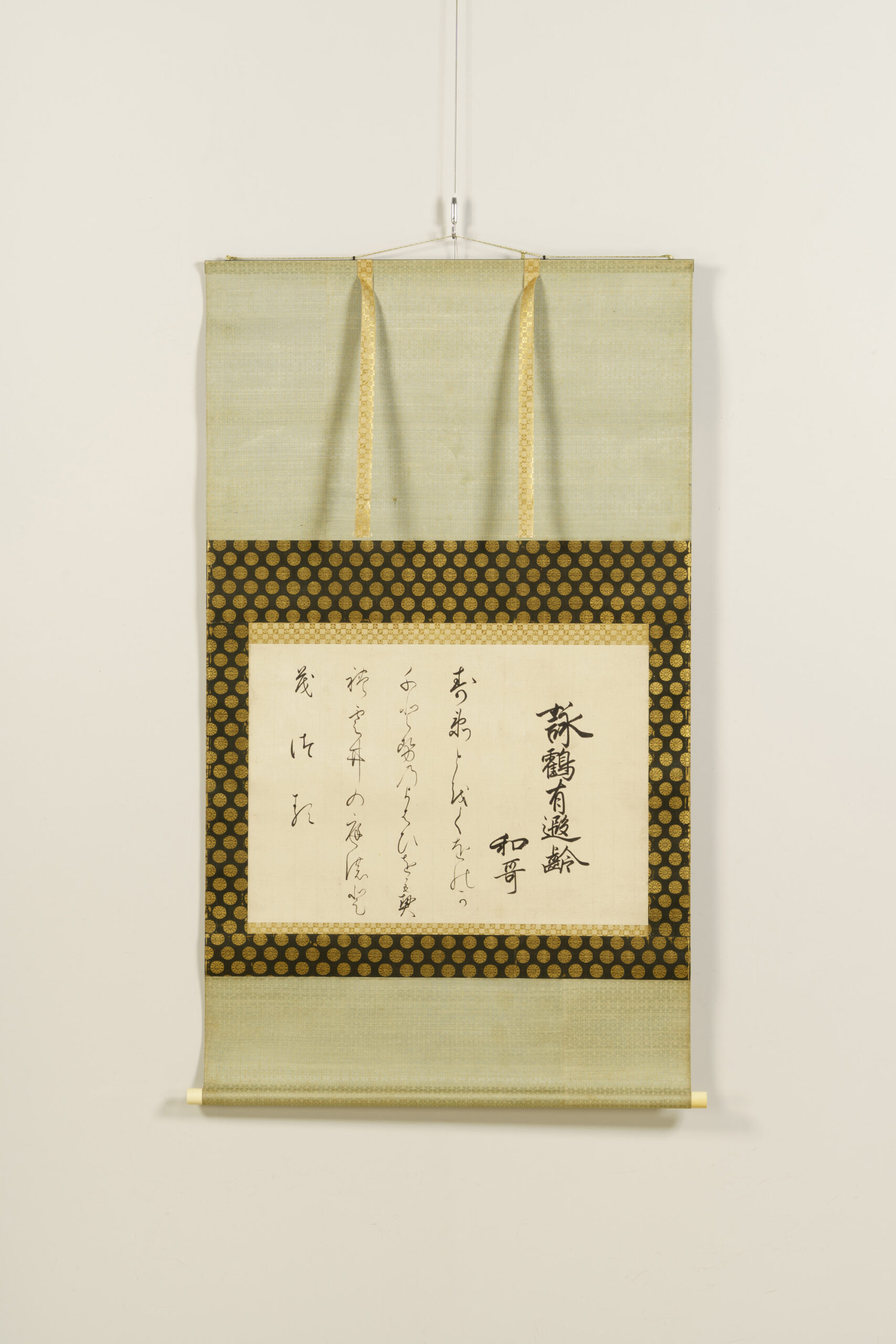
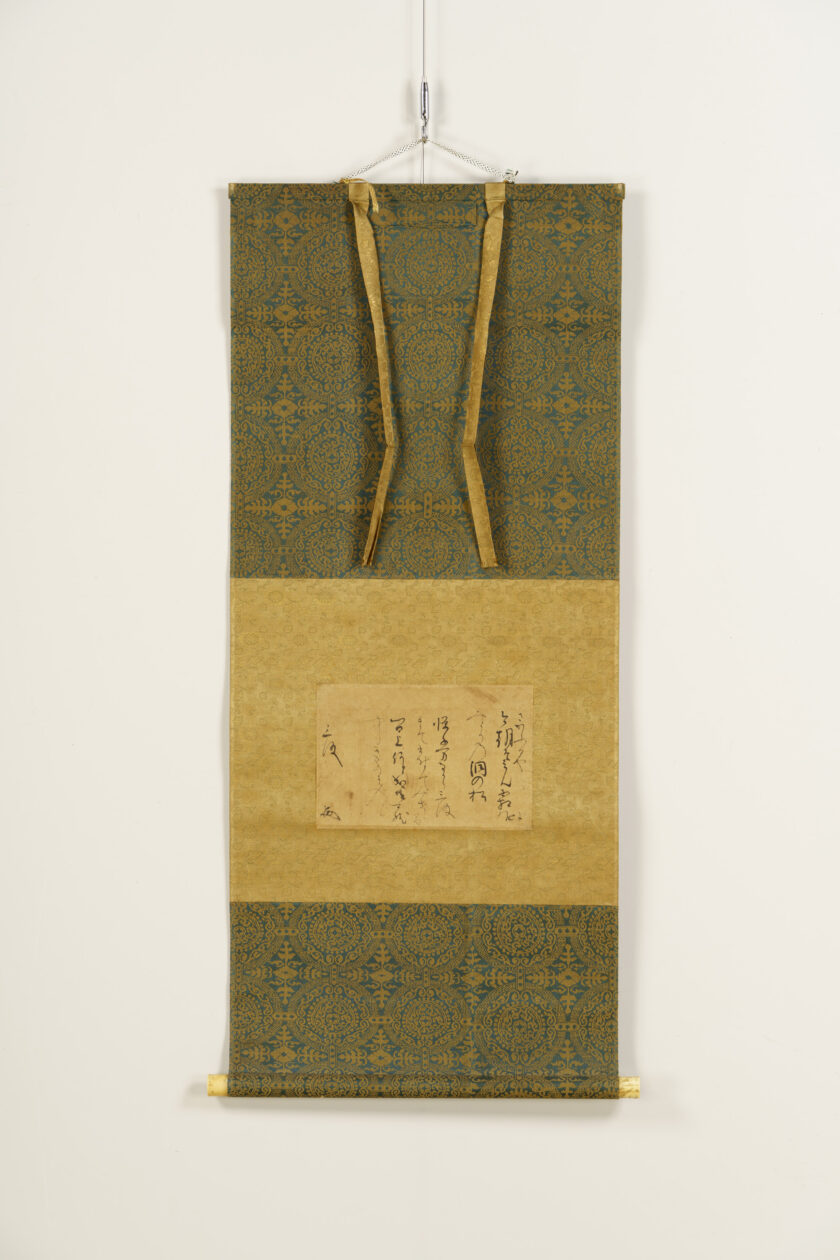
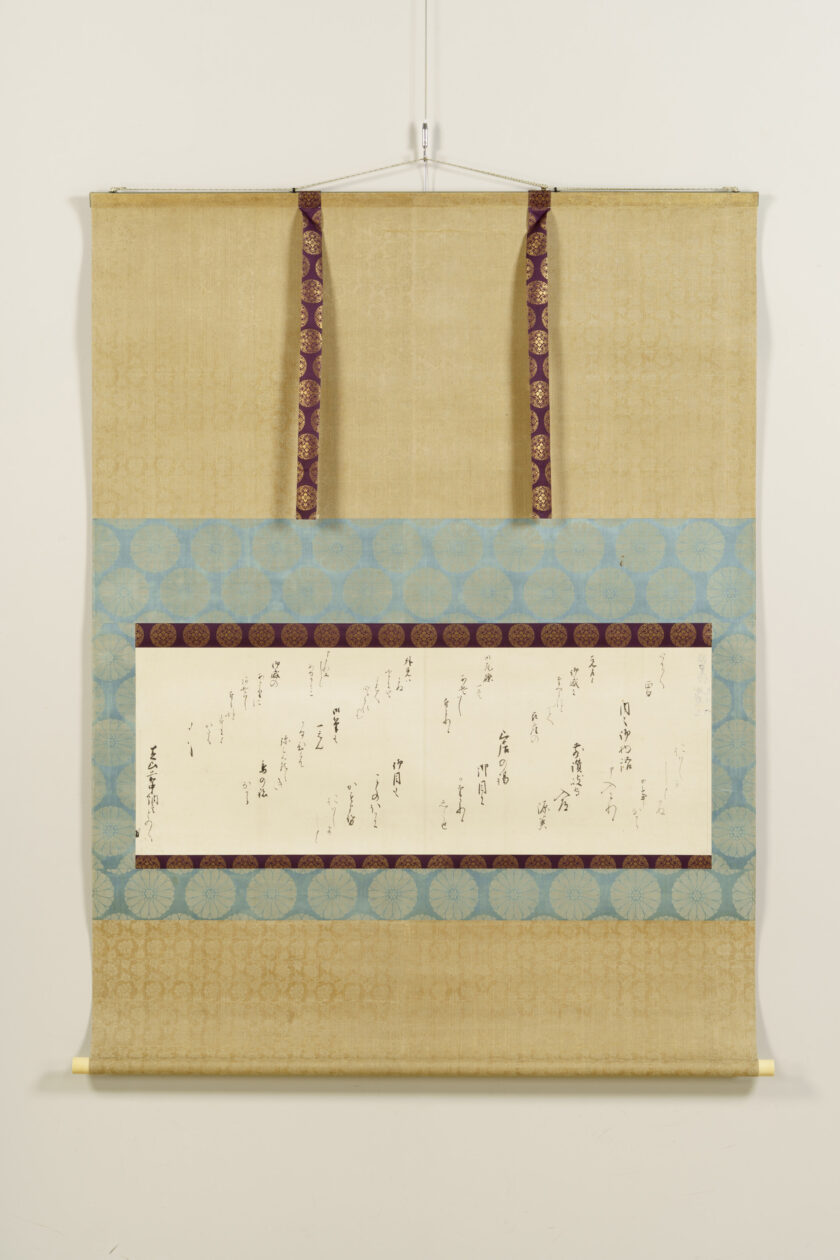
Emperor Higashiyama Imperial Handwriting (Shinkan) — Waka on Kaishi Paper
- Artist
-
Emperor Higashiyama (1675-1709)
- Period
-
Edo period, 1709 (Hōei 6)
- Quality and quantity
-
Ink on paper, one hanging scroll
- Size (cm)
-
H 44.7 × W 64.0
- Category
-
Calligraphy
- Classification
-
Important art object
- Accession number
-
MY0#00014
Description
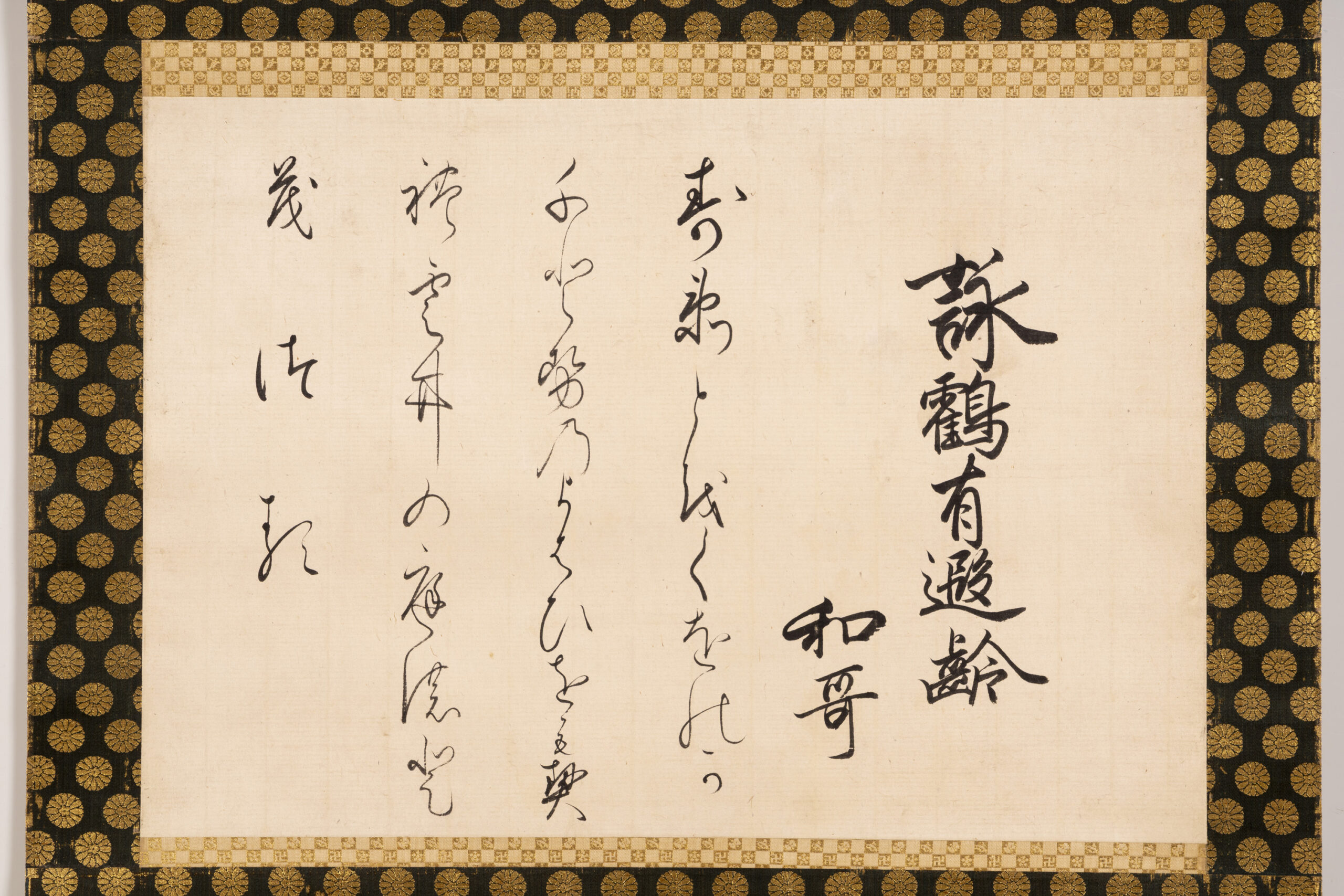
Shinkan refers to calligraphy personally written by an emperor. This work features a waka composed by Emperor Higashiyama at the Gokaihajime (the New Year’s imperial poetry gathering) held on March 7, 1709 (Hōei 6), transcribed on kaishi, a sheet of paper carried in the front fold of a garment, and handed down within the Takamatsu Matsudaira family.
The poem was composed on the theme of tsuru ni karei ari (Cranes are said to enjoy long life) and expresses a wish for longevity. Emperor Higashiyama was the fourth son of Emperor Reigen. Upon his accession in 1687 (Jōkyō 4), the Daijōe, a rite in which a newly enthroned emperor offers newly harvested grain to the deities and partakes of it himself, was conducted for the first time in 230 years. During the reign of Emperor Higashiyama, closer cooperation between the imperial court and the shogunate brought the efforts to revive imperial court ceremonies that had lapsed during the medieval era (late 12th–16th centuries) that had been initiated under Emperor Go-Mizunoo to fruition.