


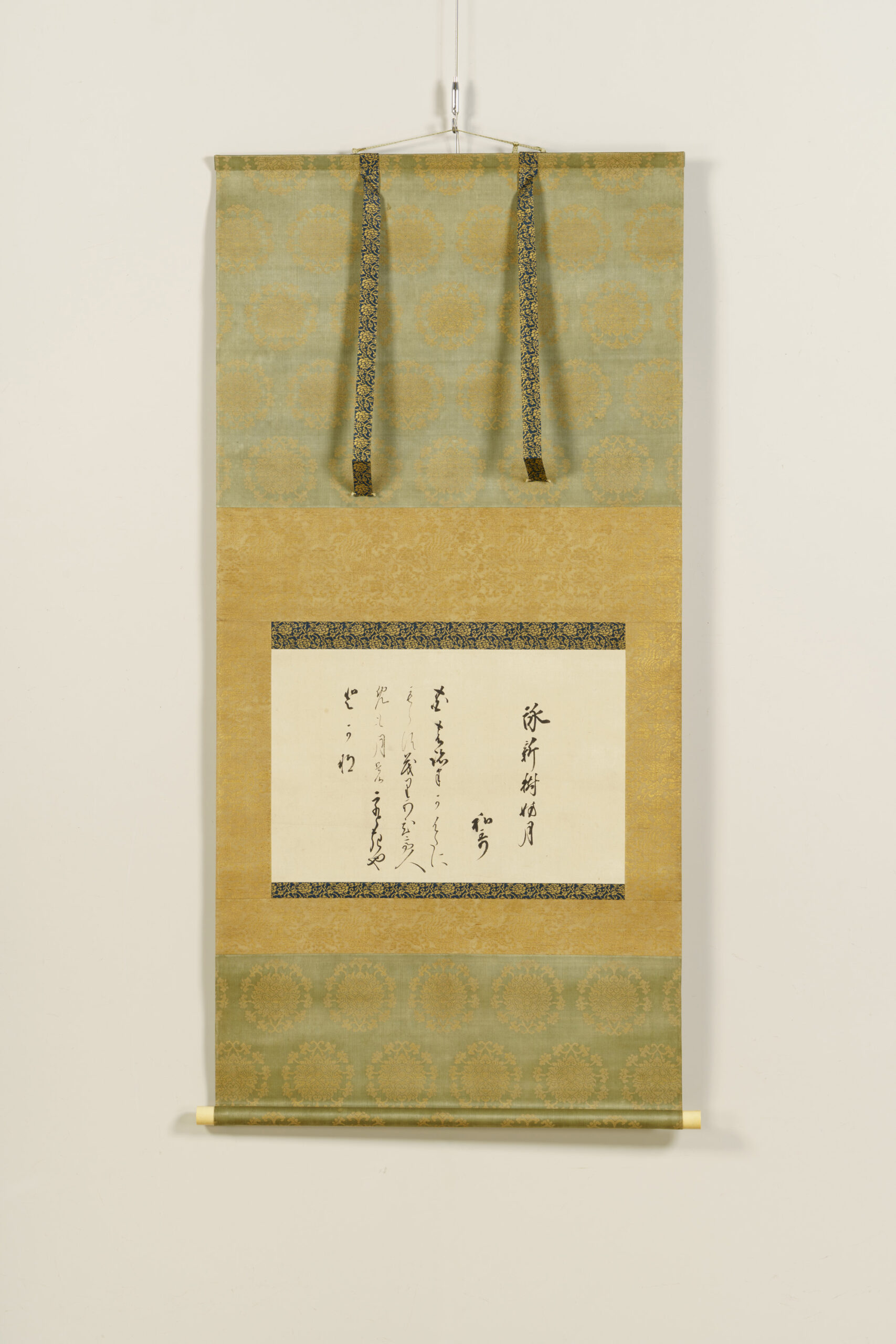
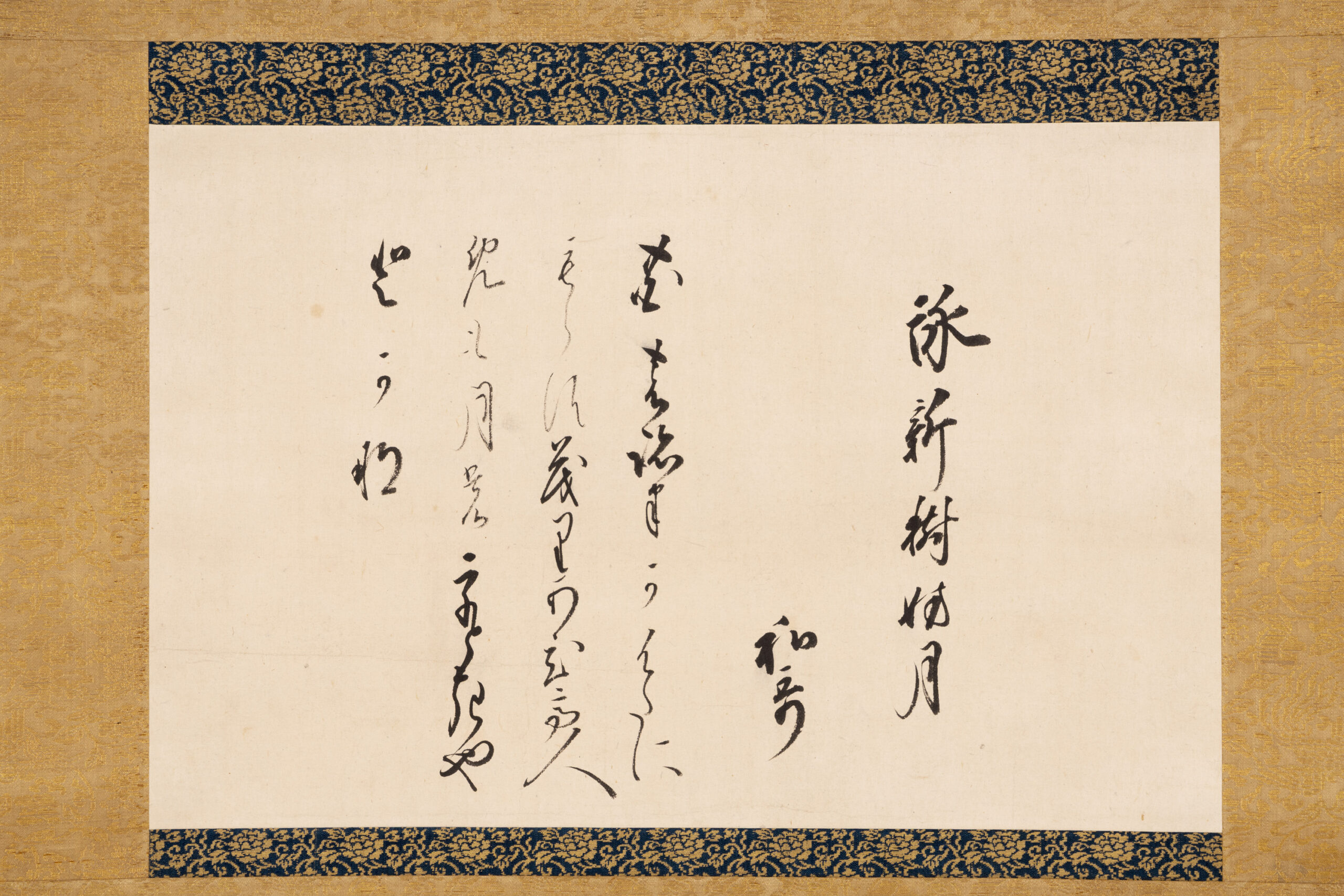
Emperor Go-Sai Imperial Handwriting (Shinkan) — Waka on Kaishi Paper(Theme: Shinju Tsuki O Samatageru)
- Artist
-
Emperor Go-Sai (1637–1685)
- Period
-
Edo period, 17th century
- Quality and quantity
-
Ink on paper, one hanging scroll
- Size (cm)
-
H 30.5 × W 46.3
- Category
-
Calligraphy
- Classification
-
Important art object
- Accession number
-
MY0#00012
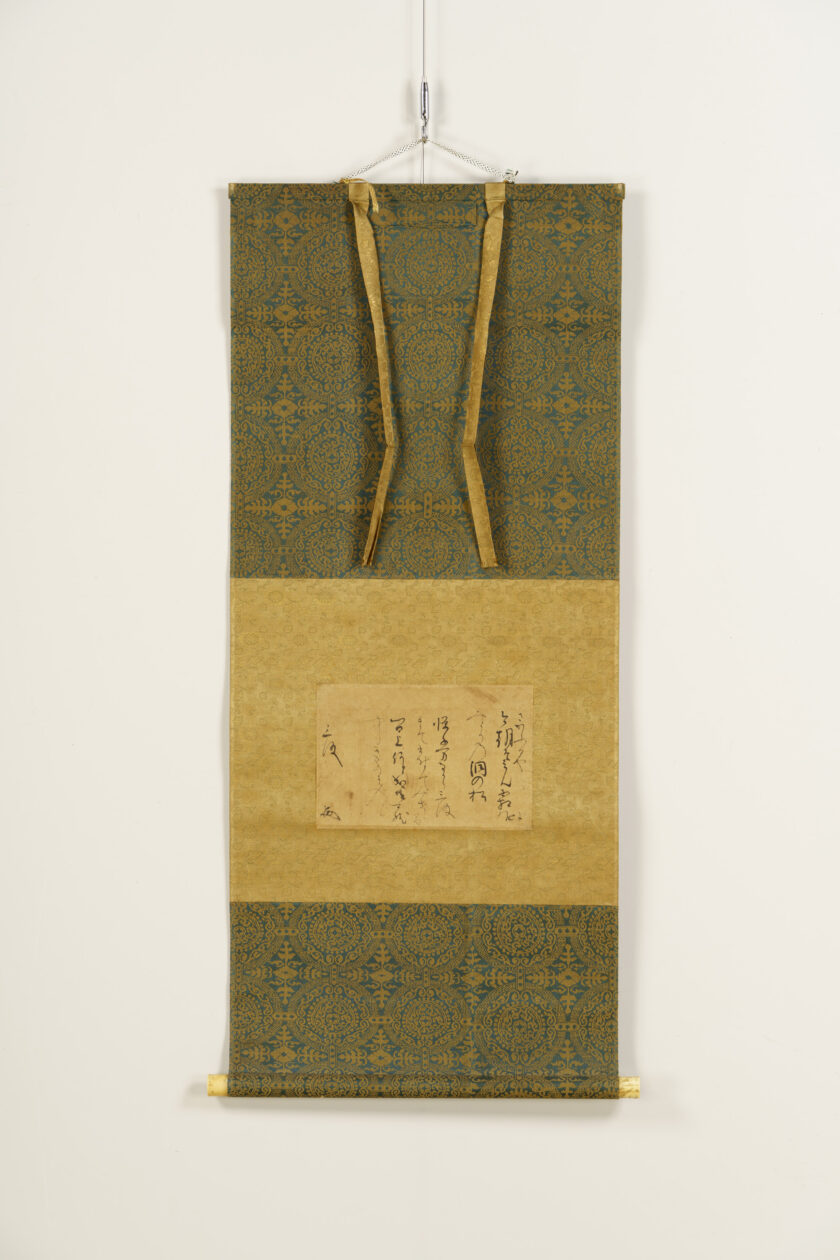
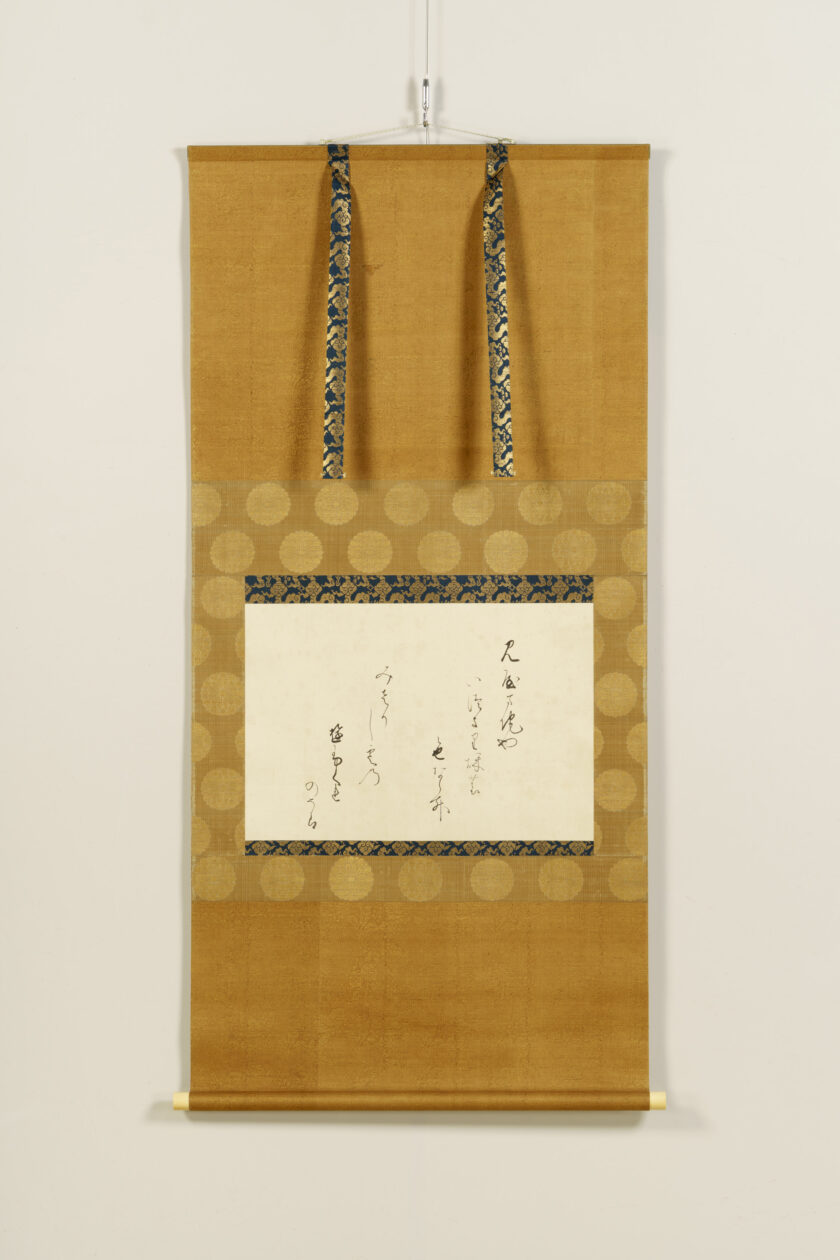
Description
Shinkan refers to calligraphy personally written by an emperor. This work features a waka composed by Emperor Go-Sai on September 4, 1668 (Kanbun 8), on the theme of shinju tsuki o samatageru (young branches obscuring the moon), written by the emperor himself on kaishi, a sheet of paper carried in the front fold of a garment.
Emperor Go-Sai ascended the throne following the sudden death of his elder brother, Emperor Go-Kōmyō, and served an interim sovereign until the accession of Emperor Reigen. Because his accession was unexpected, he received rigorous instruction in waka and other courtly studies from his father, retired Emperor Go-Mizunoo. In later years, he attained Kokin denju, the secret transmission of authoritative interpretations of the Kokin Wakashū (Collection of Ancient and Modern Japanese Poetry).
This work was handed down within the Takamatsu Matsudaira family and is thought to have been bestowed in connection with the enthronement ceremony of Emperor Go-Sai in 1656 (Meireki 2), which Matsudaira Yorishige, the first head of the Takamatsu Matsudaira family, attended as the shogunate’s representative, as well as in light of his close relationship with the retired Emperor Go-Mizunoo.