


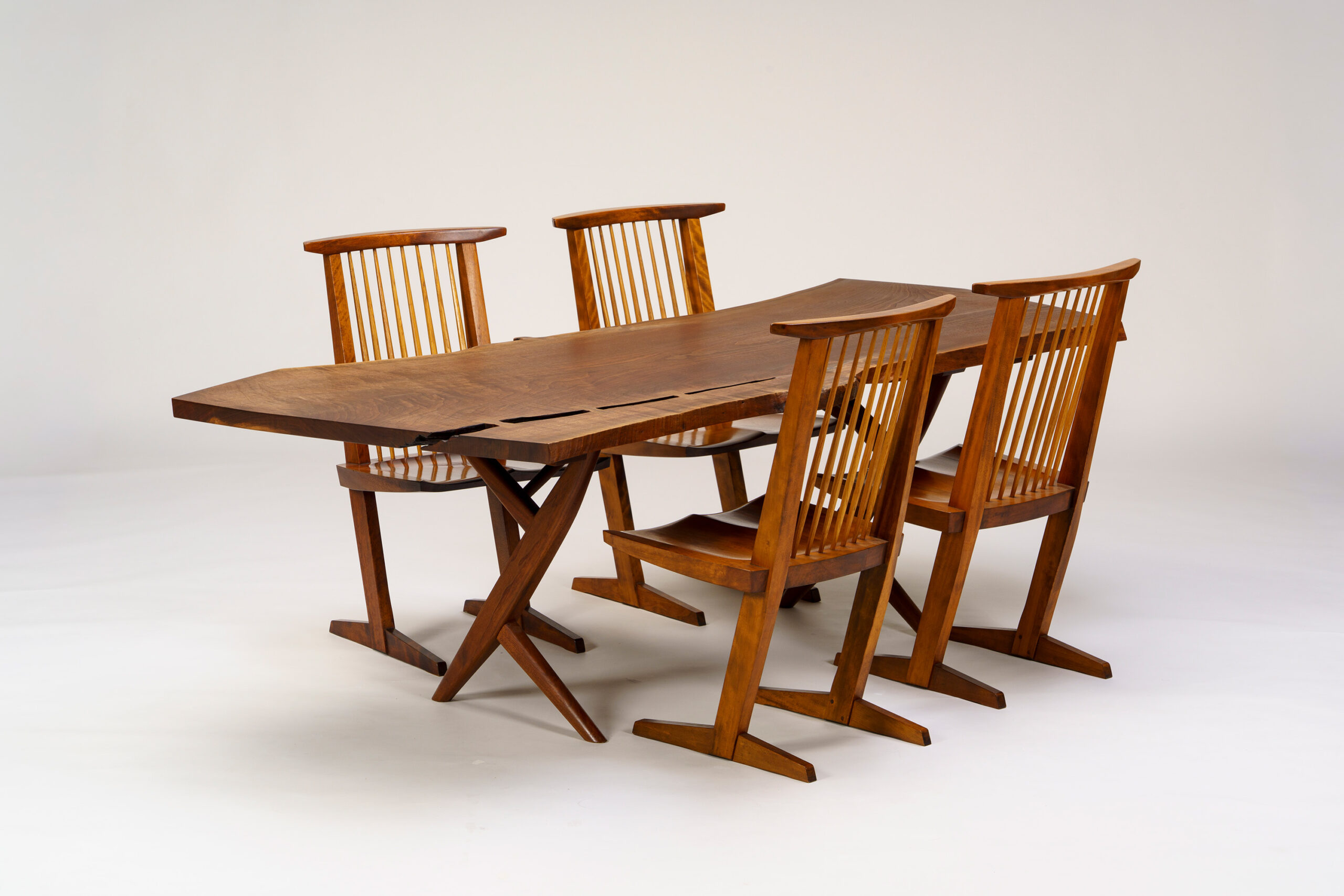
Cross-Leg Table and Conoid Chairs
- Artist
-
George Nakashima (1905–1990)
- Period
-
20th century
- Quality and quantity
-
Table: American black walnut, one table; chairs: birch, four chairs
- Size (cm)
-
Table: H 71.0 × W 97.0 × D 220.0; chairs: H 90.0 × W 56.1 × D 50.5
- Category
-
Design
- Accession number
-
(Table)BJ1#00320 (chairs)BJ1#00321
Description
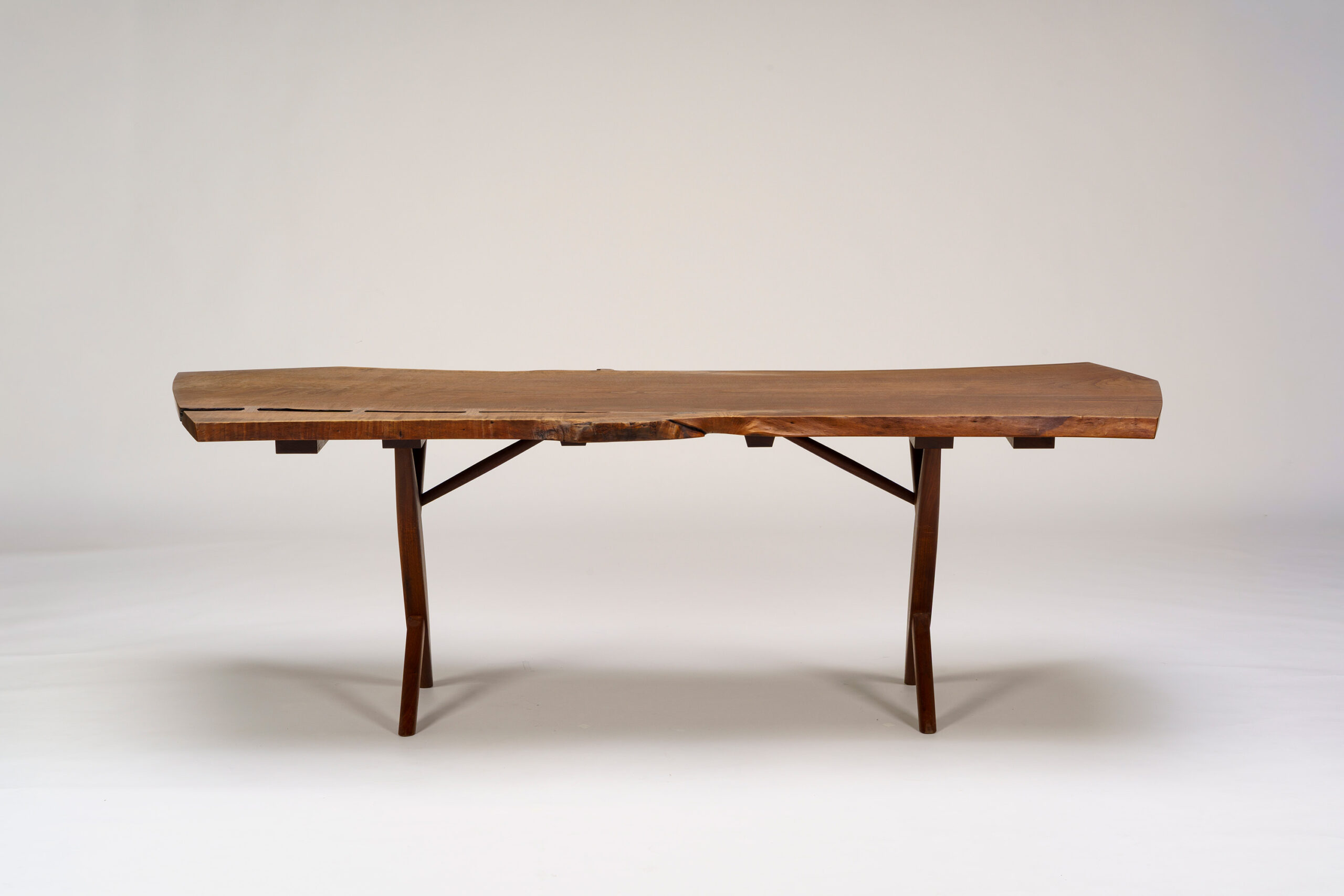
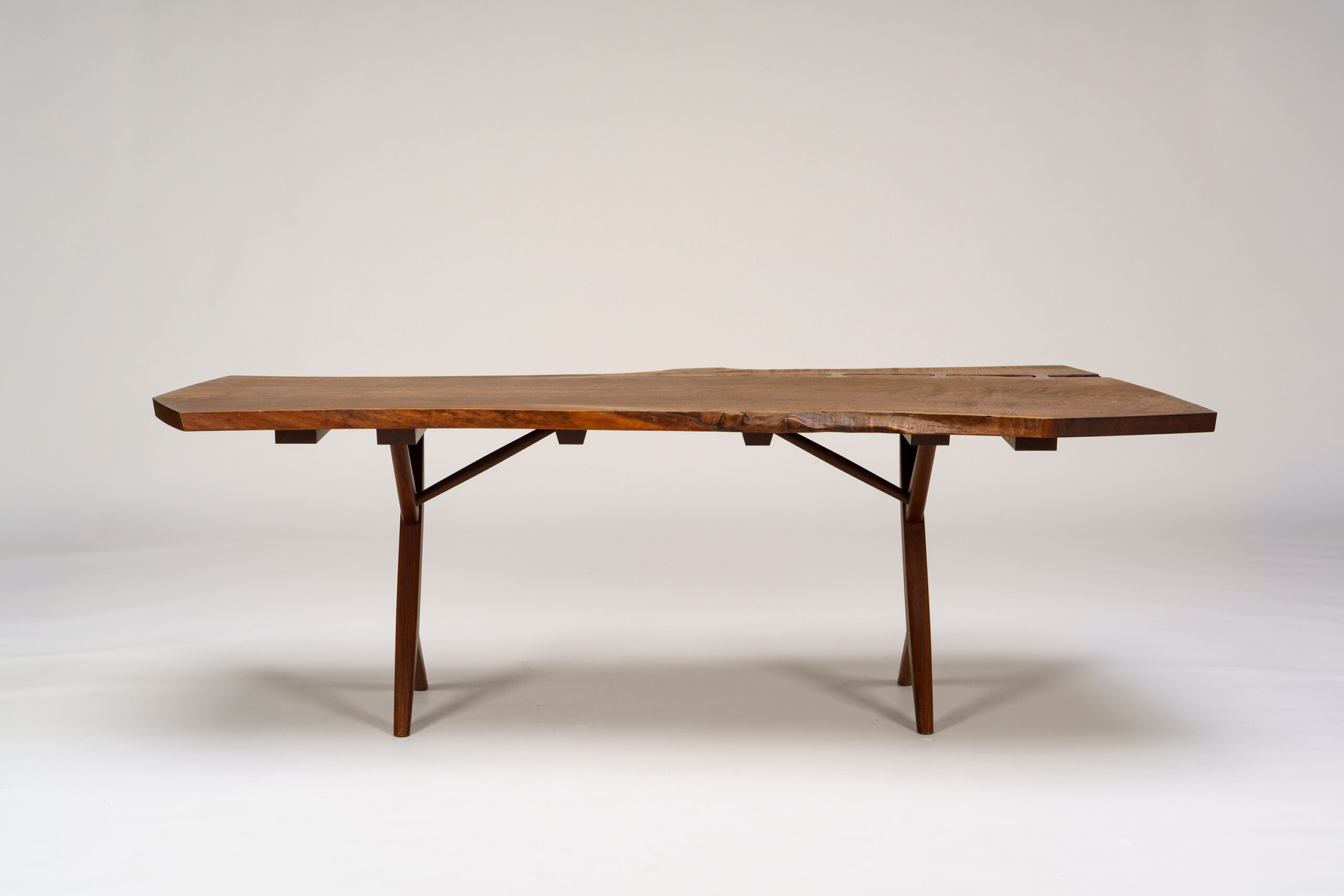
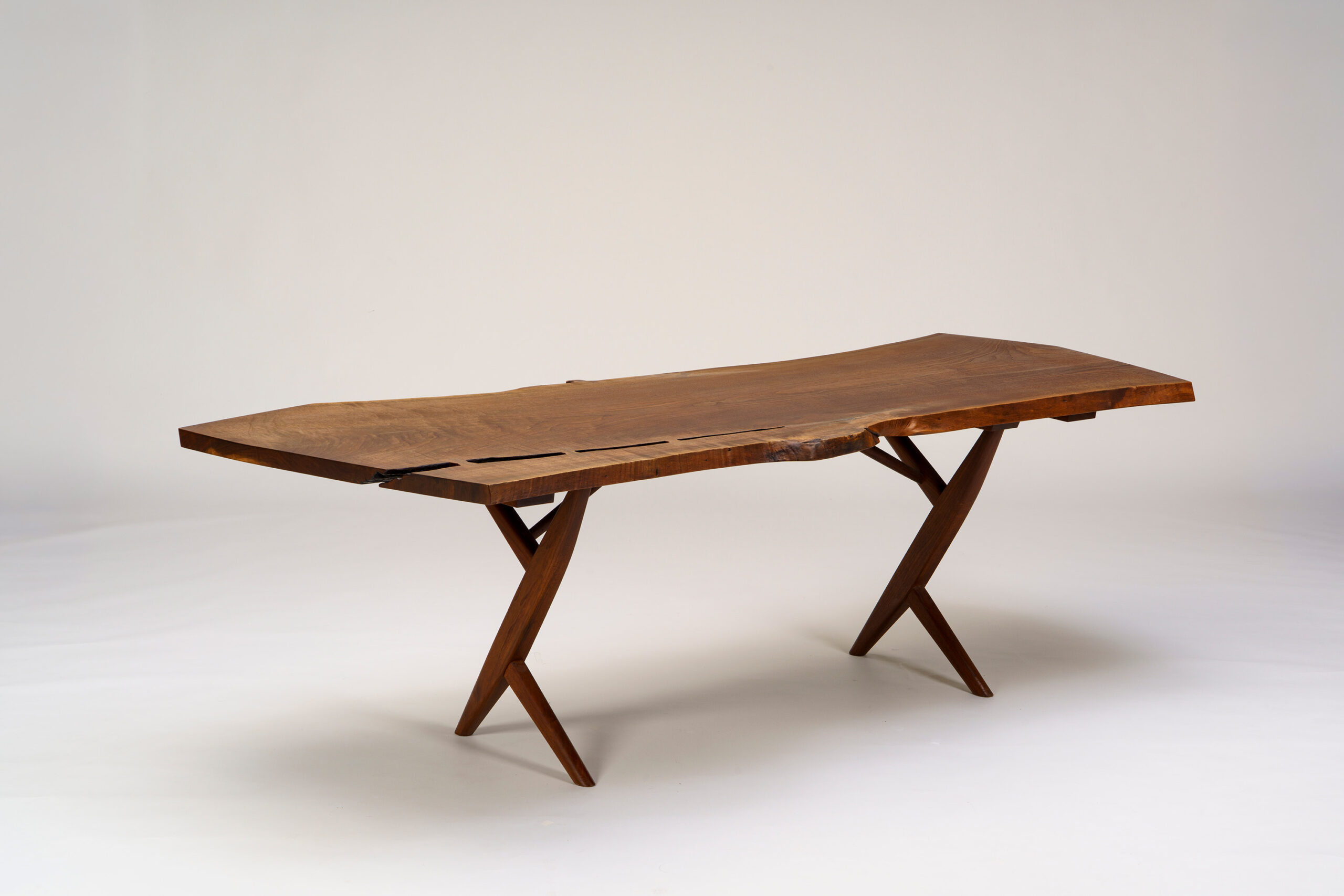
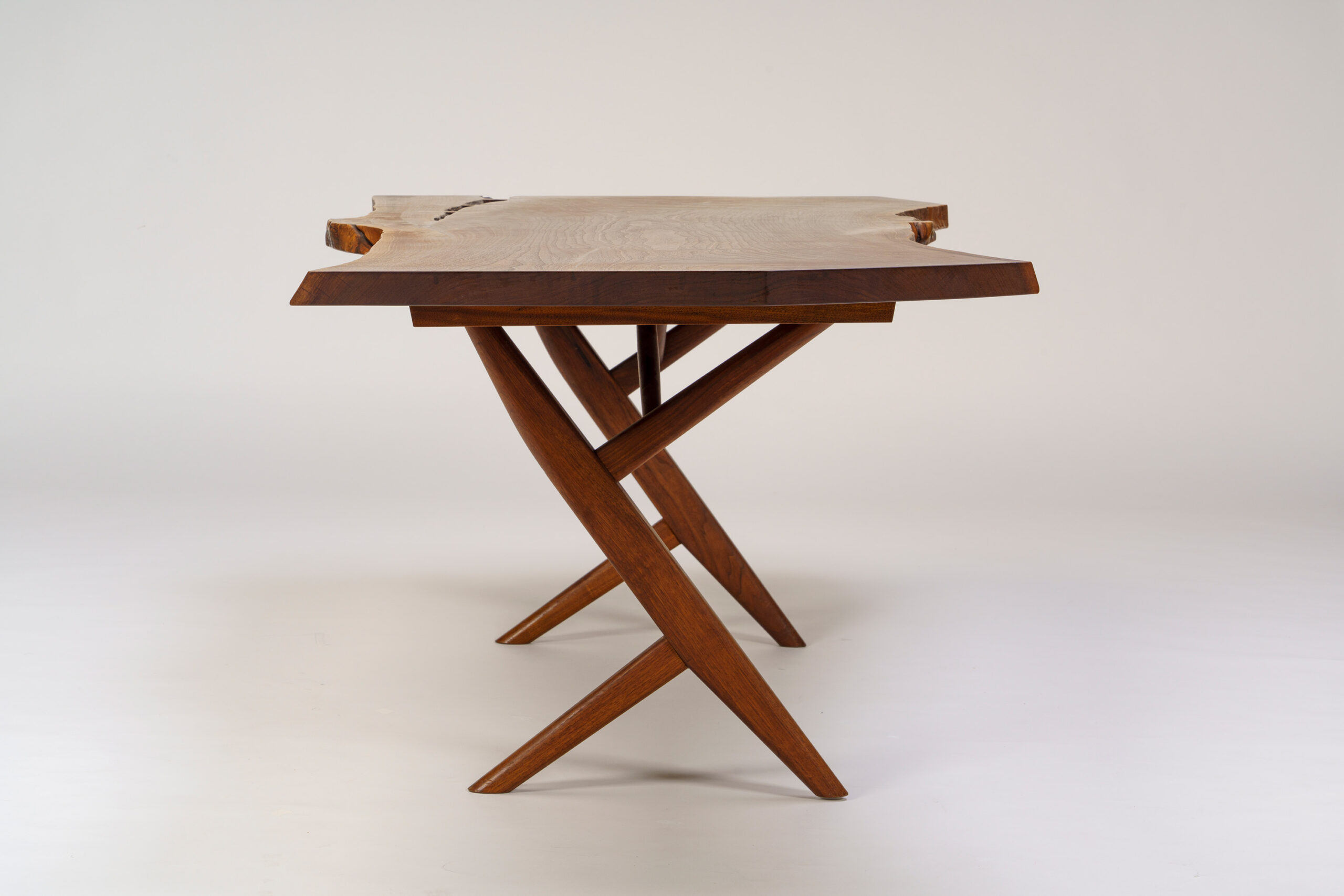
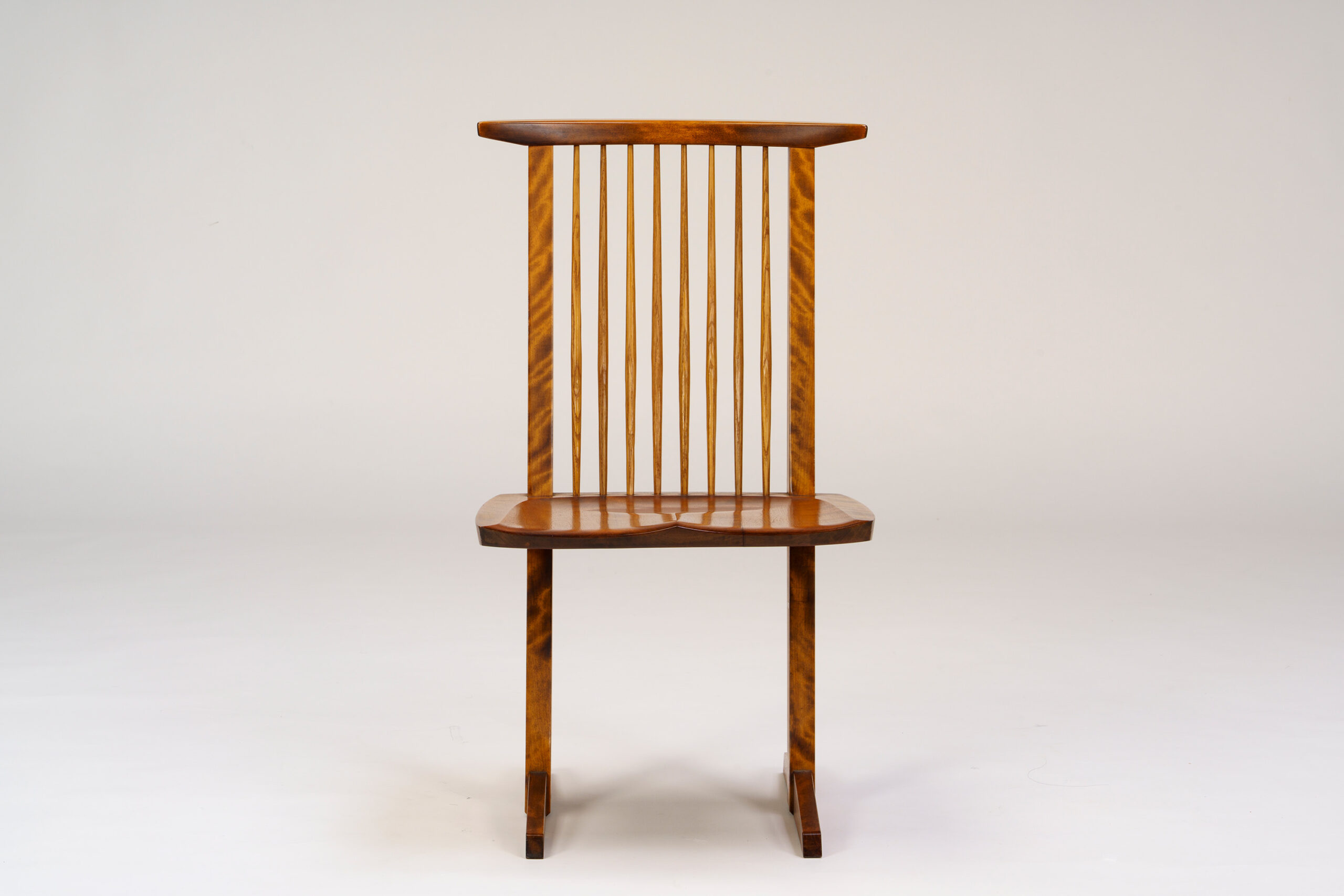
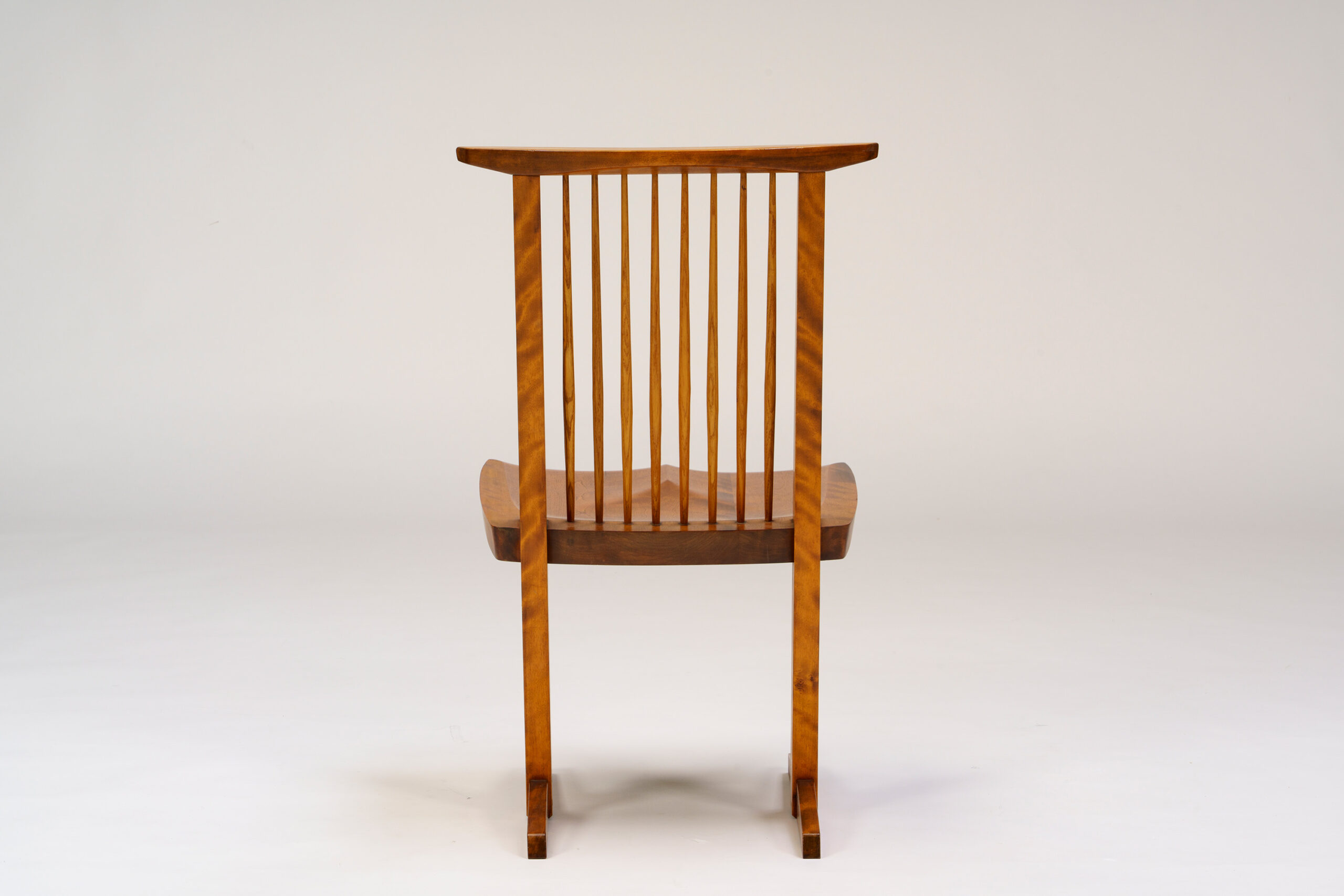
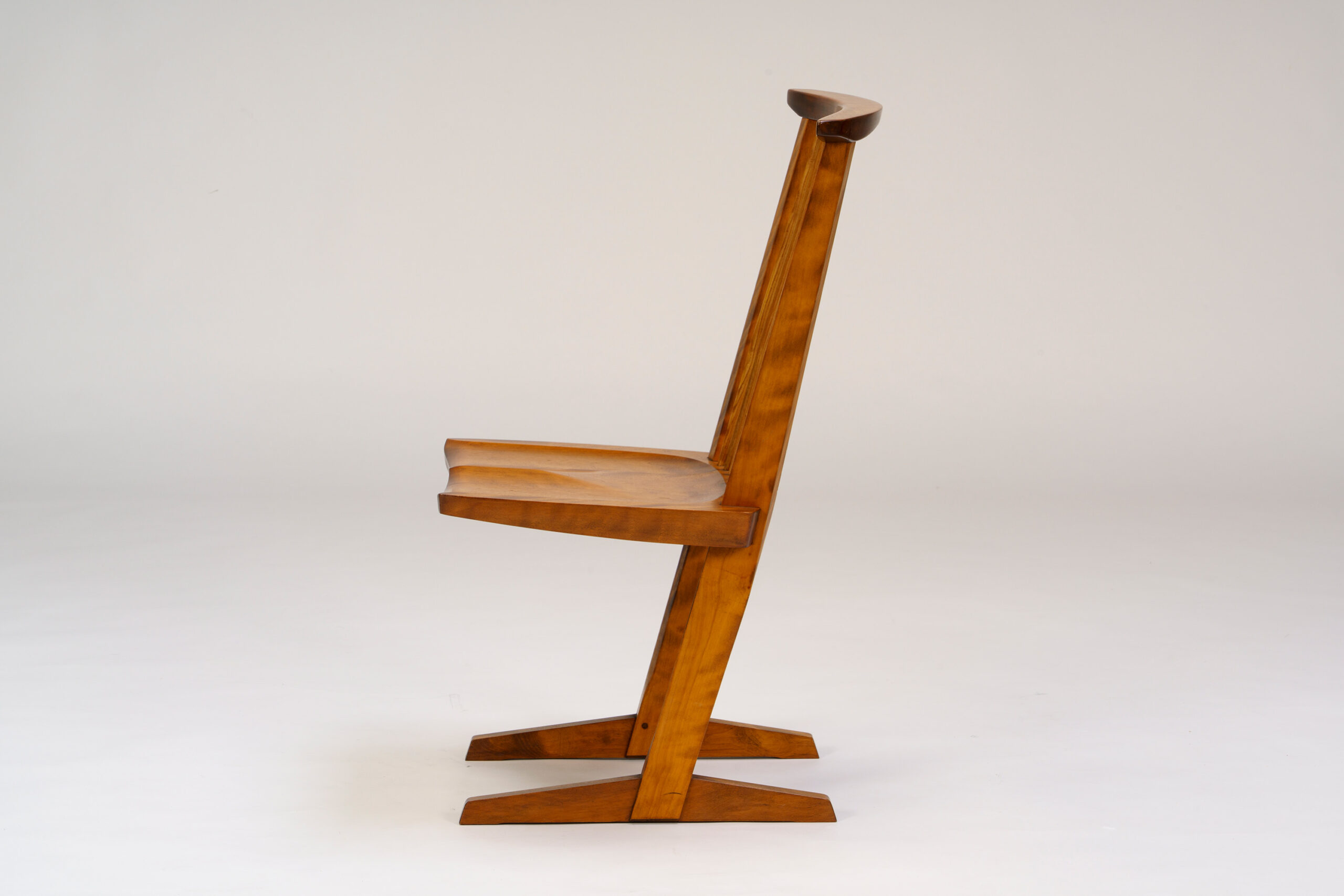
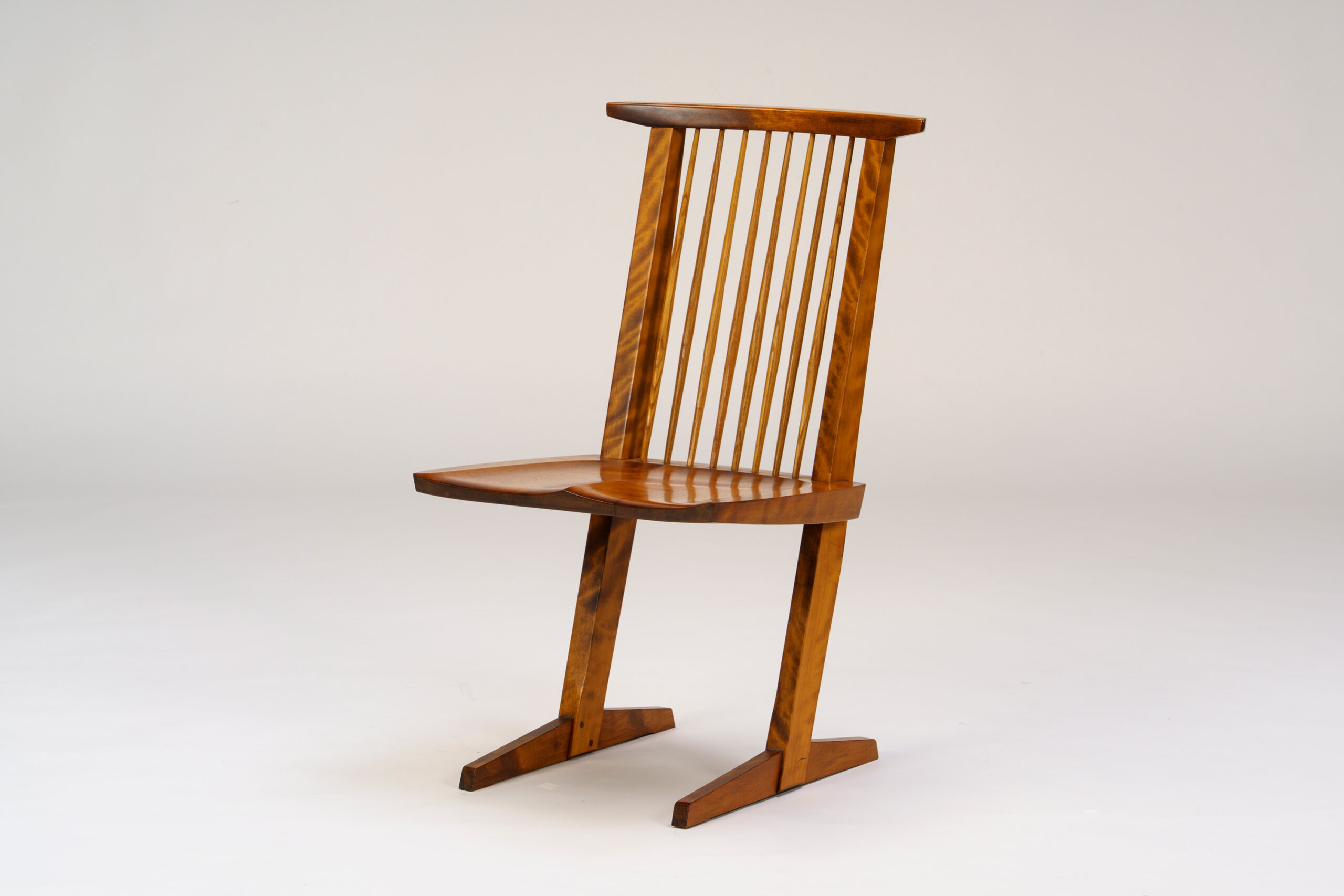
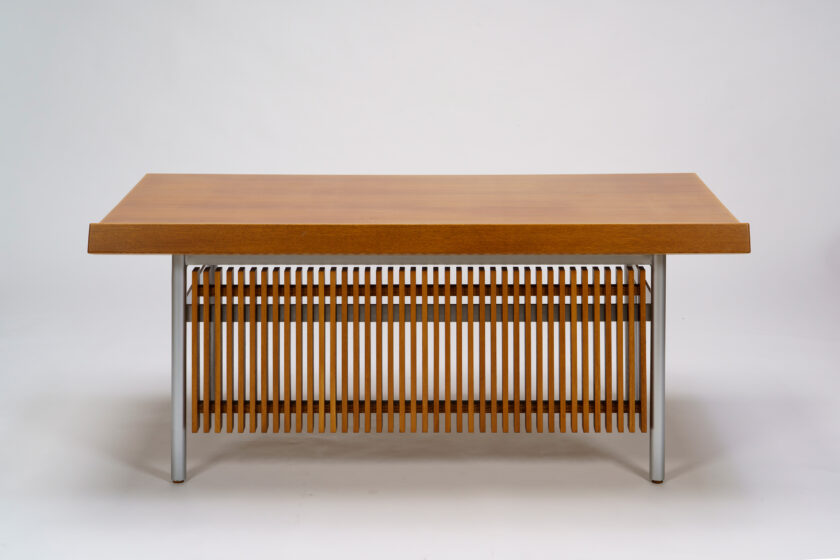
Crafted from American black walnut, the Cross-Leg Table employs a truss structure, an architectural system in which crossed members support weight, resulting in a form that conveys both the solidity of its thick tabletop and a refined, sharply articulated construction. The Conoid Chair, made of birch, is distinguished by the gentle curvature and flex of its backrest and by a leg structure supported solely by two side members. In both the table and the chairs, stability is achieved without placing legs at all four corners. This assured sense of balance reflects a design sensibility rooted in the artist’s background in architecture.
In 1964, Nakashima came to Japan at the invitation of the sculptor Nagare Masayuki. During his time in Kagawa, he resonated with Sanuki Minguren, a group dedicated to reinterpreting traditional folk tools as refined contemporary forms, and became one of its members, forging a close connection with the region.