


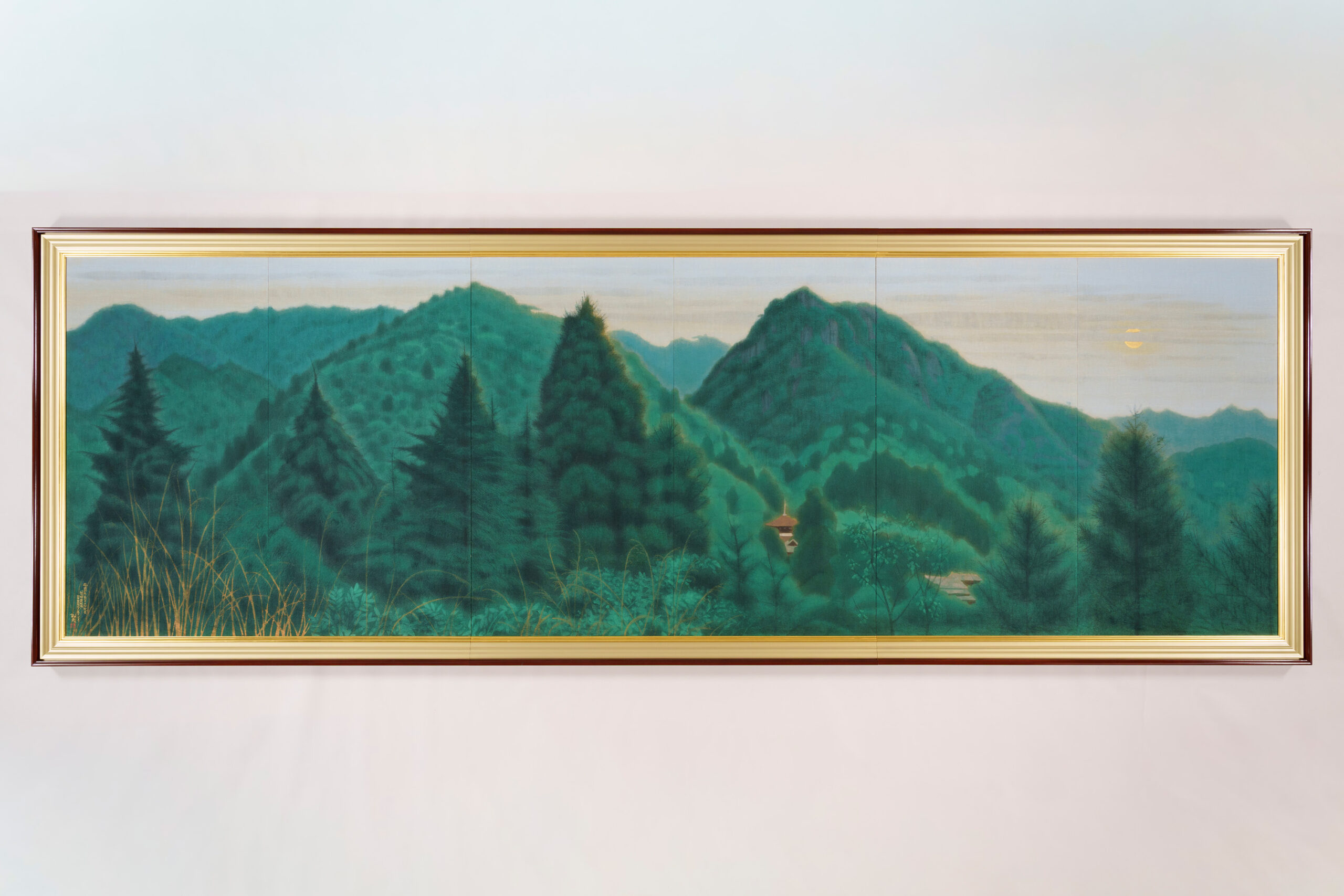
Dawn over Ōkuboji, the Eighty-Eighth Temple of the Shikoku Pilgrimage
- Artist
-
Hirayama Ikuo (1930–2009)
- Period
-
1994 (Heisei 6)
- Quality and quantity
-
Color on paper, one painting
- Size (cm)
-
H 172.0 × W 546.0
- Category
-
Painting (Japan)
- Accession number
-
BK1#00259


Description
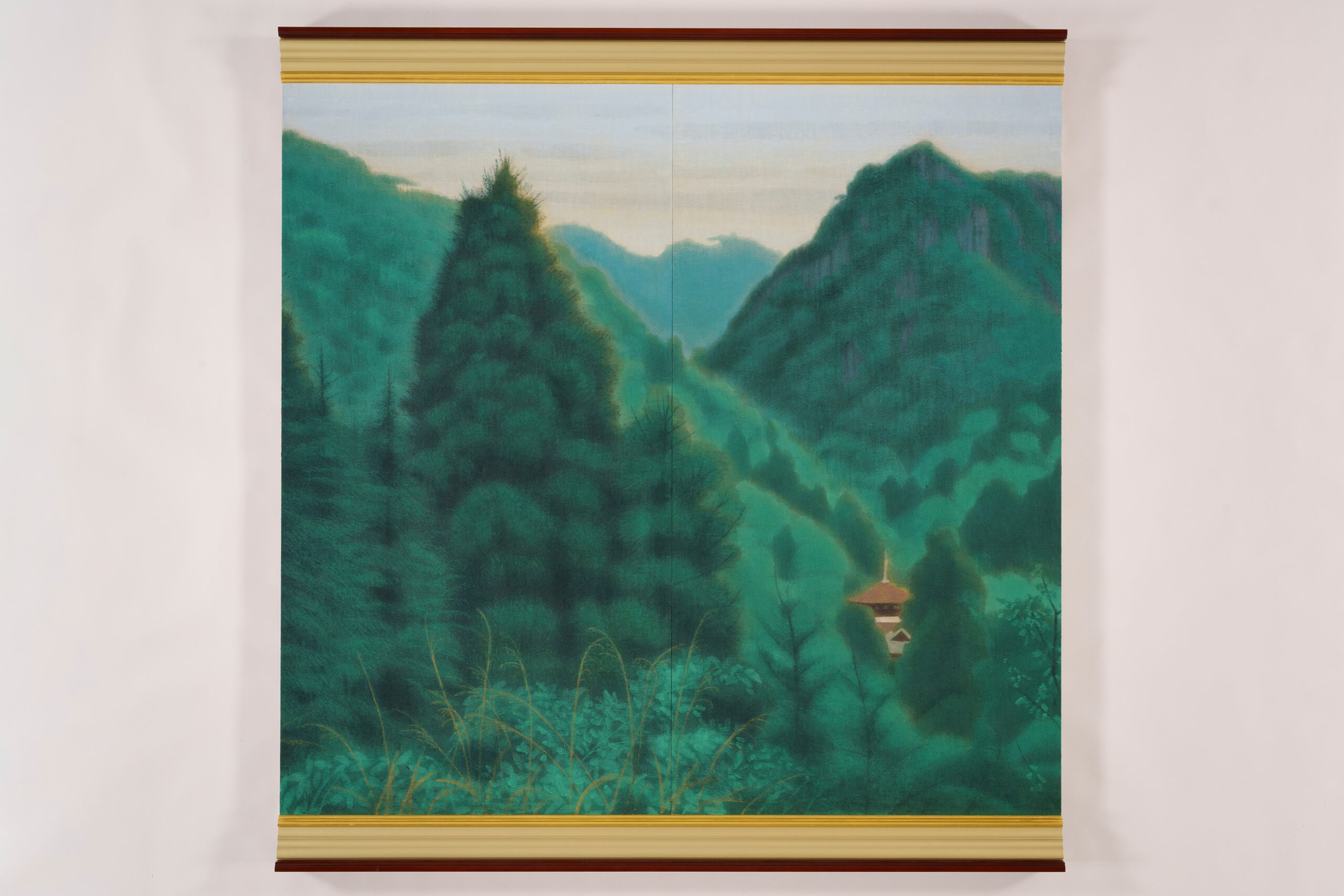
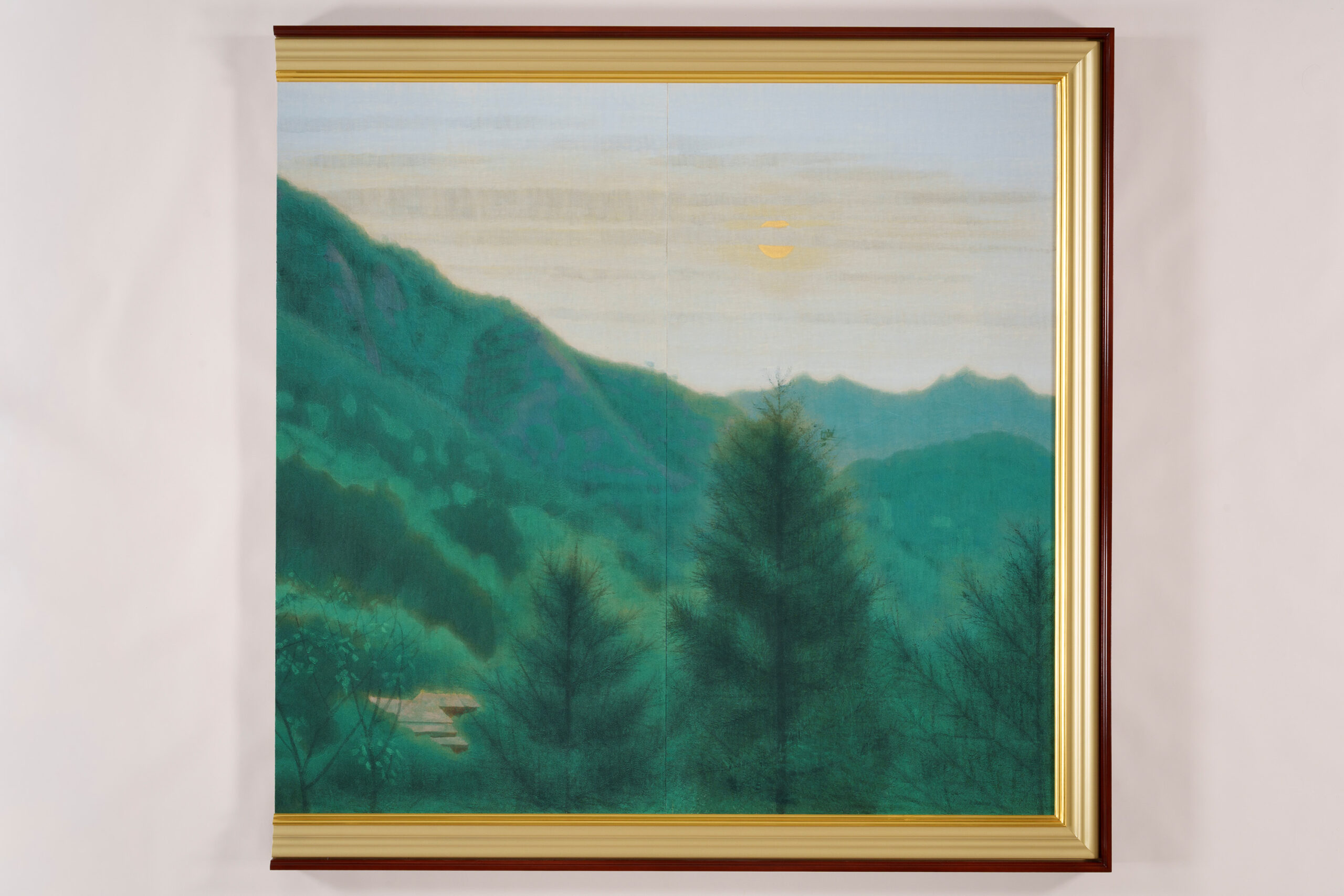
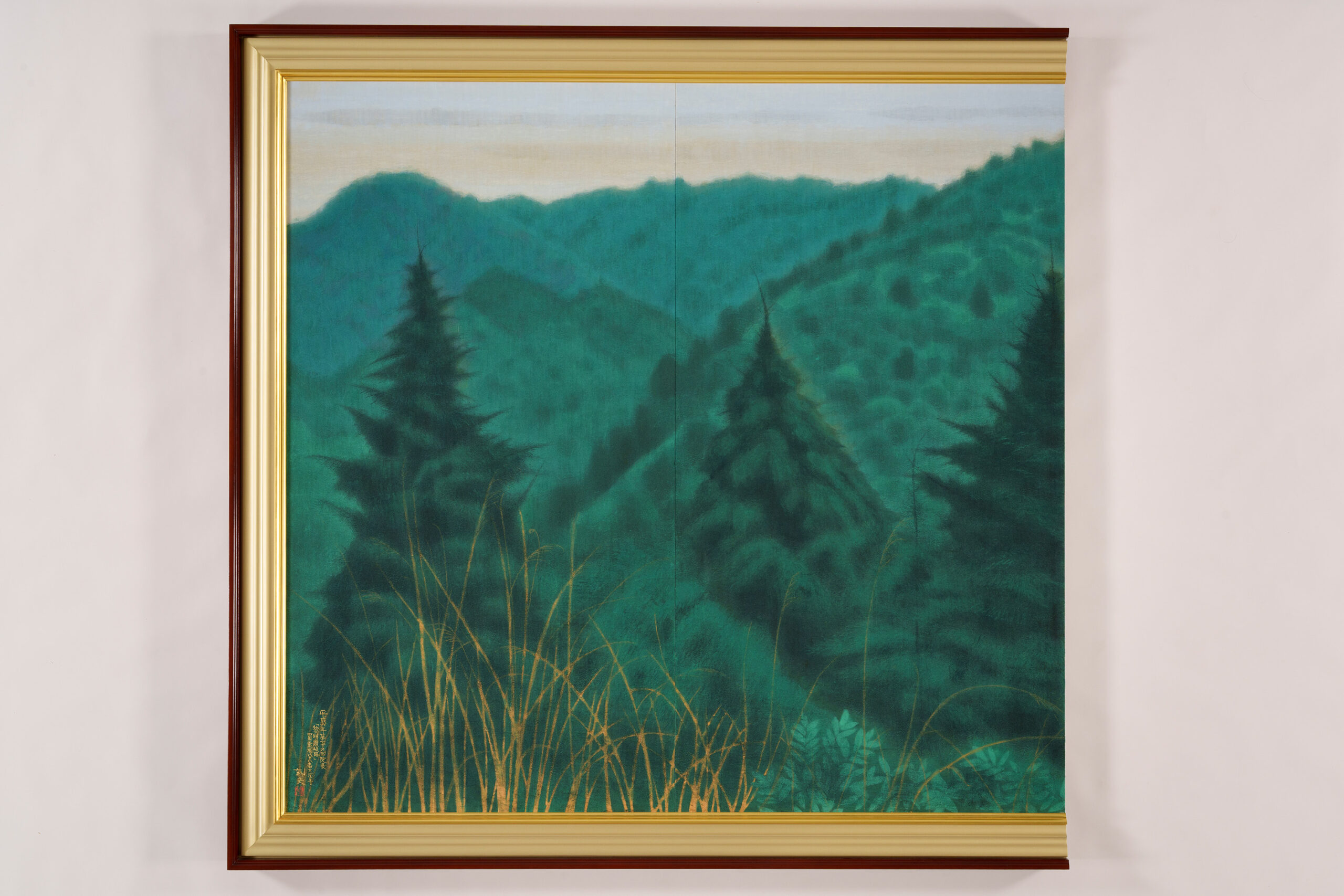
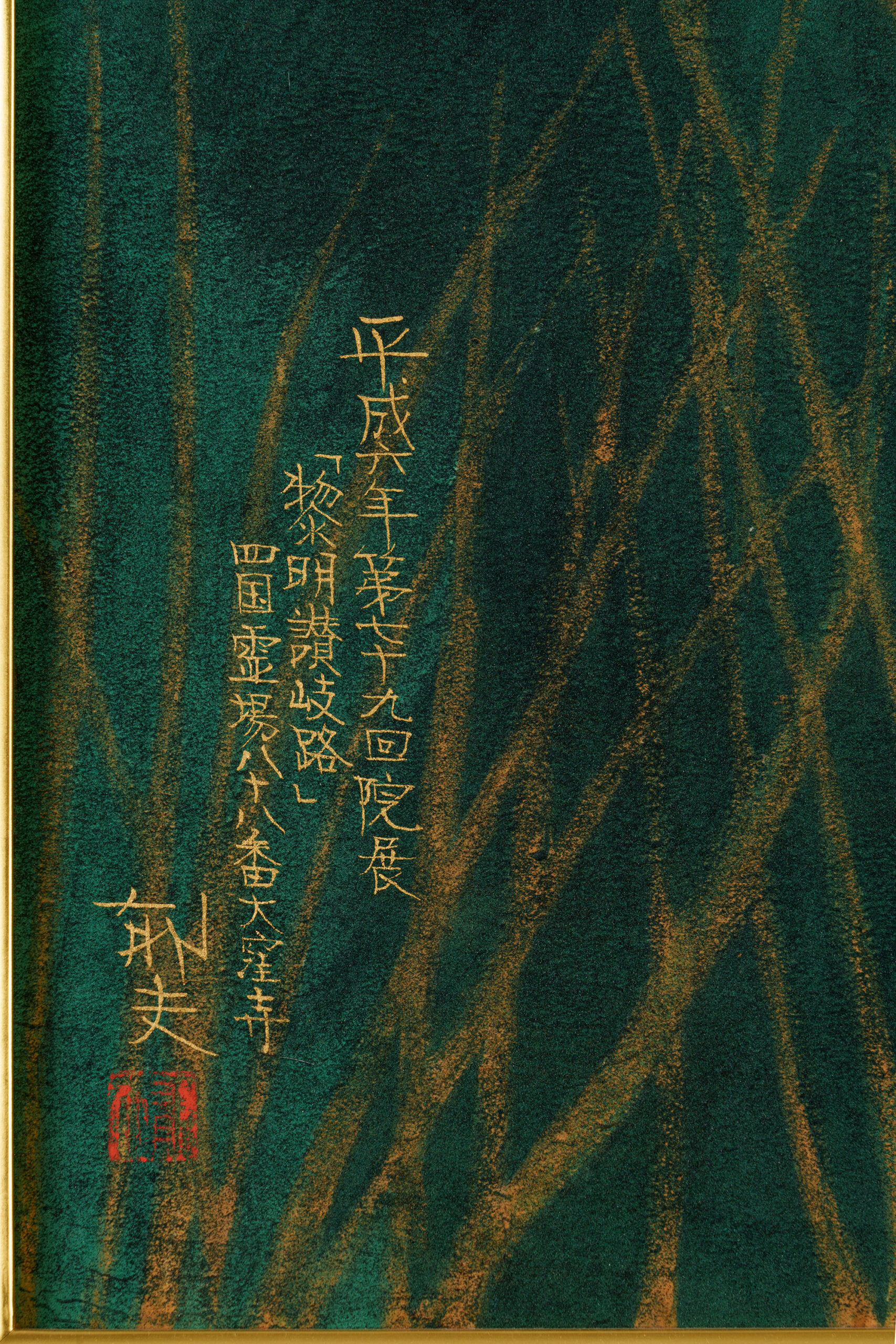
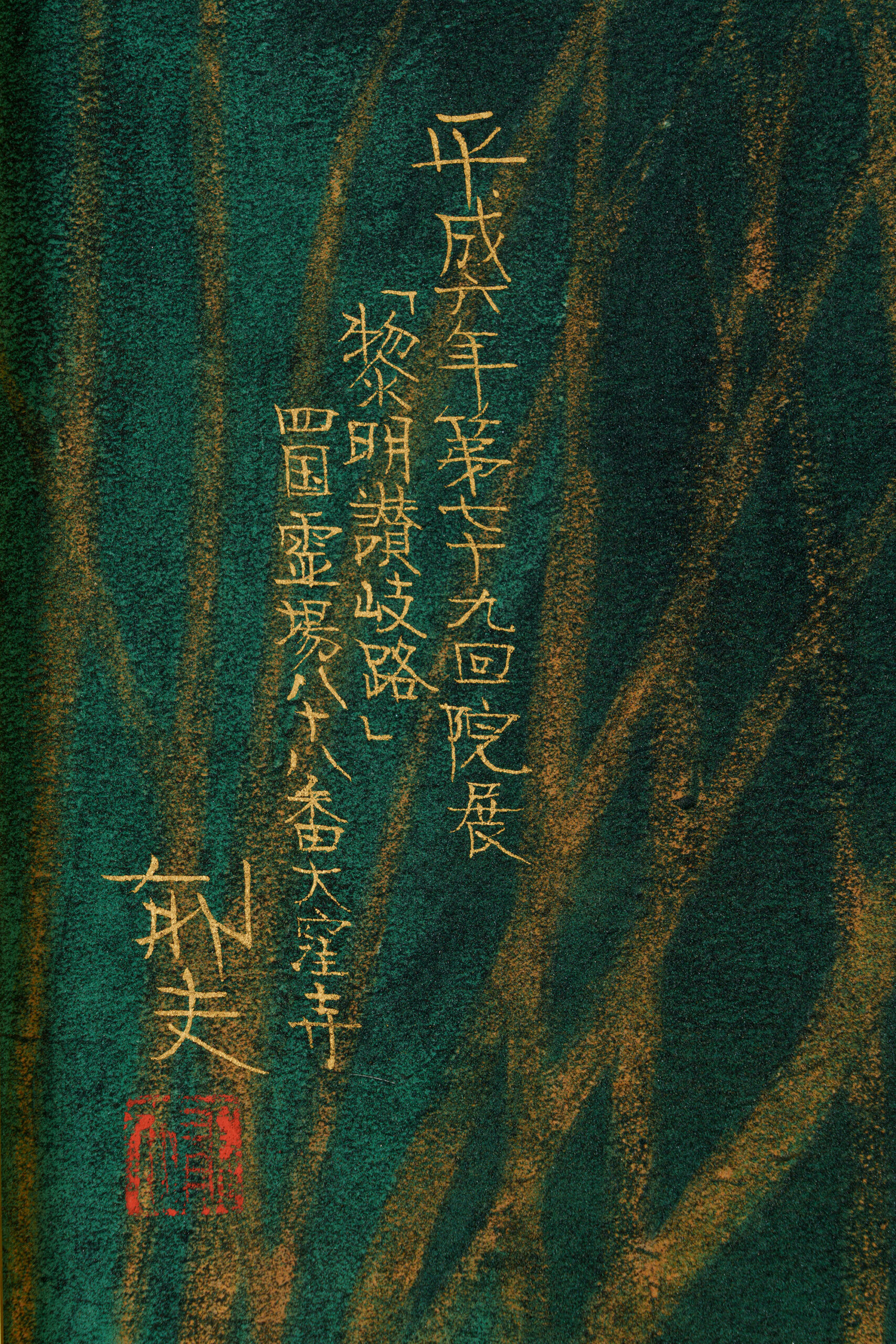
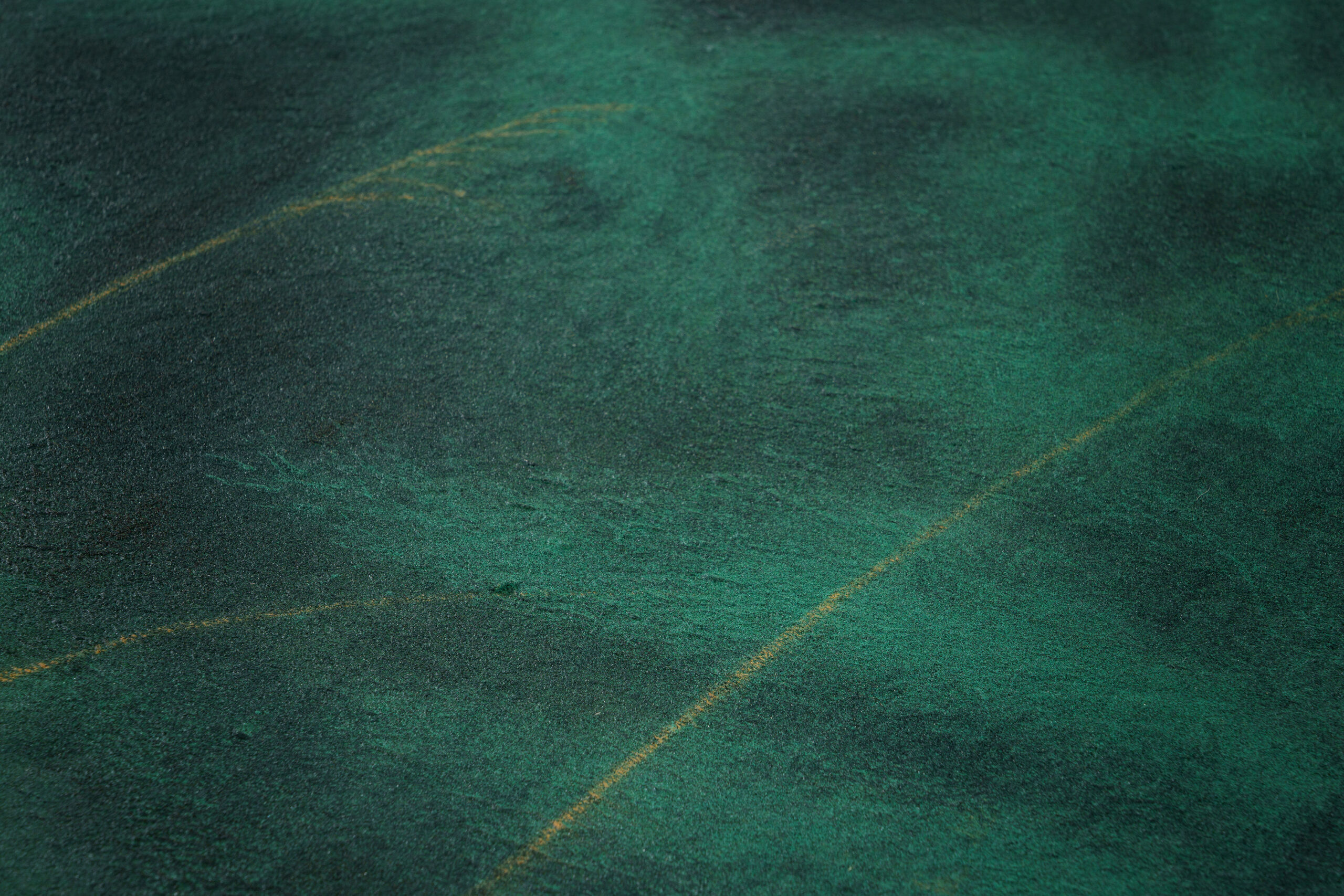
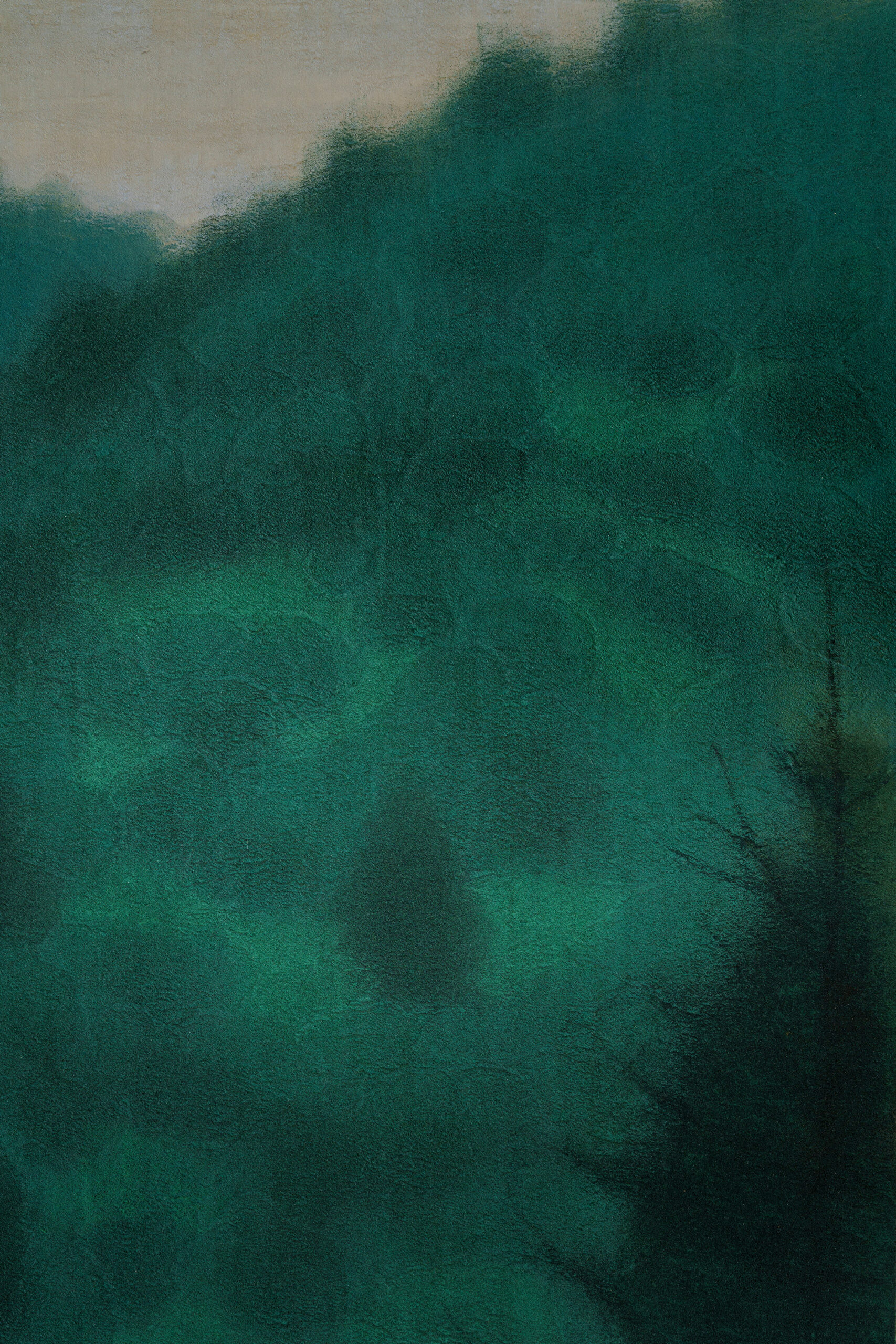
Soft light from the rising sun glows through a haze draped over the mountain ridges, gently illuminating Ōkuboji Temple and its surrounding landscape. Located in Sanuki City, Kagawa Prefecture, Ōkuboji Temple stands against the backdrop of Mt. Yahazu (788 m) and Mt. Nyotai (761 m) and serves as the final stop of the Shikoku pilgrimage, a circuit of eighty-eight sacred sites. Between 1992 and 1994, Hirayama visited Kagawa Prefecture on four occasions, producing numerous sketches. After refining the composition and color palette through a series of preparatory drawings, both small and large, he undertook the final painting and completed the work over a period of three years. Among the more than thirty works created through field research conducted throughout Kagawa Prefecture at that time, this painting stands as one of the masterpieces representative of the artist. It was exhibited at the 79th Inten Exhibition of the Japan Art Institute.
Born in Setoda-chō (present-day Onomichi City) in Hiroshima Prefecture, Hirayama graduated in 1952 from the Japanese Painting Department of the Tokyo Fine Arts School (now Tokyo University of the Arts). He later produced many works exploring the origins of Japanese culture and Buddhism.