


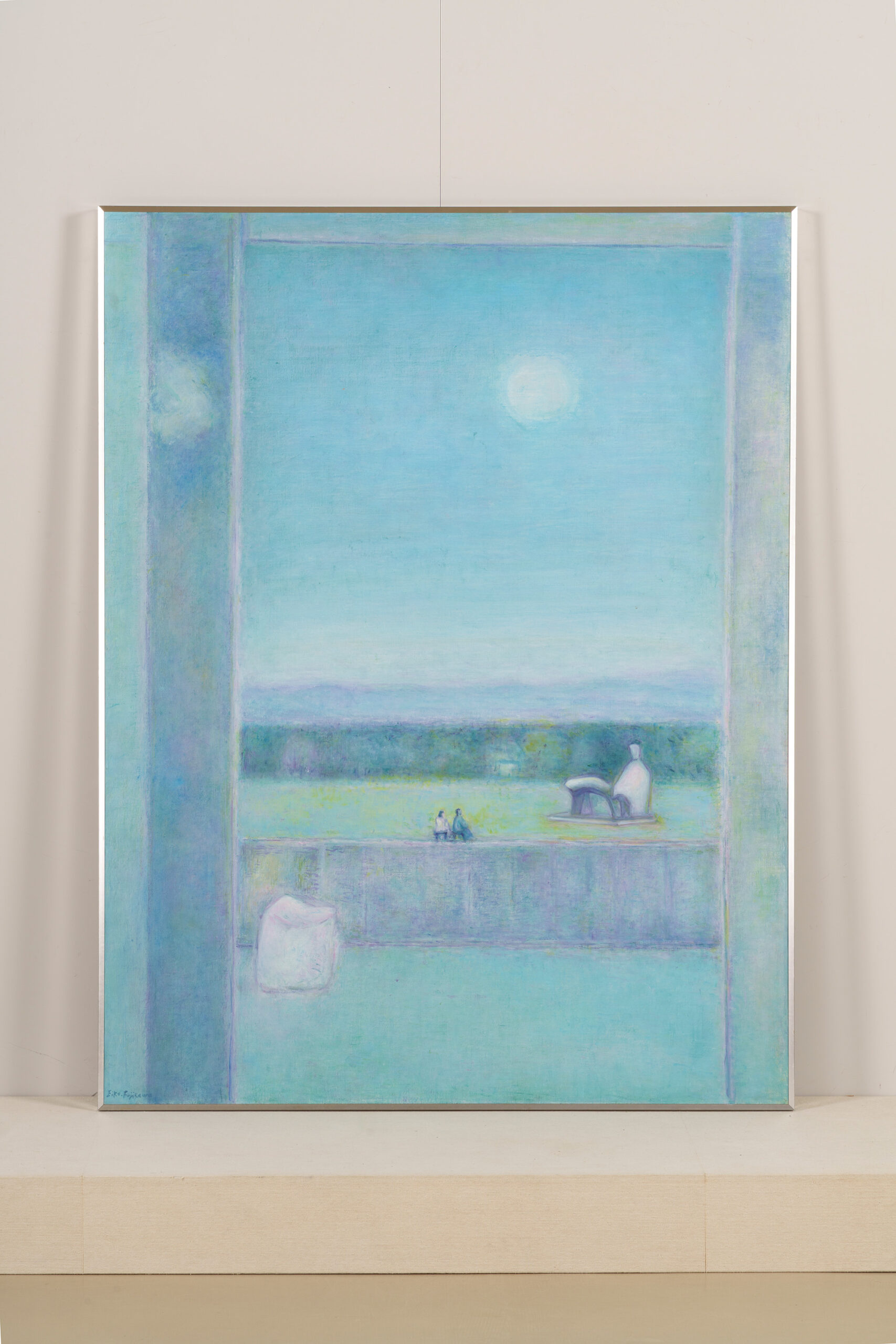
Expanse (Hirogari)
- Artist
-
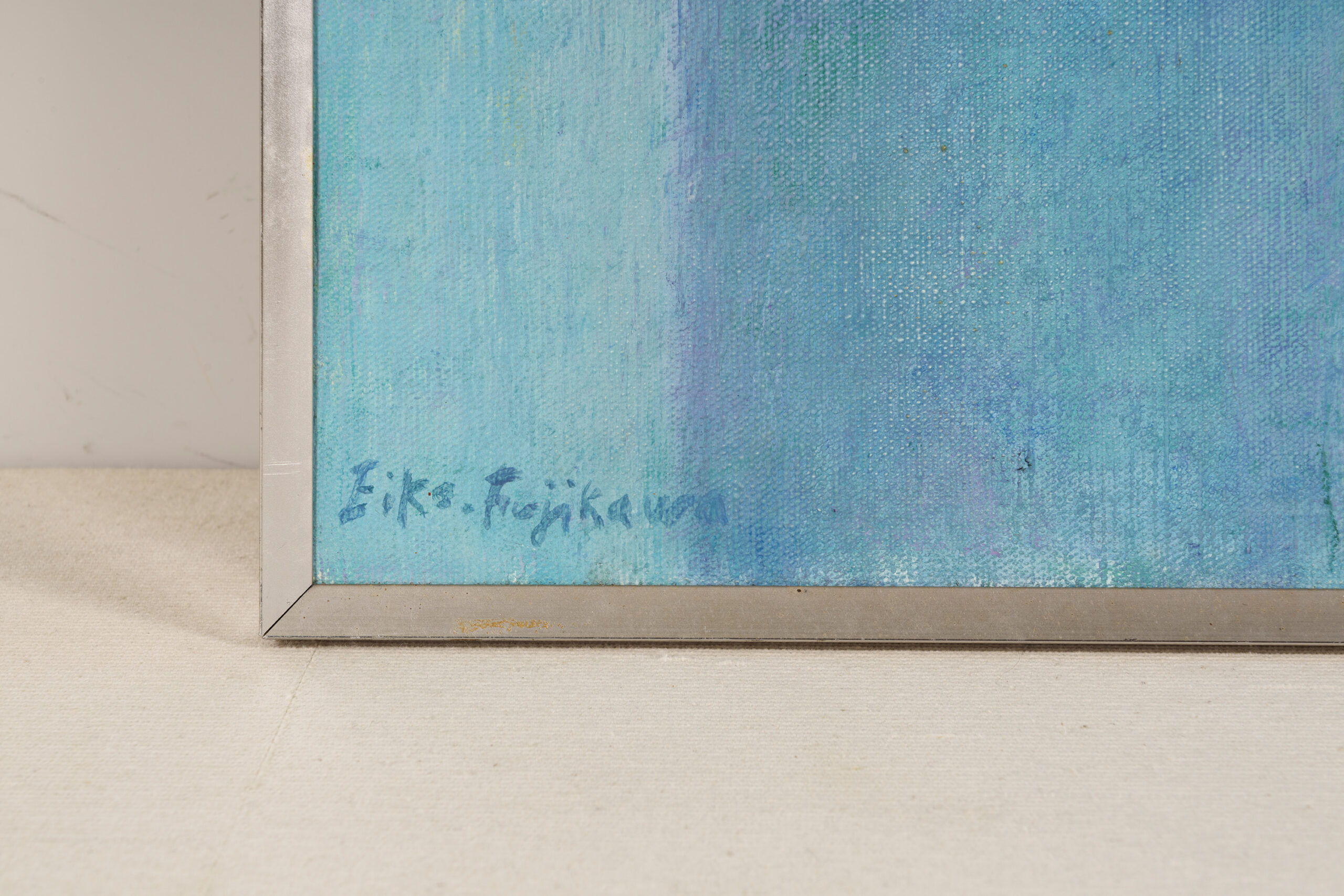
Fujikawa Eiko (1900–1983)
- Period
-
1976 (Shōwa 51)
- Quality and quantity
-
Oil on canvas, one painting
- Size (cm)
-
H 146.5 × W 113.0
- Category
-
Painting (Japan)
- Accession number
-
BK1#00516
Description
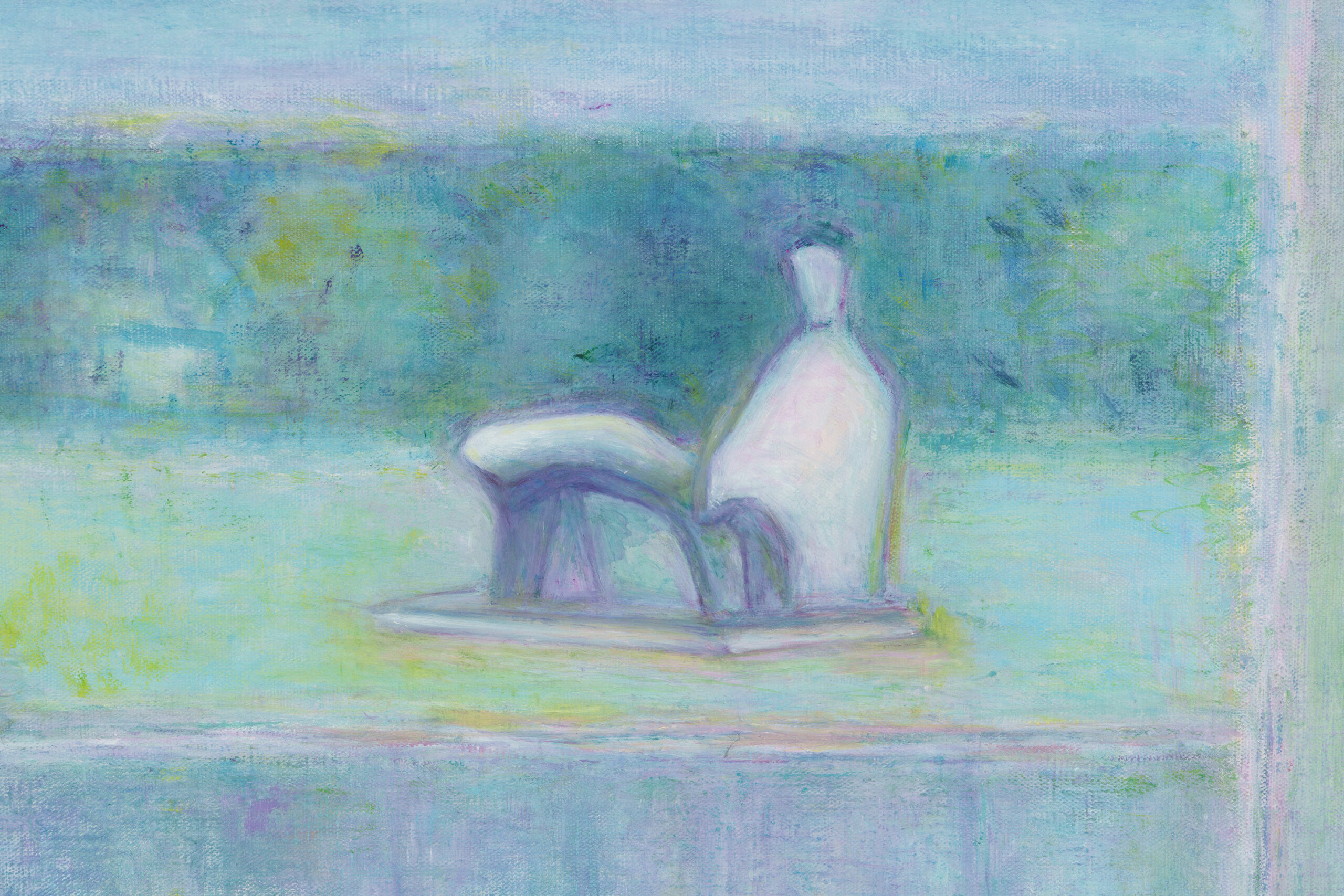
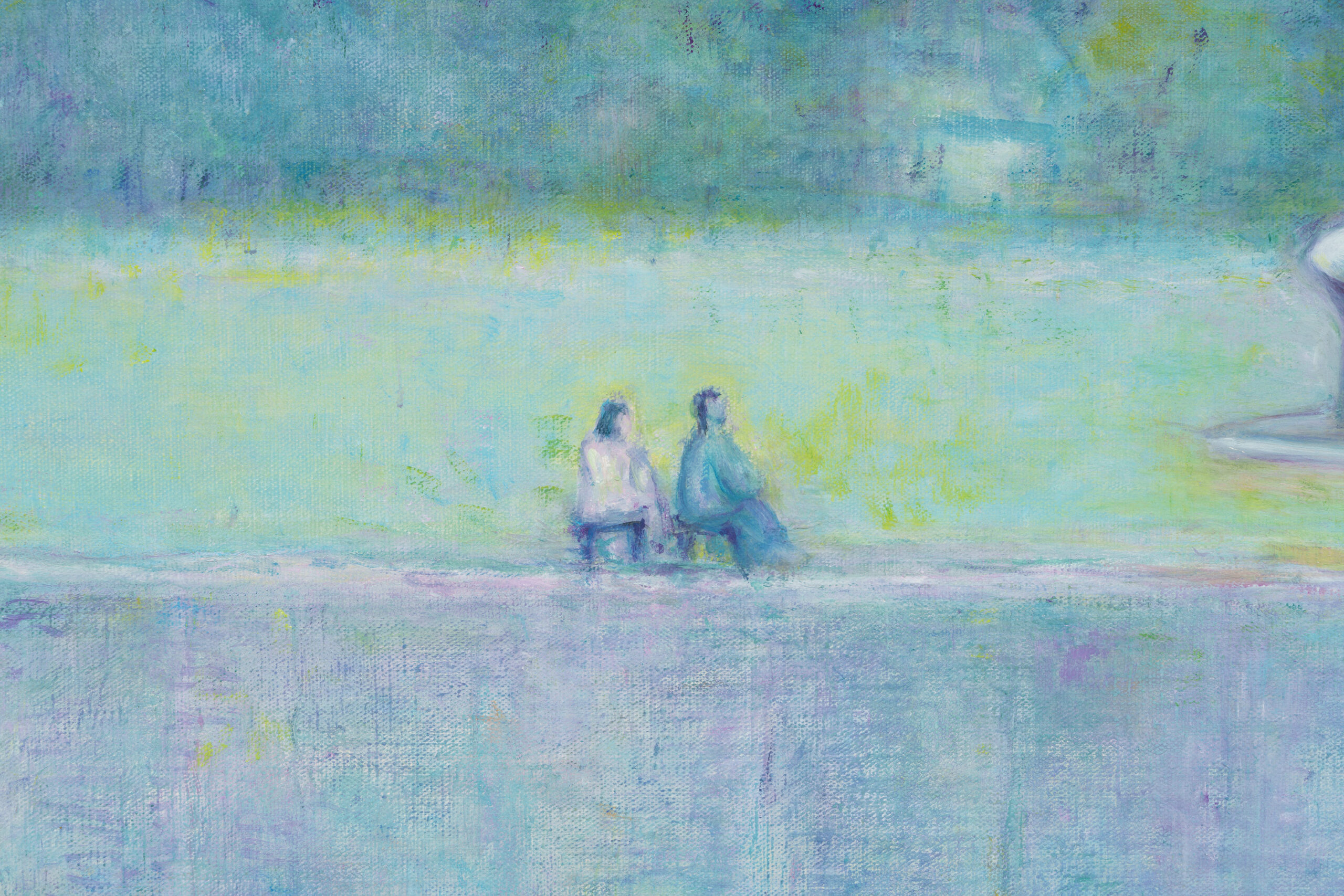
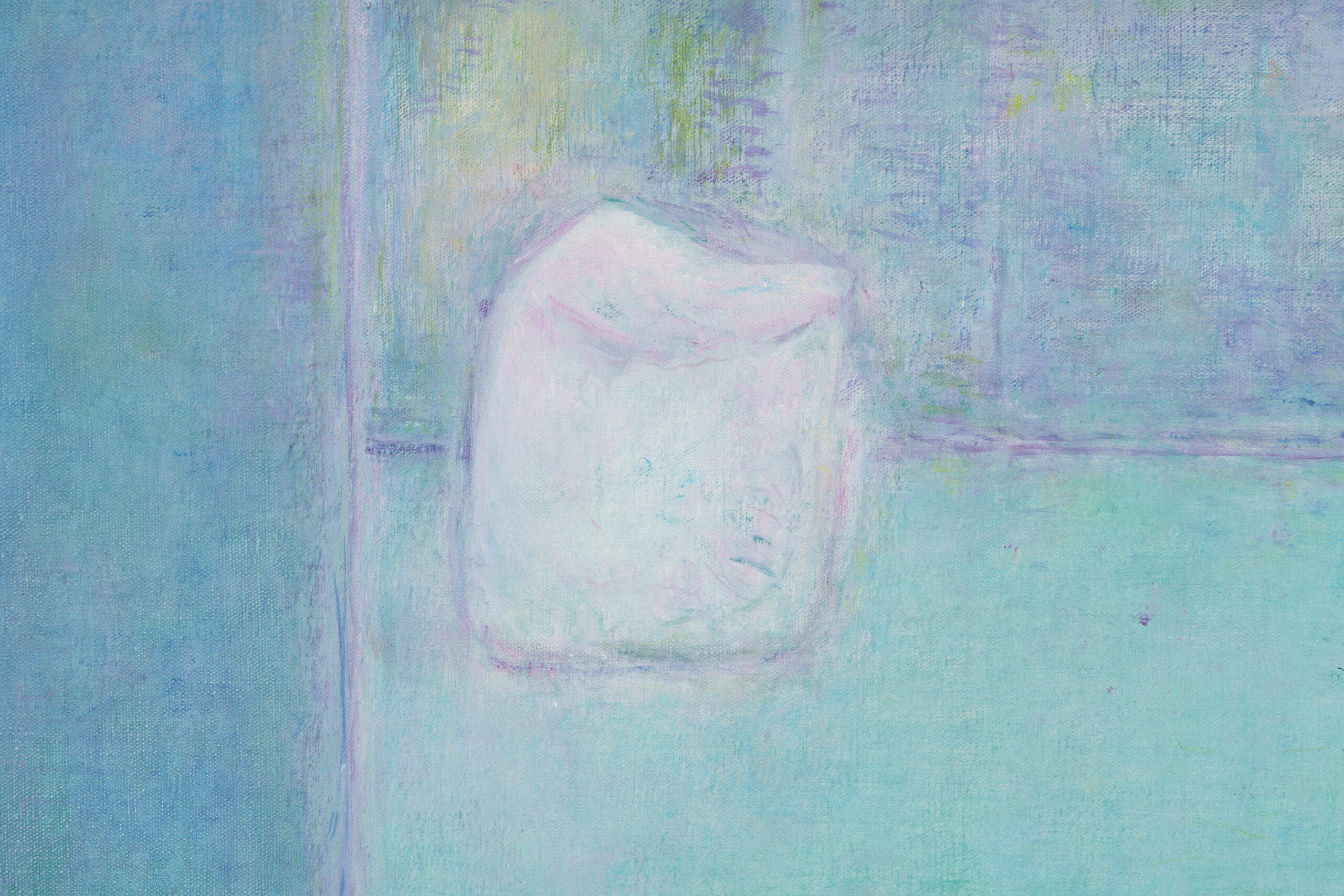
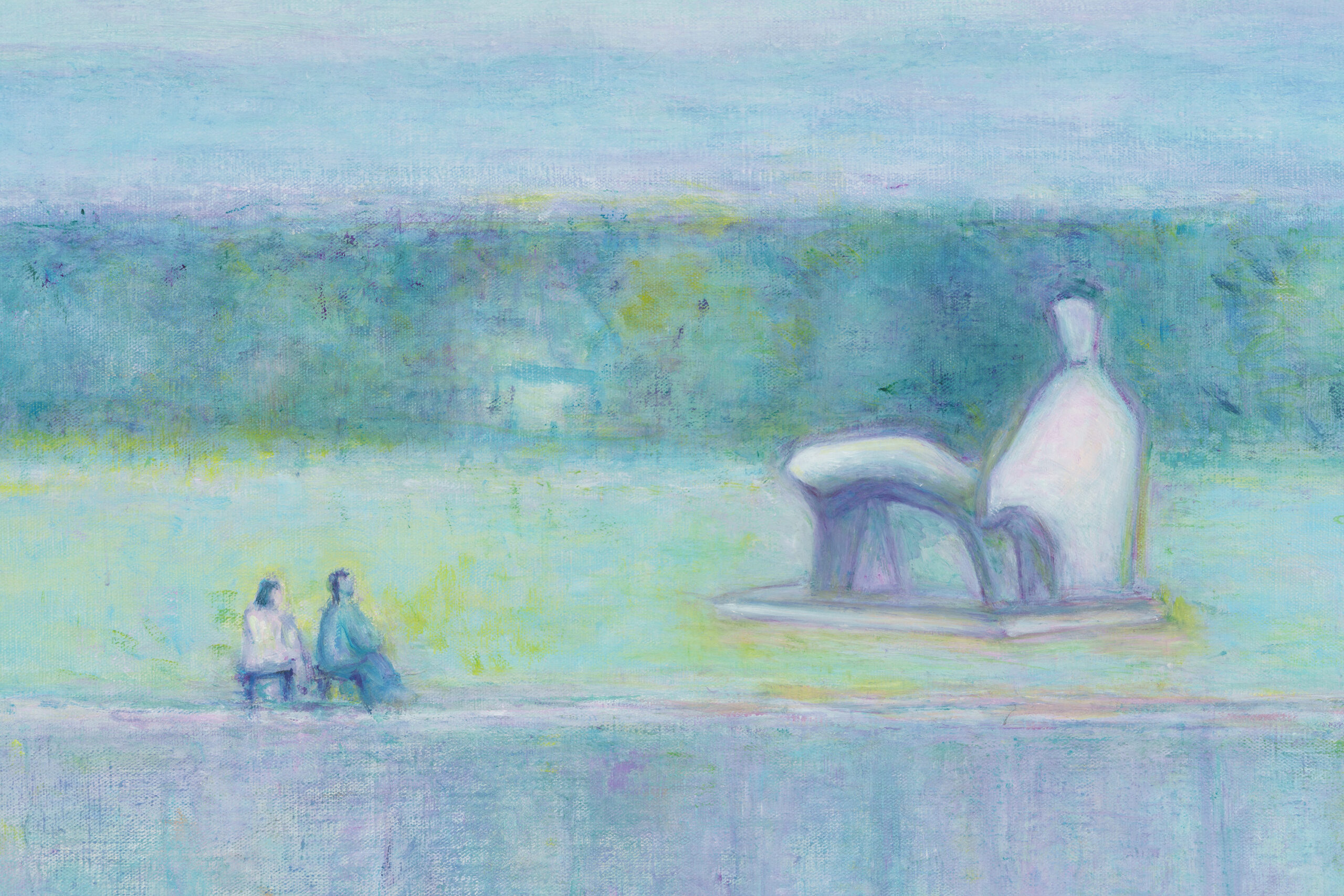
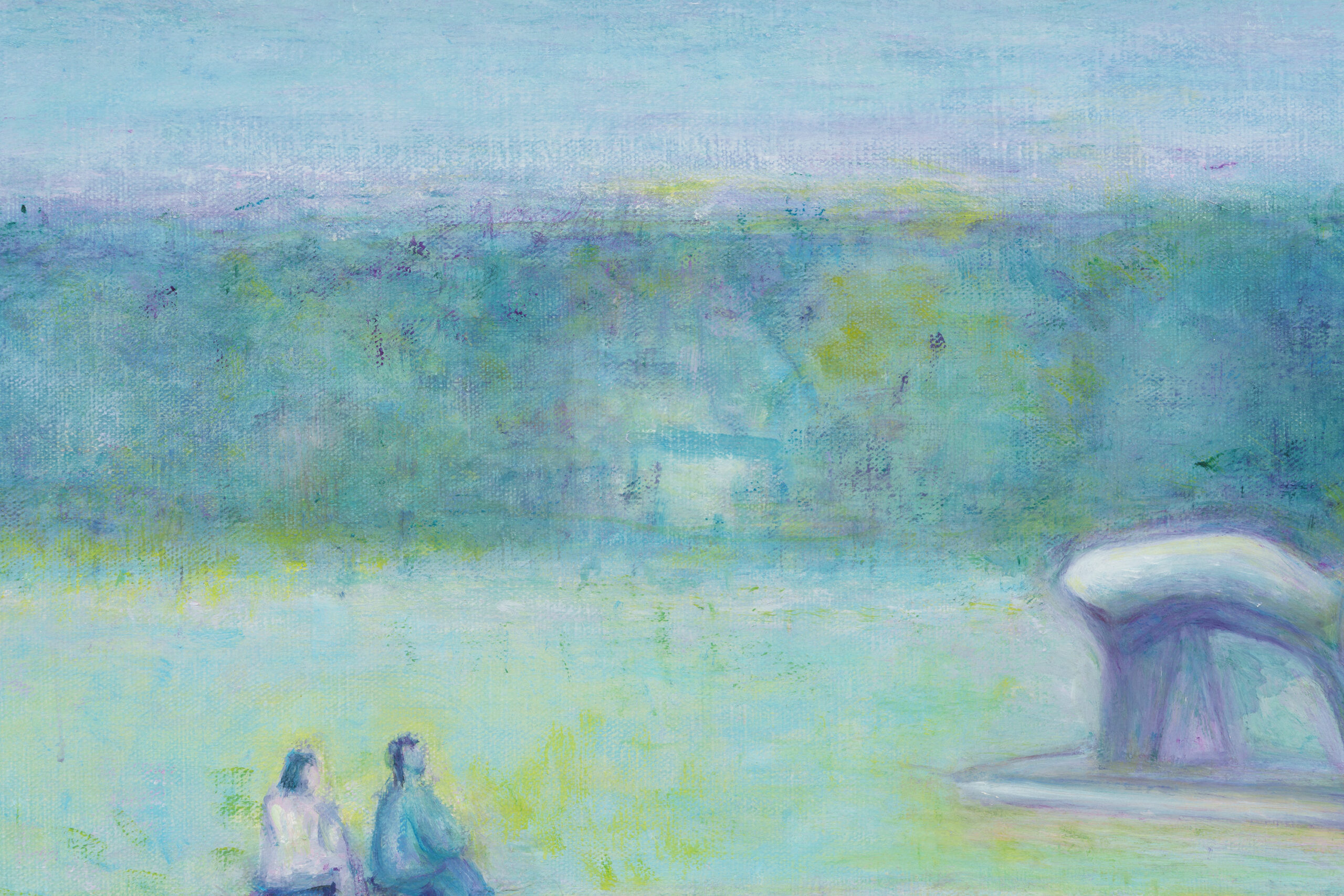
Beyond the window frame stretches an expansive view of an open plaza bordered by groves of trees and a distant mountain range. In the plaza stands a sculpture by Henry Moore, beside which two figures are quietly poised. While Fujikawa explored a wide range of pictorial styles, including those of Picasso and Mondrian, she ultimately, in her later years, arrived at a mode of expression characterized by gentle color and brushwork, through which she depicted scenes imbued with a quiet, dreamlike quality.
Fujikawa Eiko was born in Takamatsu City. She graduated from Kagawa Prefectural Takamatsu Girls’ High School (now Kagawa Prefectural Takamatsu High School) and studied at Nara Women’s Higher Normal School (now Nara Women’s University) before moving to Tokyo. In 1927, she was selected for the first time to participate in Nika Exhibition, an artists’ association founded in 1914 by emerging painters in opposition to the Ministry of Education Art Exhibition (Bunten). Thereafter, she was active primarily within the Nika Exhibition. In 1946, together with Migishi Setsuko and fellow artists, she co-founded the Women Artists Association, an organization devoted to advancing the status of women painters and nurturing emerging talent. She is widely regarded as an early and influential figure among women practitioners of Western-style painting in Japan.