


Fodder
- Artist
-
Ikeda Yūhachi (1886–1963)
- Period
-
1914 (Taishō 3)
- Quality and quantity
-
Bronze, one sculpture
- Size (cm)
-
H 20.0 × W 26.0 × D 11.5
- Category
-
Sculpture
- Accession number
-
BK1#01198
Description
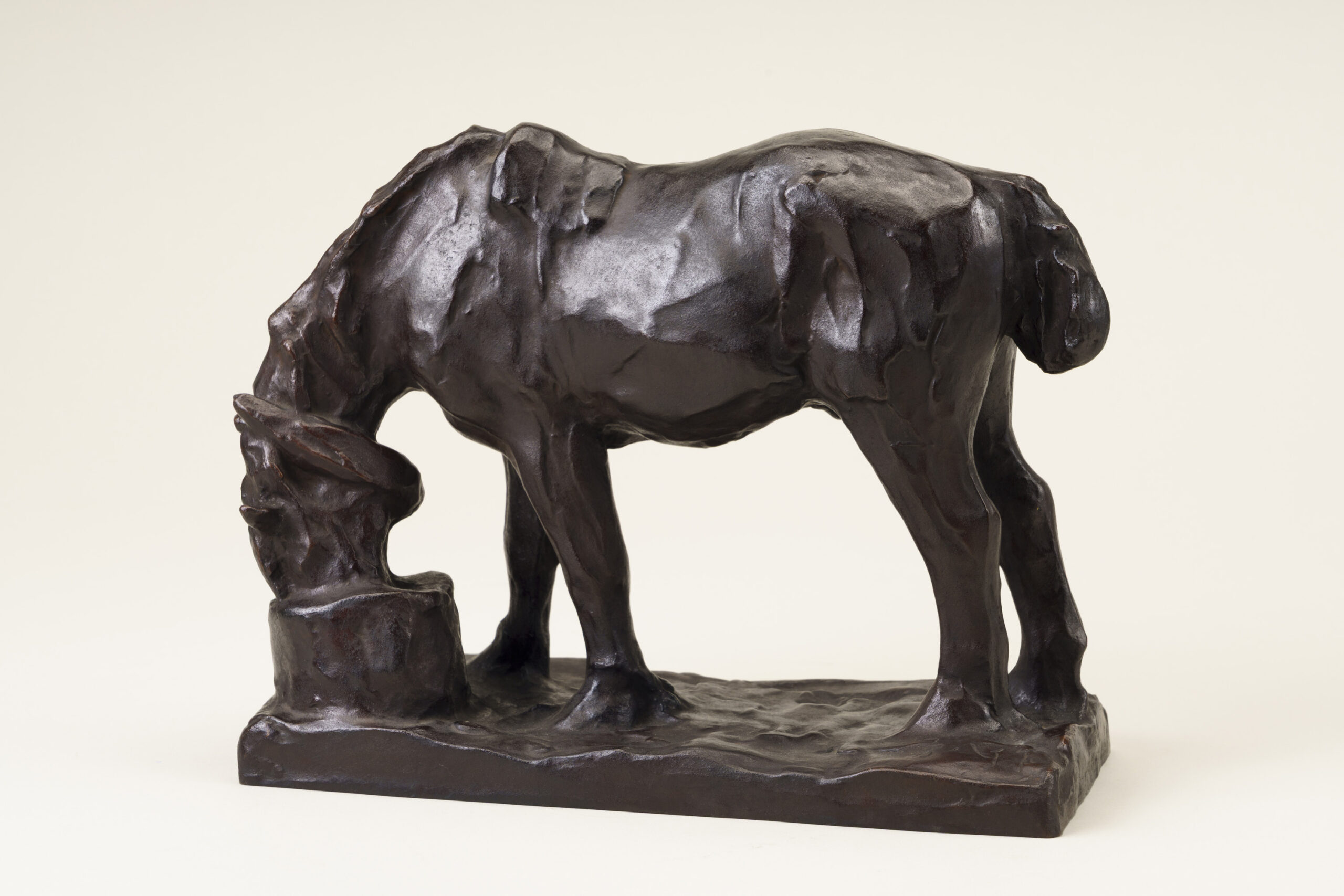
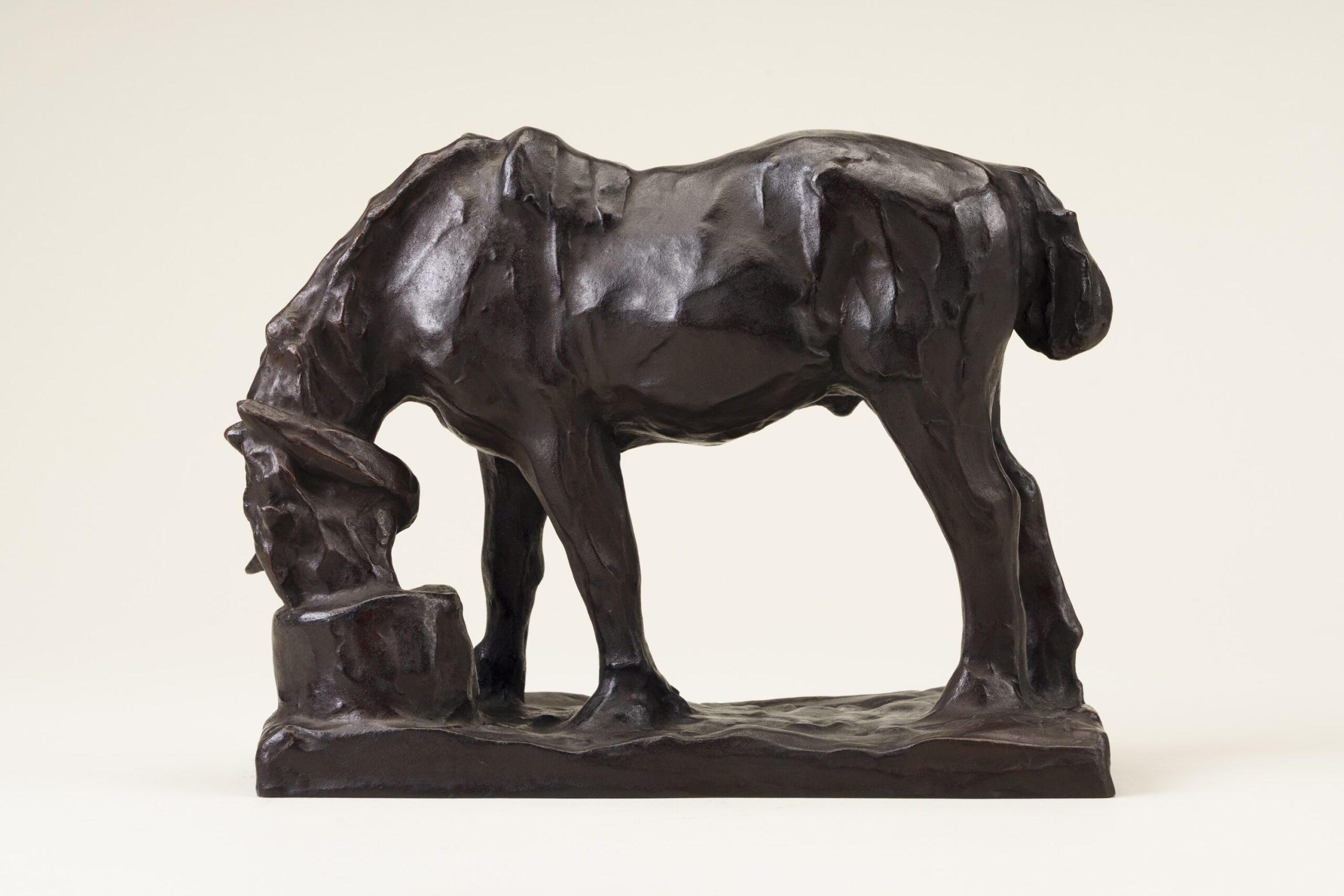
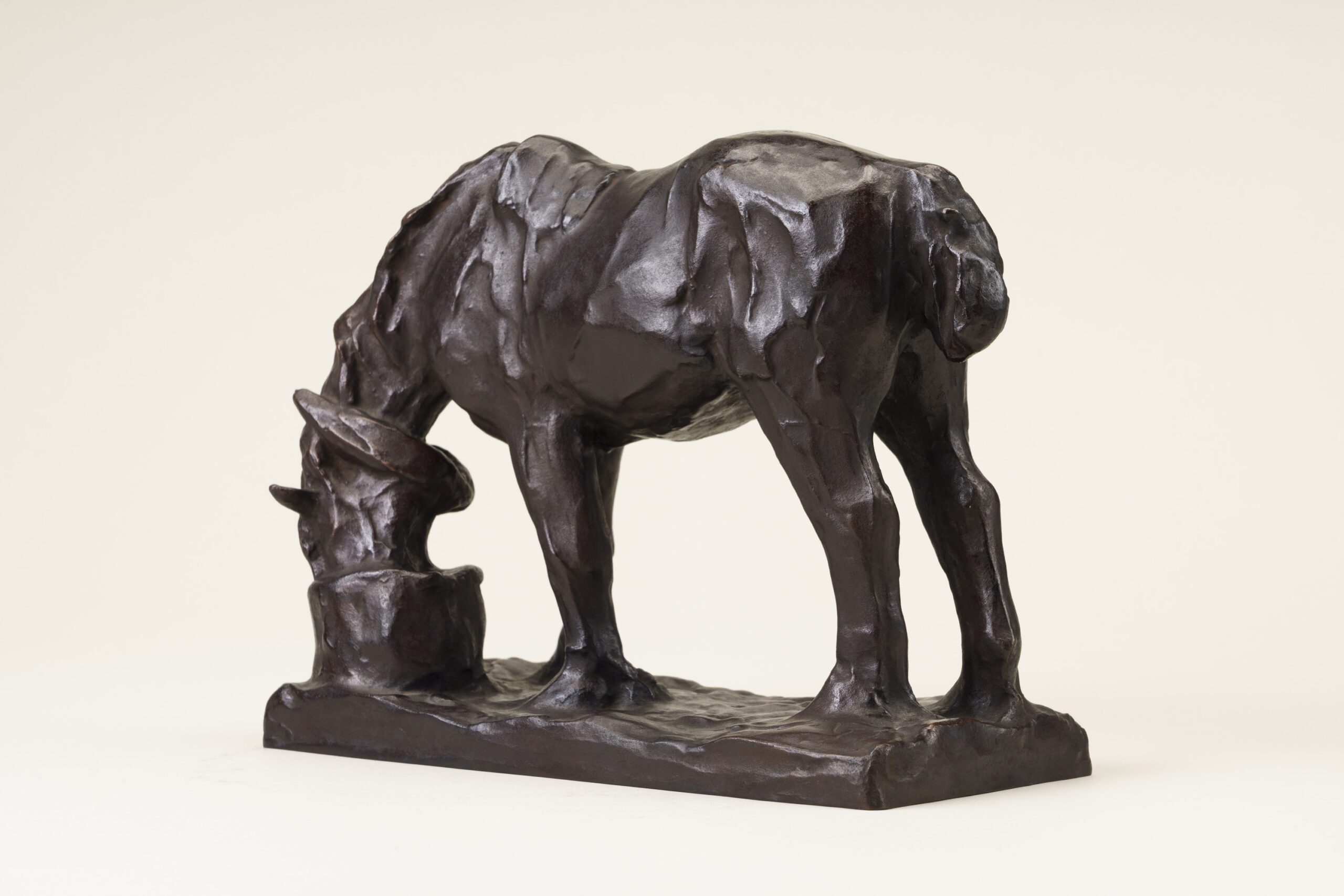
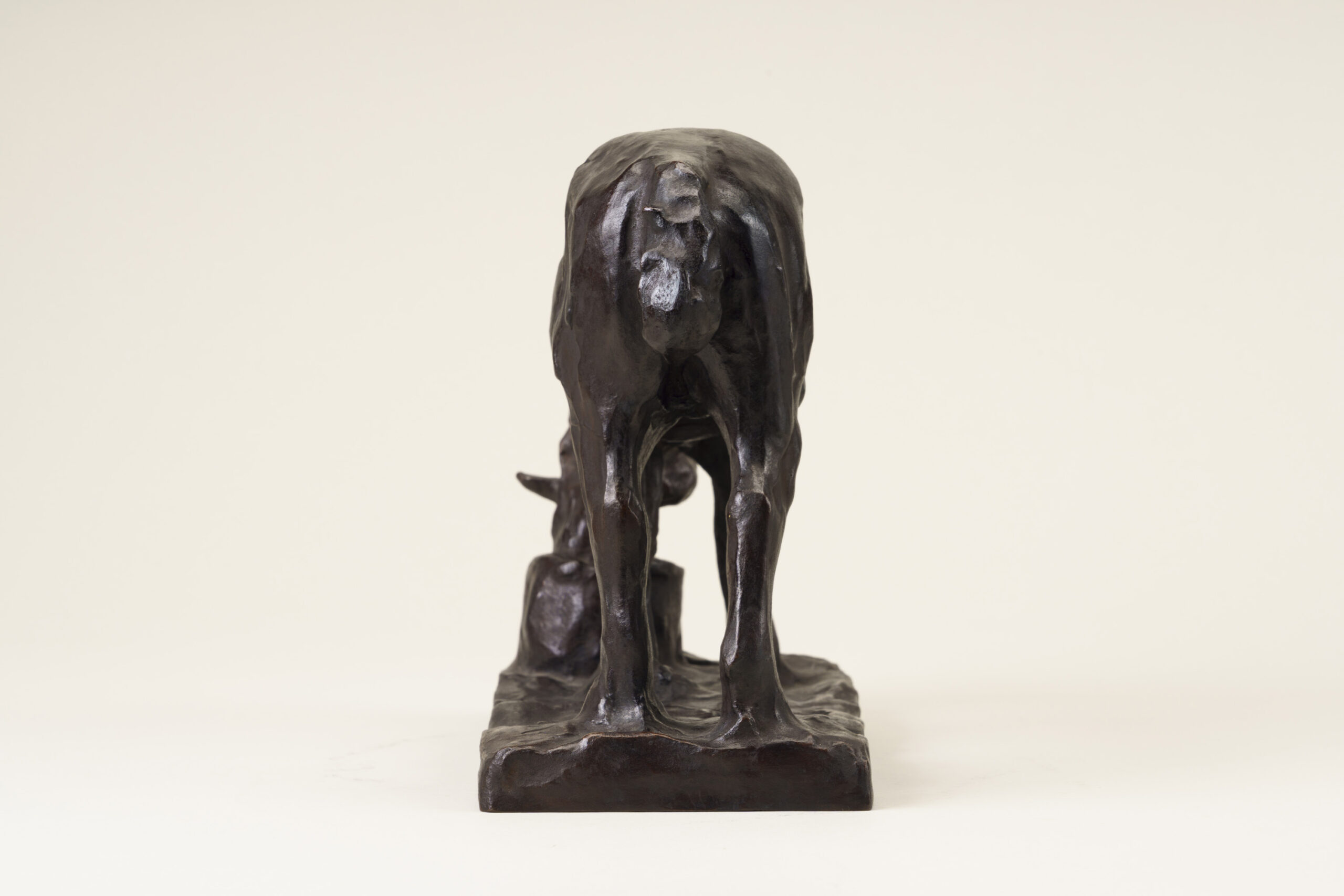
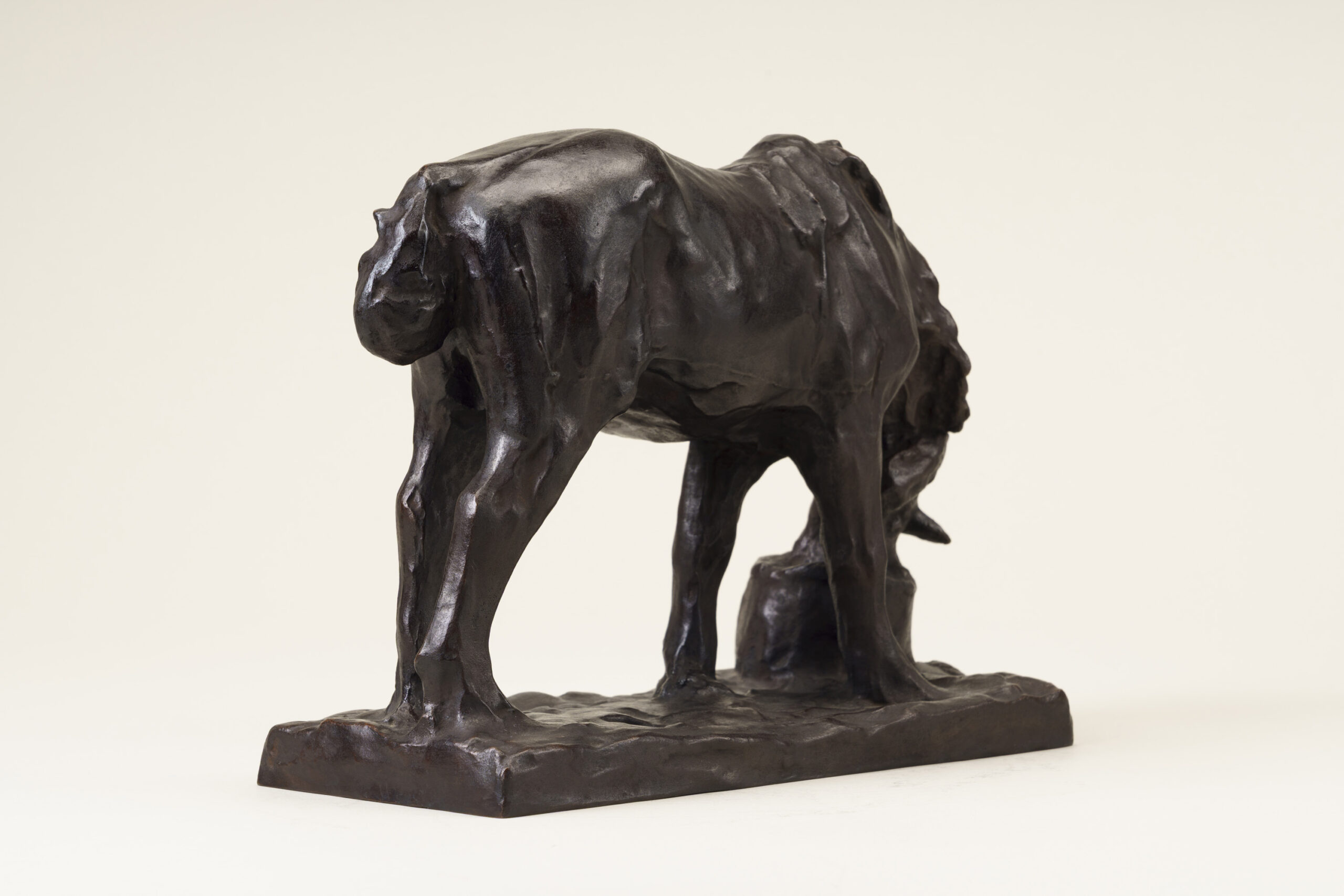
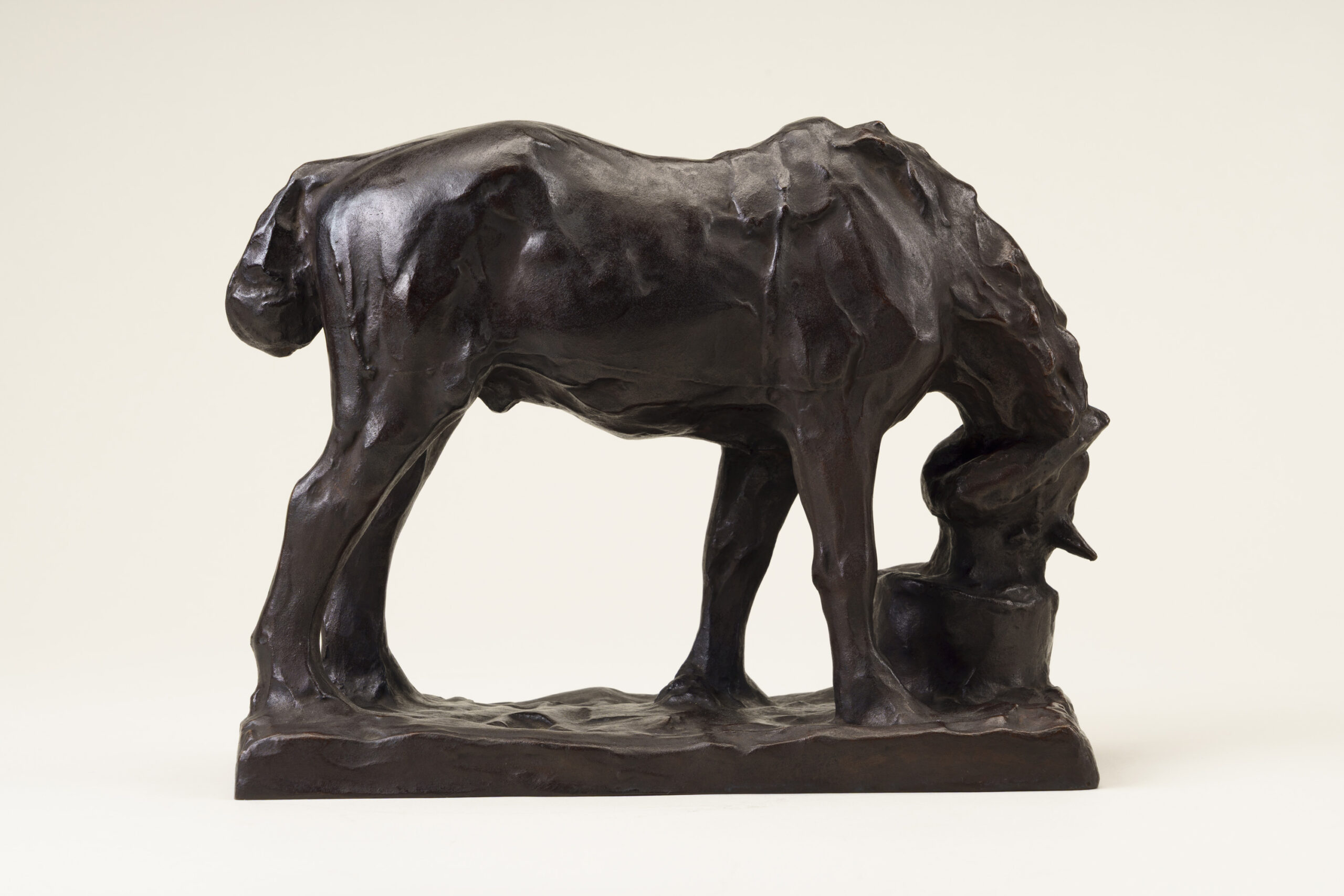
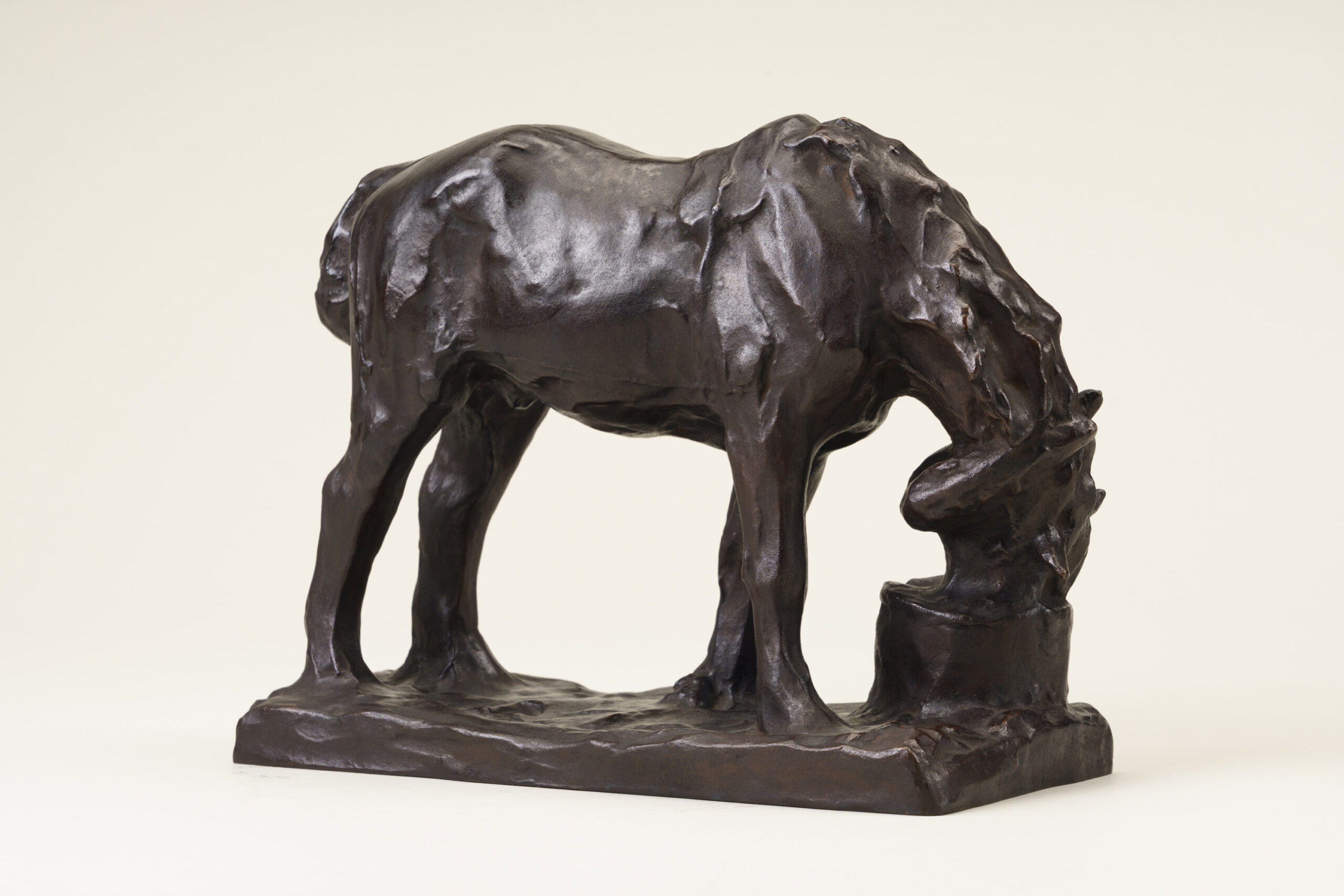
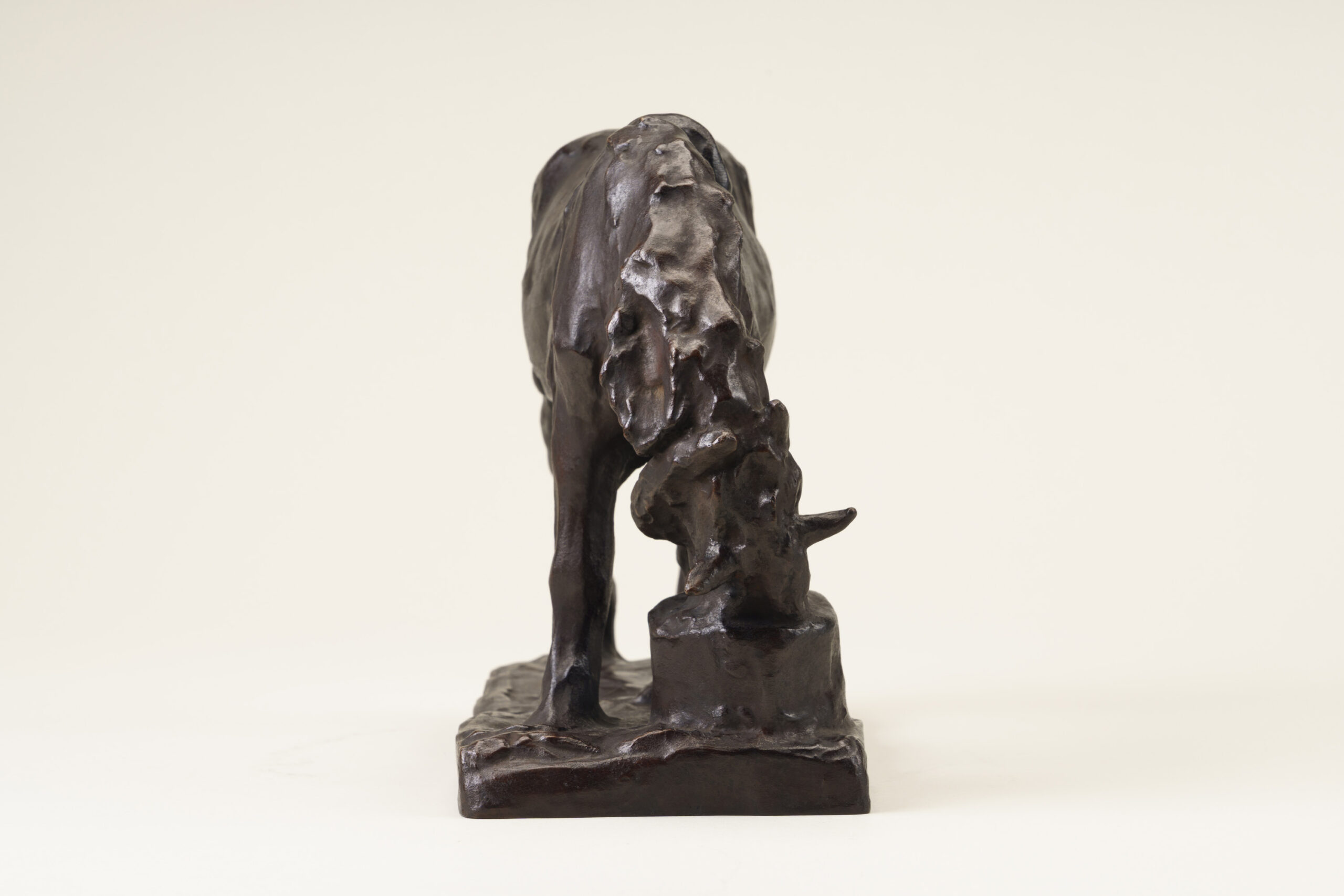
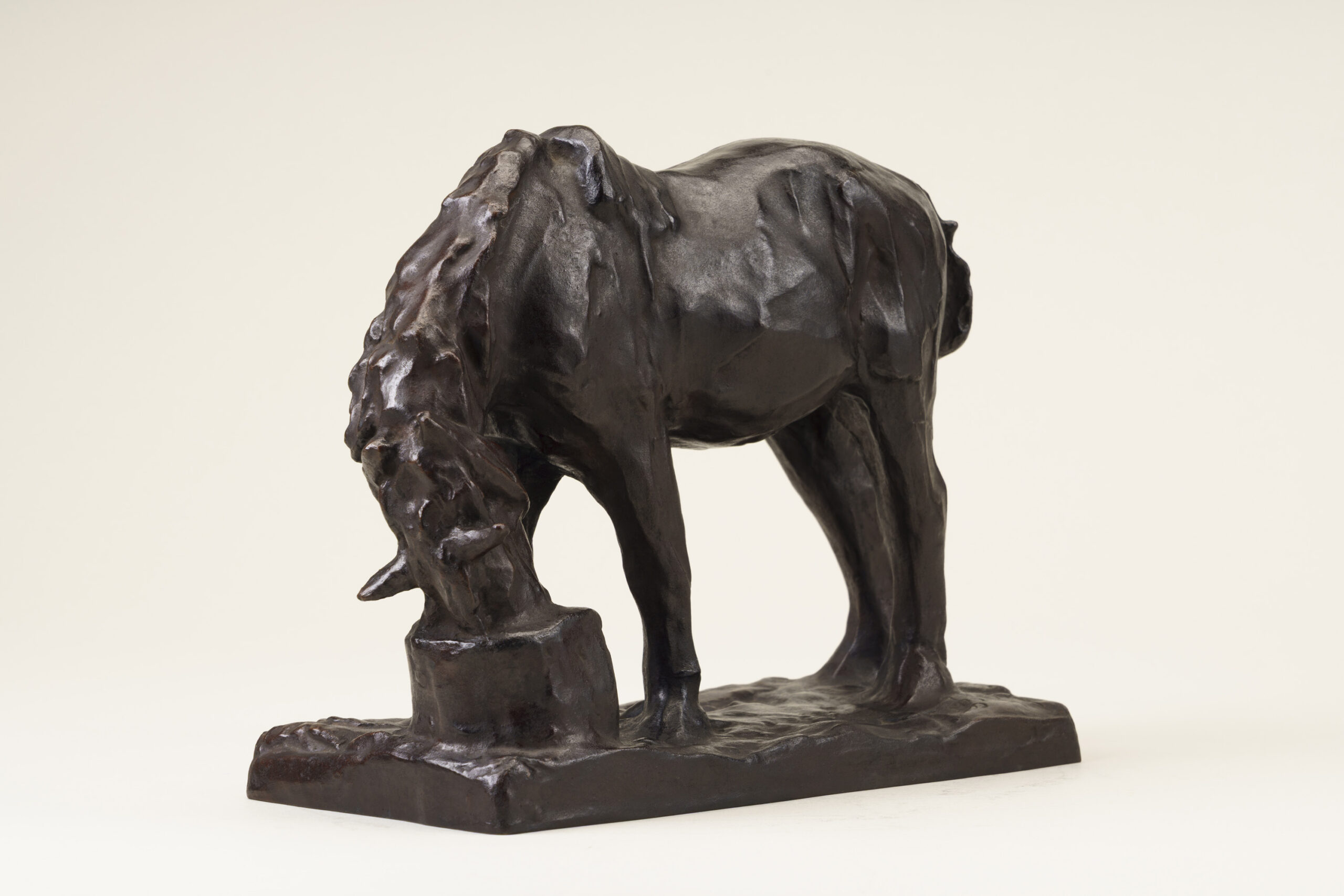
This sculpture depicts a horse lowering its head into a feed trough, absorbed in chewing fodder. While the modeling is gentle and rounded, the underlying movement of the horse’s skeletal structure is accurately understood and rendered. The animal’s inherent charm is vividly and tenderly conveyed.
Ikeda was born in Kayahara Village in the Aya District of Kagawa Prefecture (in present-day Ayagawa-chō). He specialized in animal subjects, particularly horses, and was widely known by the sobriquet “Yūhachi of the Horses.” He frequented places such as the Sanrizuka Imperial Stock Farm in Narita, Chiba Prefecture and Koiwai Farm in Shizukuishi, Iwate Prefecture, where he closely observed the behavior and physical characteristics of horses, which became the basis for his work. Capturing their unguarded gestures and expressions, his works are imbued with a deep affection for animals, and for horses in particular.