


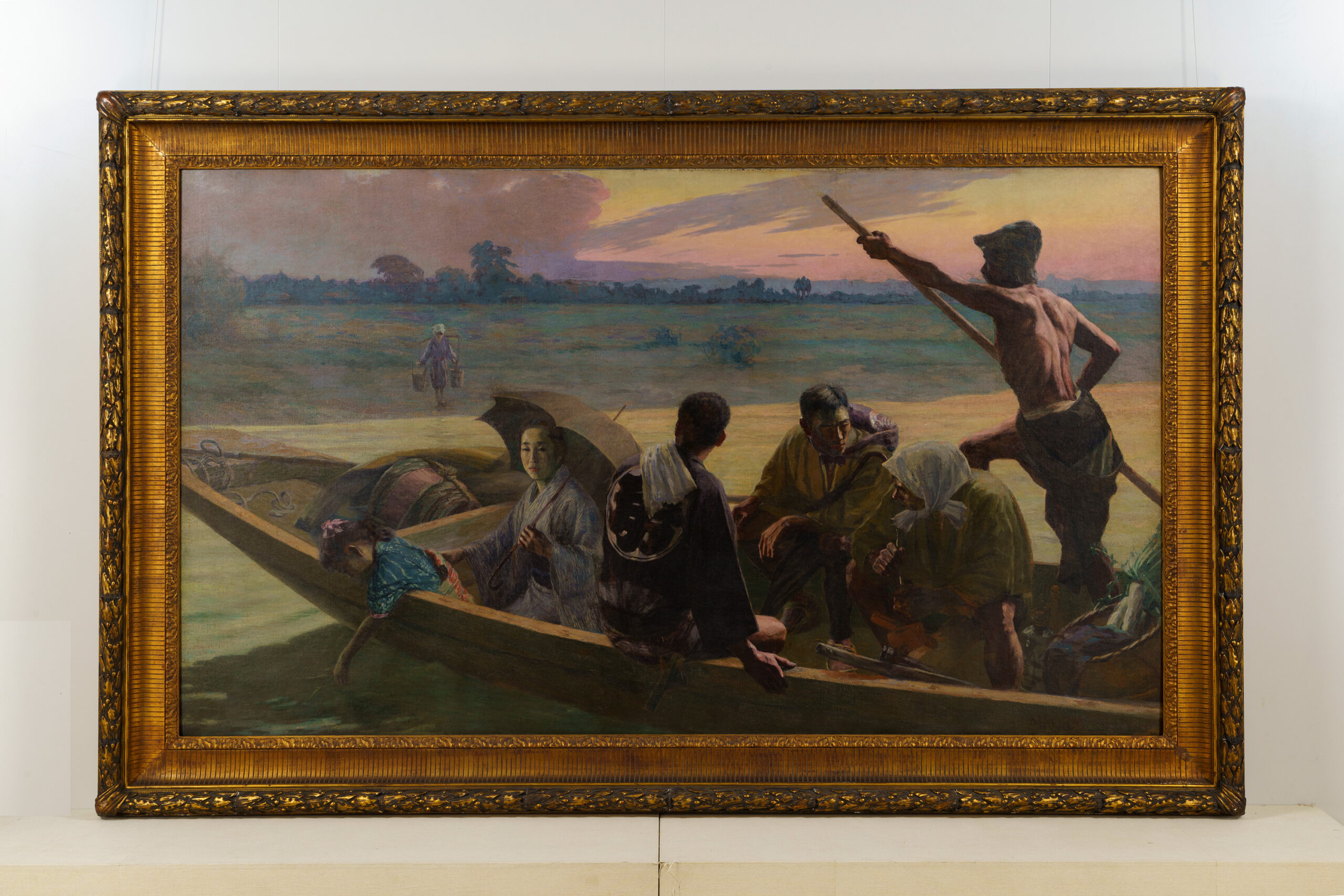
The Ferry (Watashibune)
- Artist
-
Kobayashi Mango (1868–1947)
- Period
-
1909 (Meiji 42)
- Quality and quantity
-
Oil on canvas, one painting
- Size (cm)
-
H 155.0 × W 267.0
- Category
-
Painting (Japan)
- Classification
-
Designated by the prefecture
- Accession number
-
BK1#00519

Description
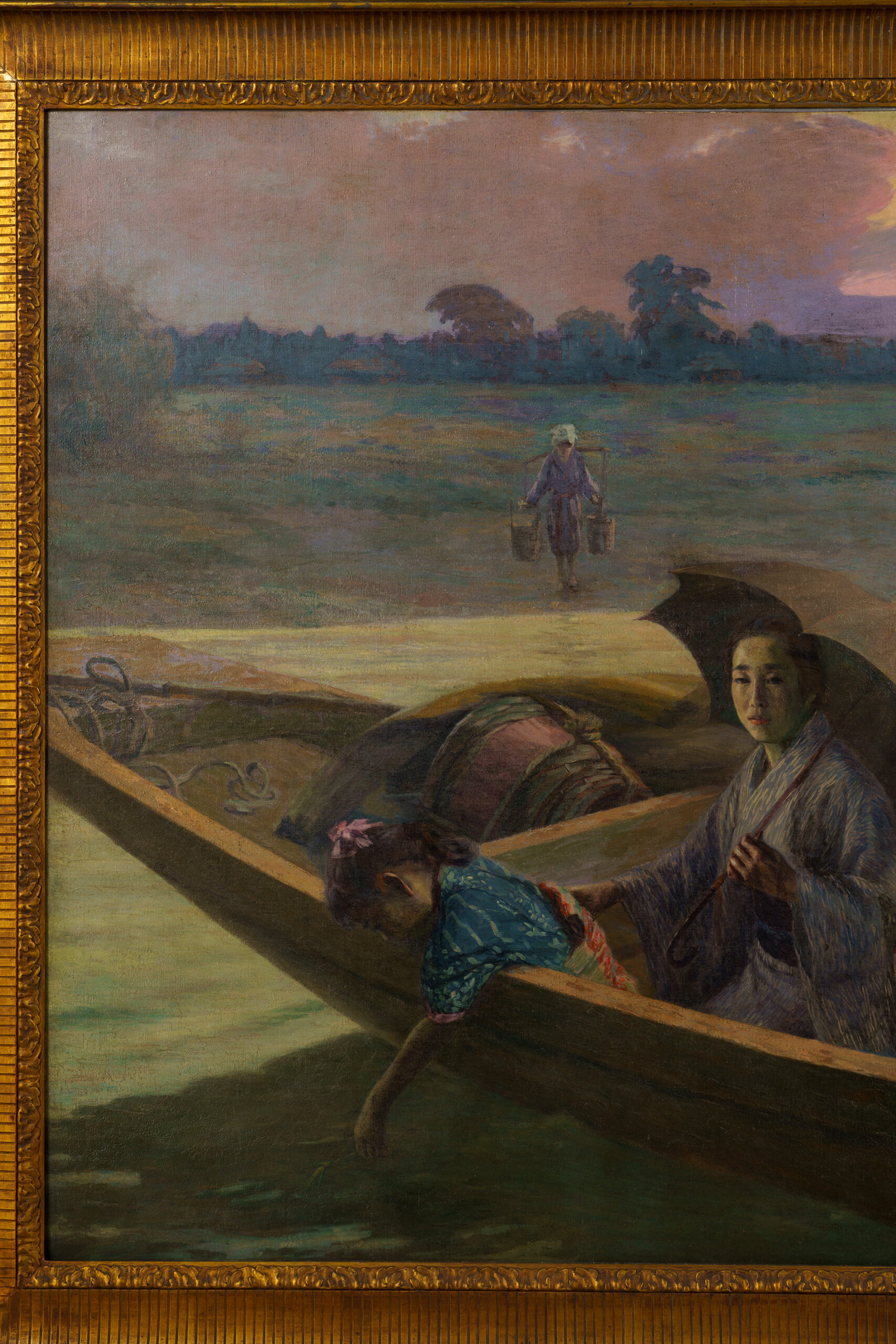
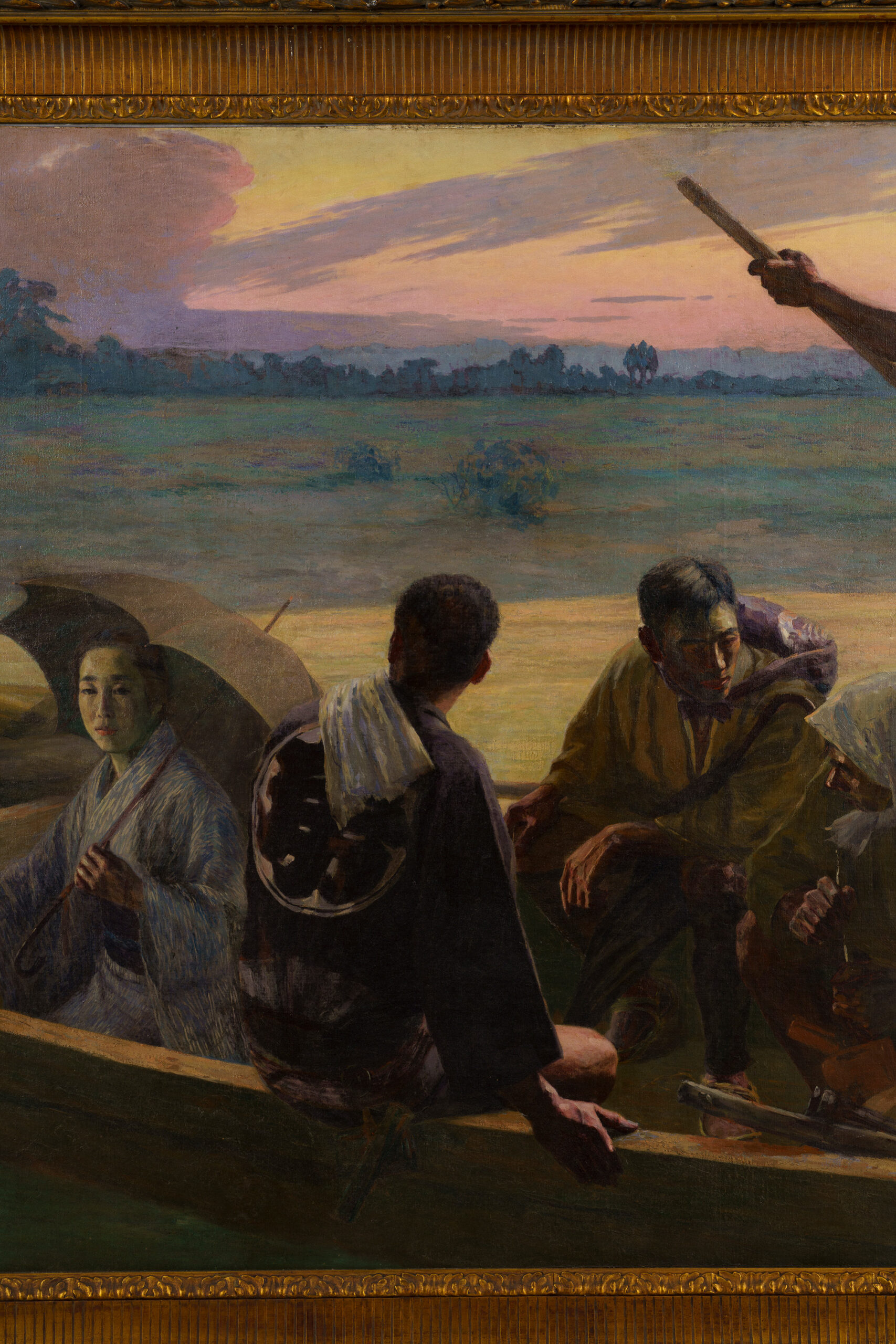
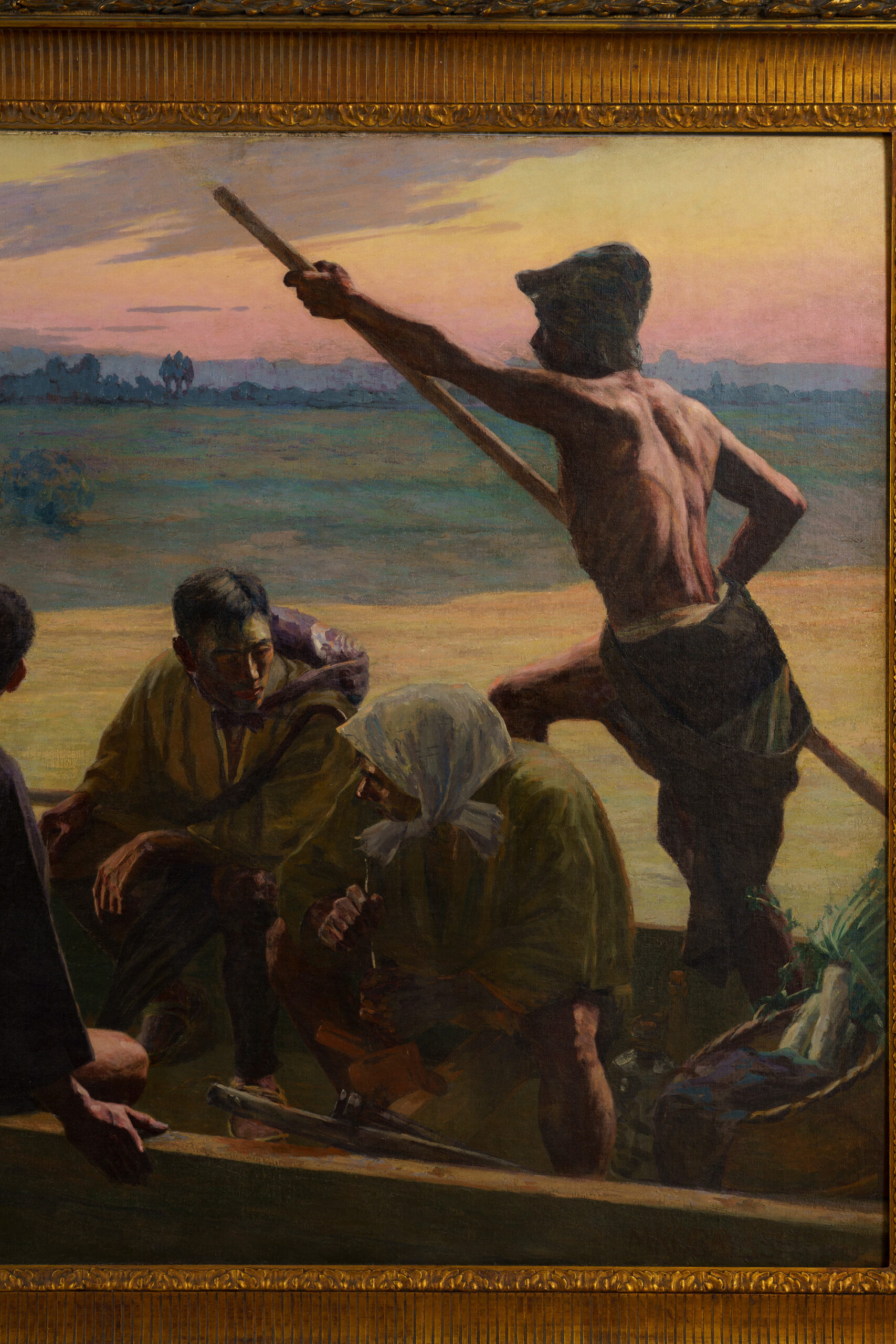
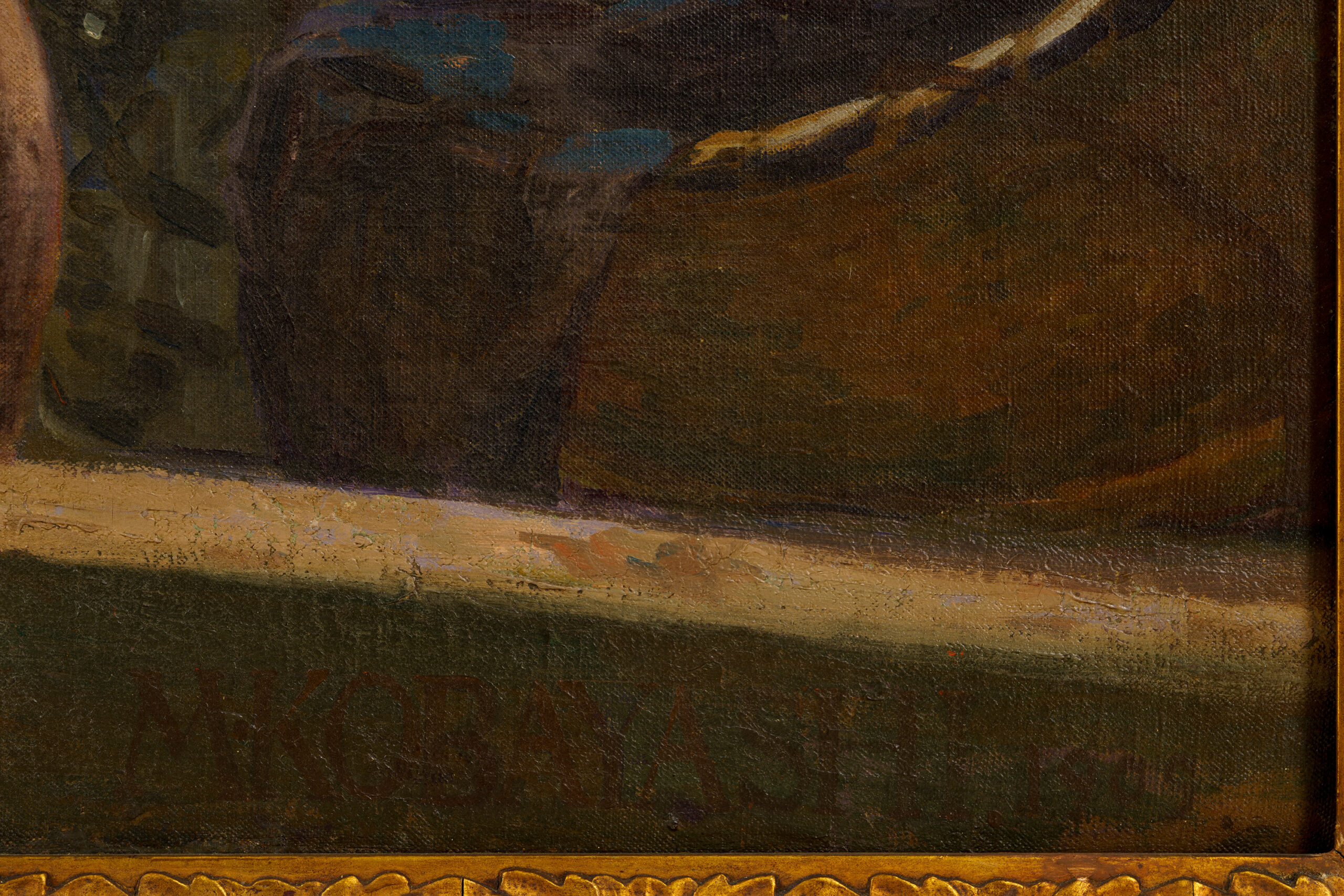
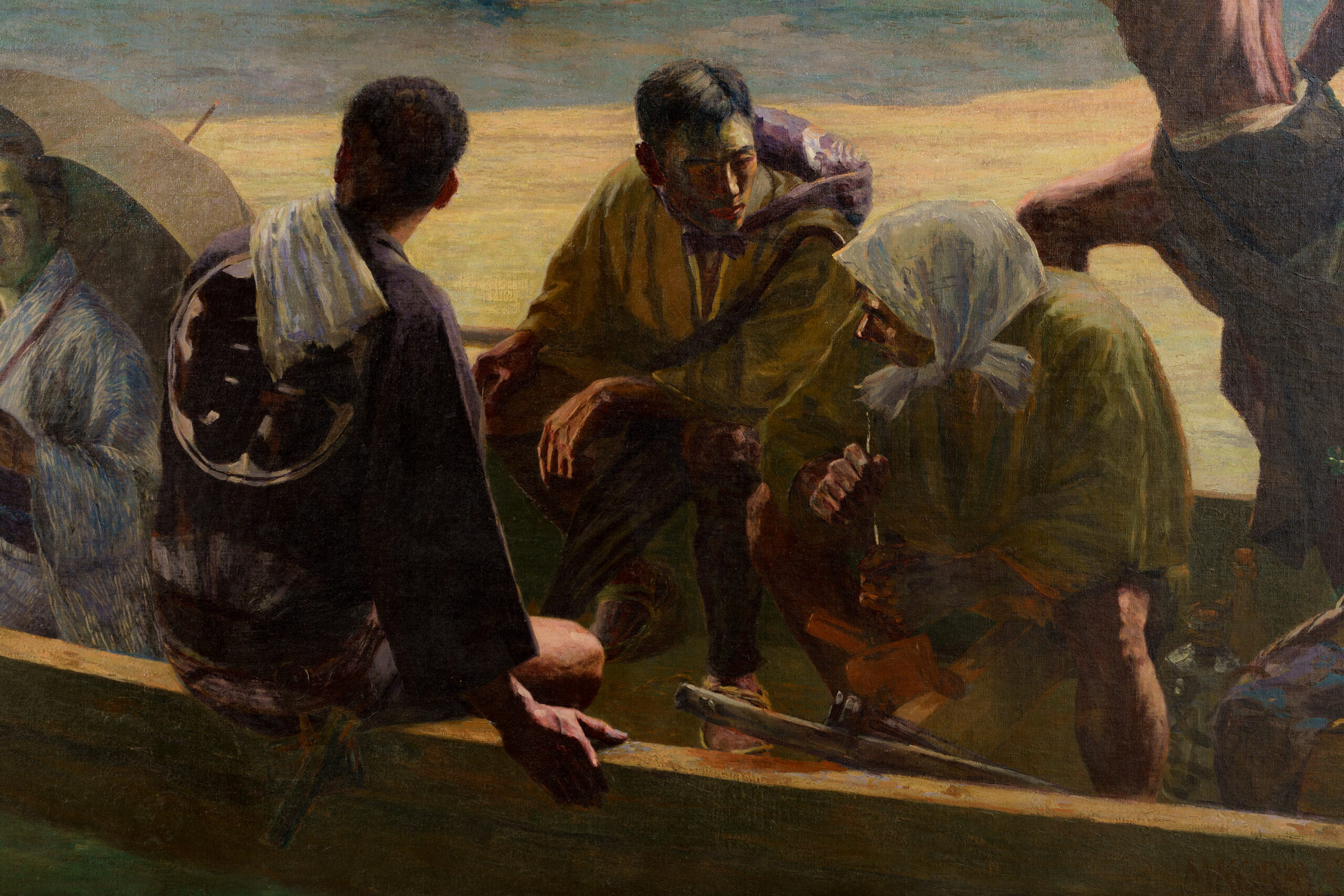
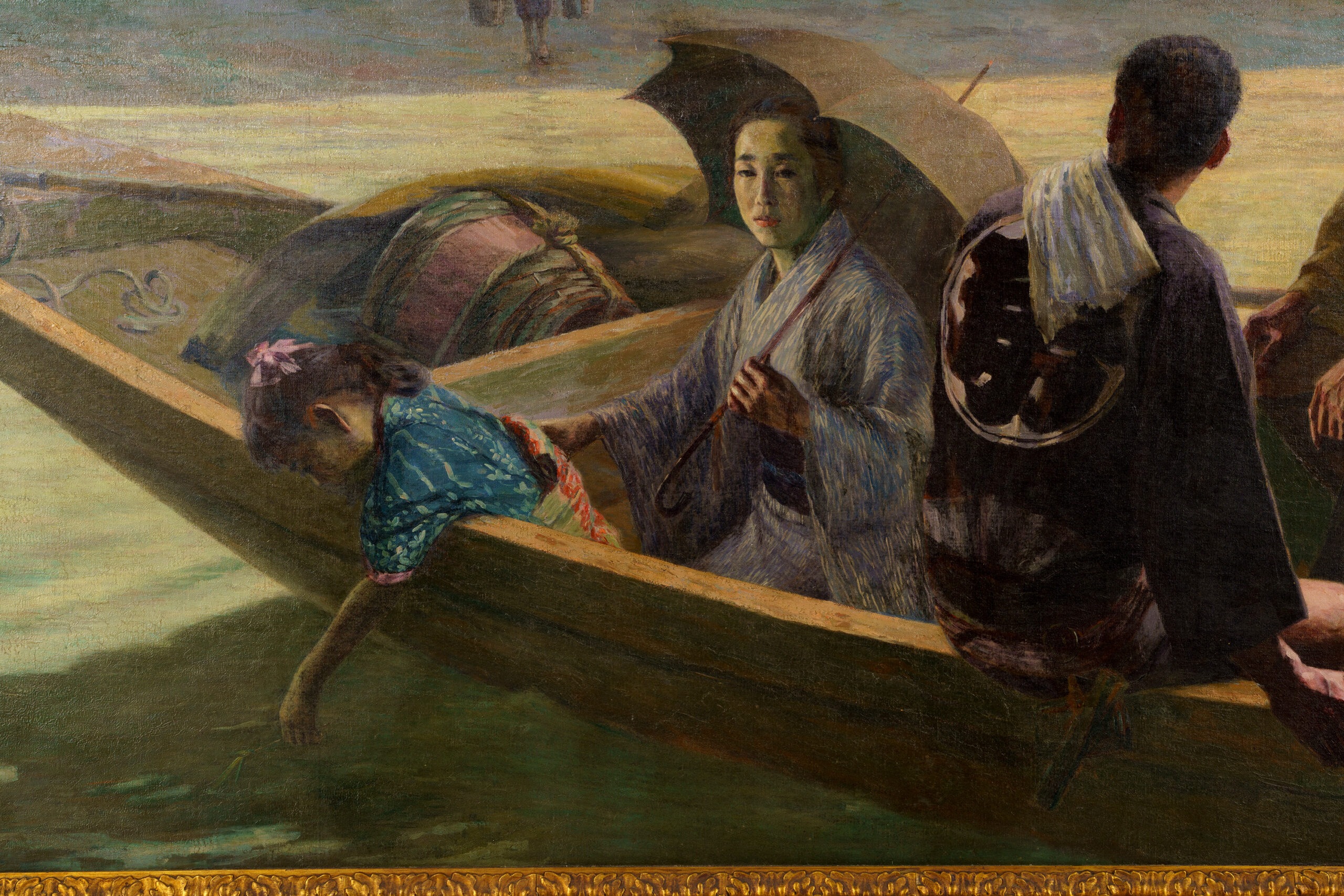
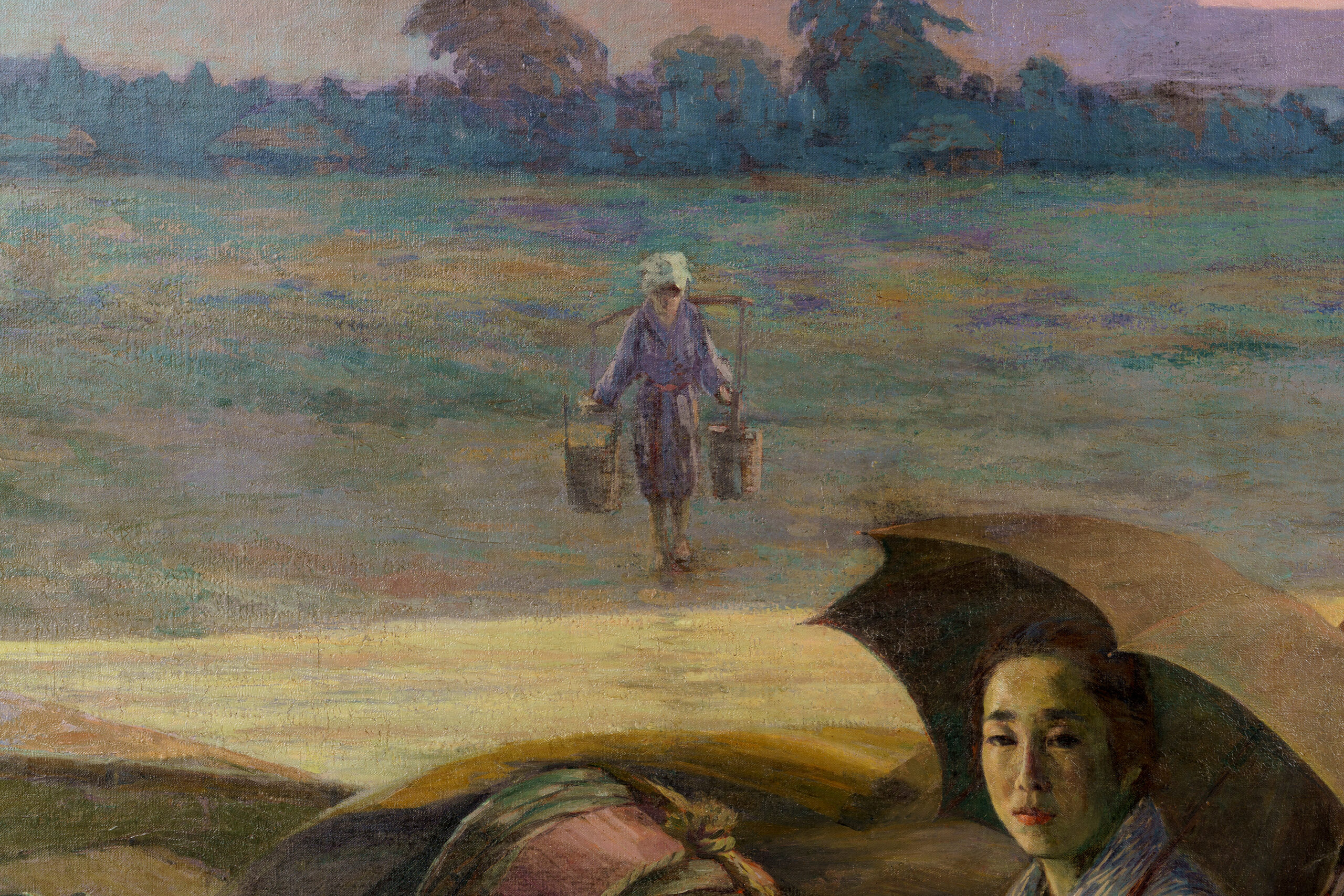
The scene depicts a ferry crowded with figures from different walks of life: a boatman, a craftsman wearing an indigo-dyed shirushi-banten (a short coat with an identifying crest), a man lightly burdened with a furoshiki-wrapped bundle, another carrying a basket of vegetables and a refillable sake flask, a woman shading herself with a parasol and a young girl beside her, reaching down to touch the surface of the water. Together, they form a vivid group portrait of individuals united only by their shared passage across the river. In preparation for this work, Kobayashi is said to have constructed a full-scale model of a boat in his studio. This work received third prize at the Third Ministry of Education Art Exhibition (Bunten) in 1909.
Kobayashi Mango was born in Takuma Village in the Mino District of Sanuki Province (present-day Takuma-cho in Mitoyo City, Kagawa Prefecture). He devoted himself to training younger artists at the Tokyo School of Fine Arts (now Tokyo University of the Arts) and at the private painting studio Dōshūsha. He also played a key role in the establishment of the Kagawa Prefectural Art Exhibition, a publicly organized exhibition that began in 1934.