


Gennai-yaki Green-Glazed Plate with a World Map
- Artist
-
-
- Period
-
Edo period, 18th–19th century
- Quality and quantity
-
Ceramic, one plate
- Size (cm)
-
H 38.0 × W 34.5 × D 3.6
- Category
-
Craftwork
- Accession number
-
UN1#00080
Description
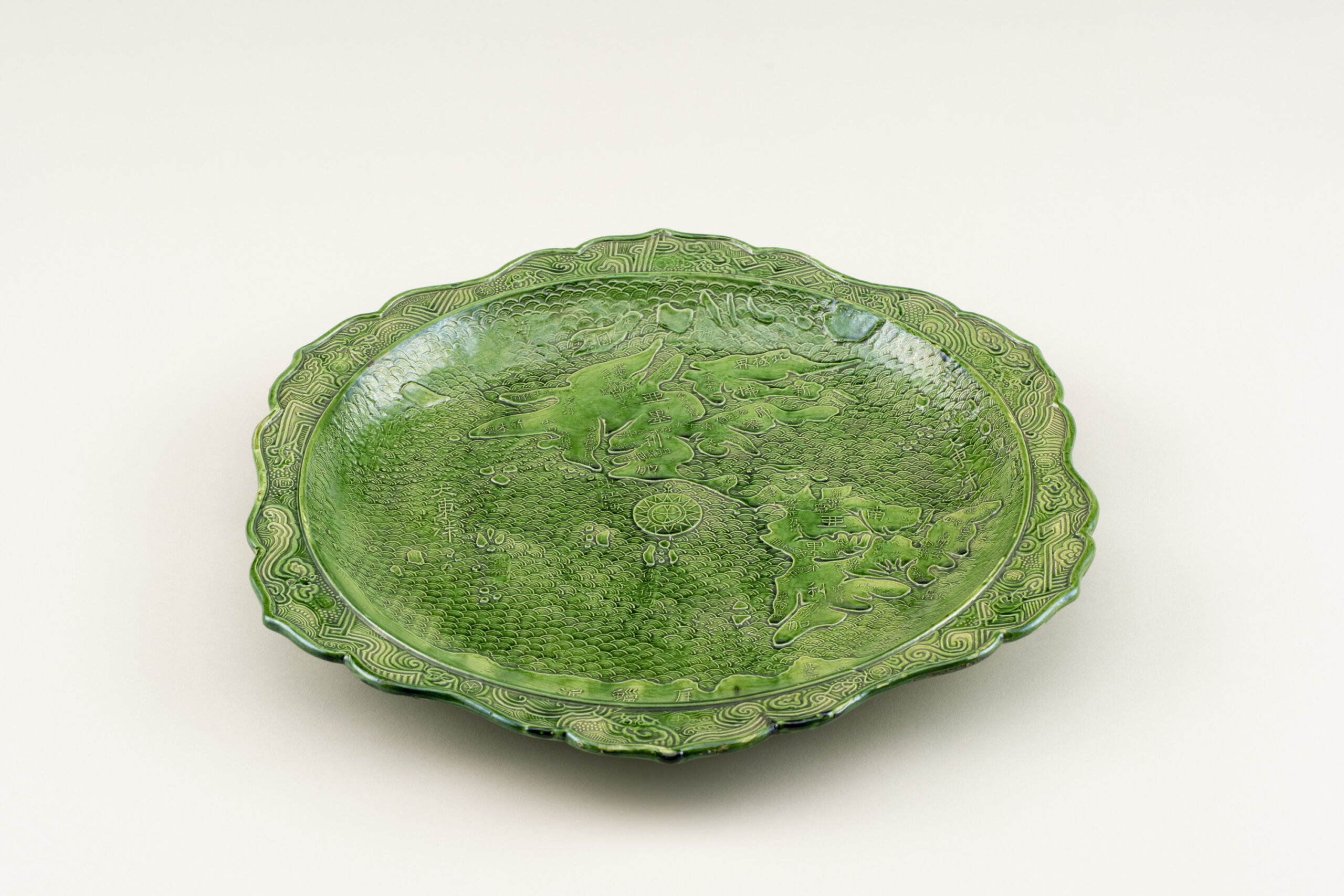
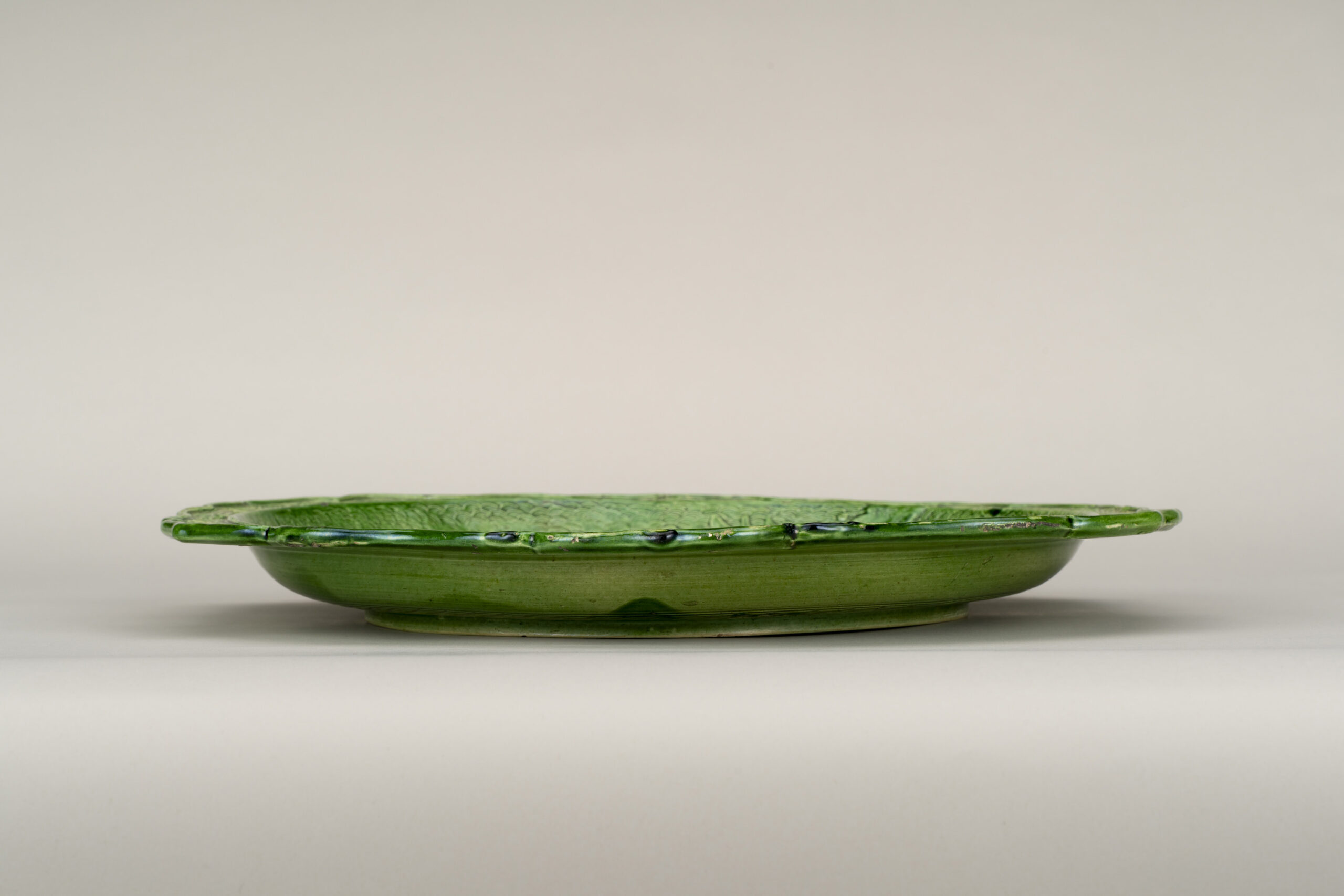
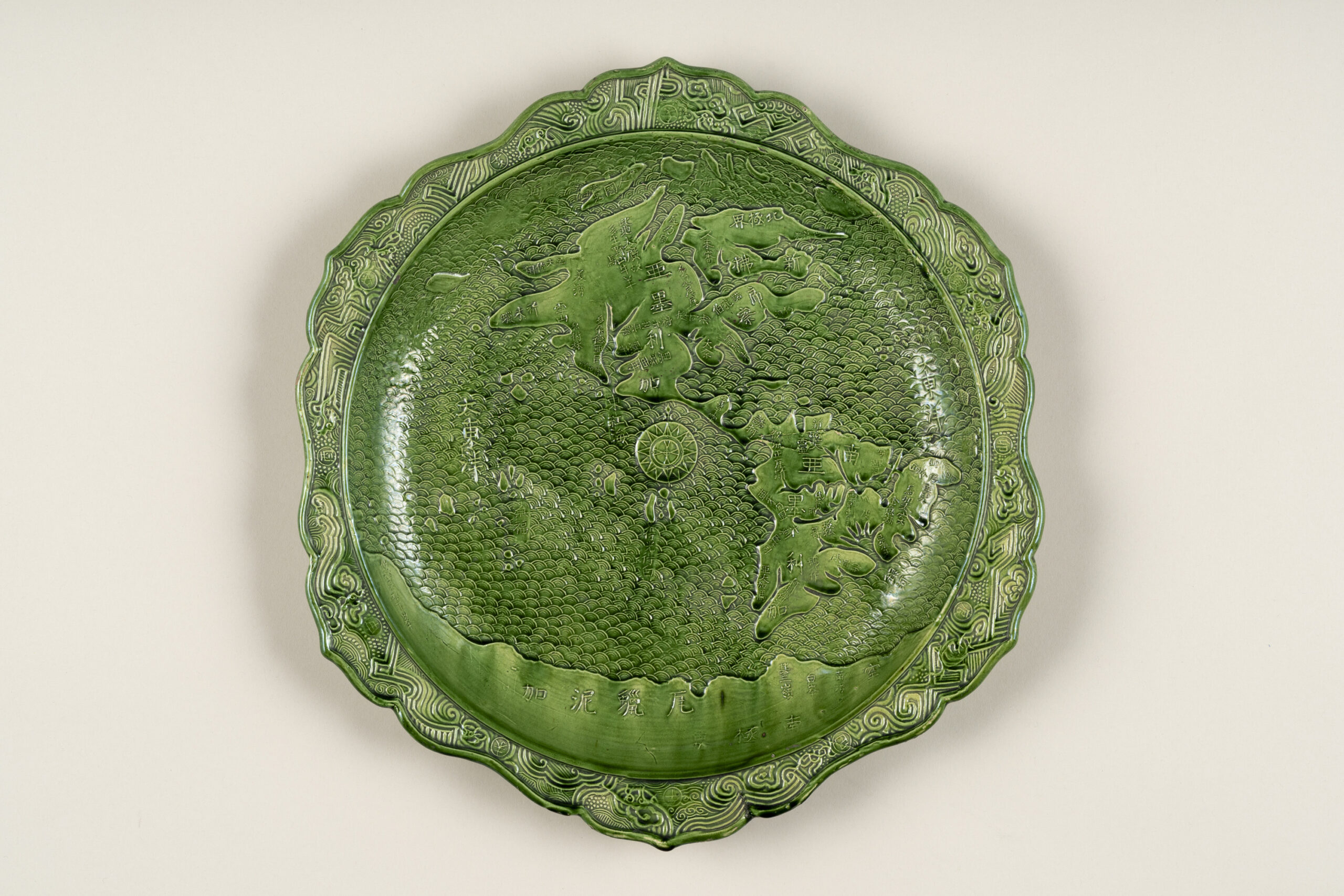
This Gennai-yaki plate features a world map as its central motif.
Gennai-yaki is a type of pottery said to have been established in Shido (present-day Sanuki City, Kagawa Prefecture) by Hiraga Gennai (1728–1779), a native of the area renowned for his achievements in a wide range of fields, including science and literature.
It is believed that the use of maps as decorative motifs on ceramics originated with Gennai-yaki. This plate decorated with a world map is one of the most representative examples of Gennai-yaki in the Edo period, when contact with foreign countries was strictly limited. The map is based on an illustration of North and South America published in the Edo-period encyclopedia Morokoshi Kinmō Zui. Plates depicting the Eurasian and African continents, drawn from the same source, are also known.
Around the rim of the plate are characters of the twelve zodiac signs indicating the cardinal and intercardinal directions, each accompanied by the animals they represent. Finely executed decorative details, including plant motifs and representations of utensils, further enhance the visual richness of the work.