


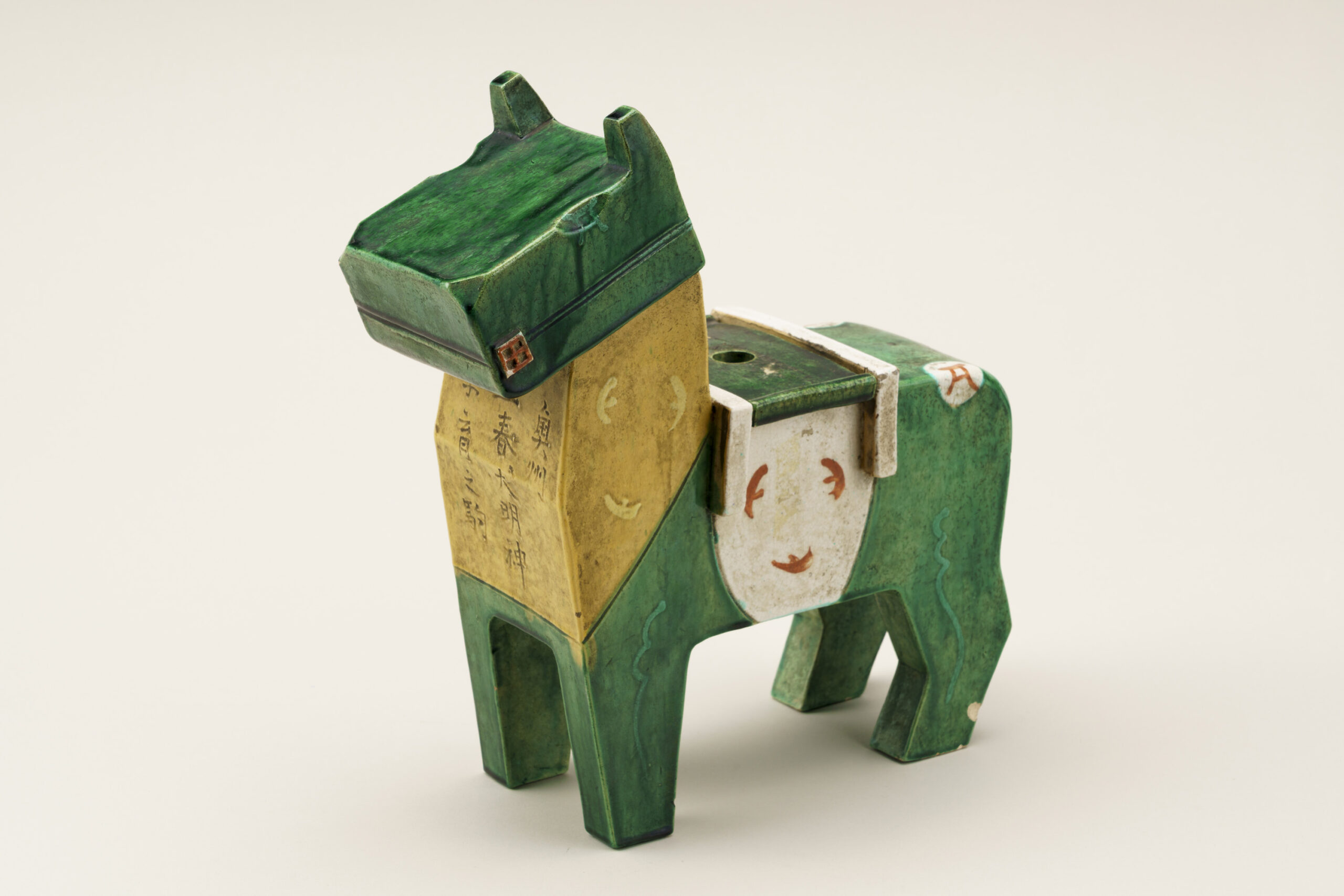
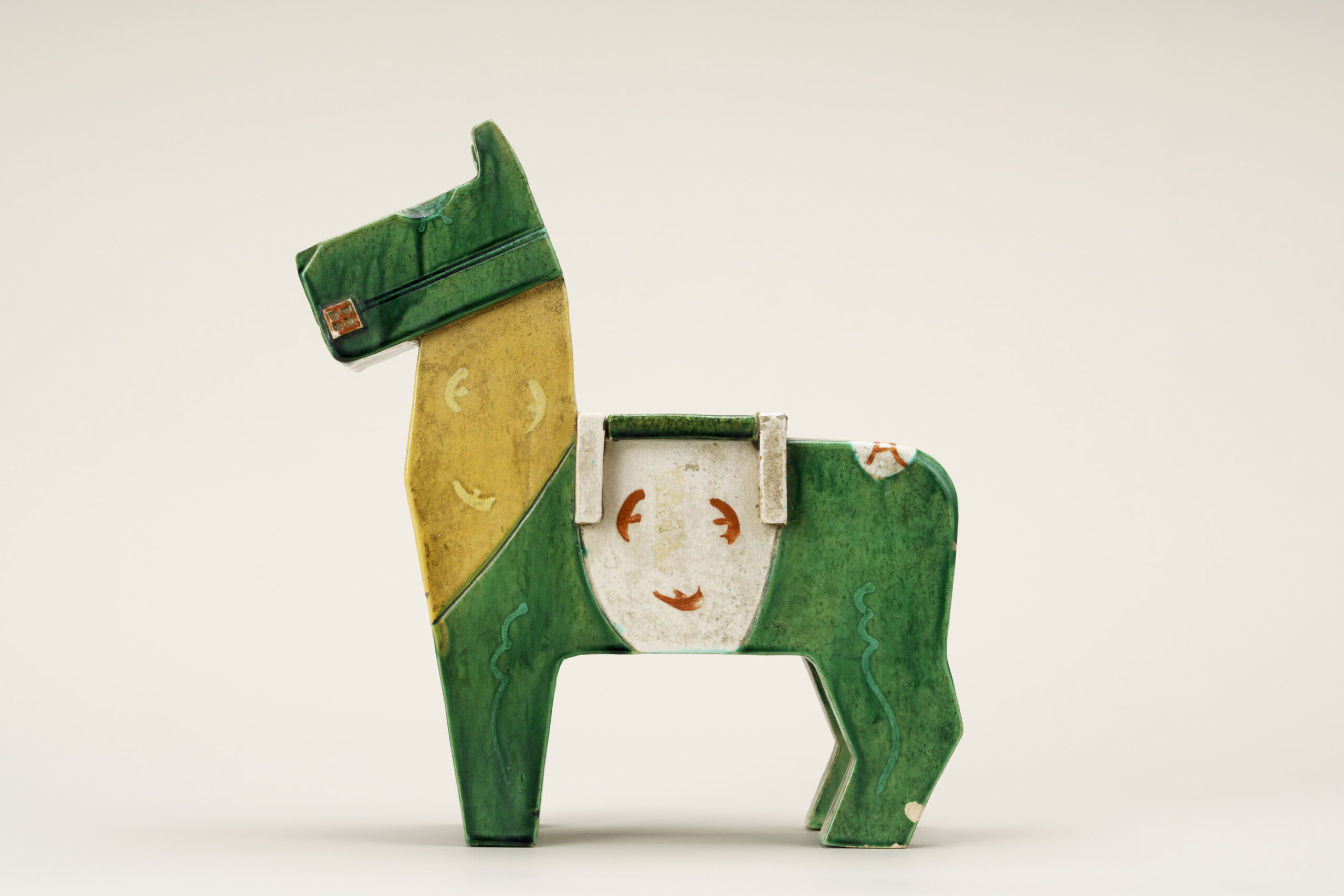
Gennai-yaki Miharu-goma Incense Burner
- Artist
-
Wakita Shunmin (dates unknown)
- Period
-
Edo period, 18th century
- Quality and quantity
-
Ceramic, one piece
- Size (cm)
-
H 29.3 × W 11.0 × D 26.8
- Category
-
Craftwork
- Accession number
-
B03000010
Description
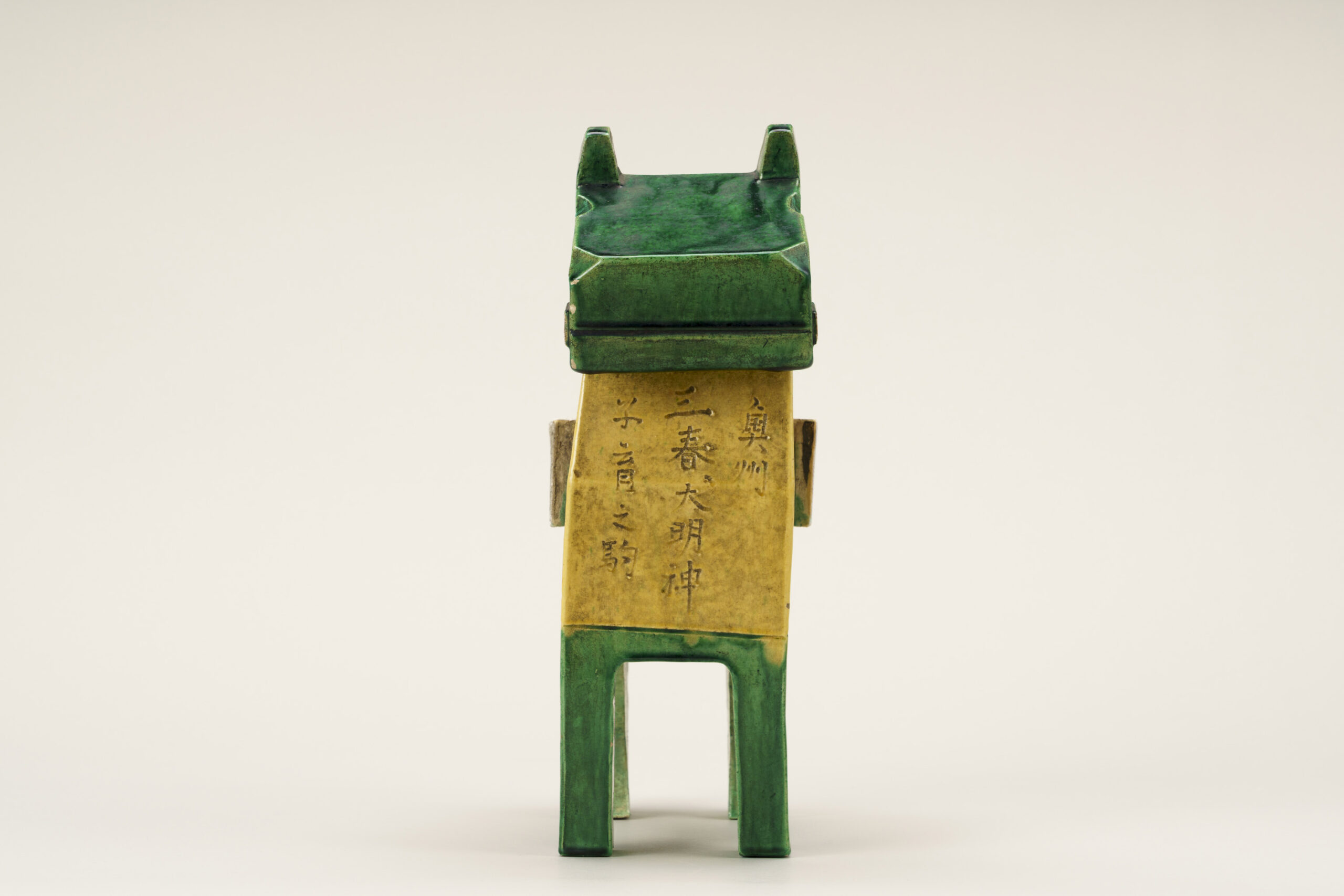
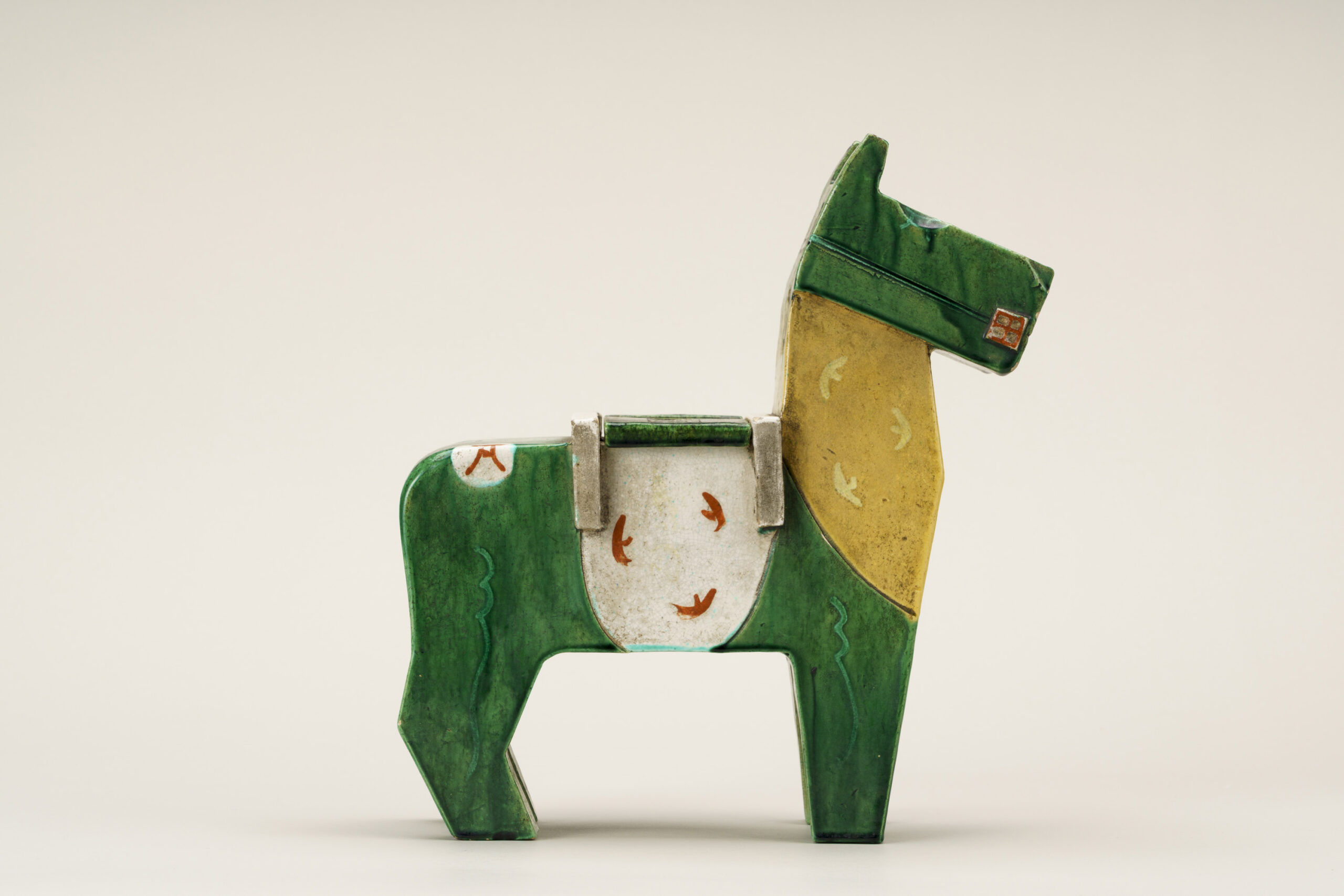
This is a Gennai-yaki incense burner modeled after a Miharu-goma, a wooden horse figurine still made today in Miharu Town, Fukushima Prefecture. Miharu-goma are folk toys traditionally associated with prayers for the healthy growth of children. On the front of this piece is an inscription reading “奥州三春大明神子育之駒 (Ōshū Miharu Daimyōjin Kosodate no Koma),” which is a reference to the Miharu deity revered for nurturing children.
Gennai-yaki is a type of pottery said to have been established in Shido (present-day Sanuki City, Kagawa Prefecture) by Hiraga Gennai (1728–1779), a native of the area renowned for his achievements in a wide range of fields, including science and literature.
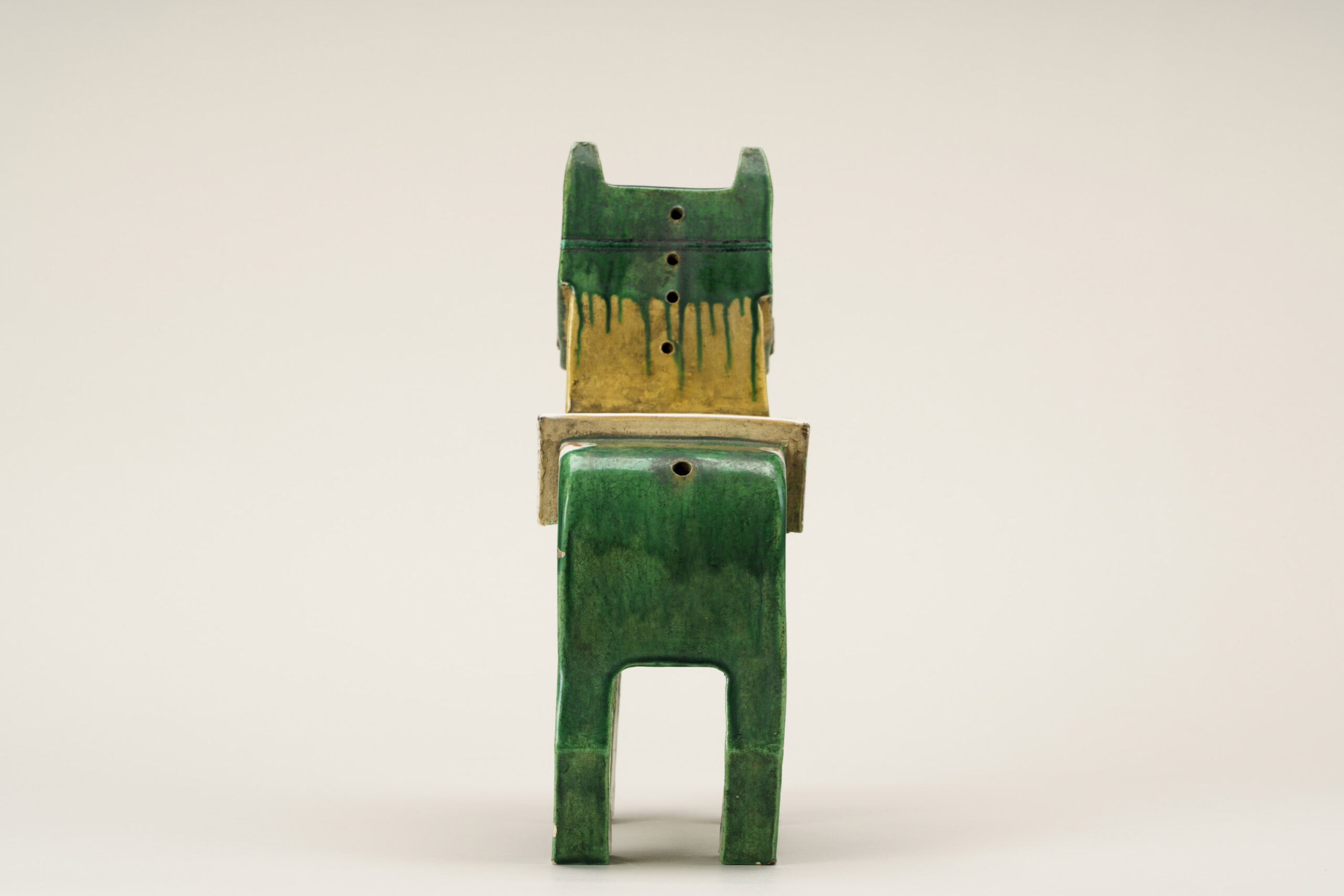
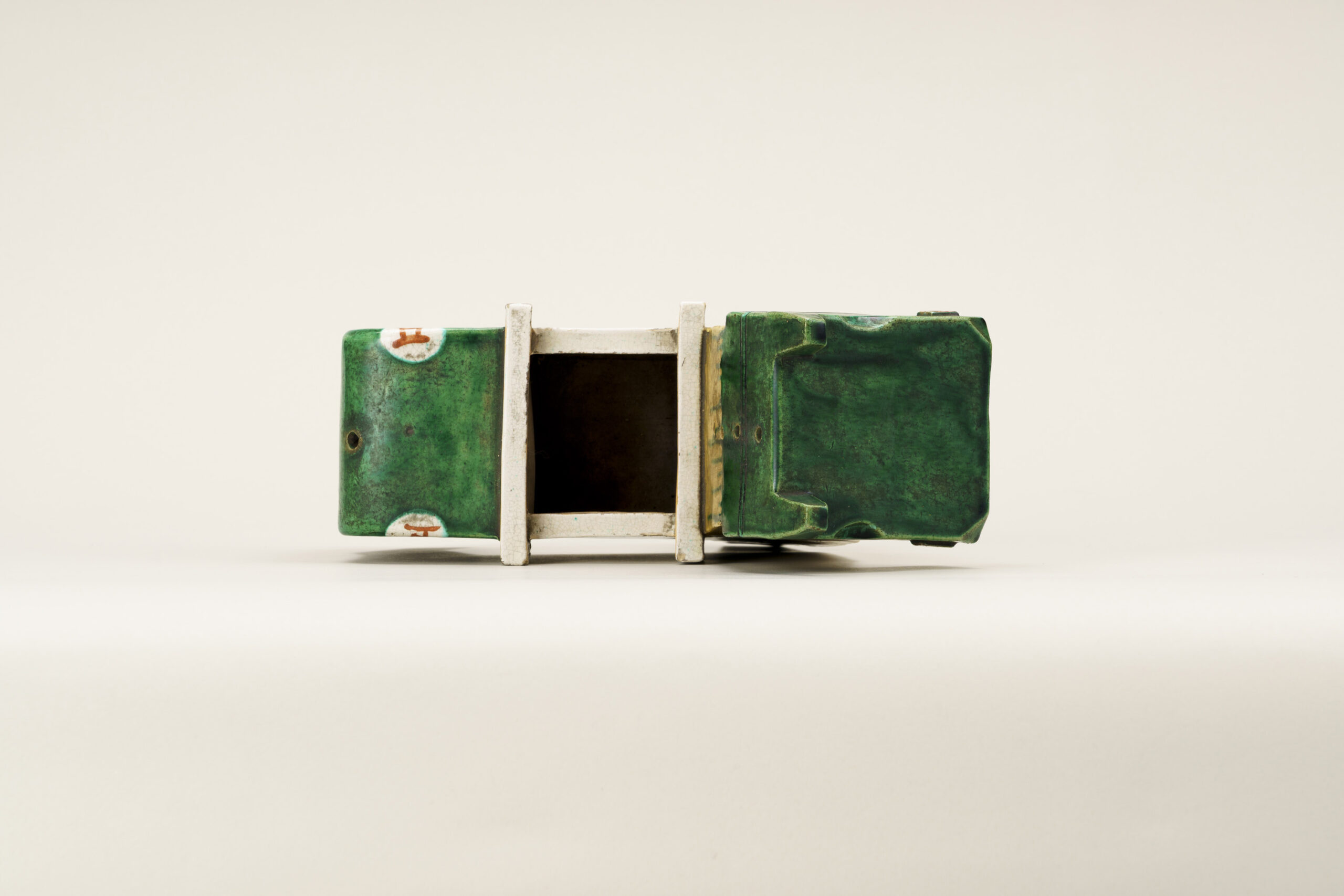
An incense burner (kōro) is a vessel used for burning incense. In this work, incense is burned within a hollow chamber inside the body of the figure.
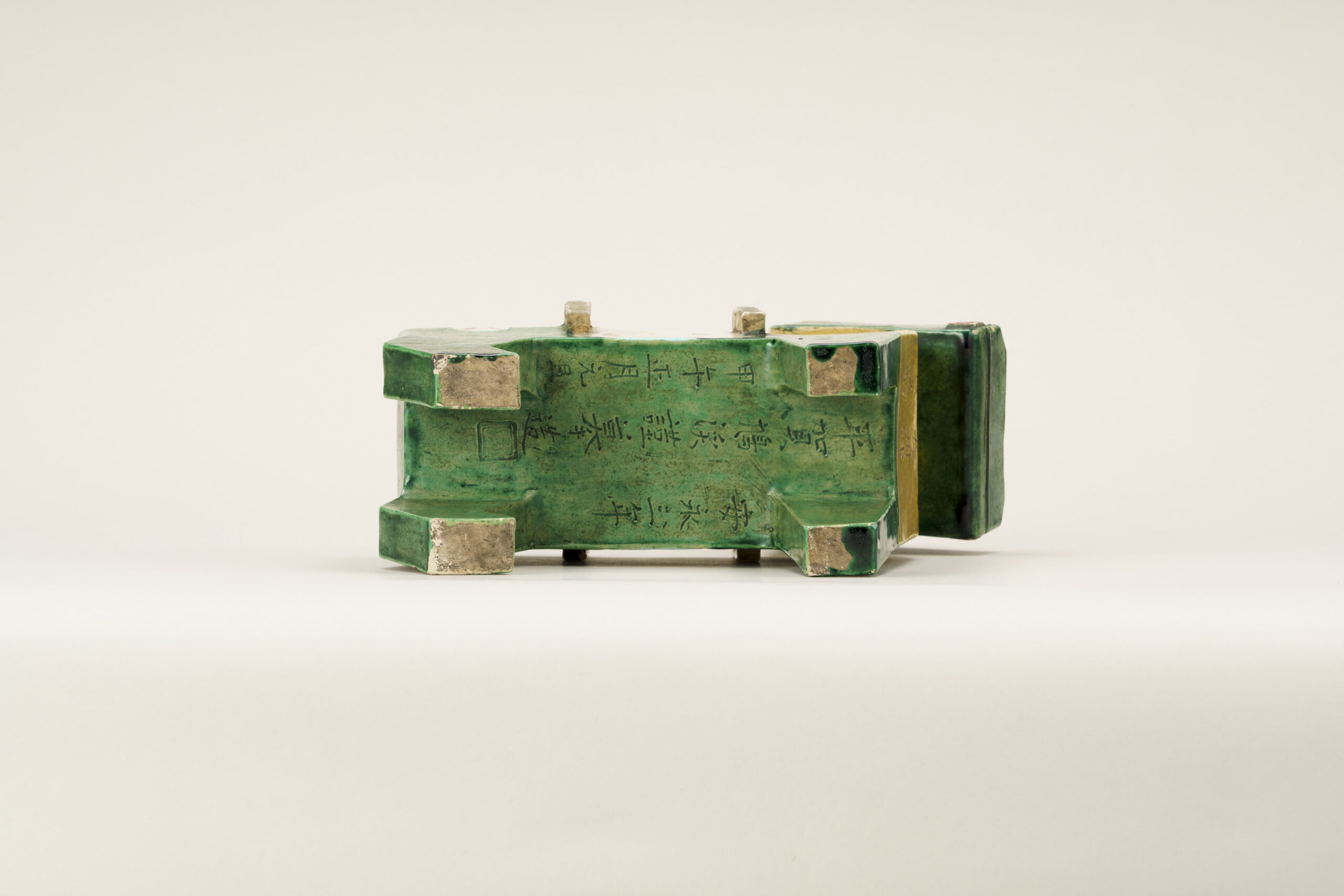
On the reverse of the abdomen is an inscription reading “安永三年 甲午正月元旦 平賀鳩渓謹模造,” which records both a date (An’ei 3, kinoe-uma, New Year’s Day) and the sobriquet of Hiraga Gennai, indicating that the work was made in deference to his design. Other Gennai-yaki incense burners in the form of Miharu-goma bear the same inscription, but differences in calligraphic style have been noted, and further examination is required to determine whether the inscription denotes authorship.