


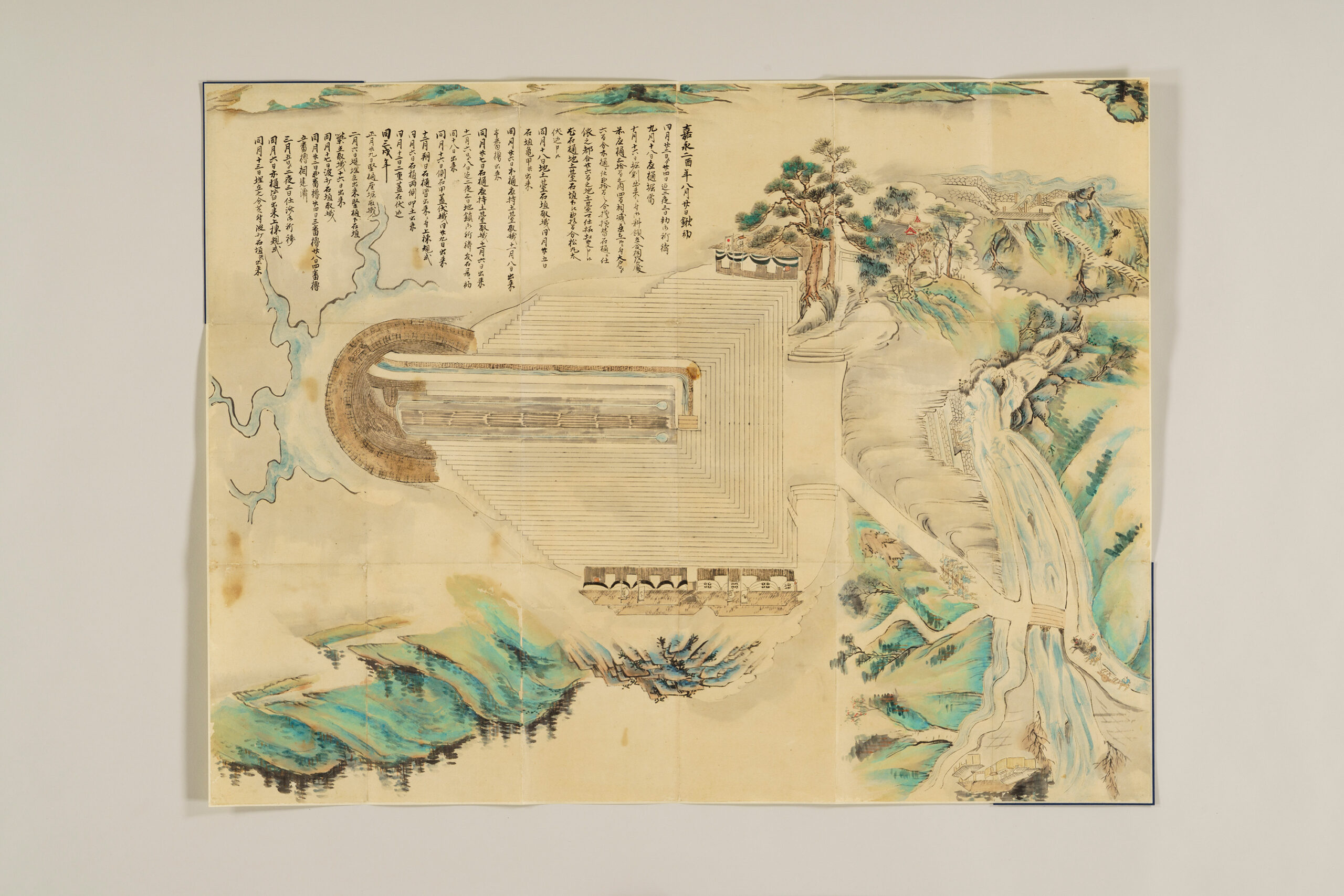
Illustration of the Culvert Construction Site at the Manno Reservoir
- Artist
-
-
- Period
-
1850 (Kaei 3)
- Quality and quantity
-
Color illustration, one sheet
- Size (cm)
-
H 90.5 × W 118.0
- Category
-
Other
- Classification
-
Designated by the city or town
- Accession number
-
TM0#00001
Description
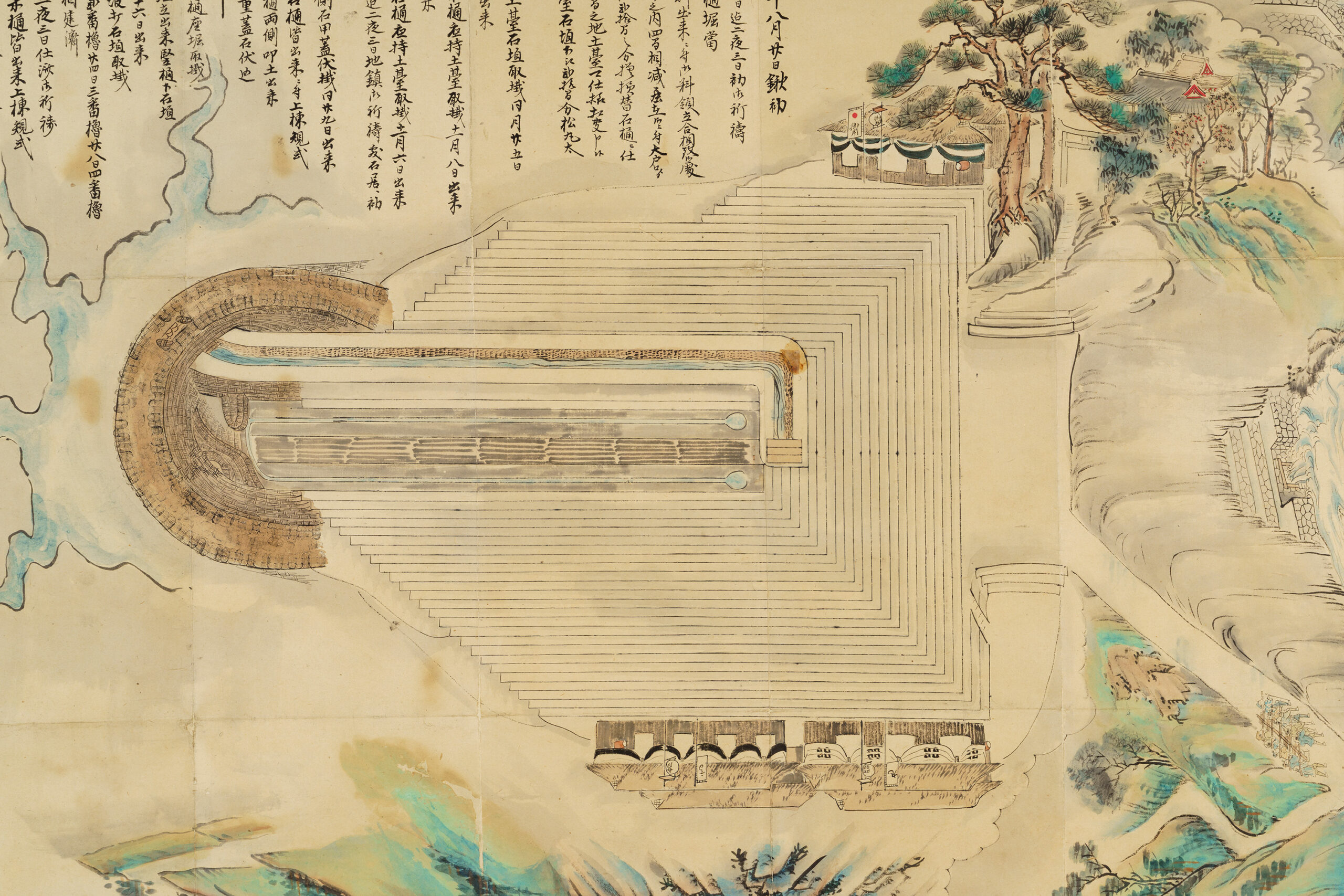
This illustration depicts construction carried out in 1850 (Kaei 3), in the late Edo period, at the Manno Reservoir, which is the largest irrigation reservoir in Japan. Today it is designated a National Place of Scenic Beauty. The scene shows the replacement of a wooden culvert (hi), which served as a water conduit, with a more durable stone culvert.
Reservoirs were equipped with culverts installed at the bottom of the basin to allow stored water to be released and exchanged. Because wooden culverts deteriorated over time due to constant exposure to water, they required regular replacement. By the late Edo period, advances in construction techniques made it possible to install stone culverts, which were more durable than their wooden predecessors.
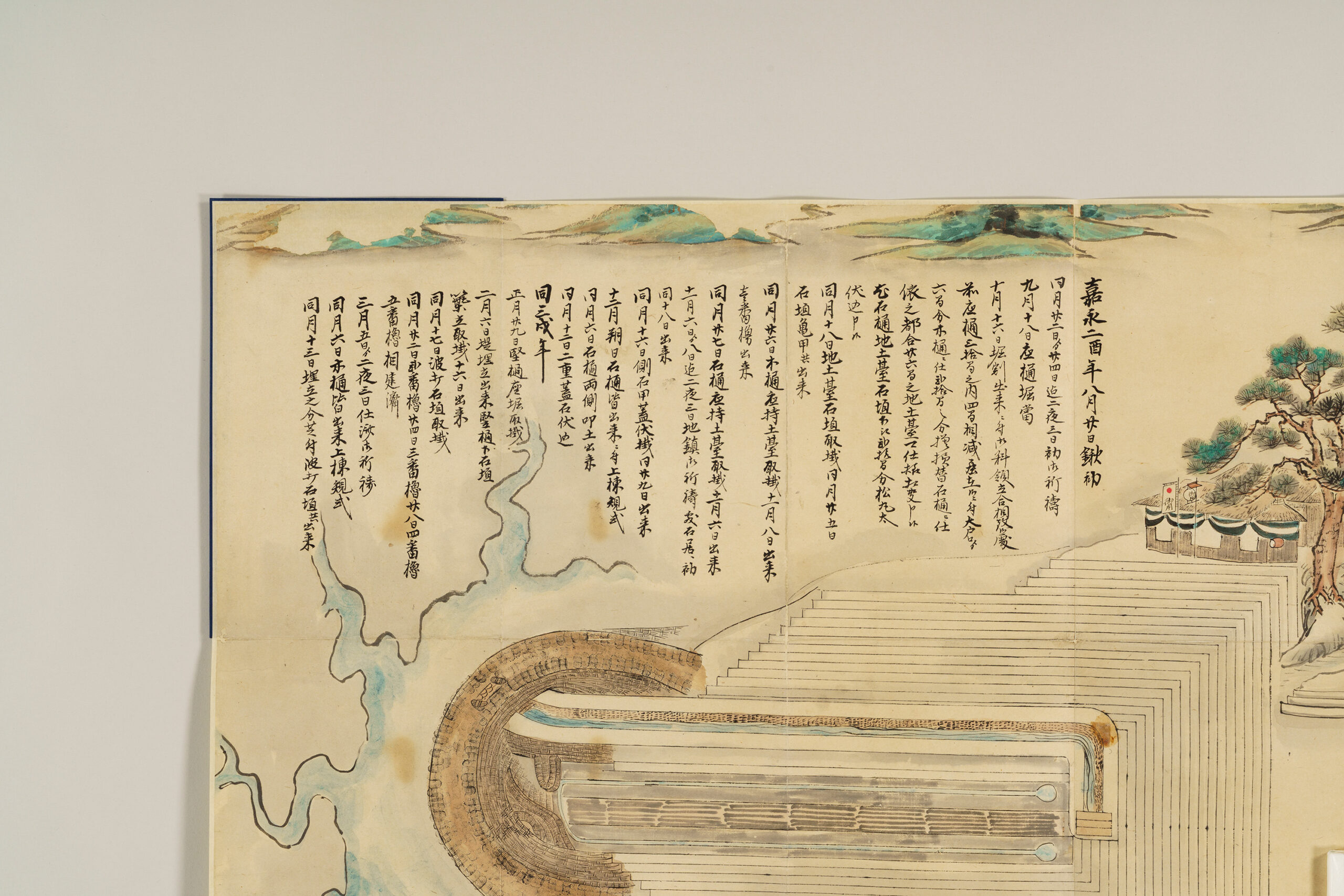
The scene depicts the reservoir after it has been drained, revealing the stepped structure of the interior of the basin. The long, trench-like feature near the center of the composition marks the location where the culvert was installed. On the eastern side of the reservoir (the upper portion of the image) are temporary construction huts belonging to the Edo shogunate, and there are huts associated with the Marugame and Takamatsu domains on the opposite side. The text in the upper left records the progress of the construction work on a day-by-day basis from Kaei 2 through Kaei 3.