


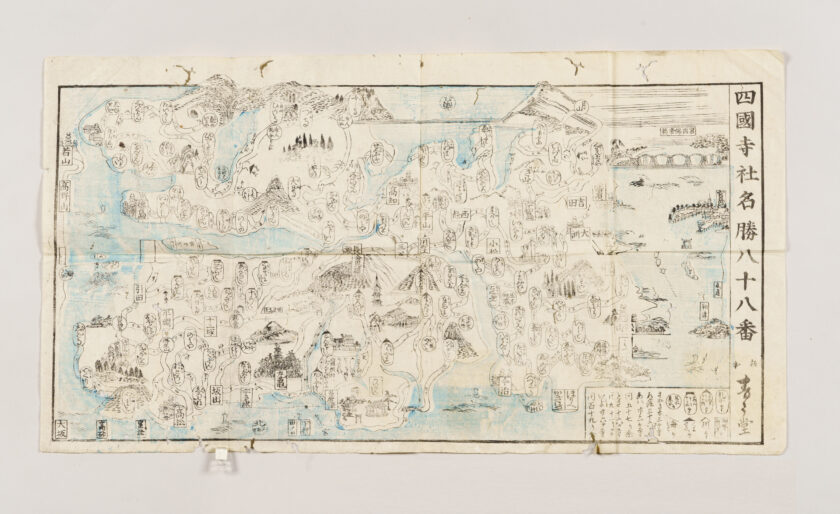
Shikoku Pilgrimage Route Map
- Artist
-
Published by Watanabe Shōten
- Period
-
1932 (Shōwa 7)
- Quality and quantity
-
Multi-color letterpress print, one paper
- Size (cm)
-
H 39.3 × W 54.4
- Category
-
Other
- Accession number
-
B9700585
Description
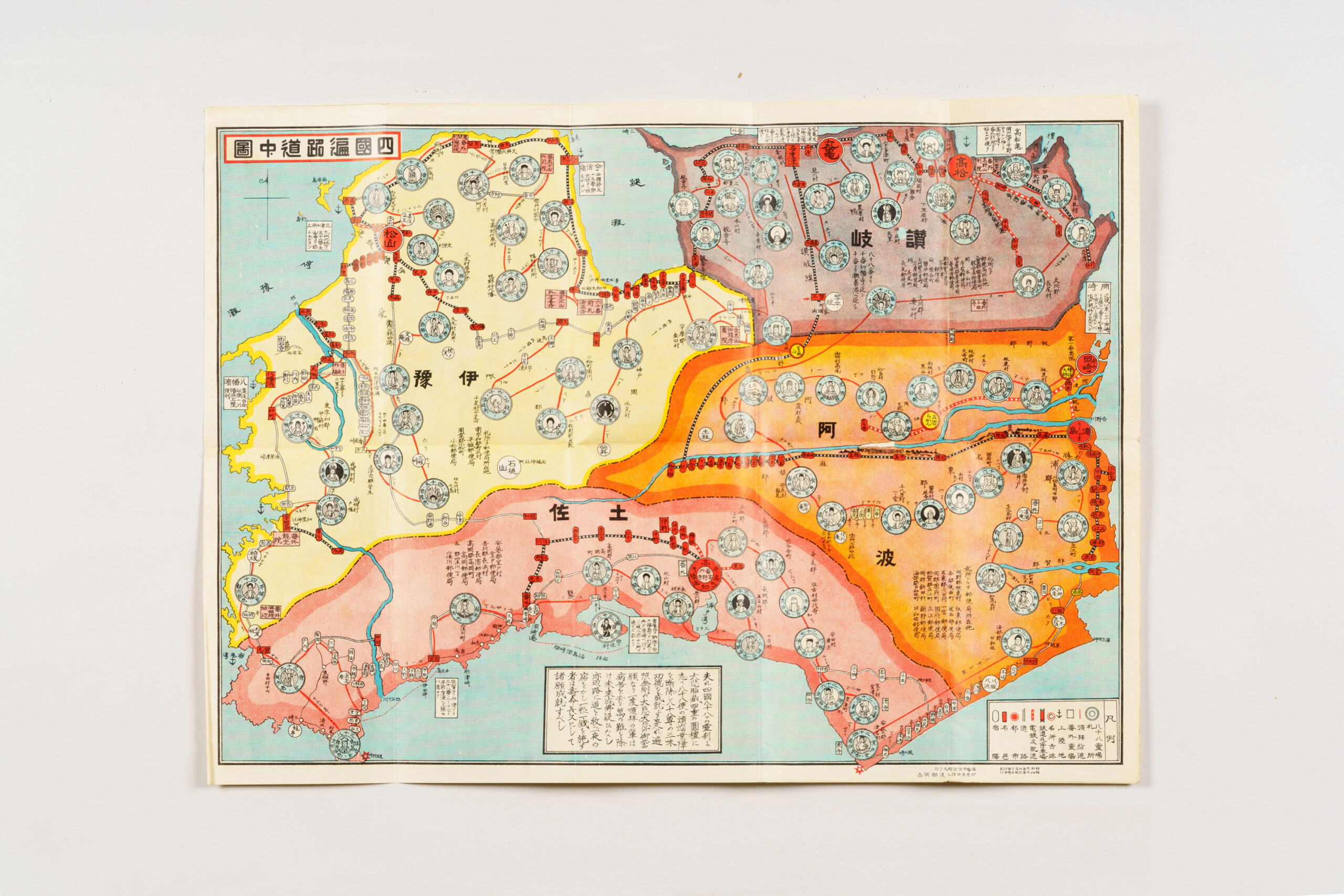
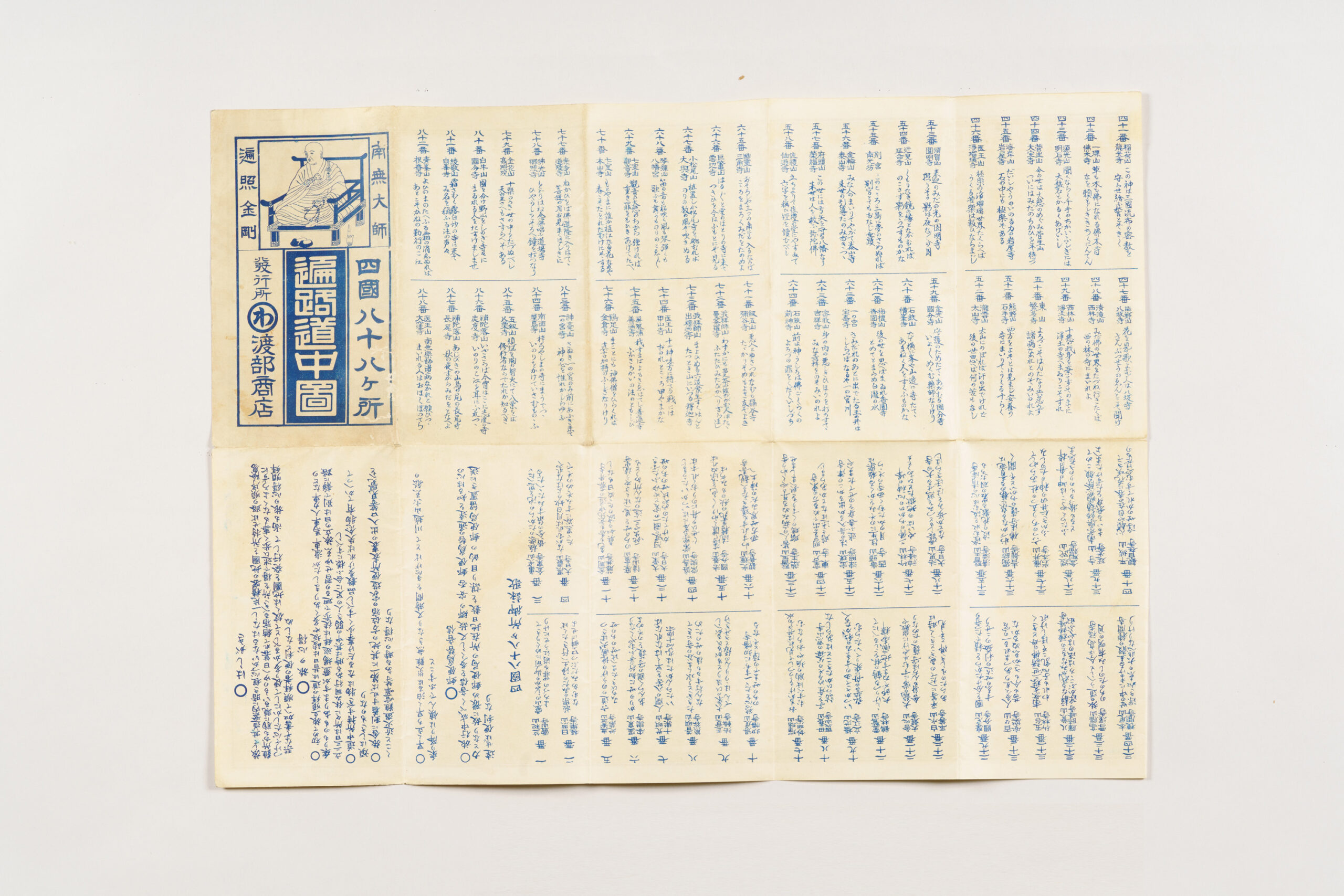
This is a guide map for the Shikoku pilgrimage. The front of the map shows the routes between the eighty-eight sacred sites (fudasho) in order and the distances between them, along with transportation networks such as railways and sea routes. The reverse records the goeika, which are waka poems composed in praise of each temple’s virtues, as well as guidance and practical advice for travelers along the route. Post office locations are also indicated, encouraging pilgrims to correspond with family back home through letters or money orders.
From the late Taishō through the prewar Shōwa era in the early twentieth century, maps of this type with nearly identical content were published by shops and were likely sold or distributed to pilgrims. This work offers valuable insight into the nature of the Shikoku pilgrimage in the modern period.