


Carved Red Lacquer Drum Box
- Artist
-
Tamakaji Zōkoku (1806–1869)
- Period
-
Edo period, 1853 (Kaei 6)
- Quality and quantity
-
Wood with lacquer, one box
- Size (cm)
-
H 29.0 W 46.2 D 24.3
- Category
-
Craftwork
- Classification
-
Designated by the prefecture
Description
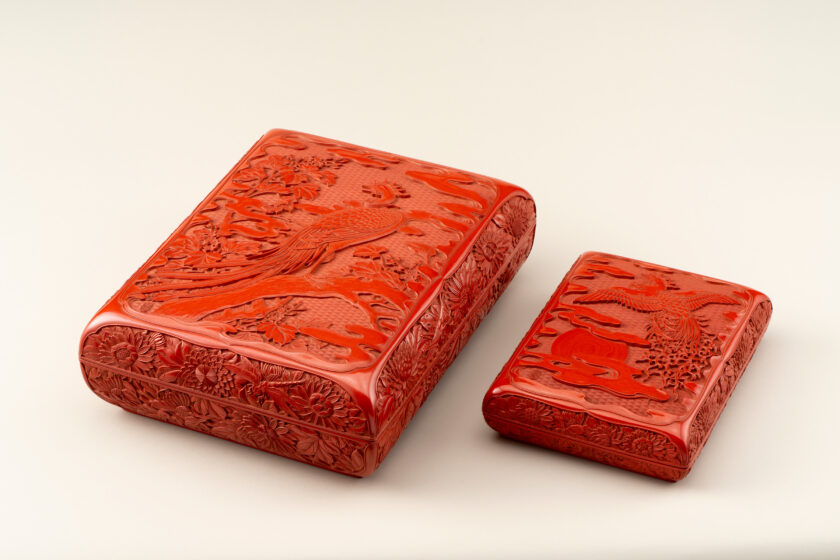
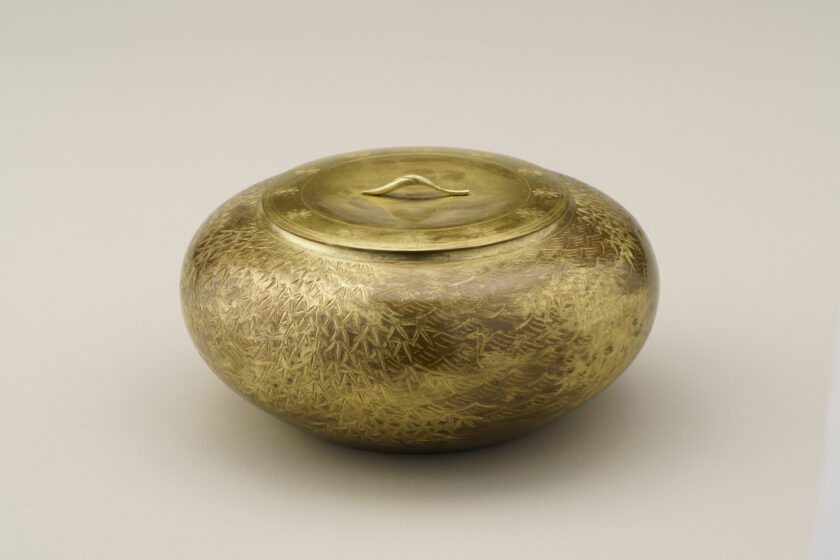
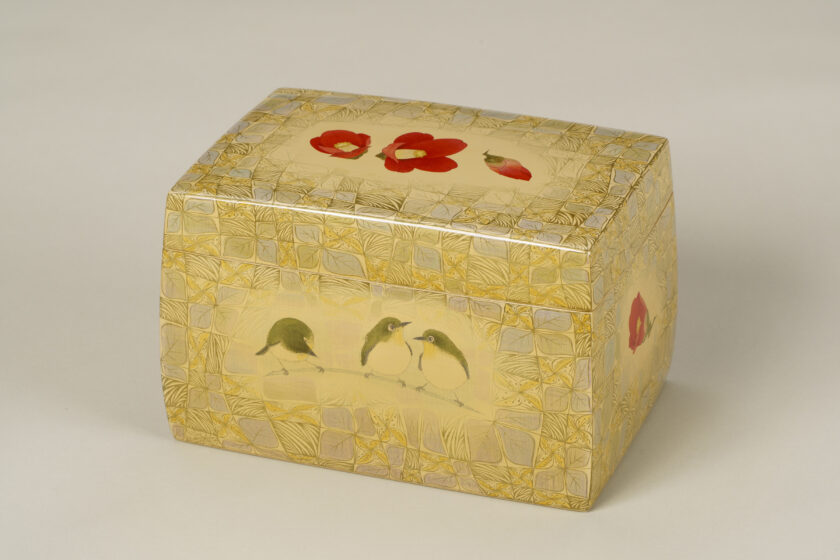
Tamakaji Zōkoku was a lacquer artist who served three successive lords of the Takamatsu Matsudaira family, Yorihiro (the ninth lord), Yoritane (the tenth lord), and Yoritoshi (the eleventh lord). Studying lacquerware introduced from China and Southeast Asia and drawing on his own carving virtuosity, he laid the foundation for three Kagawa lacquer techniques: chōshitsu (carved lacquer), kinma (engraved-and-filled lacquer) and zonsei (incised polychrome lacquer).
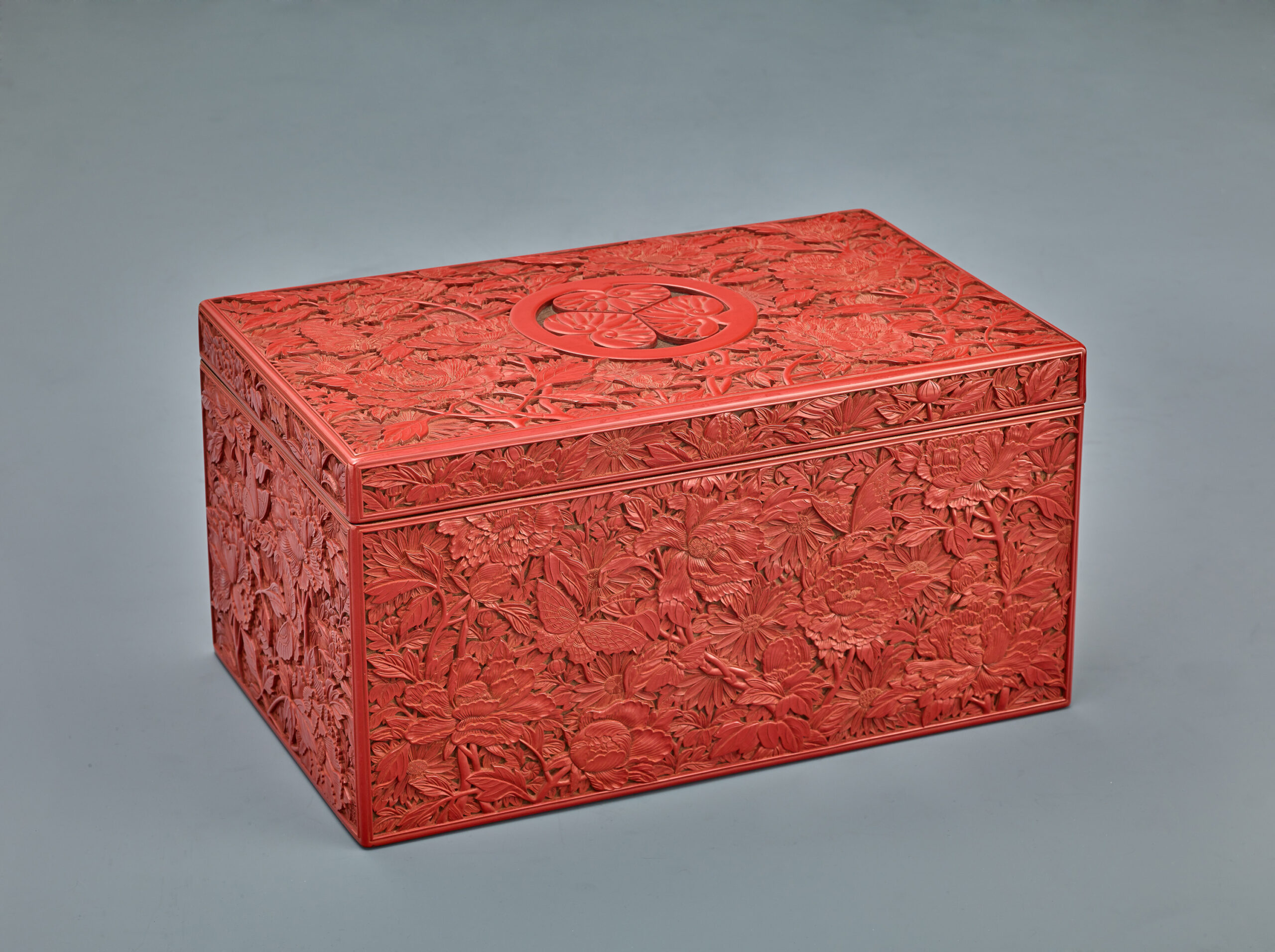
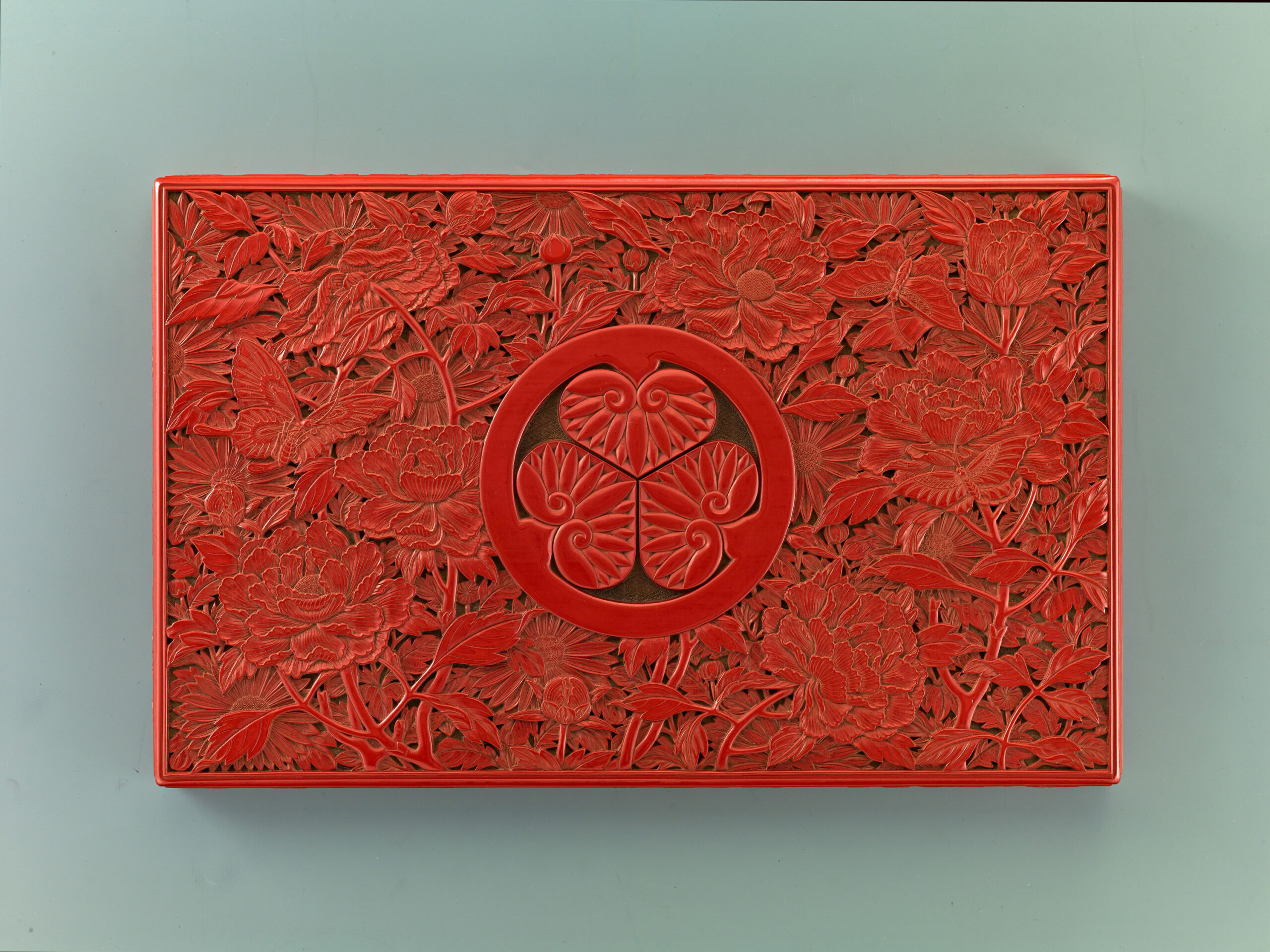
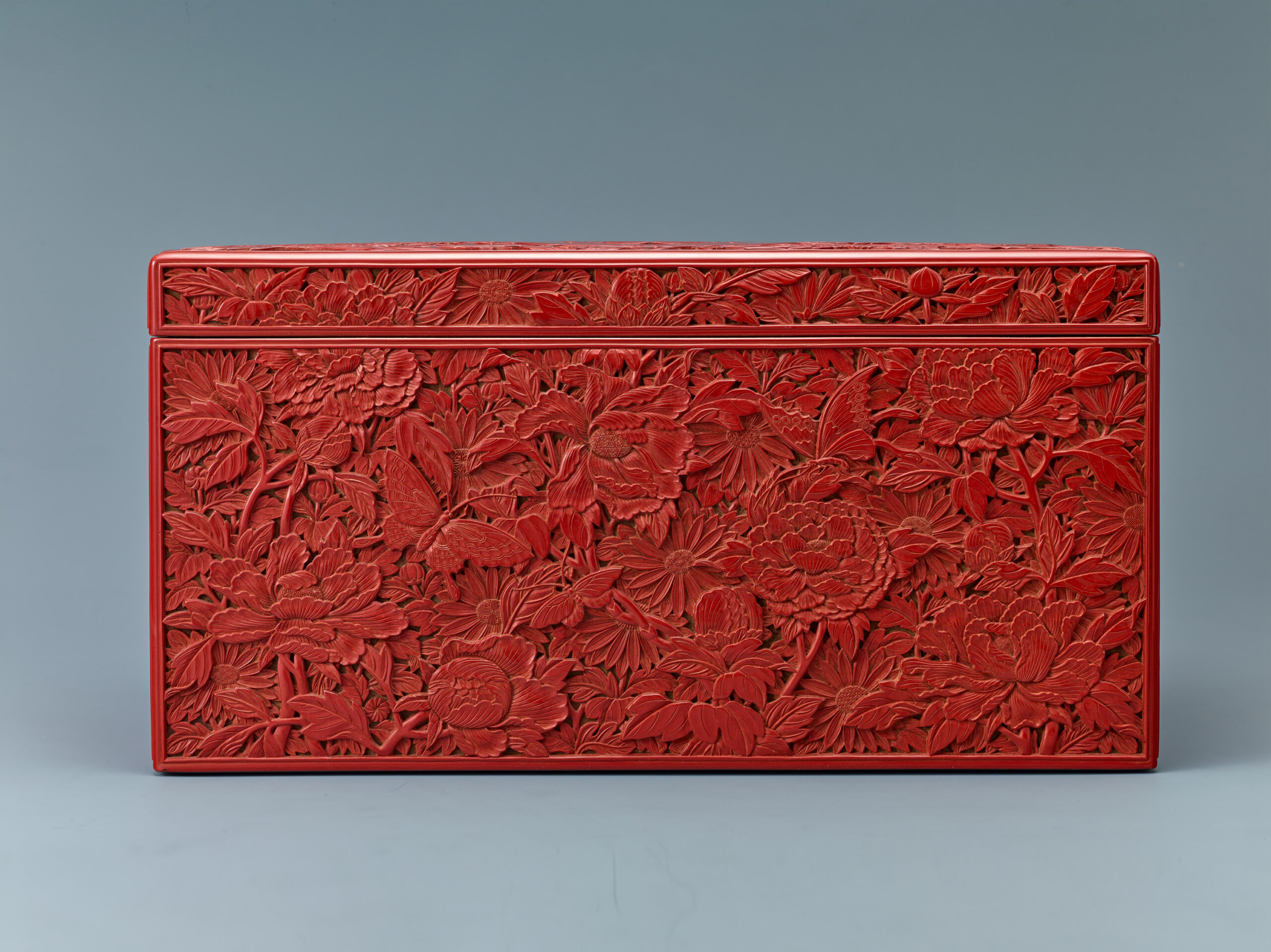
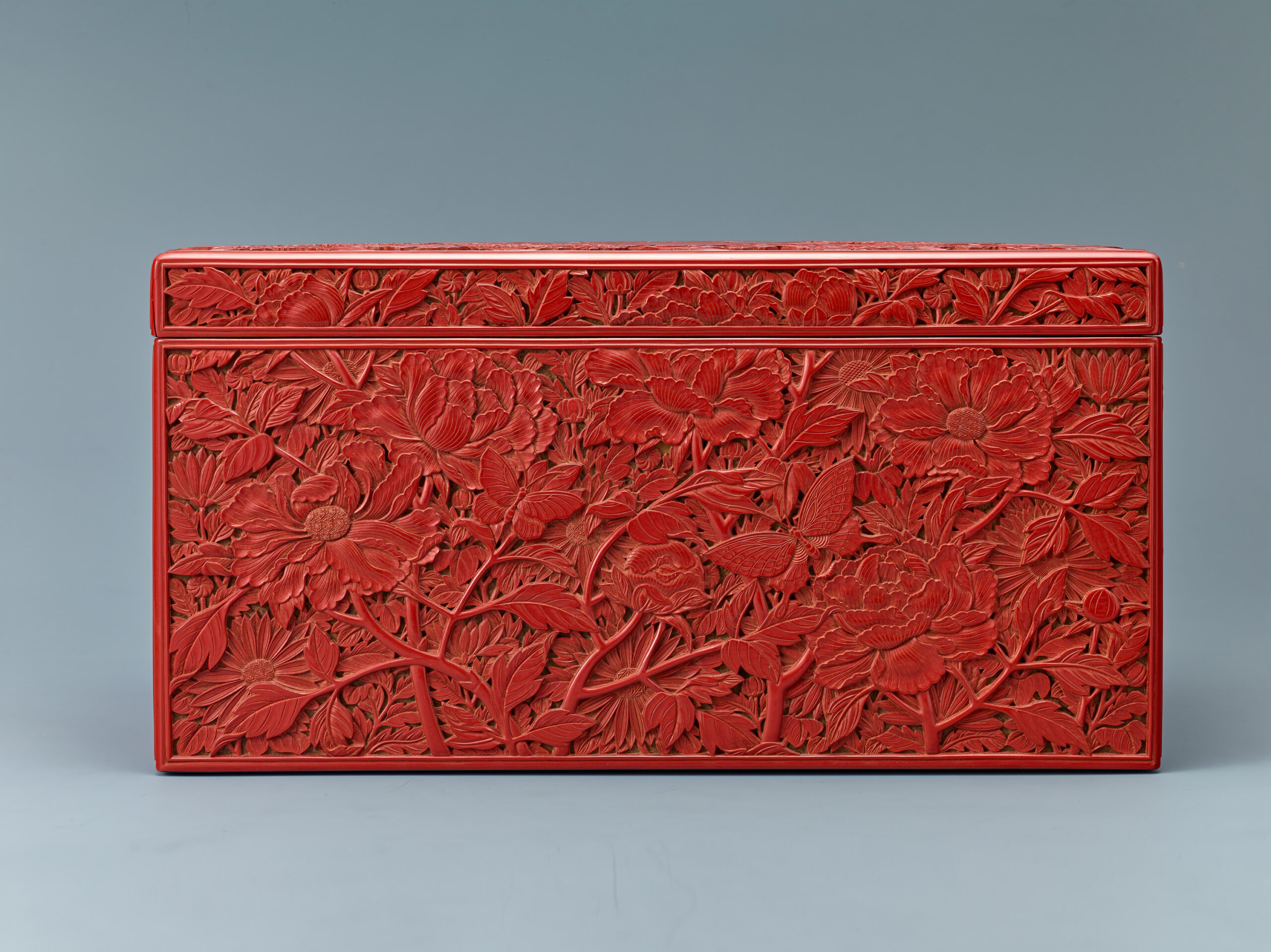
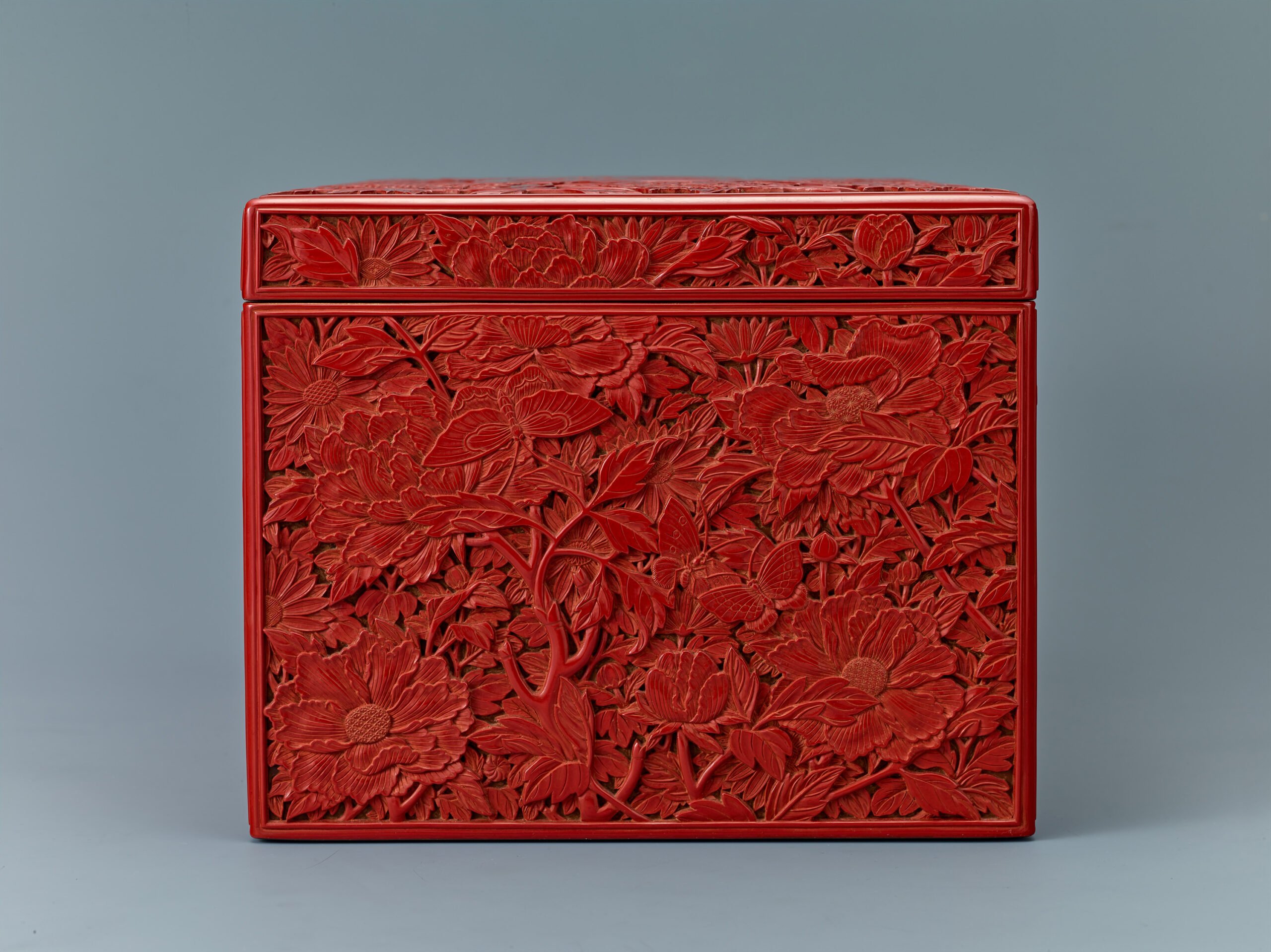
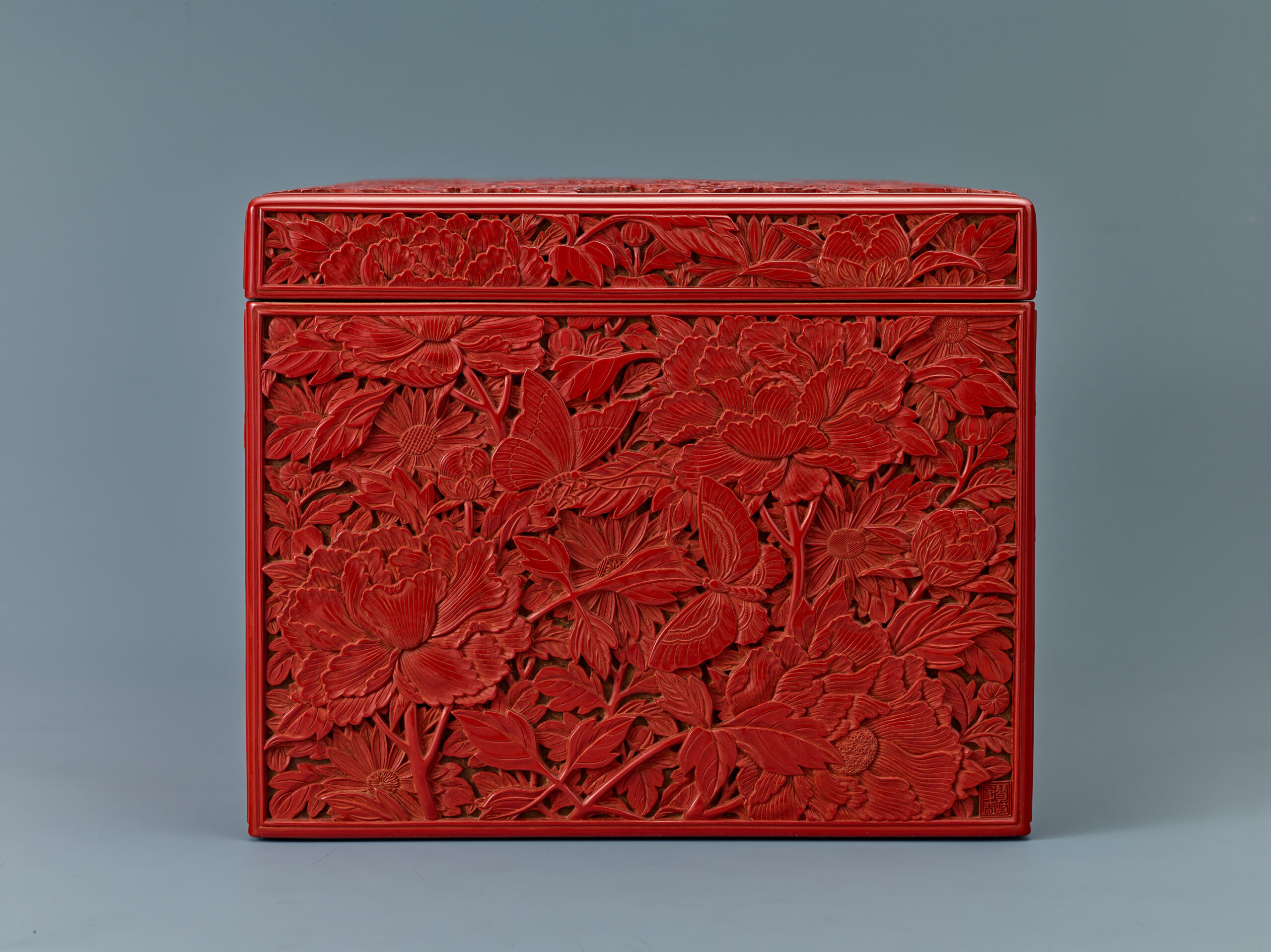
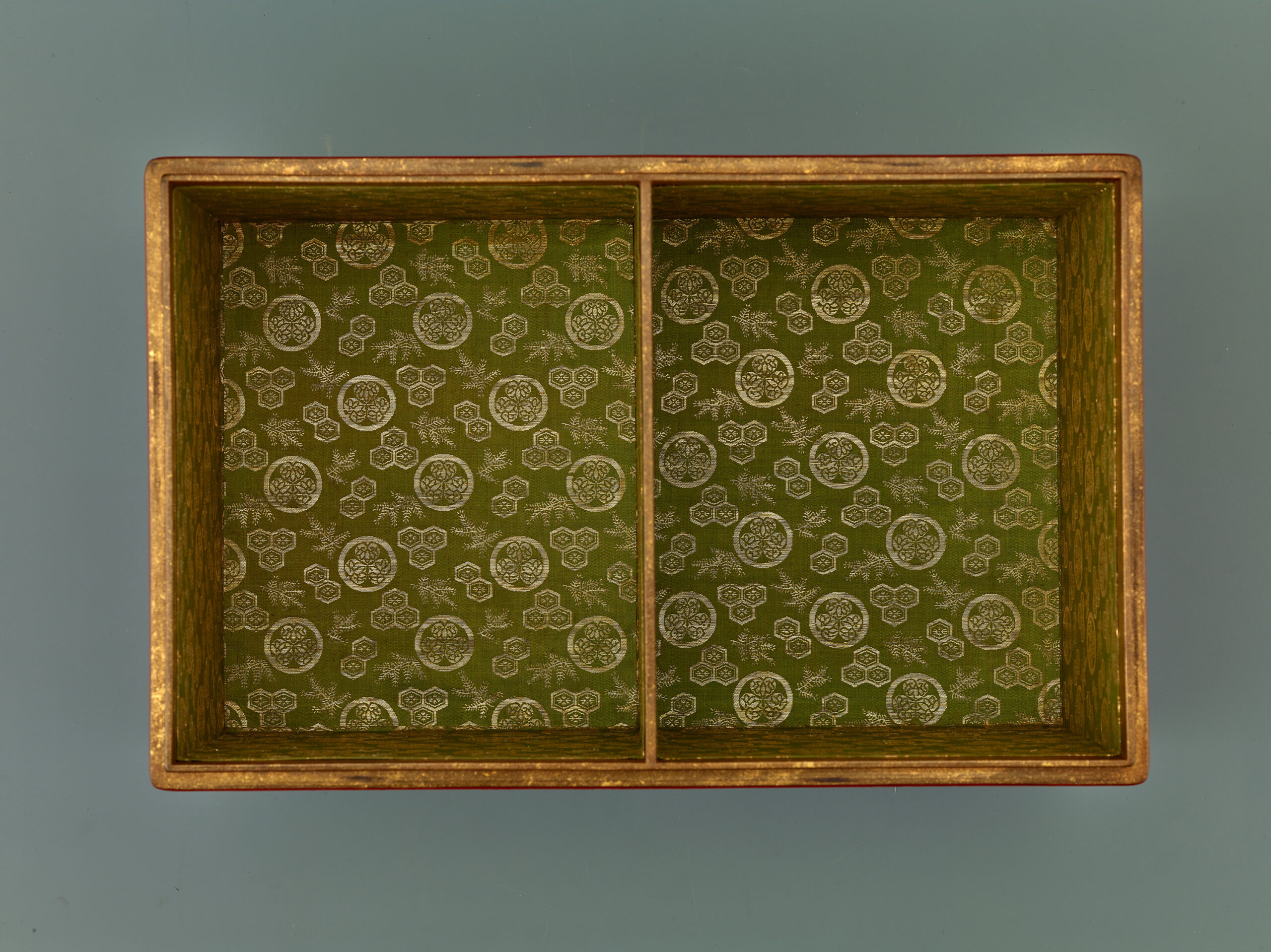
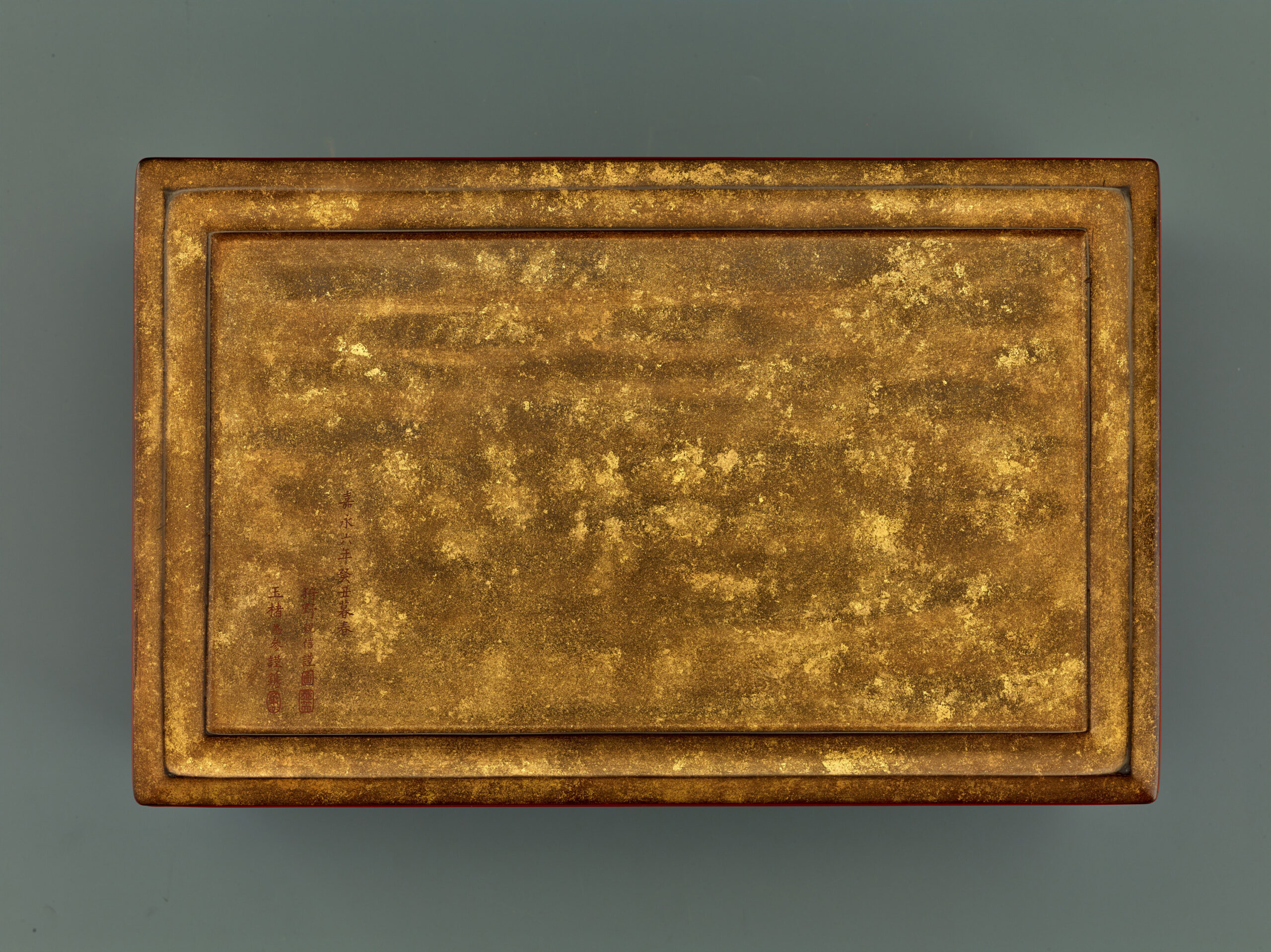
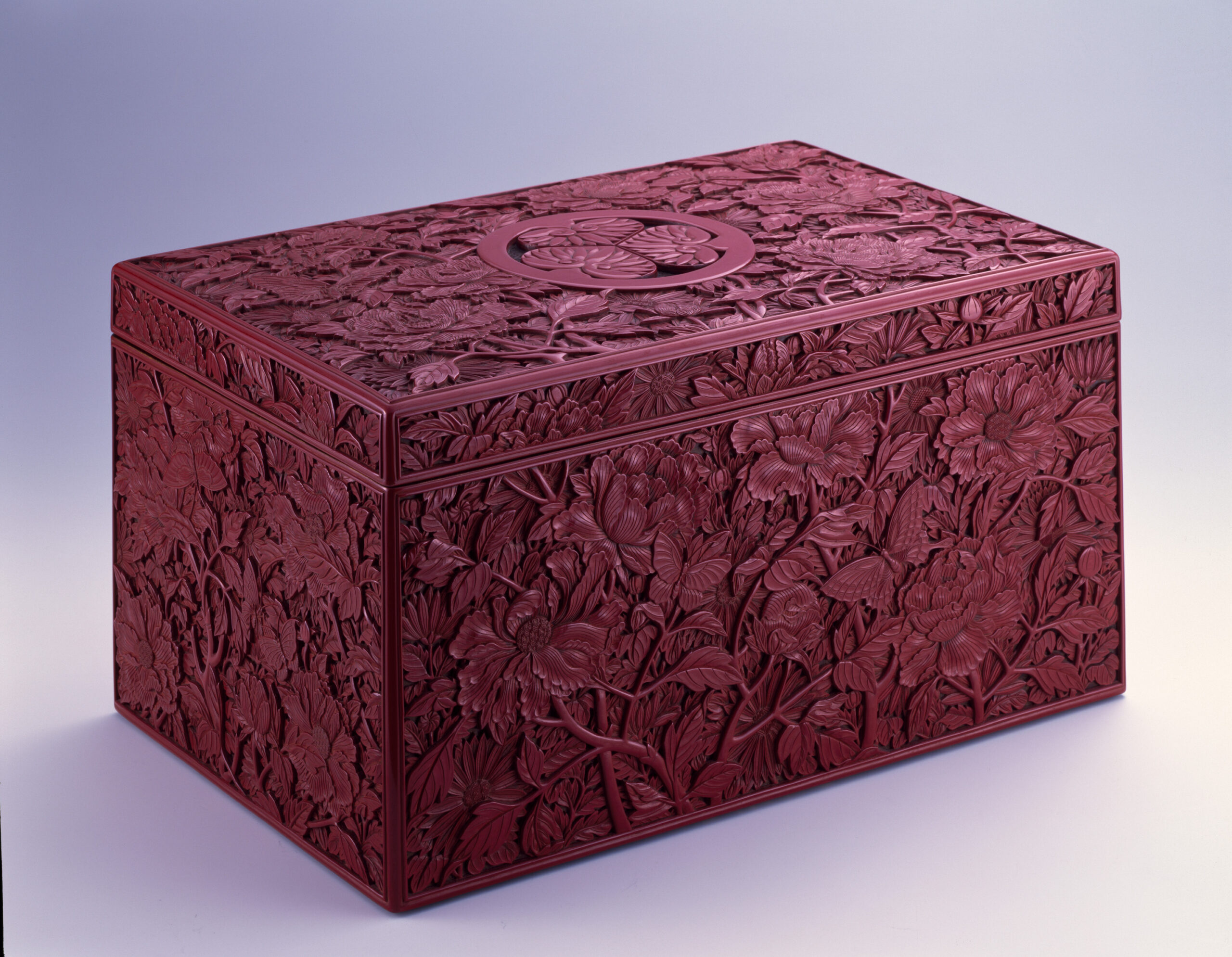
This work is a drum box used to store a pair of ko-tsuzumi (small hand drums) for Noh performances. It employs the chōshitsu technique, in which red lacquer is carved in two stepped layers, creating motifs such as butterflies, peonies, and chrysanthemums in pronounced relief. Made for Lord Yoritane, there is a large and prominent aoi crest, the emblem of the Matsudaira family, on the lid of the box as a symbol of the domain lord’s authority.
The preparatory sketch was drawn by Kanō Eishō (1819–1888), a painter of the Takamatsu domain. While the basic arrangement of flowers and butterflies follows Eishō’s design, Zōkoku added his own decorative patterns, including sayagata (an interlocking manji pattern), tortoiseshell, manji, and interlocking diamonds, to details such as butterfly wings, flower centers, and leaf veins, expressing his individual artistry. Records indicate that the domain lord inspected the work twice during its creation, underscoring his keen interest in the piece. This drum box is considered one of Zōkoku’s signature works, showcasing both his technical mastery and refined sense of design.