


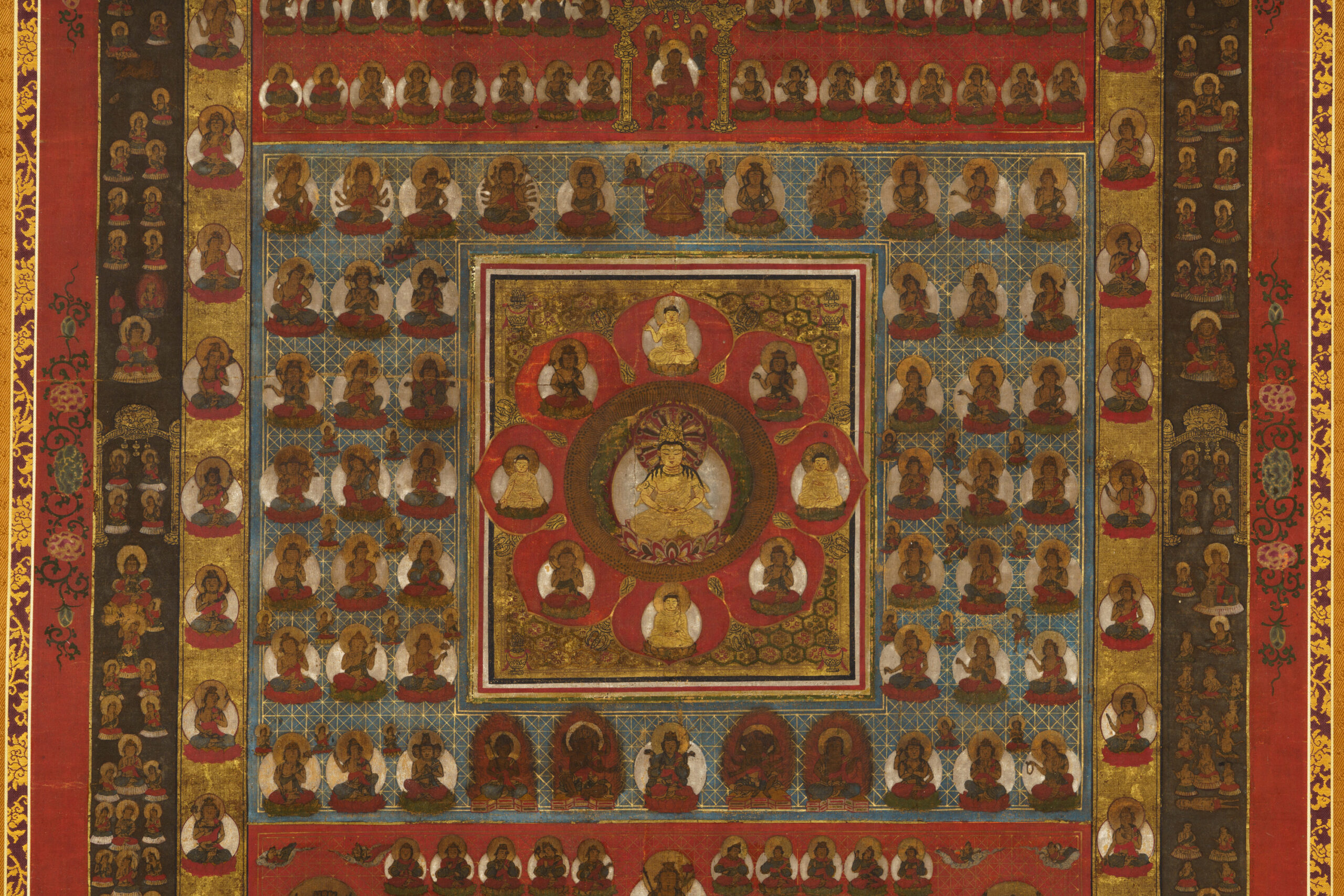
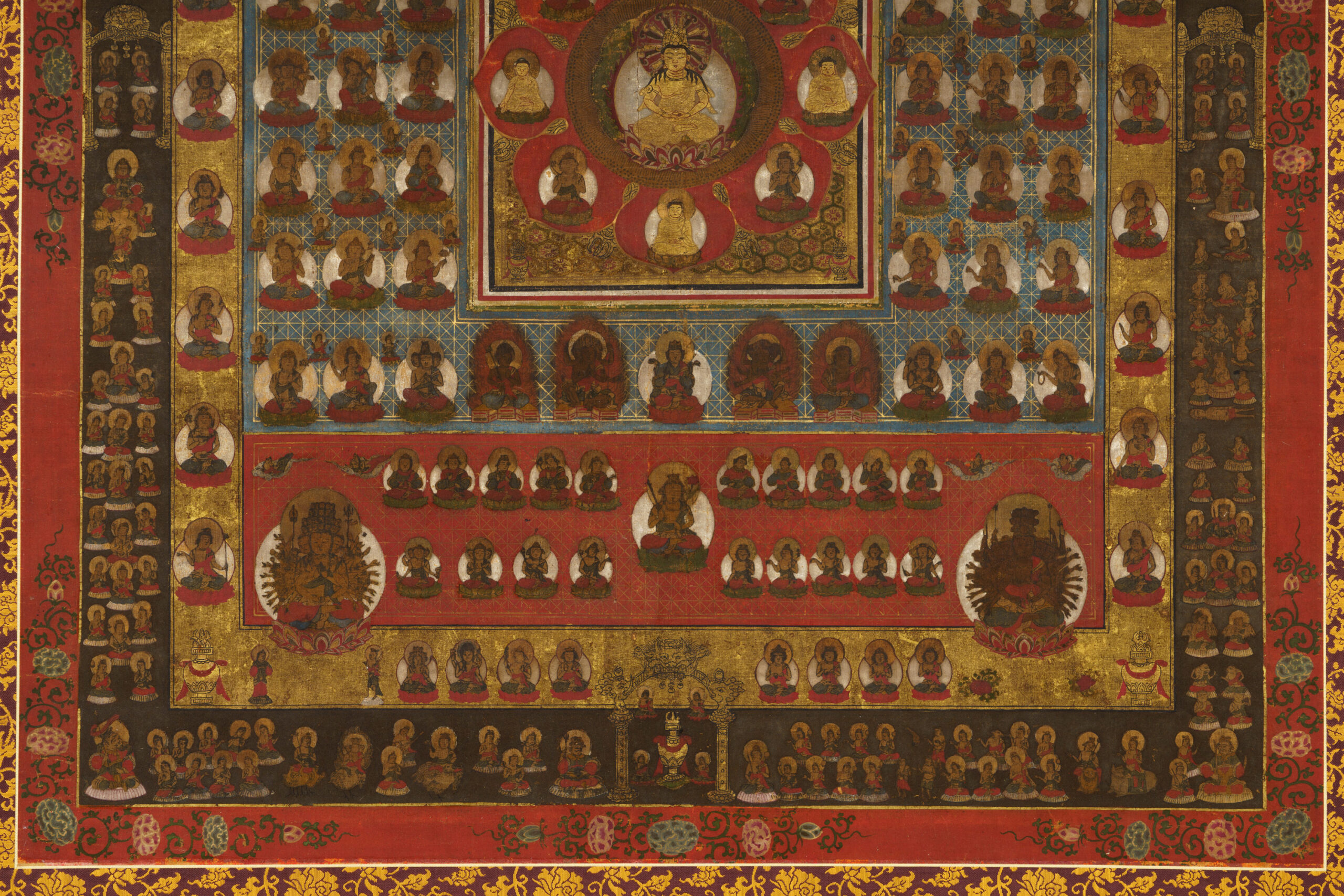
Mandala of the Two Realms
- Artist
-
‐
- Period
-
Muromachi period, 15th century
- Quality and quantity
-
Color on silk, pair of hanging scrolls
- Size (cm)
-
H 81.8 × W 68.7
- Category
-
Painting (Japan)
- Accession number
-
B99000911
Description
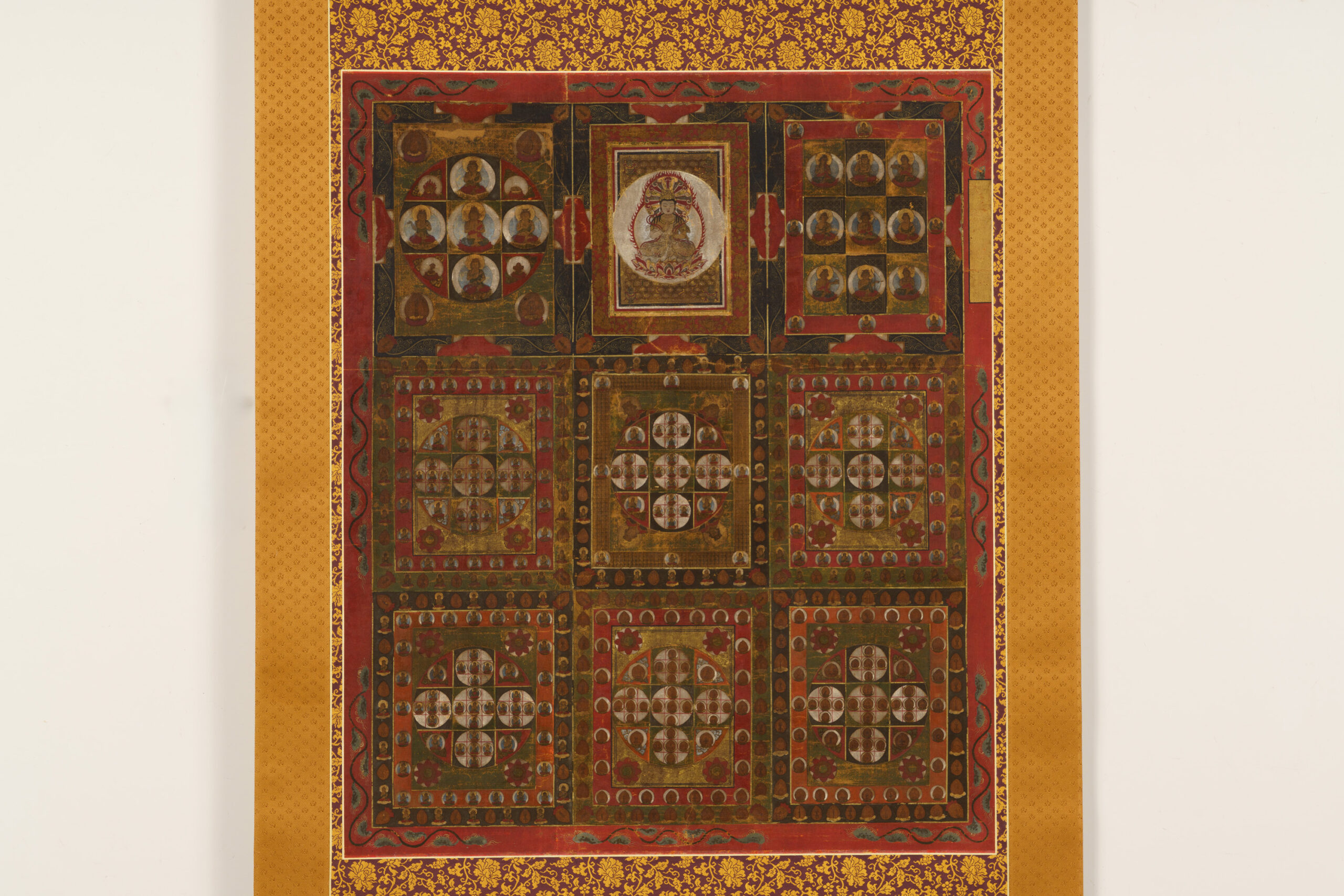
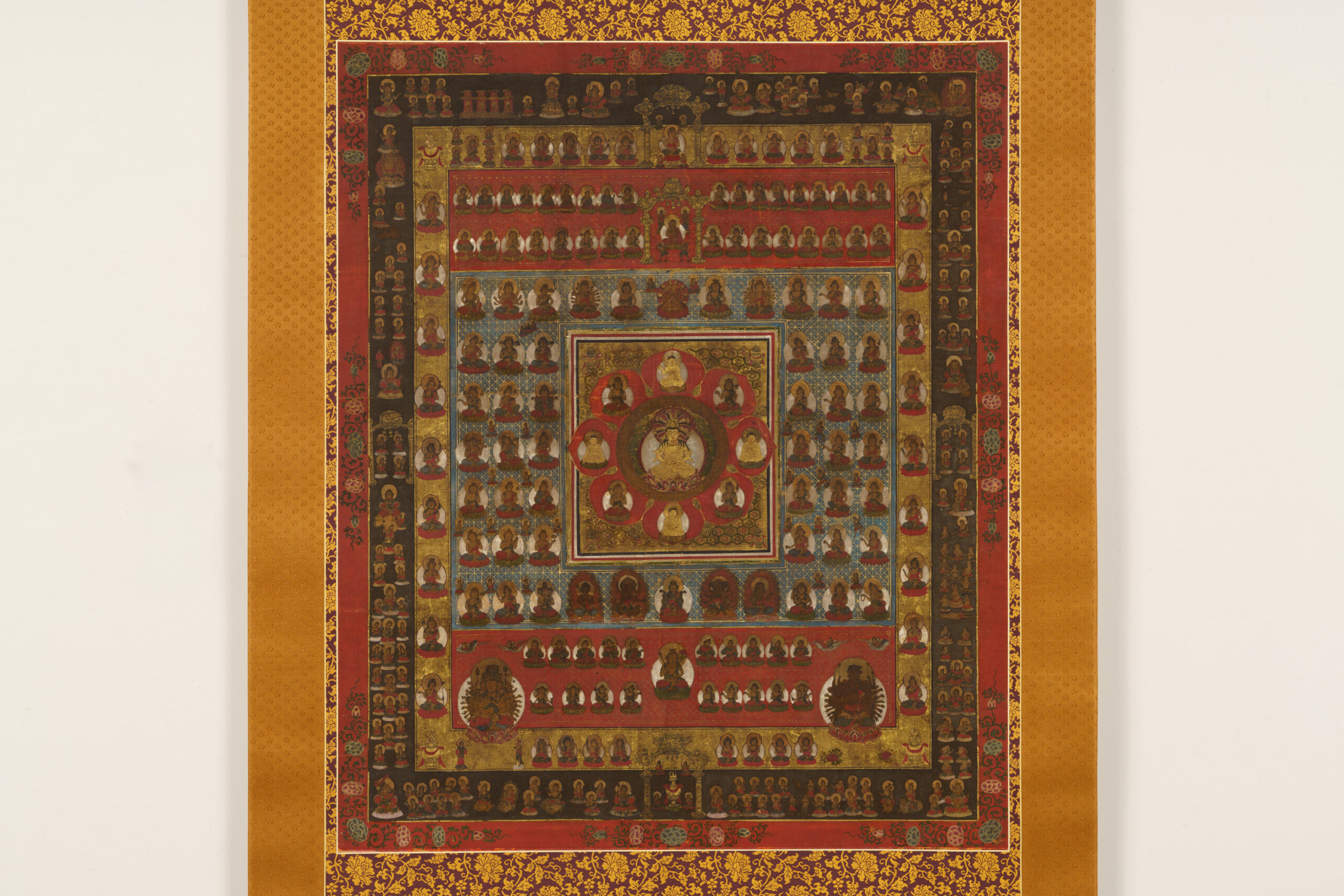
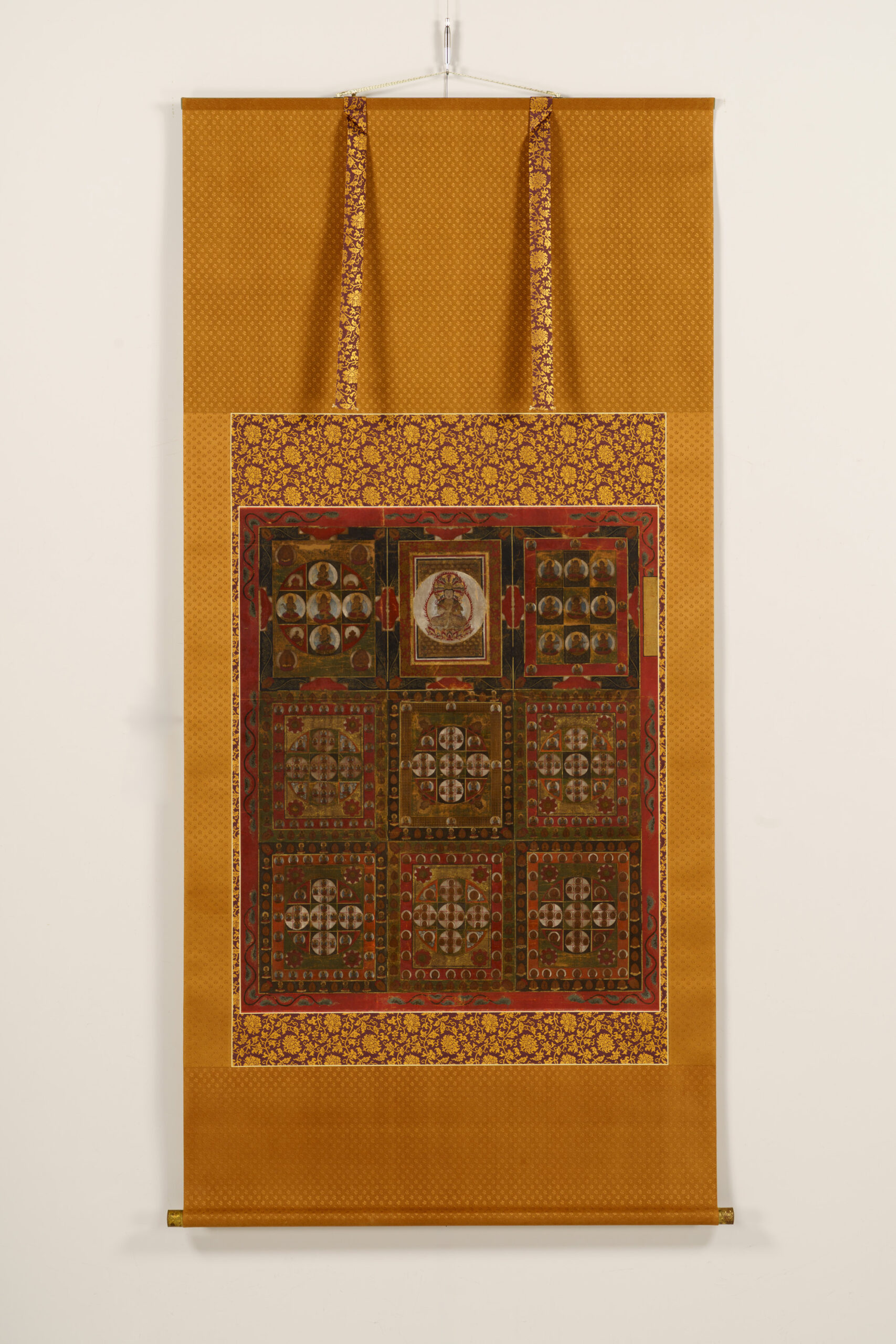
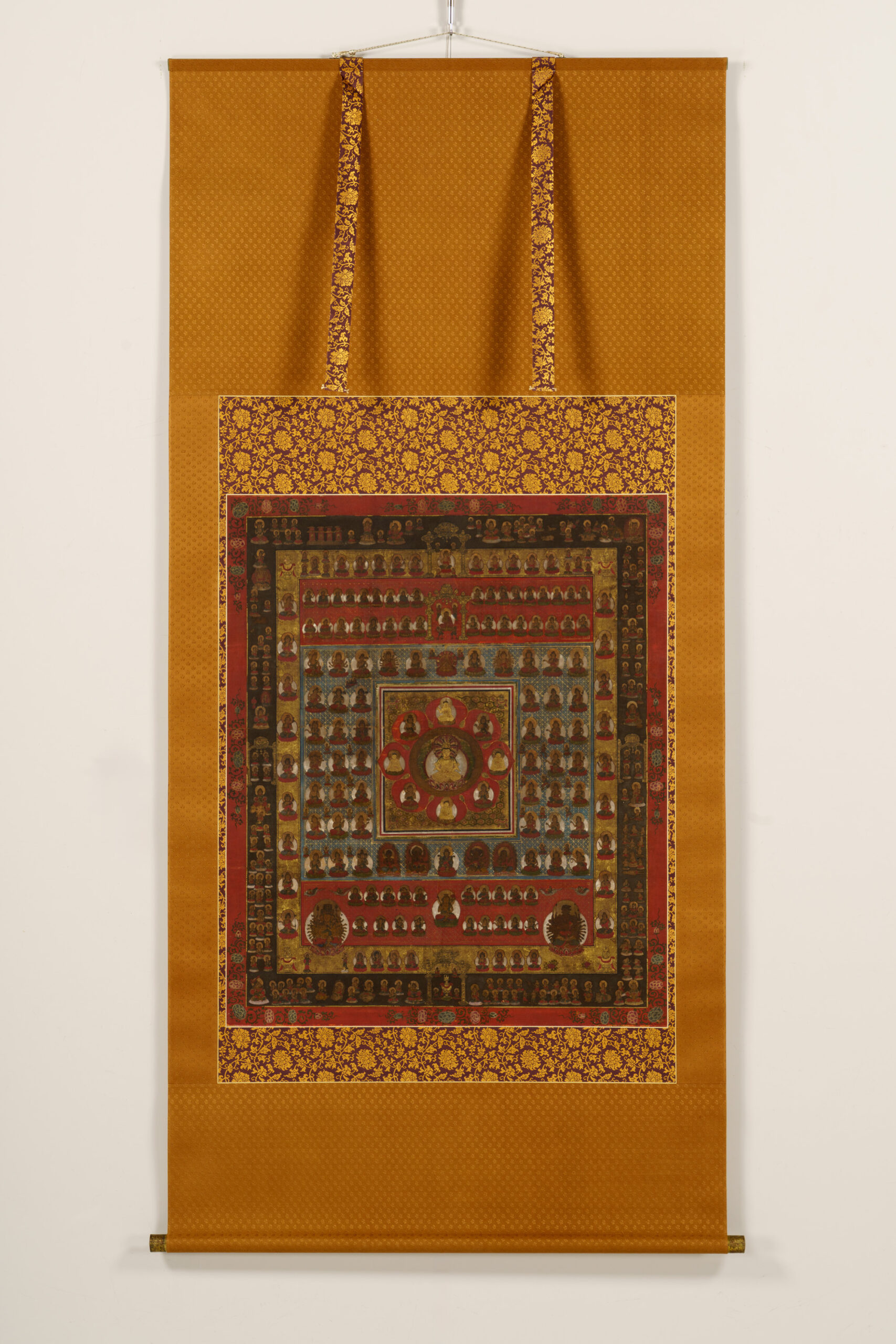
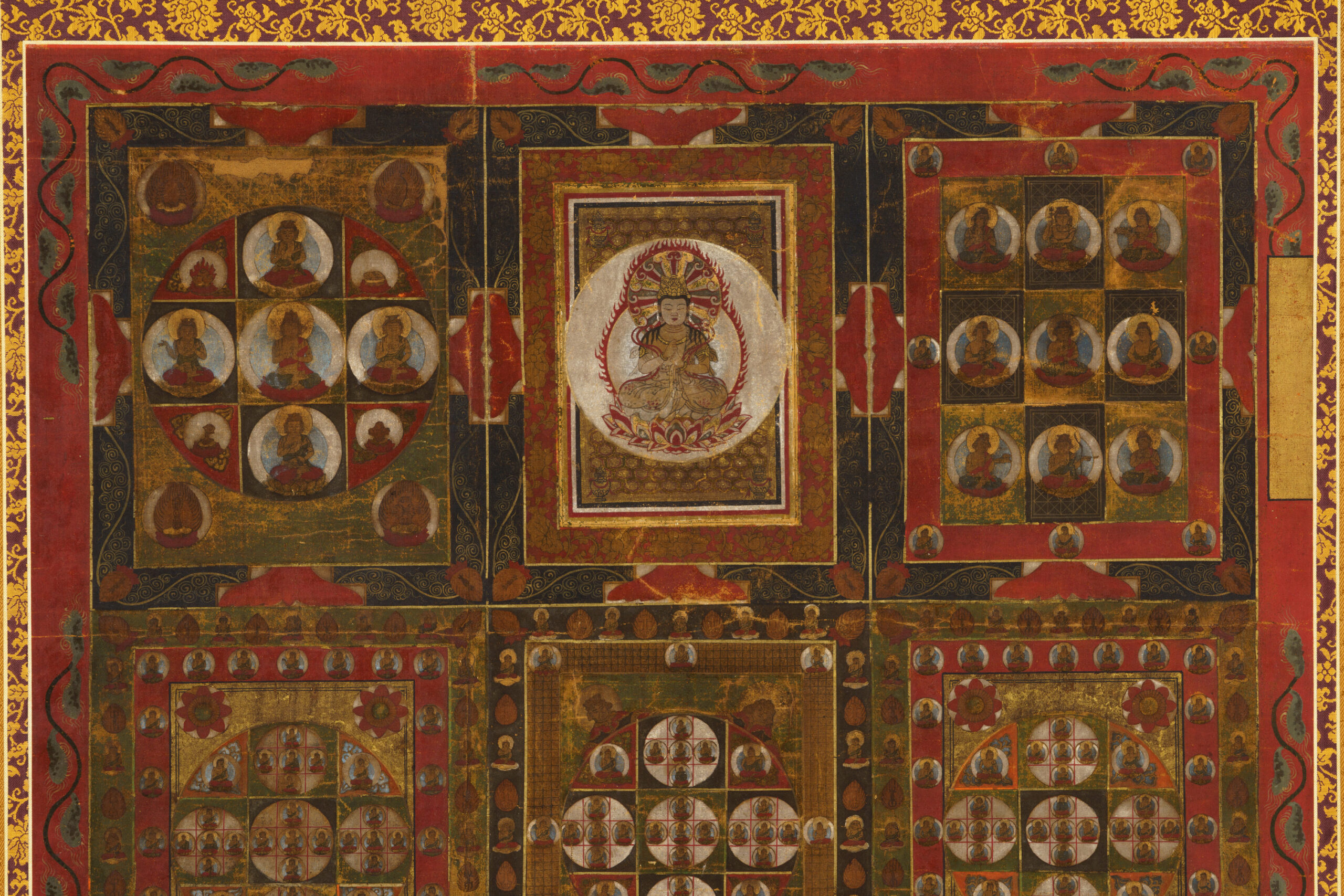
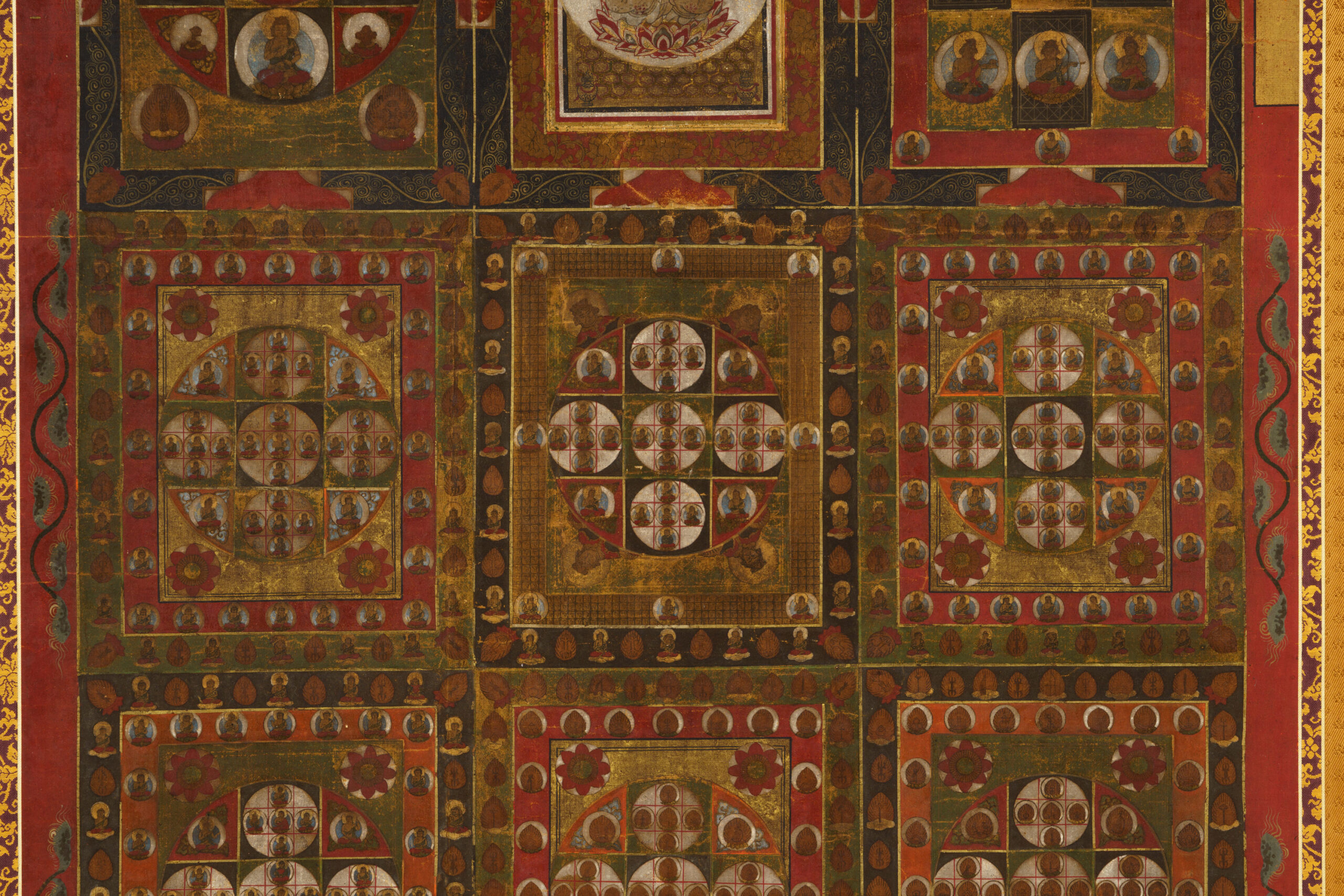
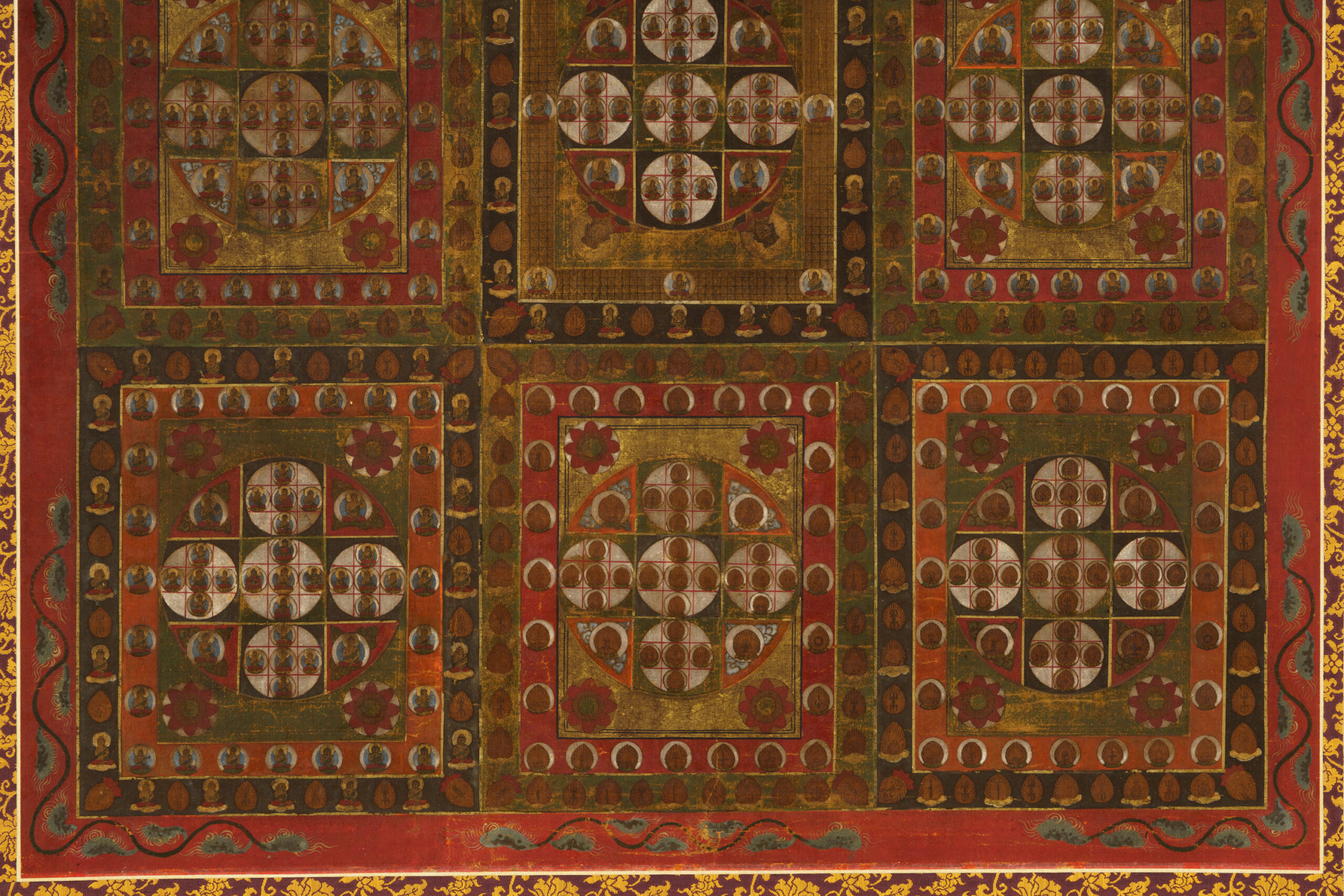
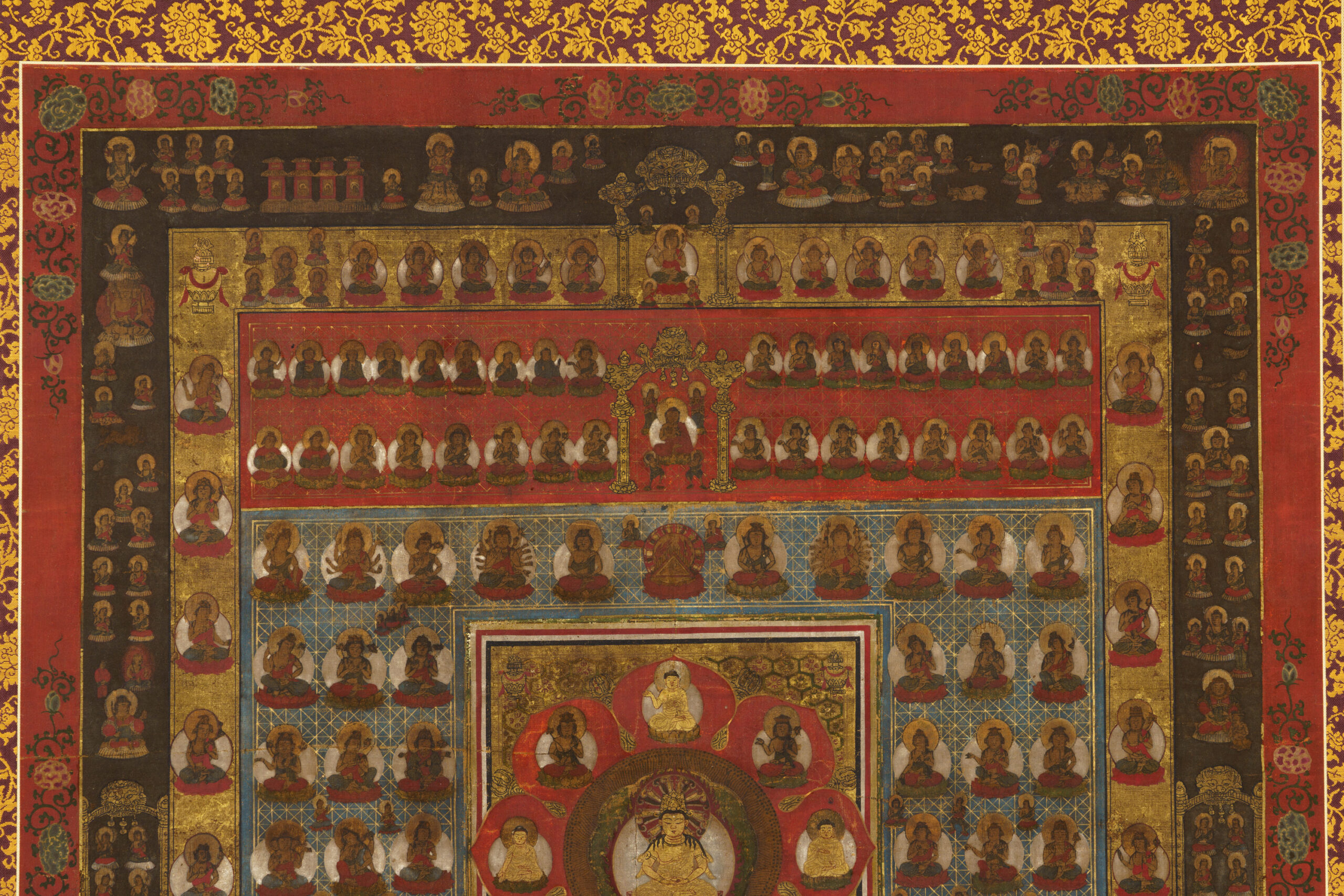
The Mandala of the Two Realms visualizes the doctrines of the Mahavairocana Sutra (Dainichi-kyō) and the Vajrasekhara Sutra (Kongōchō-kyō), the two foundational scriptures of Shingon Esoteric Buddhism. Comprising the Womb Realm Mandala (Taizōkai, formally the Taihi Taizō Shō Mandara) and the Diamond Realm Mandala (Kongōkai), the pair was installed side by side, east and west, during esoteric rituals, serving as the central focus of liturgical practice.
A mandala visually expresses the esoteric Buddhist cosmos through the forms and arrangement of buddhas and other sacred figures. The Womb Realm represents all-embracing compassion, while the Diamond Realm illustrates the path to enlightenment. Practitioners contemplated these diagrams to internalize the path toward enlightenment. The Mandala of the Two Realms in particular became an essential ritual implement at Shingon temples, most notably at Mt. Kōya and the Tō-ji Temple, and numerous copies and reproductions were created throughout Japan. In addition to large meticulously painted mandalas, more accessible mandalas, such as the hand-colored works based on the woodblock prints seen here, also circulated widely. These mandalas were important implements of esoteric Buddhism supporting ritual practice and study, as well as the proselytization of devotional beliefs.