


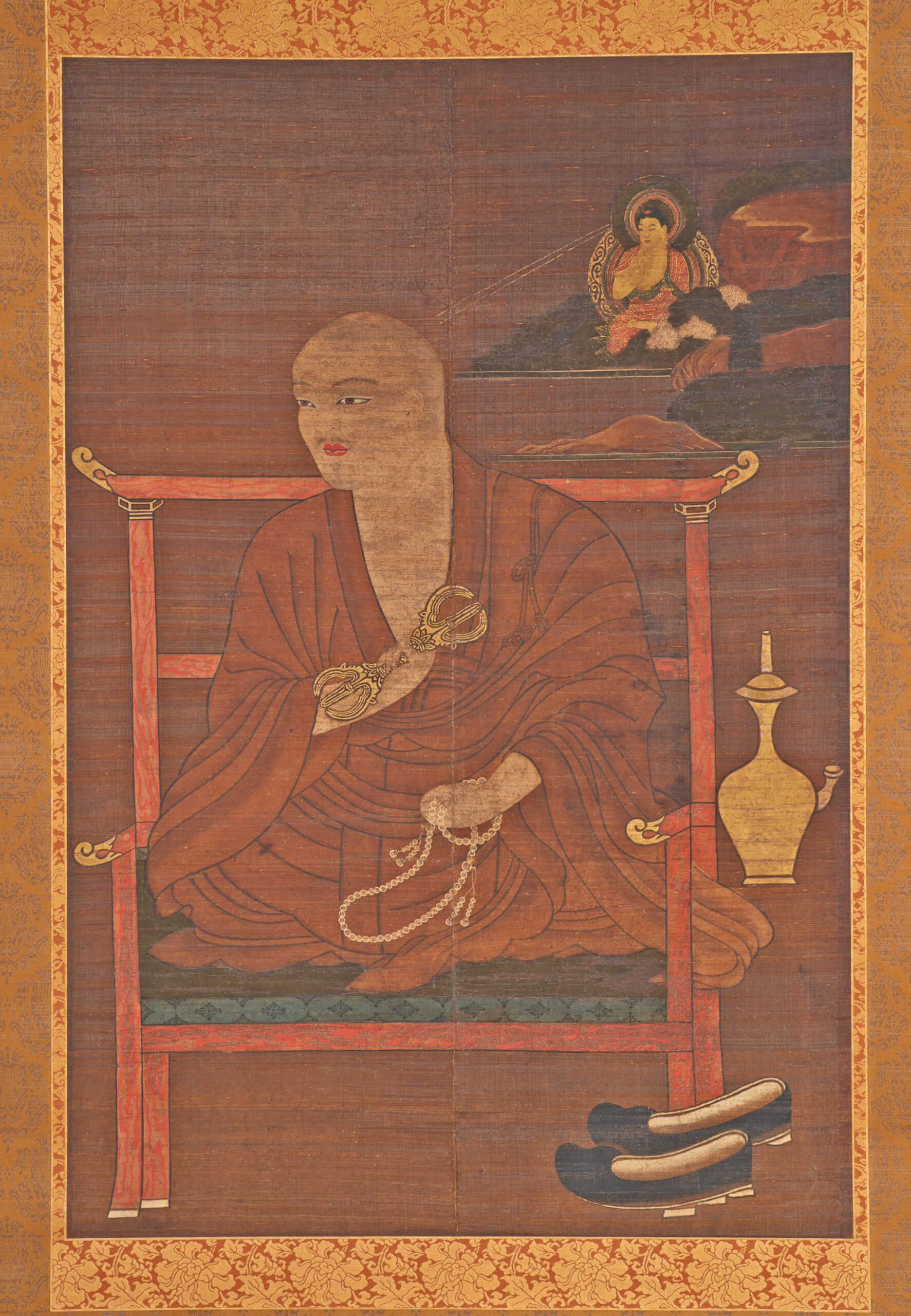
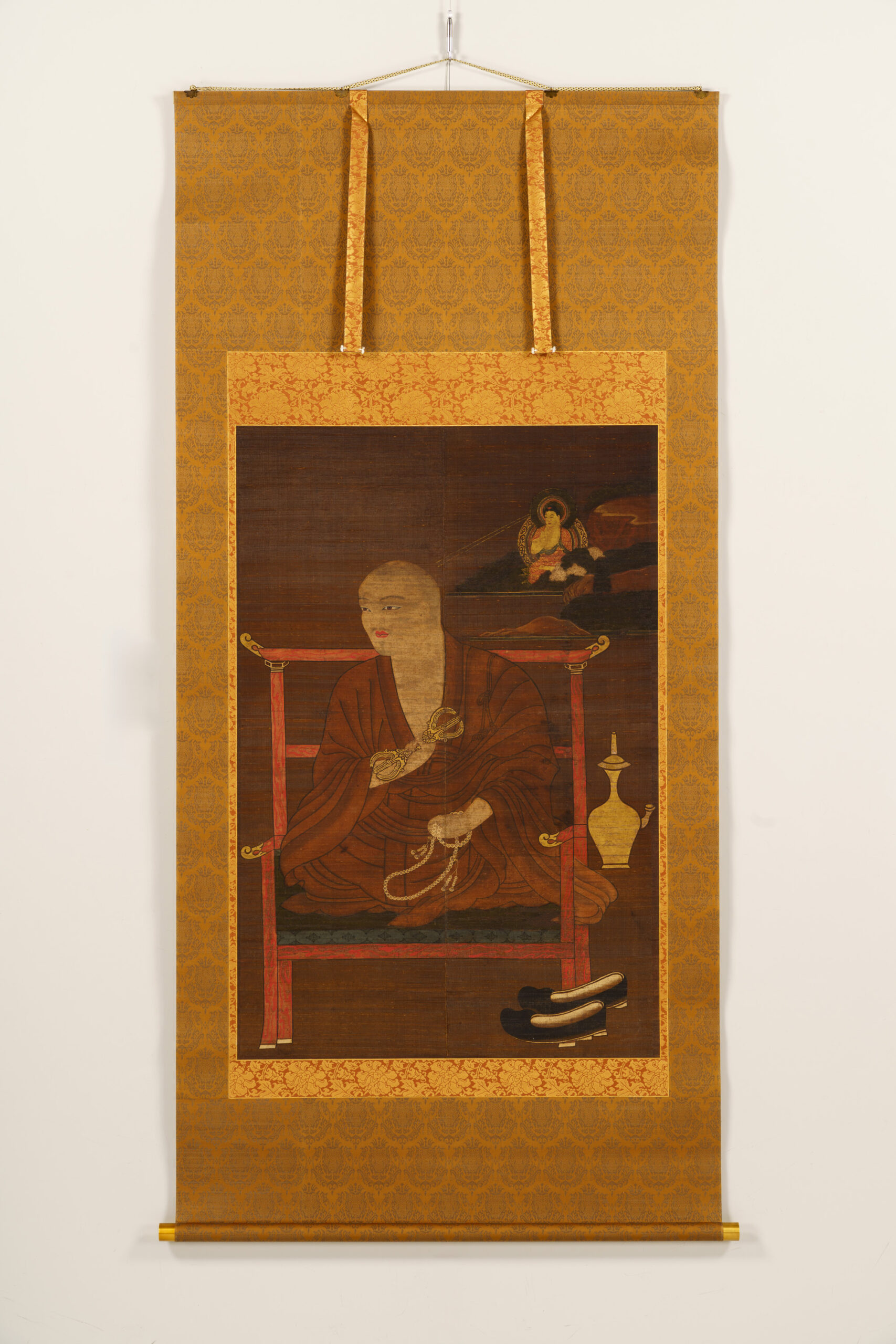
Portrait of Kōbō Daishi (Zentsū-ji Miei)
- Artist
-
‐
- Period
-
Muromachi period, 15th century
- Quality and quantity
-
Color on silk, one hanging scroll
- Size (cm)
-
H 115.2 × W 76.8
- Category
-
Painting (Japan)
- Accession number
-
B97000624
Description
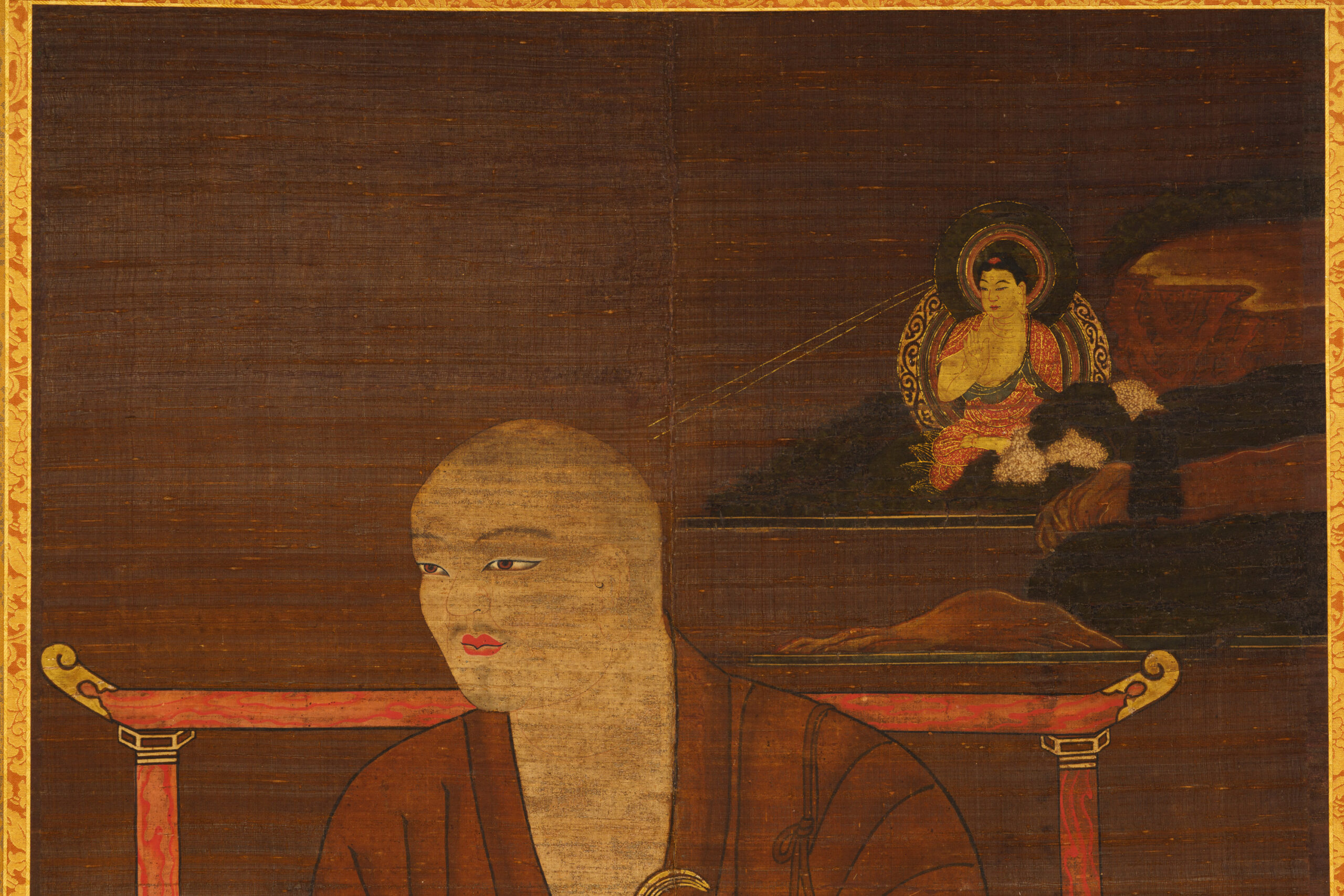
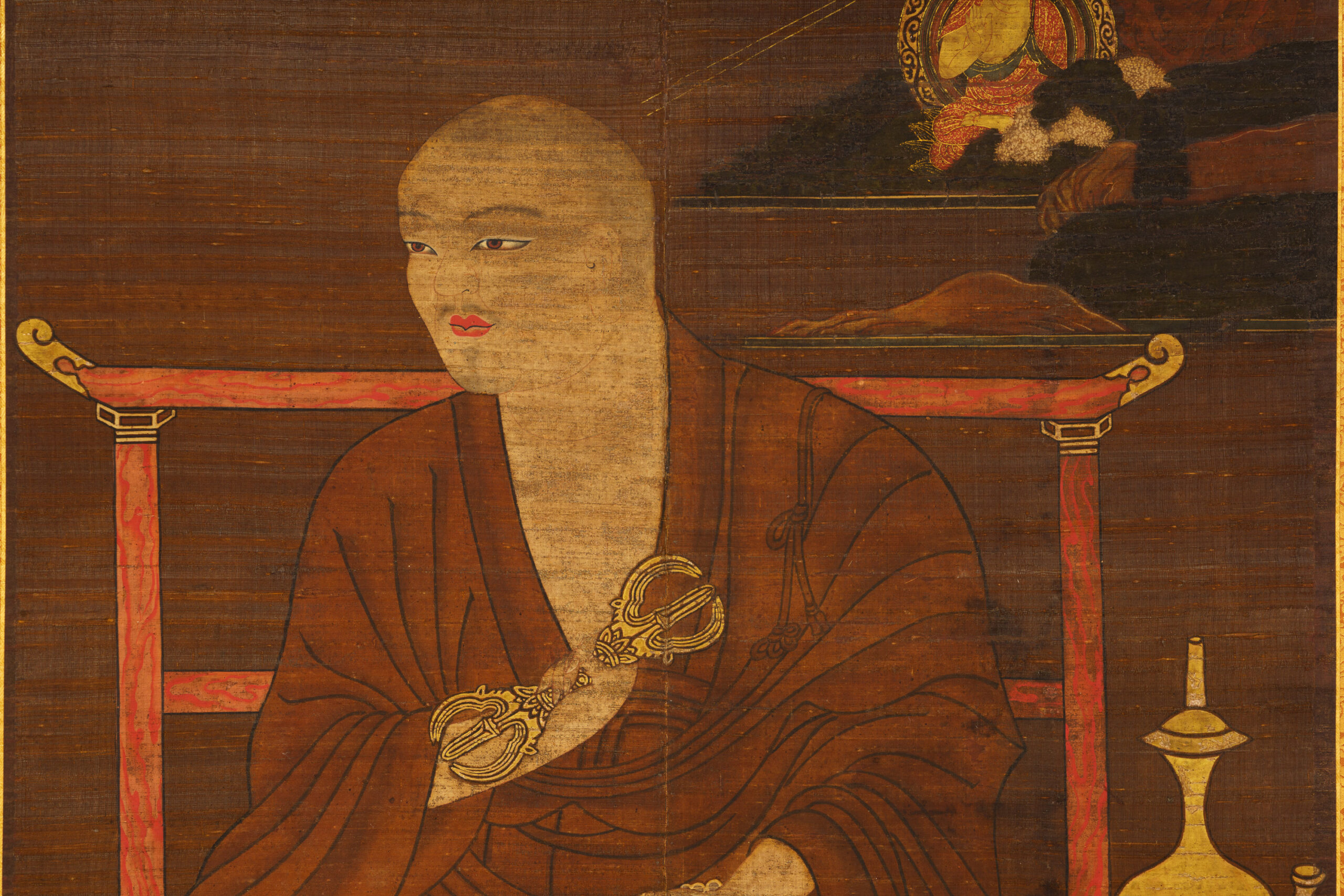
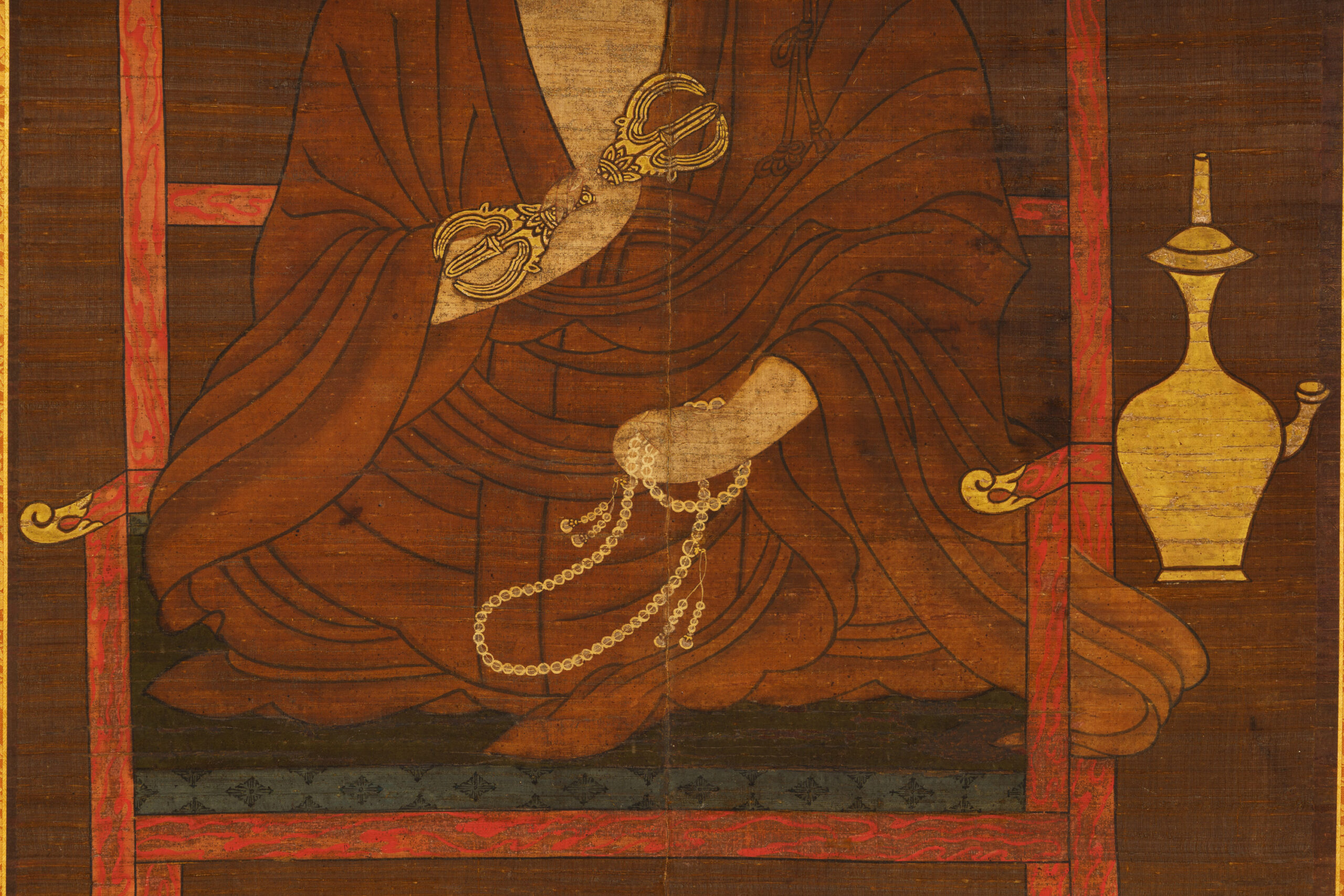
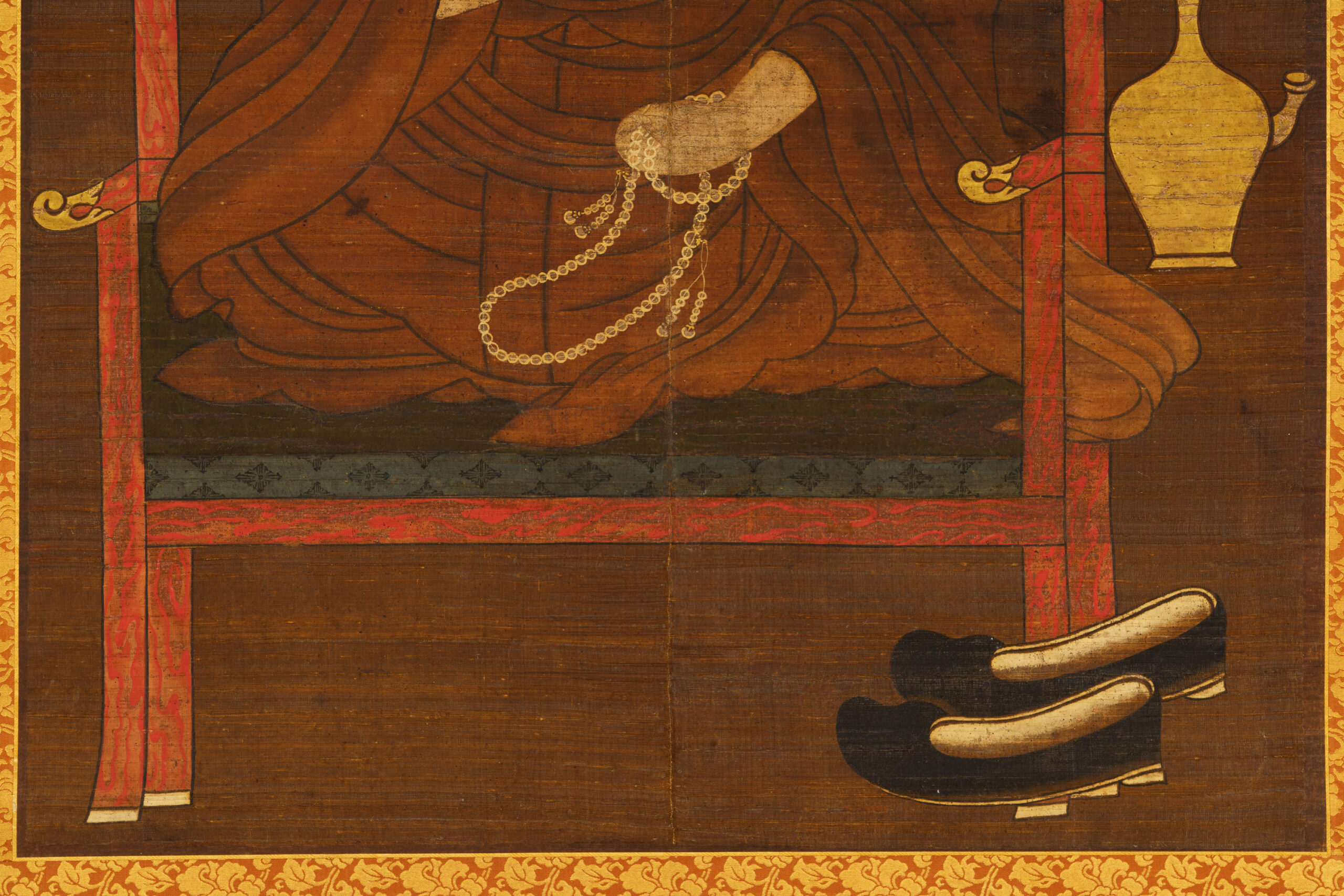
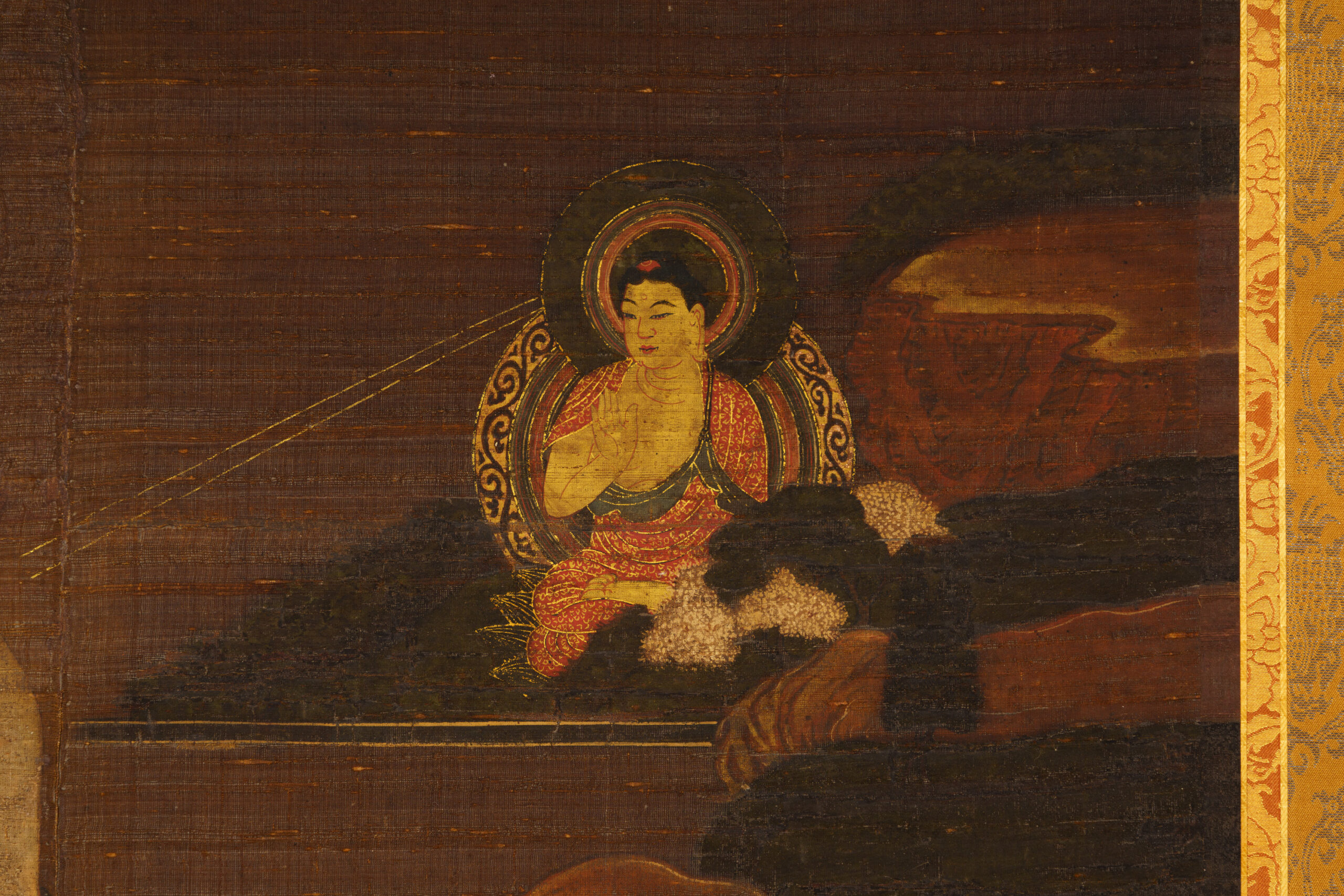
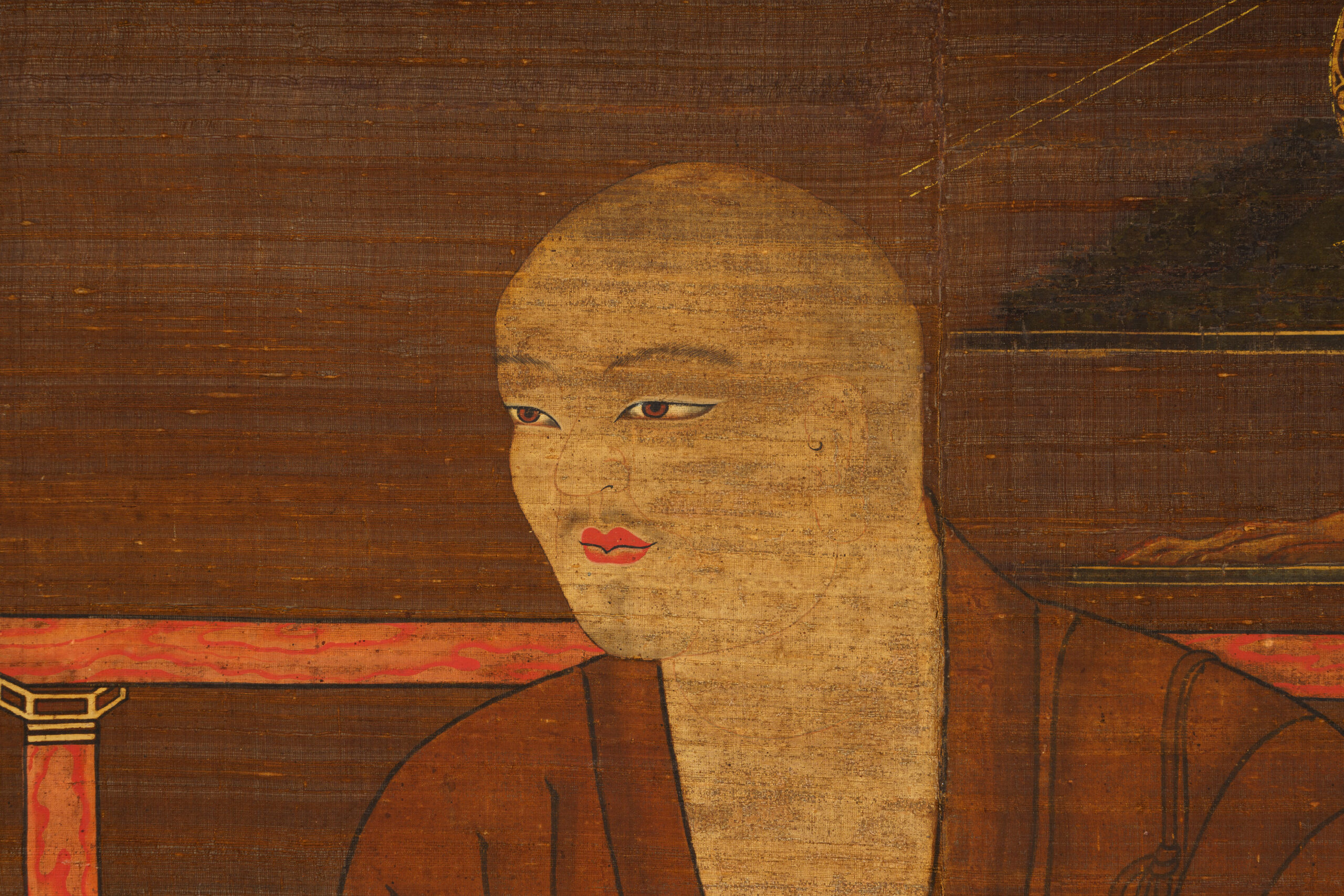
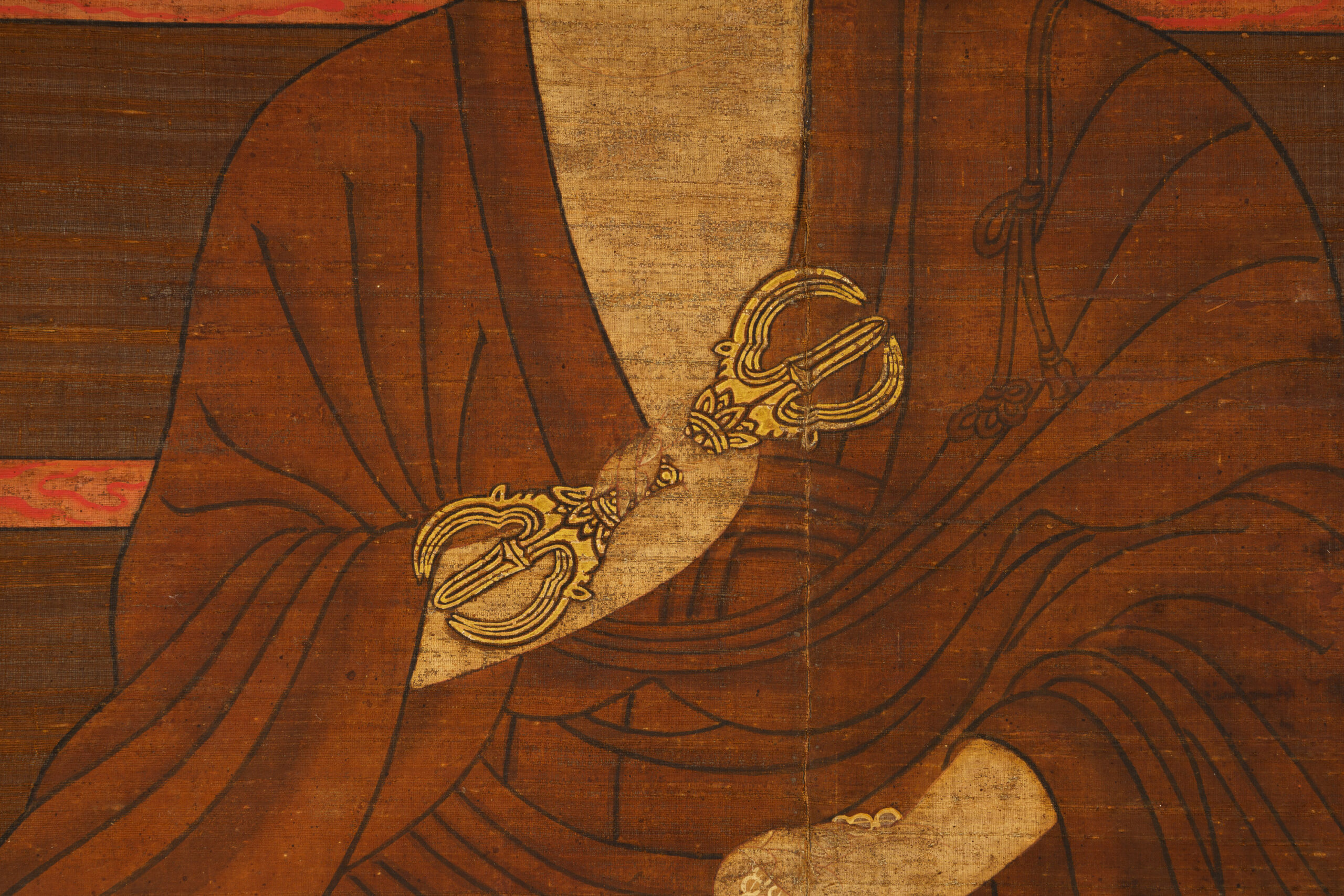
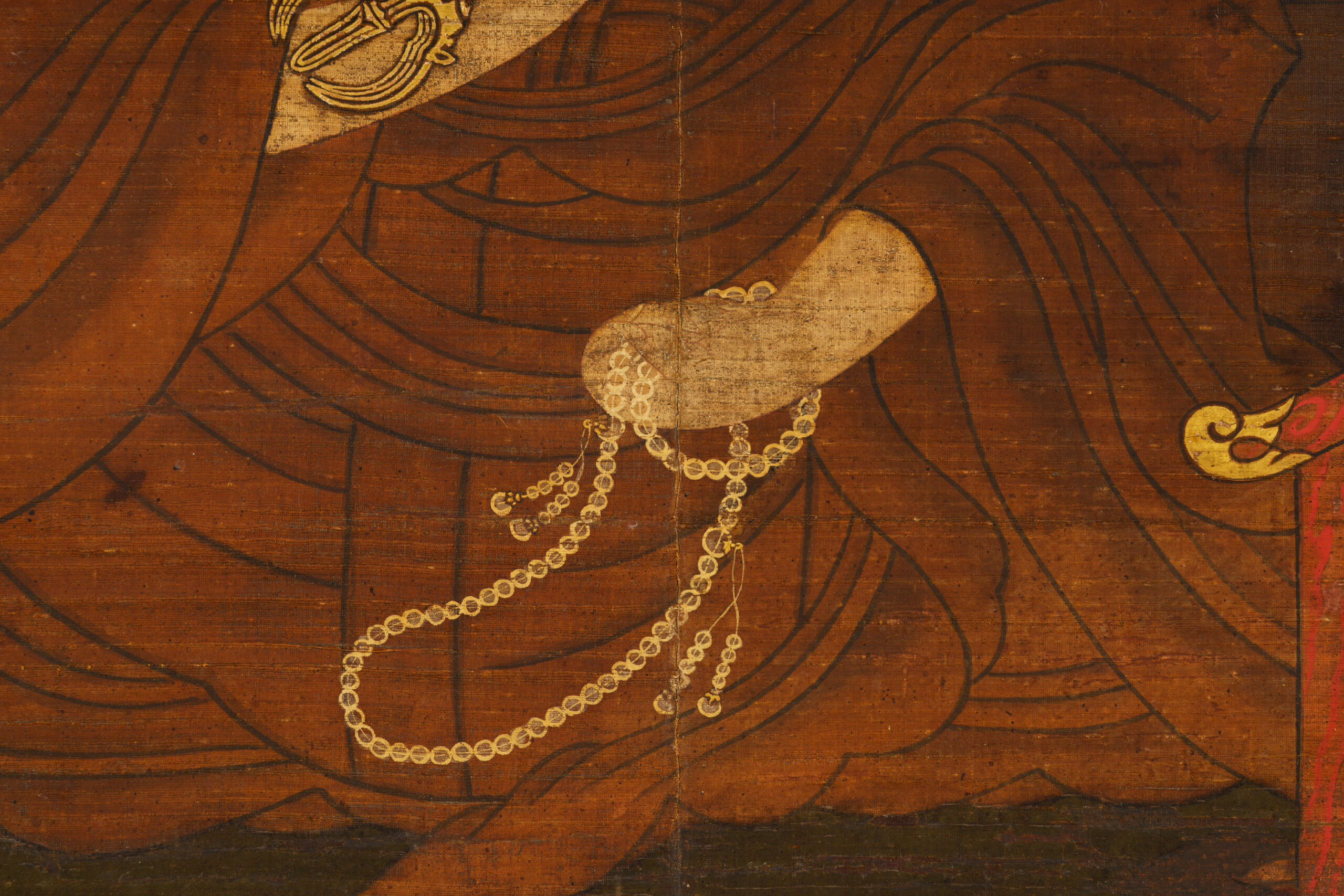
Painted images of Kūkai (Kōbō Daishi) known as miei typically depict him seated on a chair, his face turned slightly to the right, holding a five-pronged vajra (gokosho) in his right hand and a rosary (juzu) in his left, with a water vessel and a pair of shoes placed beside him. This painting follows the conventional iconography of Kōbō Daishi portraits, but it is distinguished by the addition of a scene depicting Shakyamuni Buddha appearing on a pine-covered mountain above him.
The monk Dōhan of Mt. Kōya recorded in his travel diary, Nankai Rurōki, that when he visited the Zentsū-ji Temple, which was regarded as a “sacred site of the Great Master,” he found in the pagoda a portrait said to have been painted by Kūkai himself, to which a scene of Shakyamuni Buddha appearing before him had been added. The sculptor Jōyū is said to have produced a copy of this portrait, which was subsequently shown to the emperor on several occasions. Portraits of Kōbō Daishi accompanied by a manifestation of Shakyamuni, known as Zentsū-ji miei, spread widely across Mt. Kōya, Shikoku, and Okayama, and they have also been linked to the monk Zōun from Sanuki.
Executed with forceful ink lines and dominated by vermilion tones, this work conveys a vivid sense of physical presence. It captures details such as Kūkai’s penetrating gaze and the stubble on his chin. According to a restoration inscription dated 1832 (Tenpō 3), the painting was originally preserved at Hōman-ji Temple in Bizen and was believed to be an authentic work by Zōun dating to the Hōtoku era (1449–1452). The inscription also states that Zōun himself added the phrase “atakamo shōjin no gotoshi” (“as if alive”) to the original mounting. Among the existing examples of Zentsū-ji miei, this painting is regarded as particularly distinguished.