


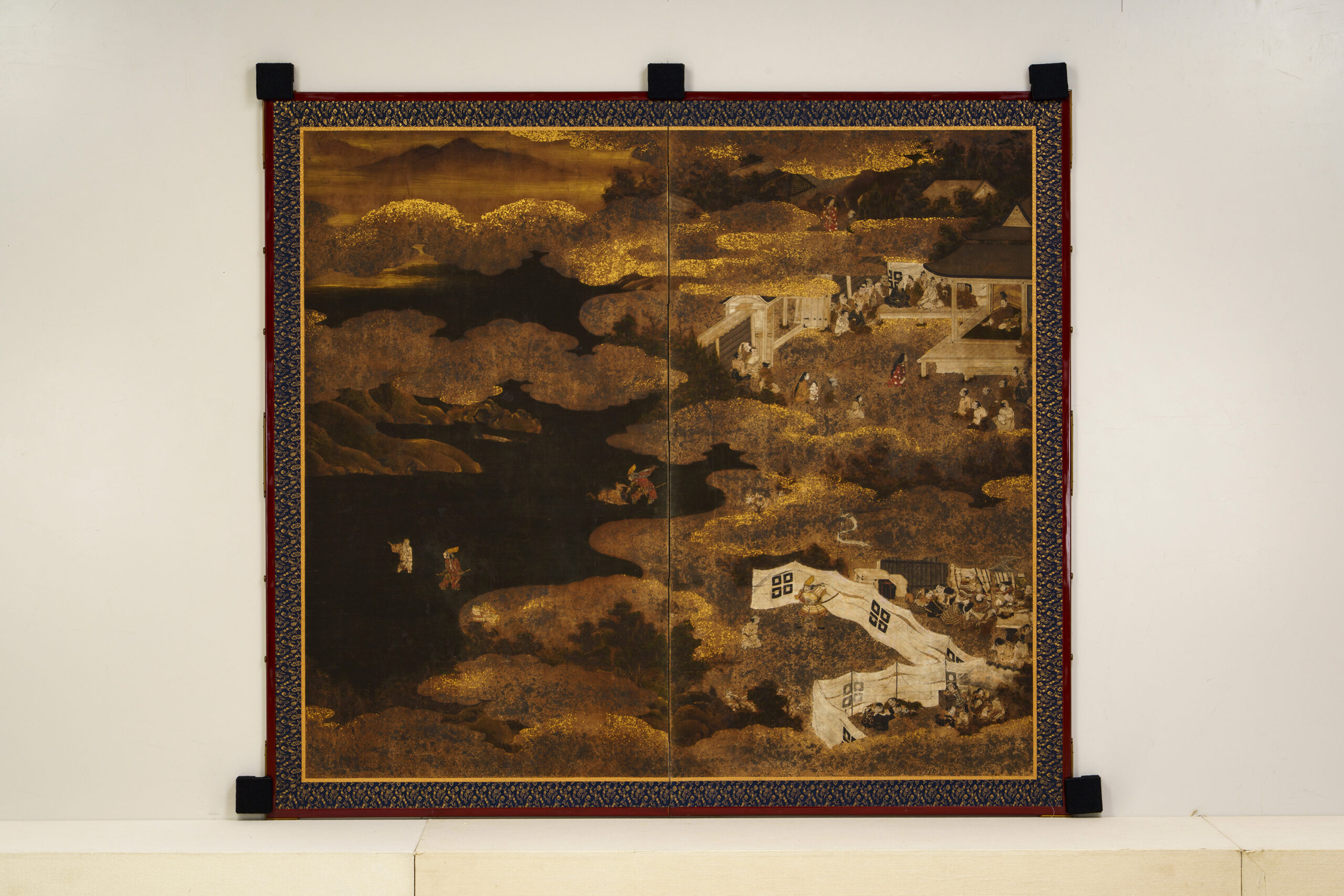
Screens of the Genpei War (Ichinotani and Fujito)
- Artist
-
-
- Period
-
Edo period, 17th century
- Quality and quantity
-
Color on paper, two-panel folding screens, one pair of screens
- Size (cm)
-
Right screen: H 150.4 × W 169.0 Left screen: H 150.3 × W 168.8
- Accession number
-
B00000238
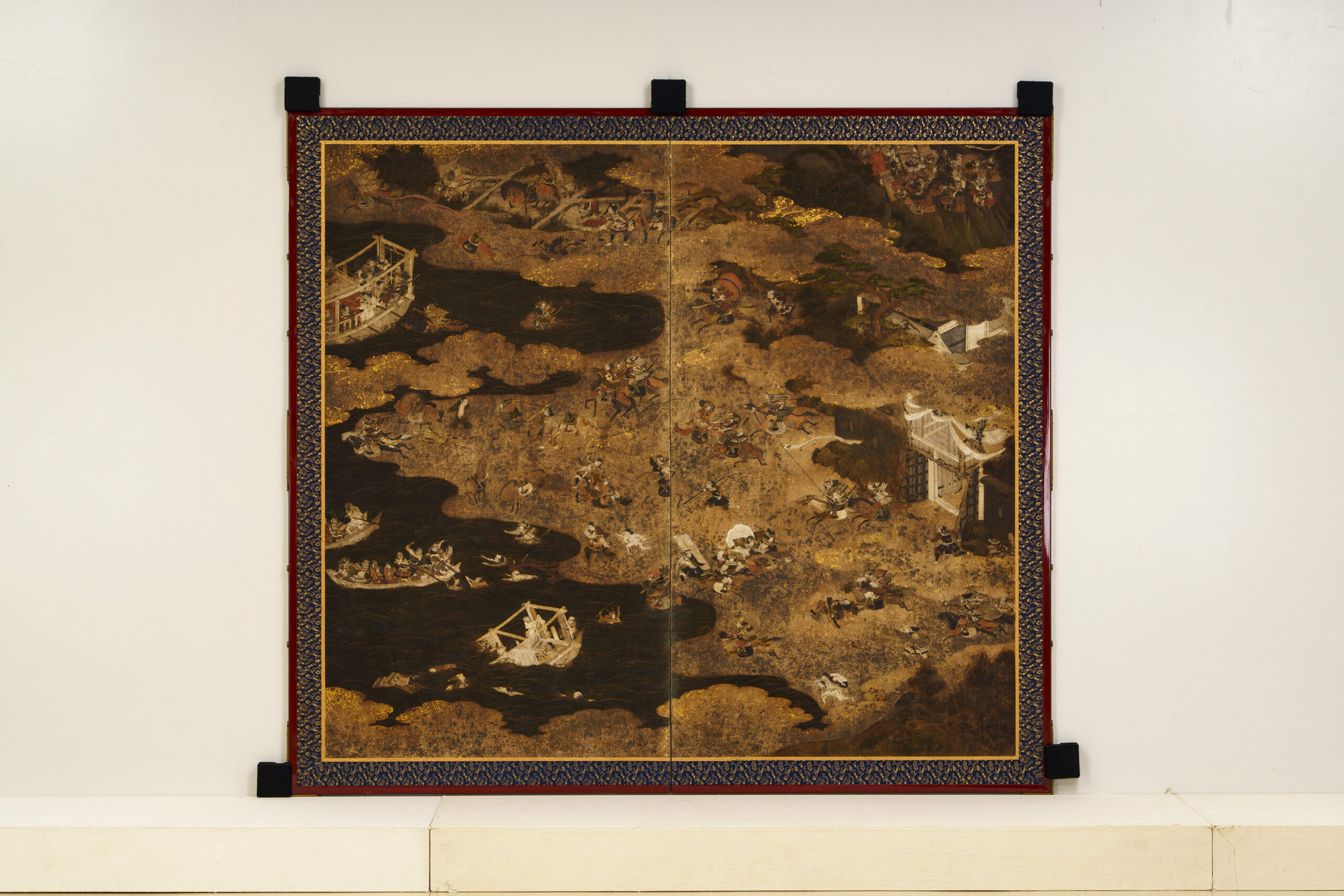
Description
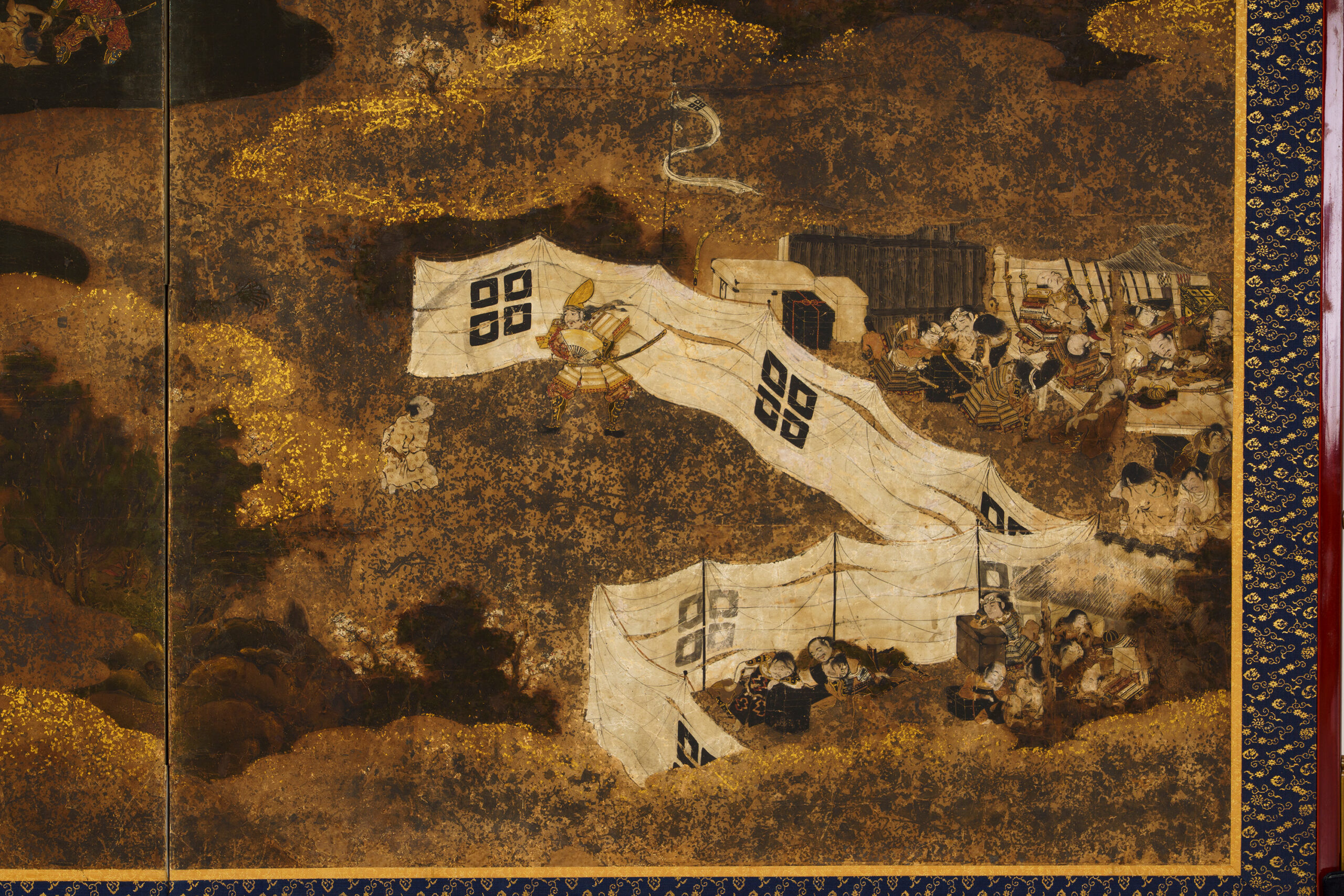
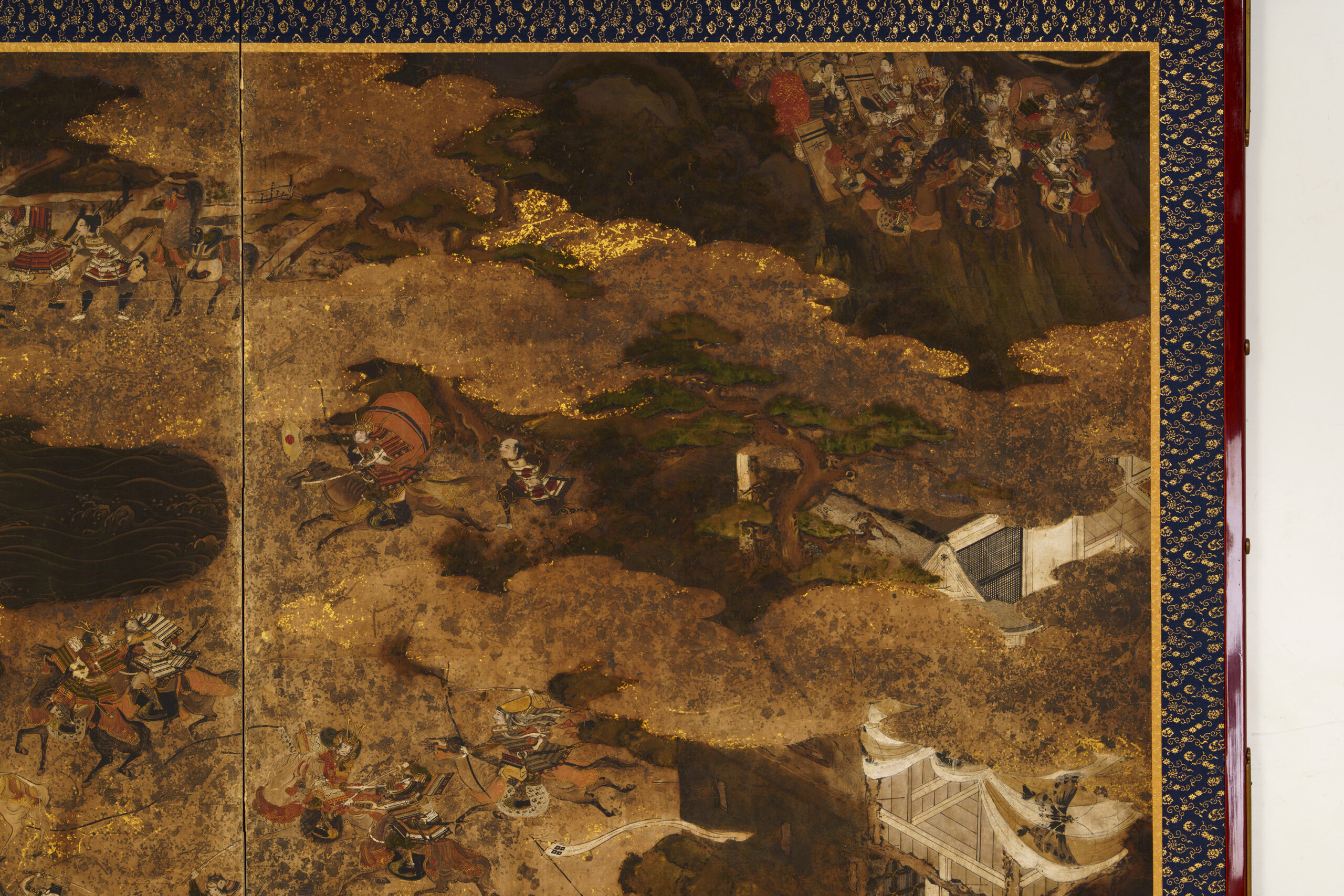
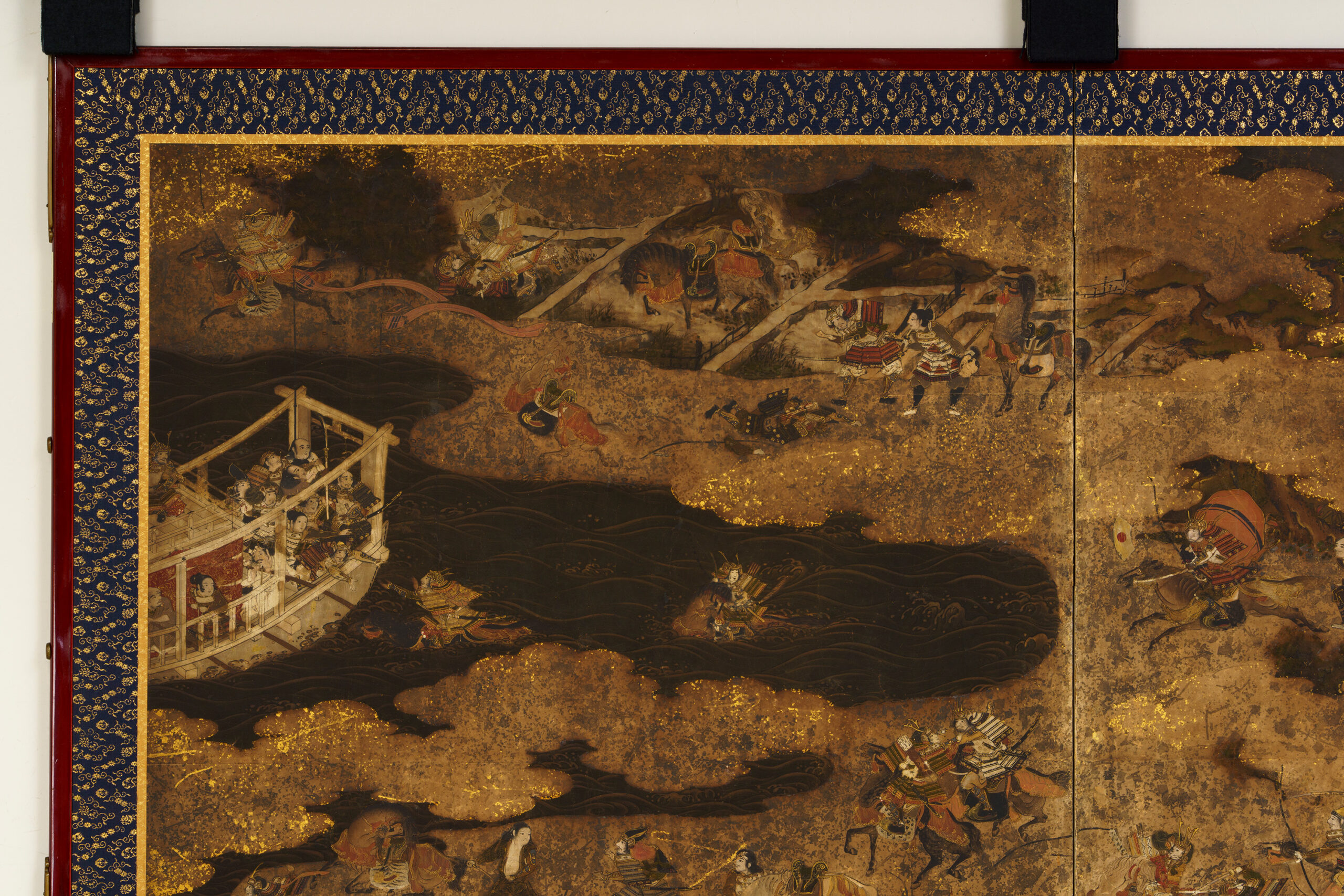
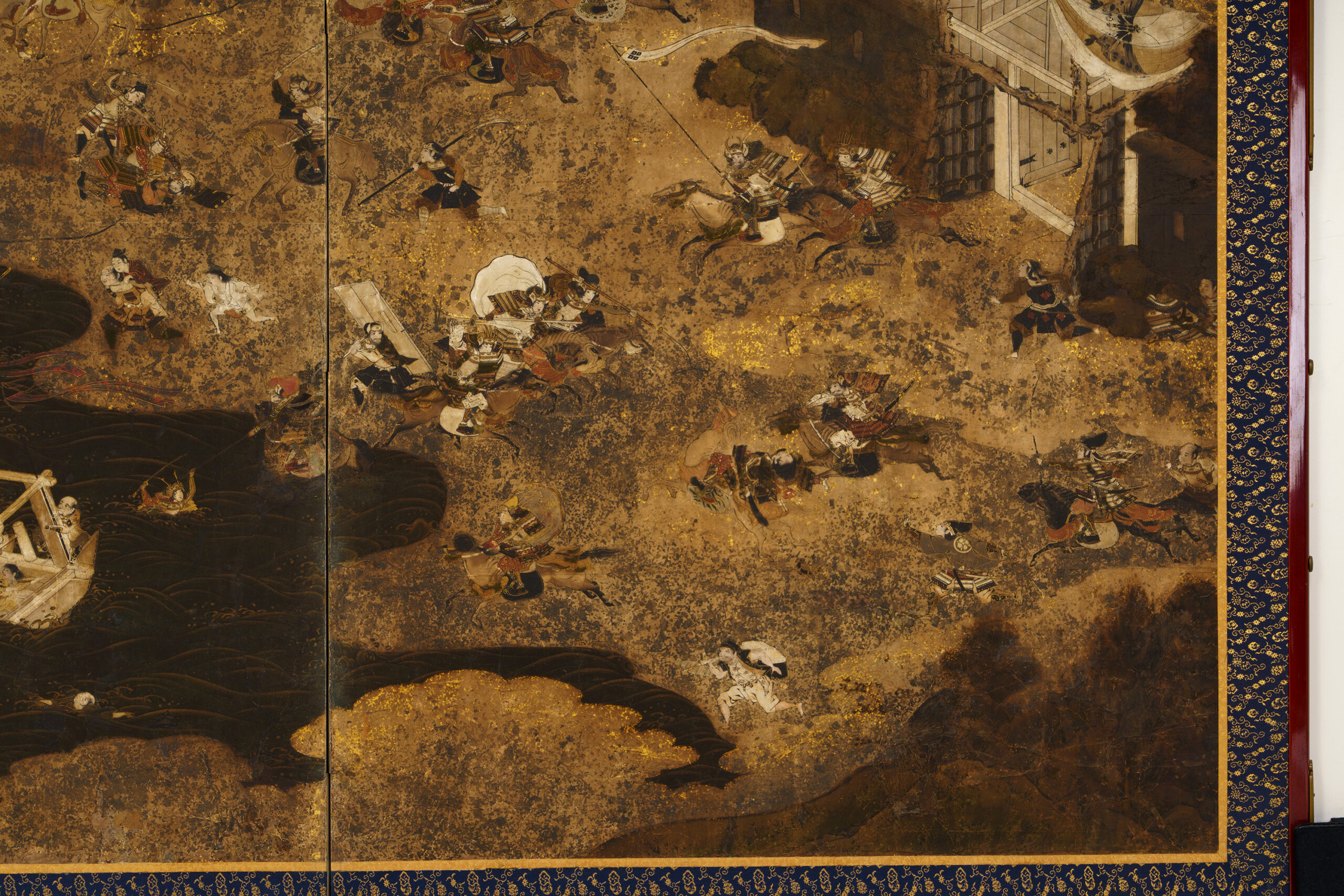
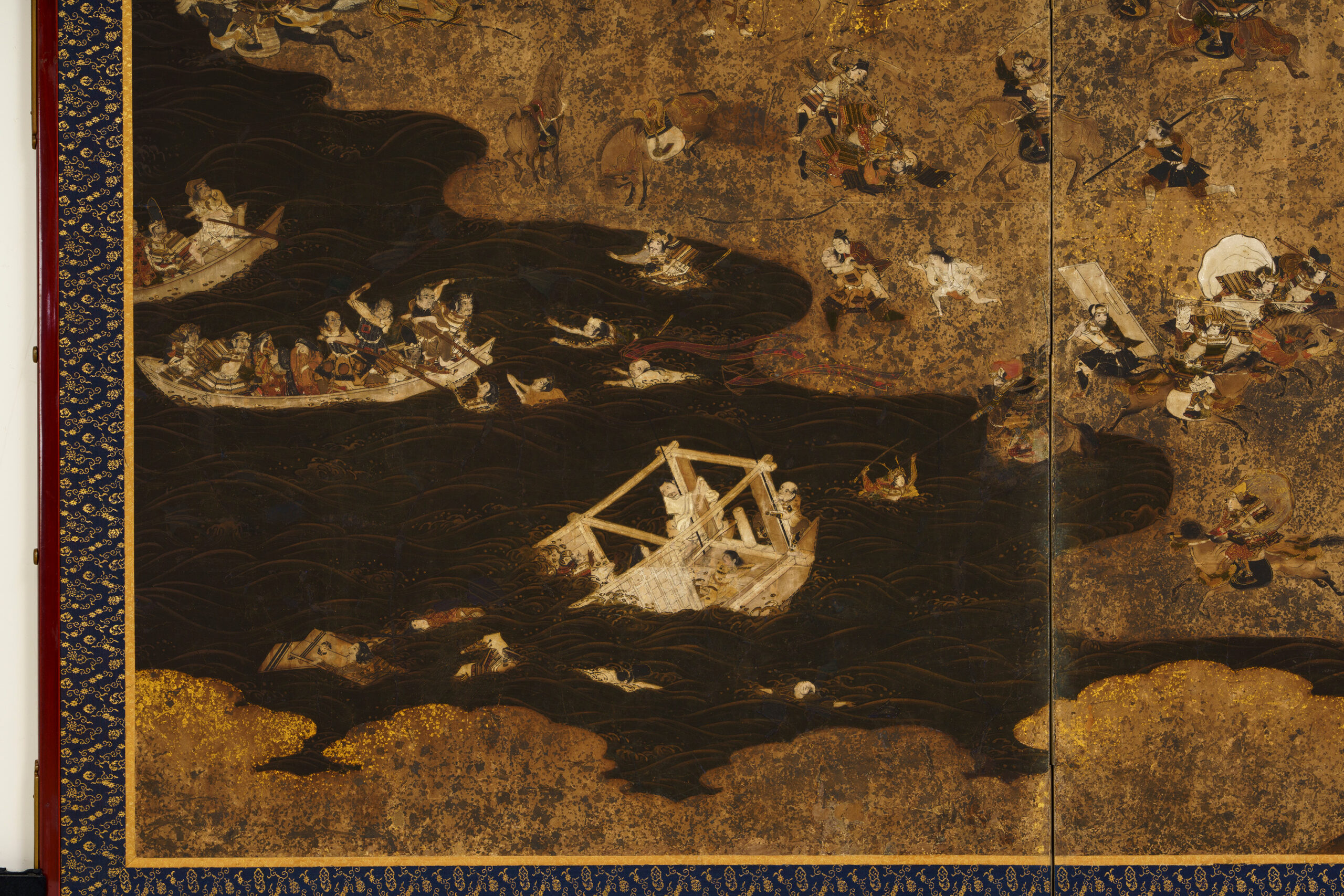
This pair of two-panel folding screens depicts two events from the Genpei War, the war between the Minamoto (Genji) and Taira (Heike) clans in 1184 (Juei 3). The right screen portrays the Battle of Ichinotani, and the left screen depicts the Battle of Fujito.
In the upper right of the right screen, Minamoto no Yoshitsune’s forces are shown charging down the precipitous slope of Hiyodorigoe. Toward the lower left, Taira warriors, caught off guard from behind, flee toward their ships.
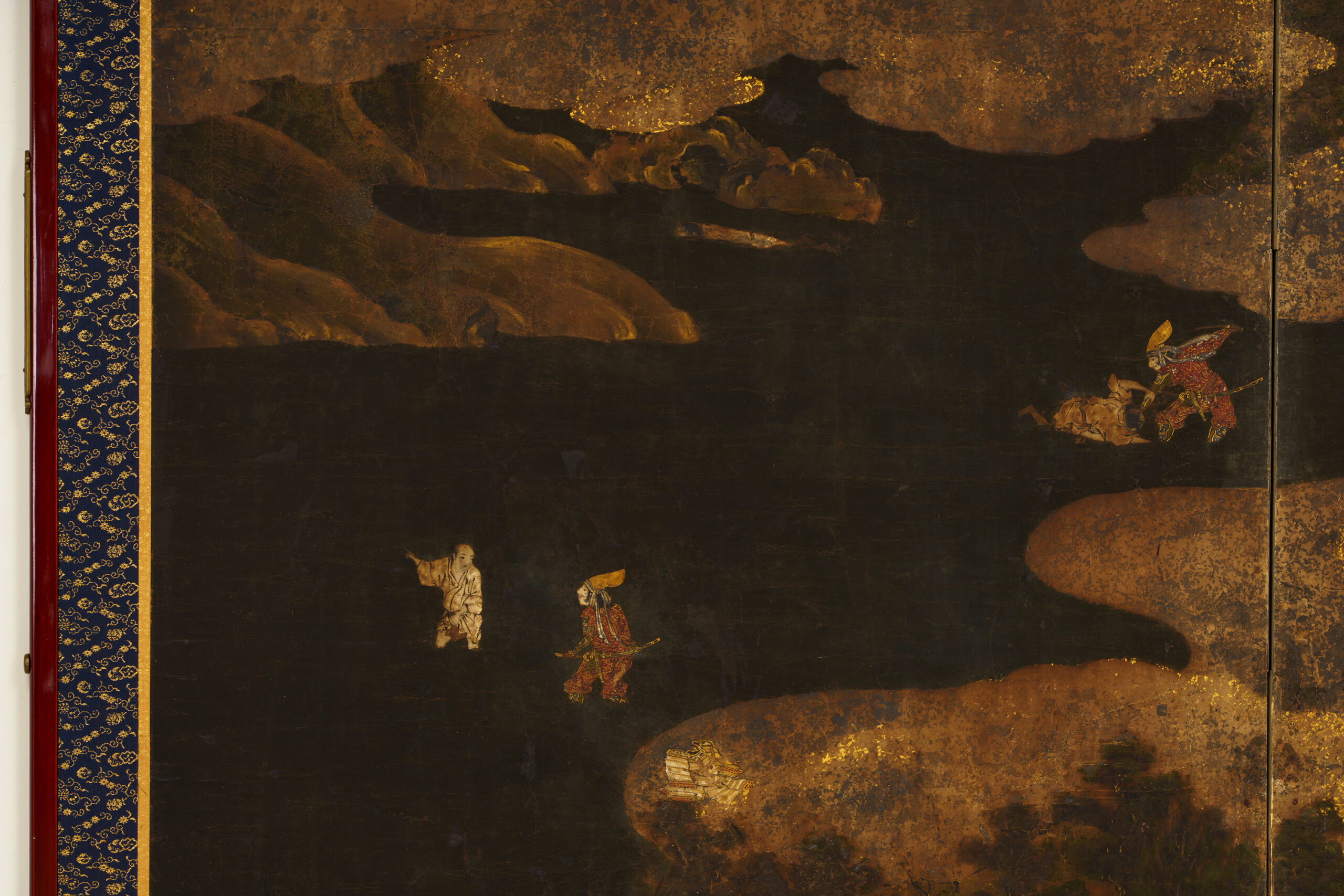
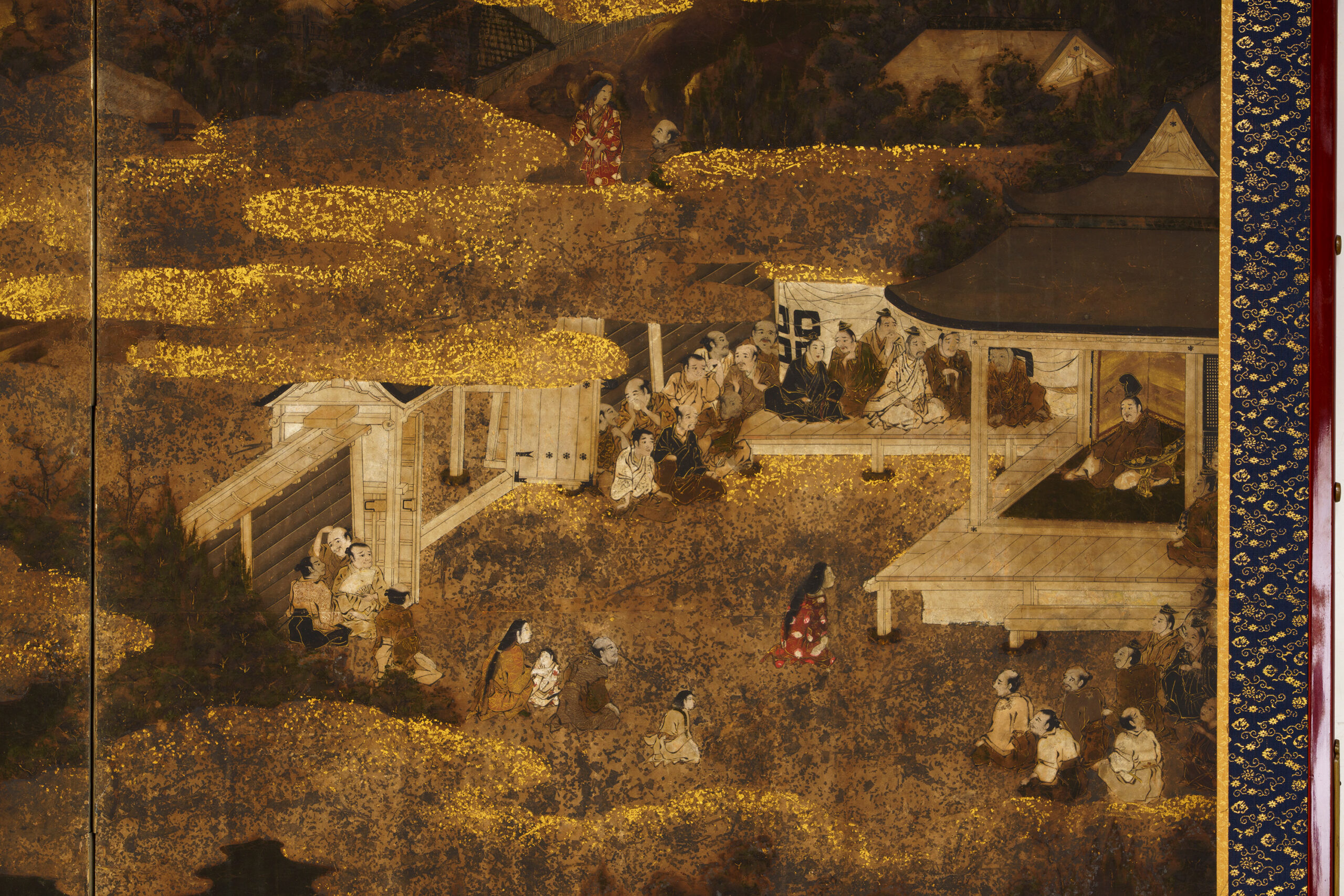
The left screen represents the Battle of Fujito, depicting Sasaki Saburō Moritsuna attacking the Taira forces at sea. He achieved distinction in battle and was ultimately granted the fief of Kojima in Bizen Province. From the lower right to the lower left, the screen shows Moritsuna secretly questioning a local fisherman about a shallow crossing. In the center, it depicts Moritsuna killing the man to keep the information concealed. These scenes follow the Heike Monogatari (The Tale of the Heike), which recounts Moritsuna’s successful crossing of the shallows on horseback the next day to attack the Taira at sea. However, the scene in the upper right that shows the fisherman’s mother lamenting her son’s death to Moritsuna is derived from the Noh play Fujito. Because this confrontation does not appear in the Heike Monogatari, the screens are thought to have been created referencing the Noh play.
The scattering of gold and silver flakes (sunago) and metallic cuttings (noge) directly onto the surface, combined with stylistic features more closely associated with Chinese-style painting than with the Kanō school, suggests that the screens were likely painted by an artist of the Hasegawa school. The work is thought to date from the Keichō (1596–1615) to Genna (1615–1624) eras.