


Poem-Slip Screens
- Artist
-
-
- Period
-
Edo period, 17th century
- Quality and quantity
-
Six-panel folding screens, one pair of screens
- Size (cm)
-
H 162.0 × W 376.2
- Category
-
Painting (Japan)
- Classification
-
Designated by the city or town
- Accession number
-
MY0#00856
Description
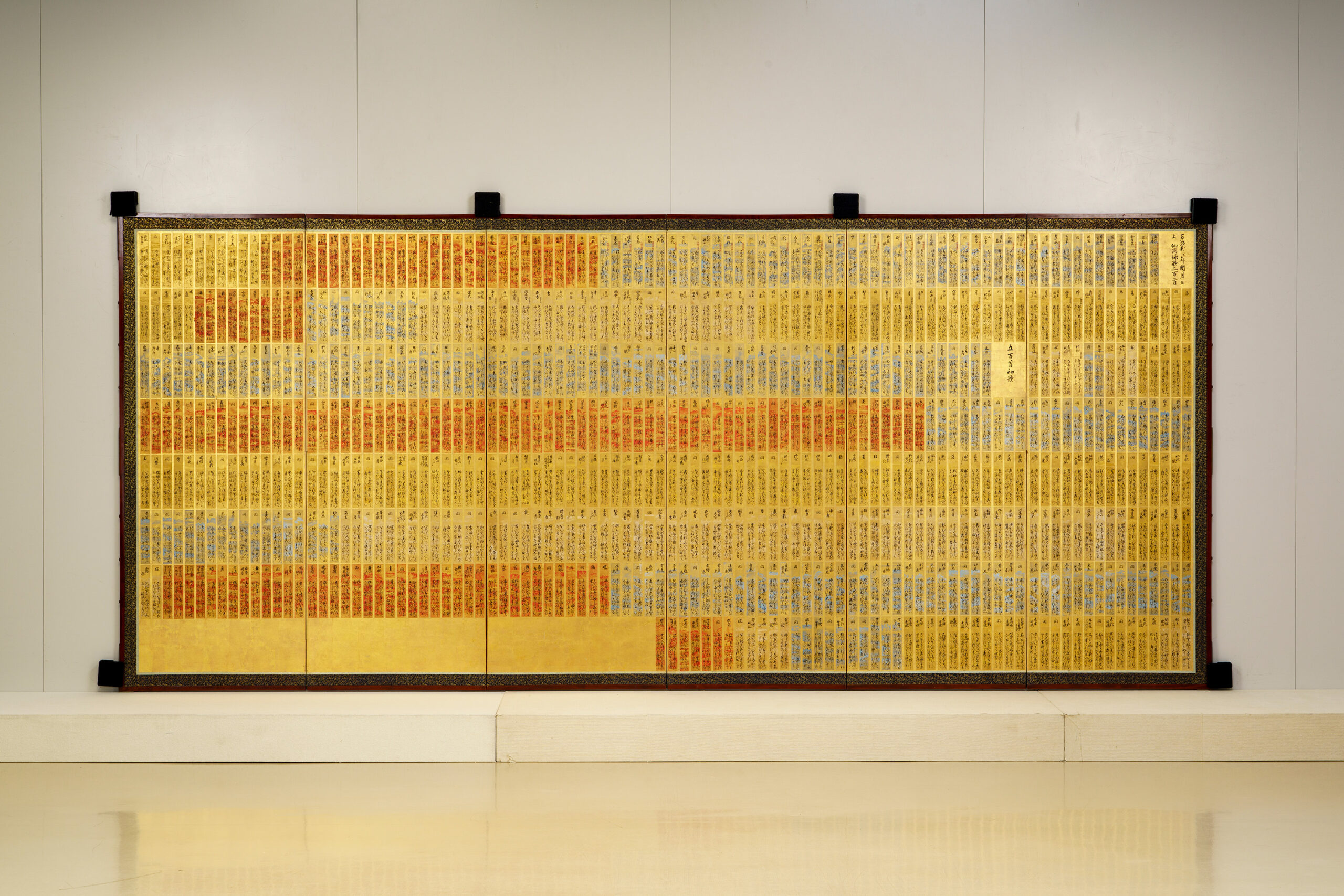
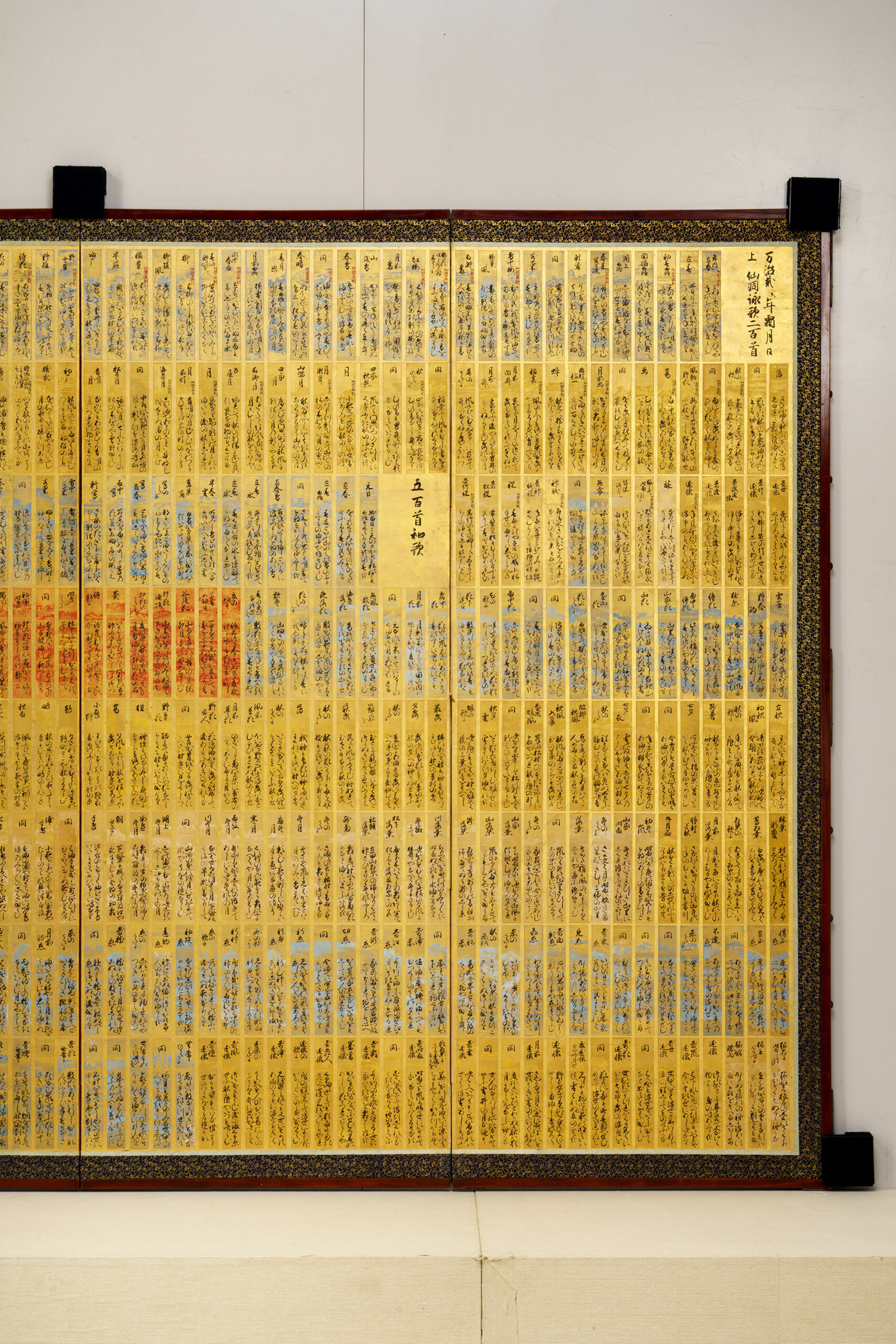
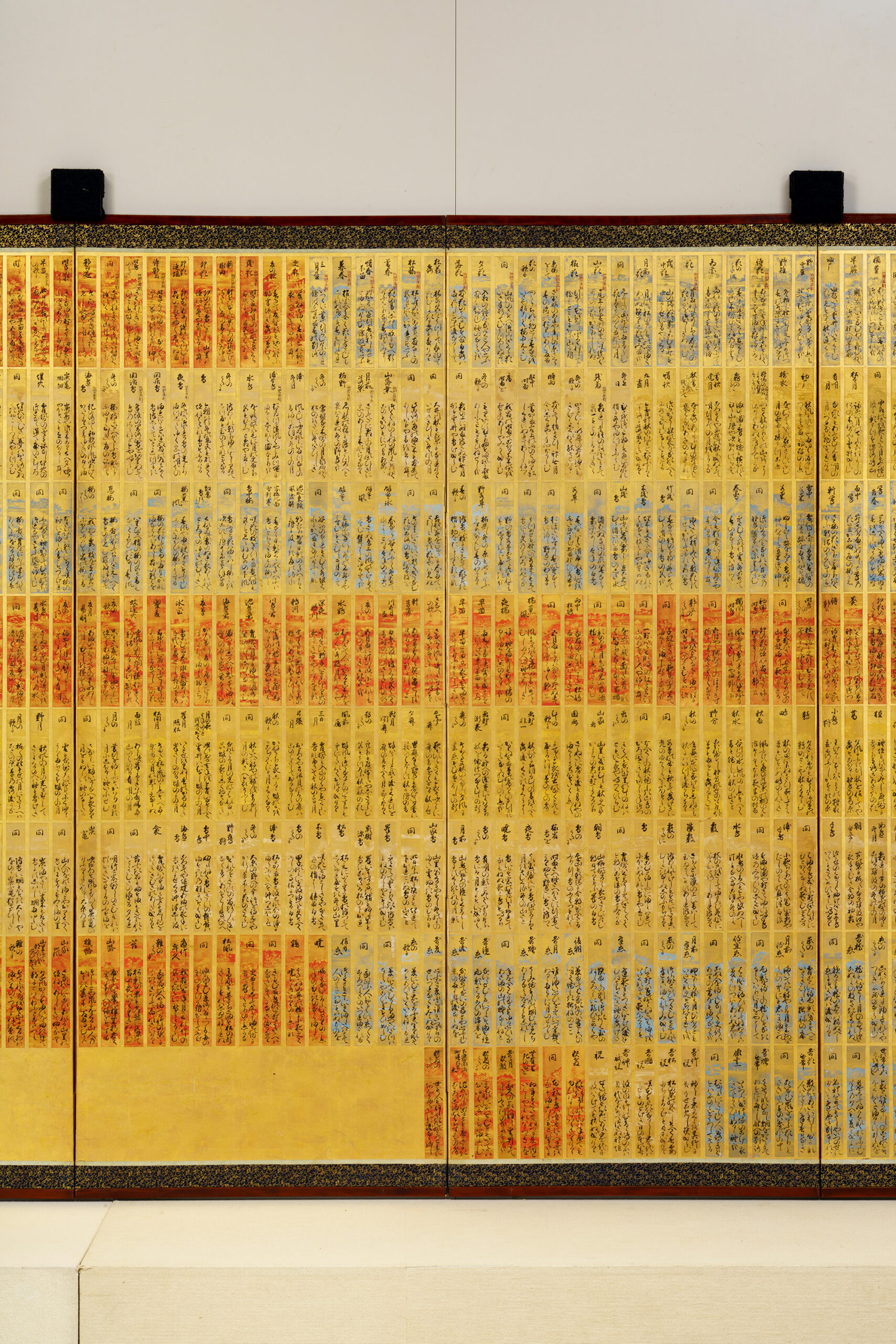
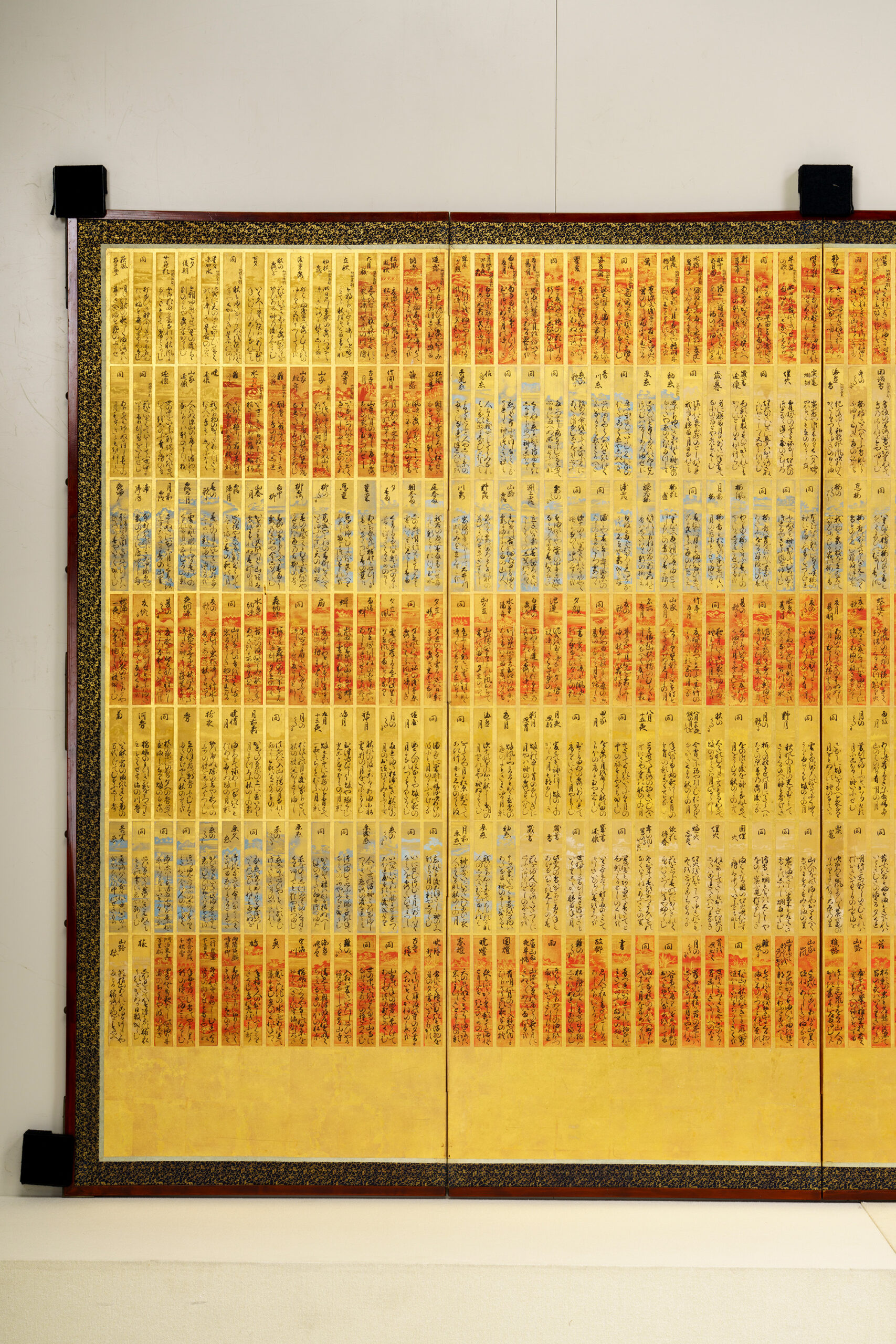
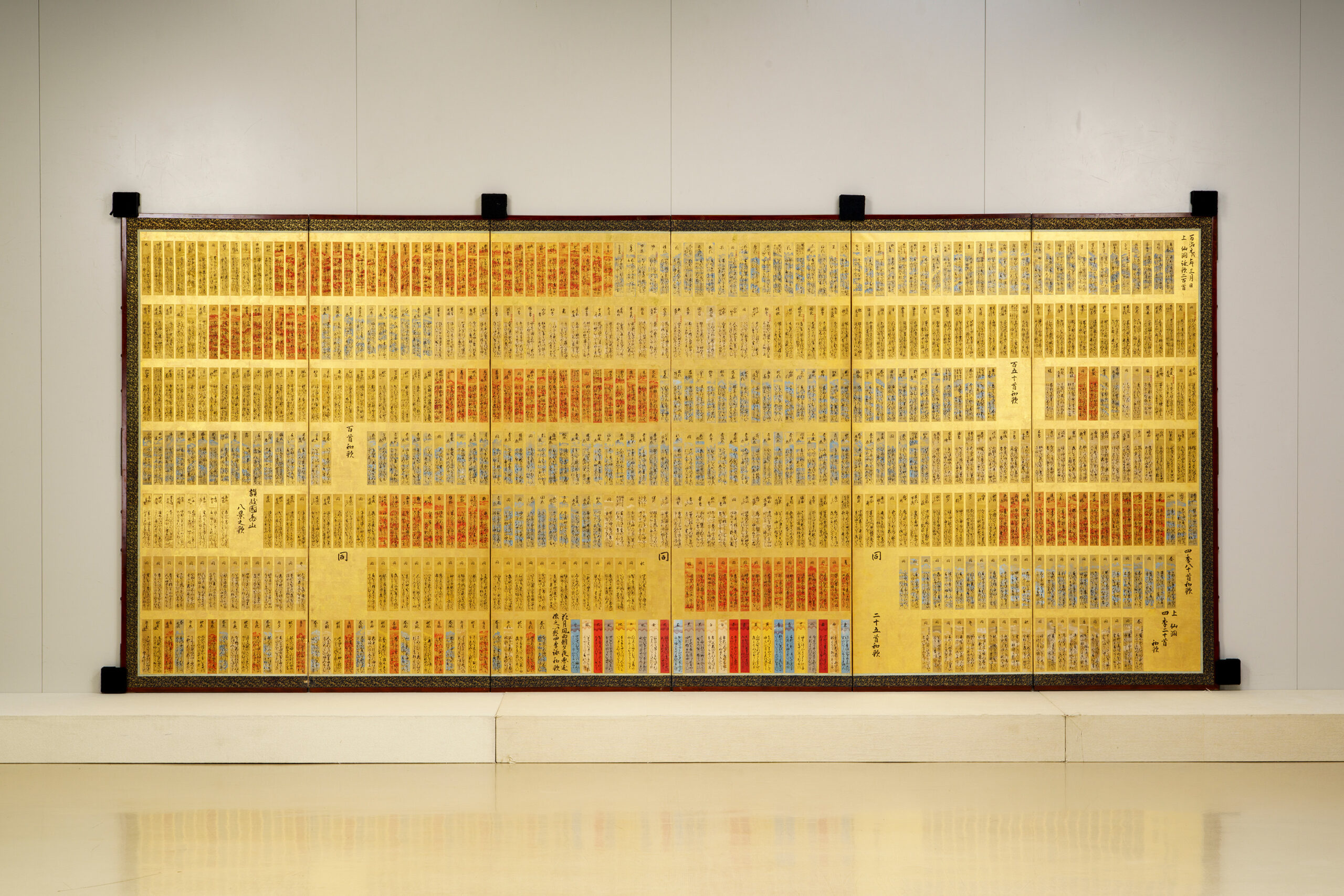
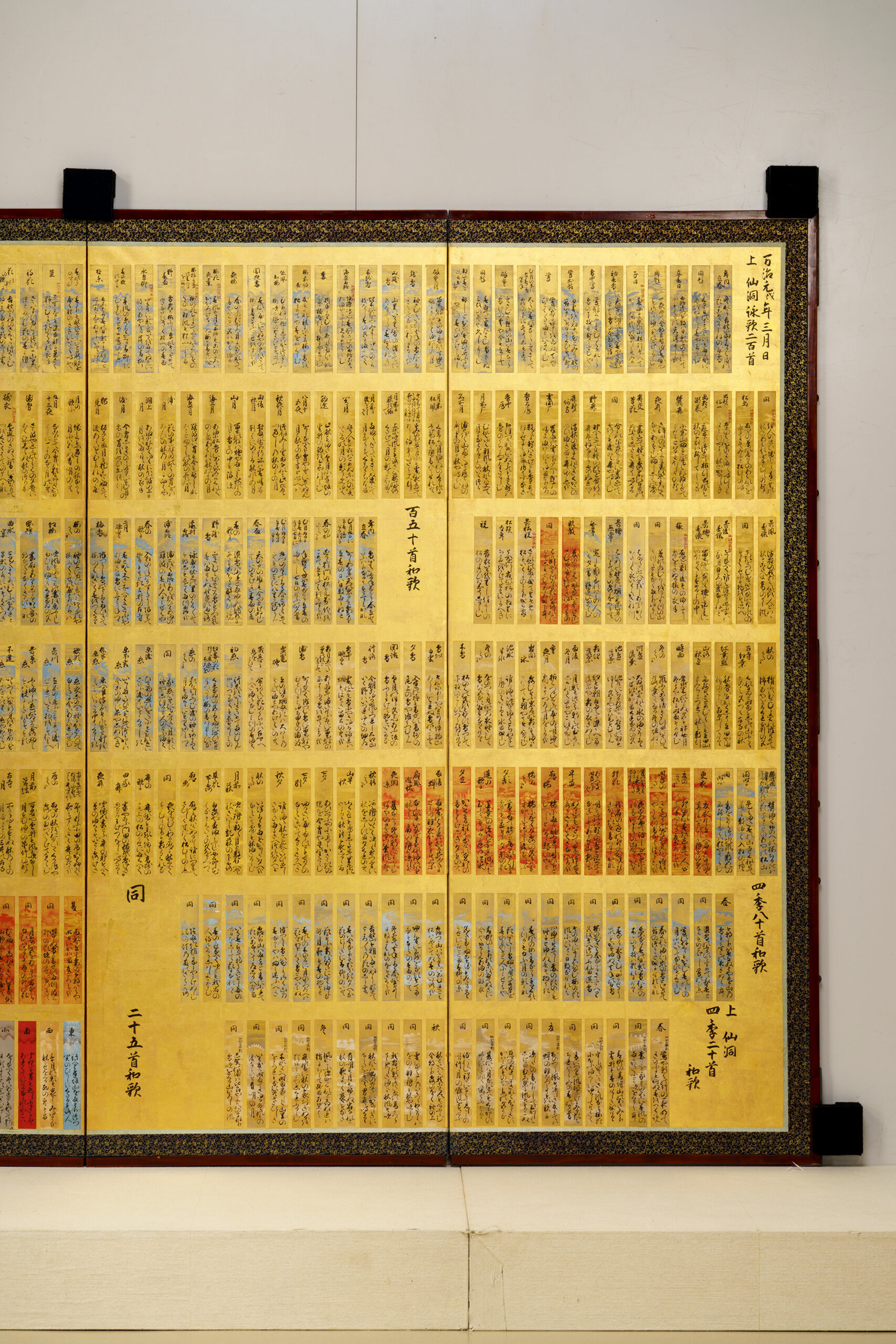
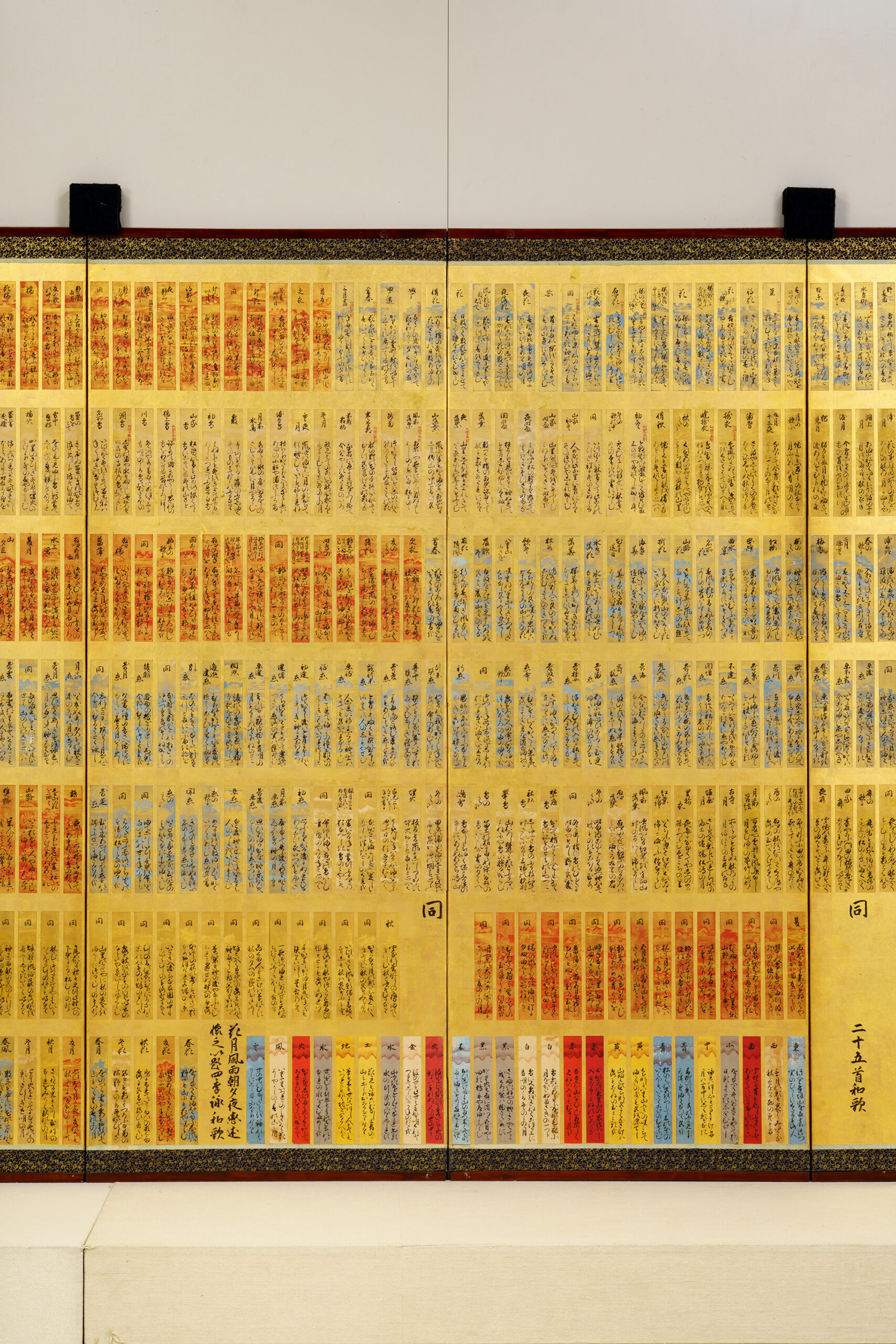
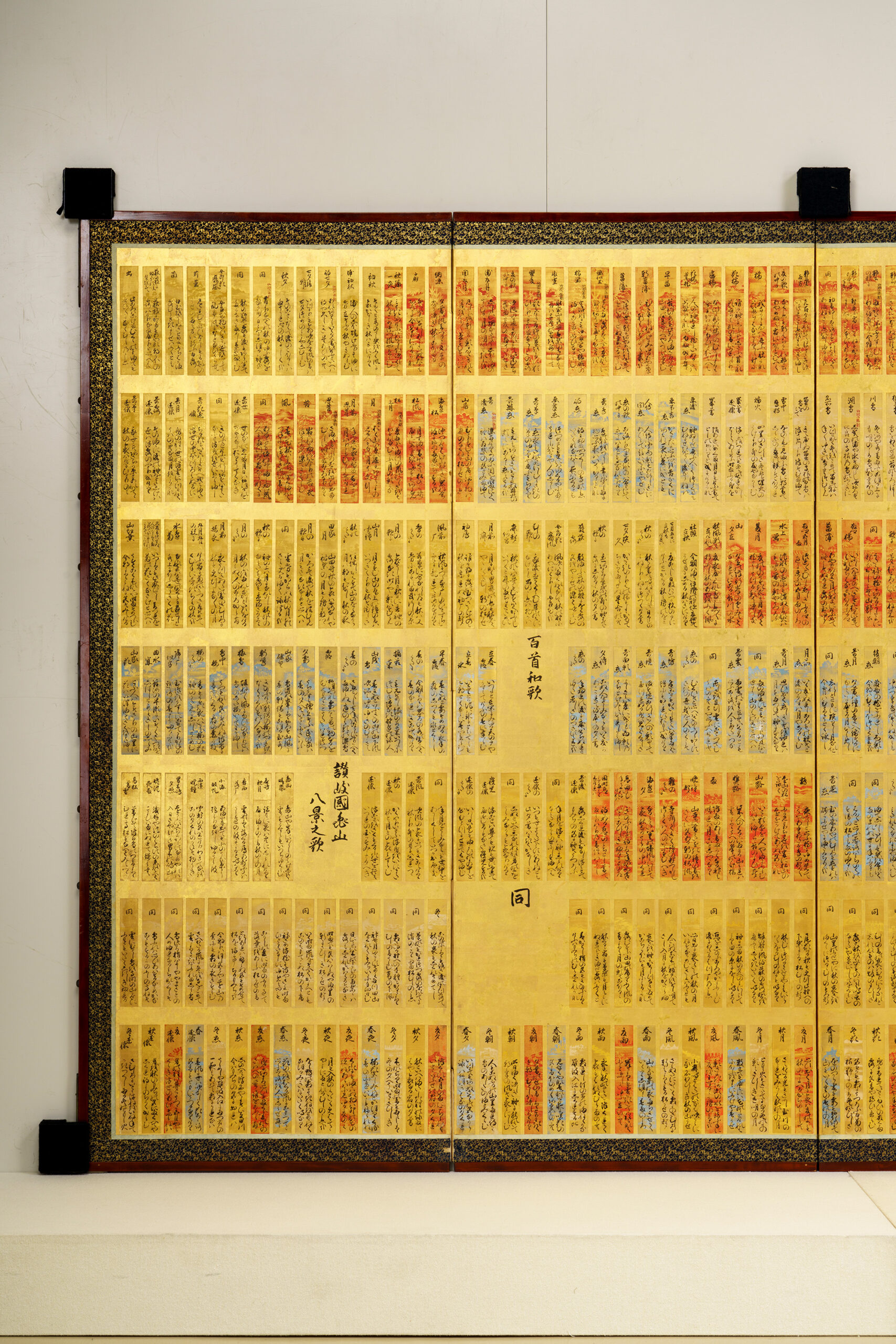
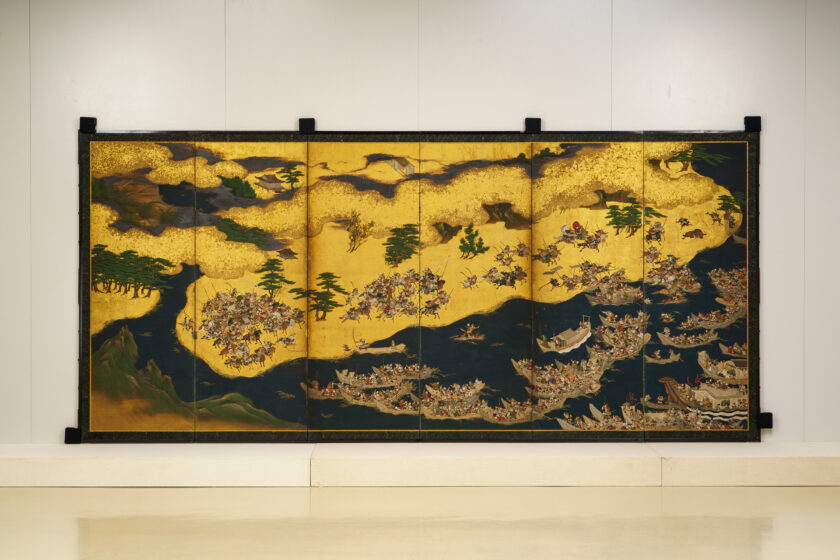
These folding screens are composed of tanzaku (poem papers) inscribed with waka poems by Matsudaira Yorishige, the first head of the Takamatsu Matsudaira family. There are 619 tanzaku on the right screen, including waka composed in 1658 (Manji 1) under the instruction of Emperor Emeritus Go-Mizunoo, as well as waka on the theme of the Eight Views of Kameyama. There are 700 tanzaku on the left screen, including waka composed under the emperor emeritus’s guidance in 1659 (Manji 2). The poem slips affixed to the screens that were revised by Emperor Emeritus Go‐Mizunoo are marked in red or black with the notation “Sendō on‐tensaku” (“corrected by the retired emperor”), indicating the places where he made additions, deletions, or other adjustments. Noted as one of the most accomplished waka poets among Japan’s emperors, Go-Mizunoo frequently reviewed Yorishige’s verses and provided instruction.
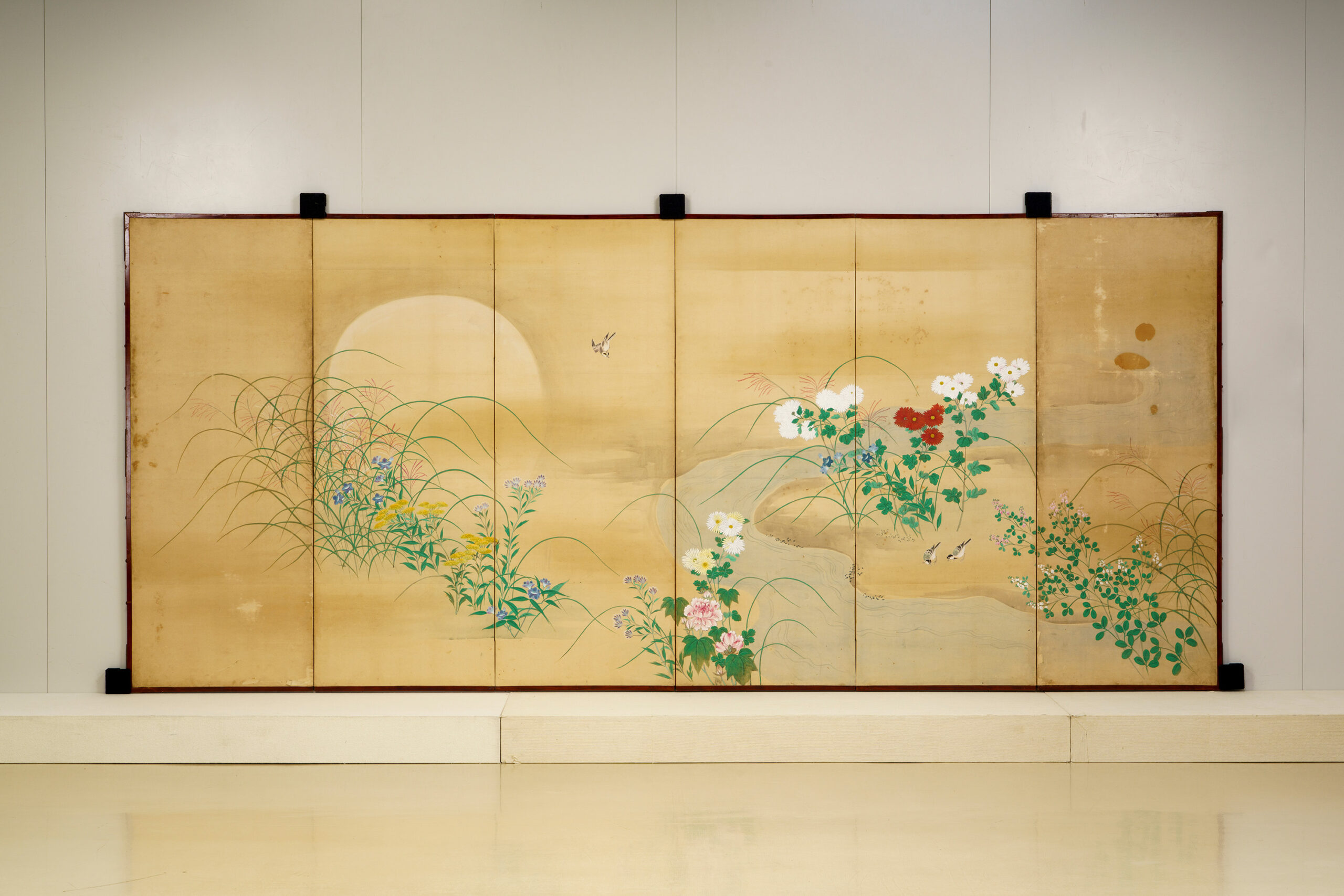
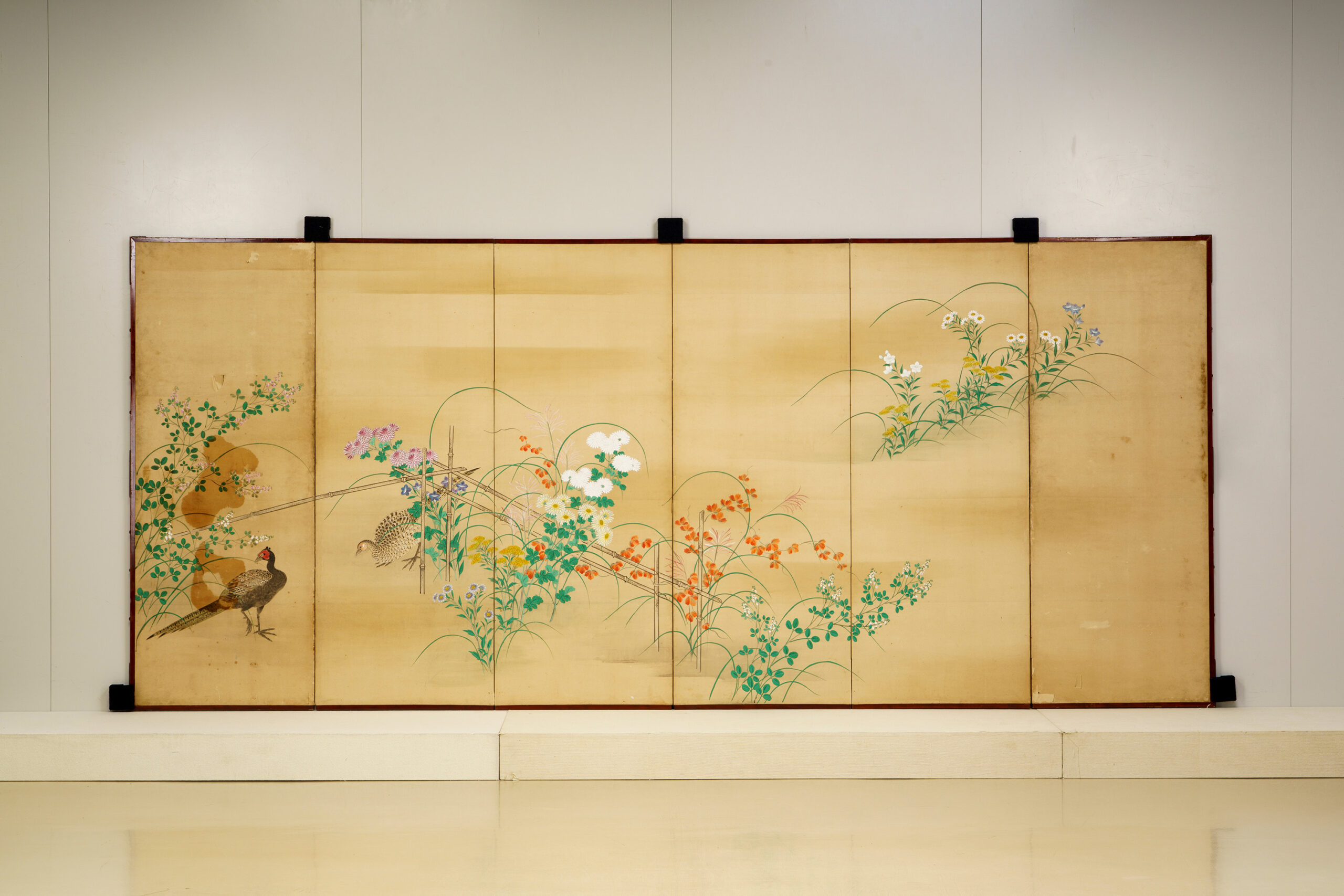
On the reverse of the screens, the 1658 screen depicts autumn grasses and a pheasant, while the 1659 screen shows autumn grasses and three small birds.