


A Kinma Paper Box and an Inkstone Box
- Artist
-
Tamakaji Zōkoku (1806–1869)
- Period
-
Edo period, 1854 (Kaei 7)
- Quality and quantity
-
Wood with lacquer, two-piece set
- Size (cm)
-
Paper box: H 40.2 × W 31.3 × D 11.2 Inkstone box: H 26.0 × W 20.8 × D 6.3
- Category
-
Craftwork
- Classification
-
Designated by the prefecture
- Accession number
-
MY0#01498、MY0#01499
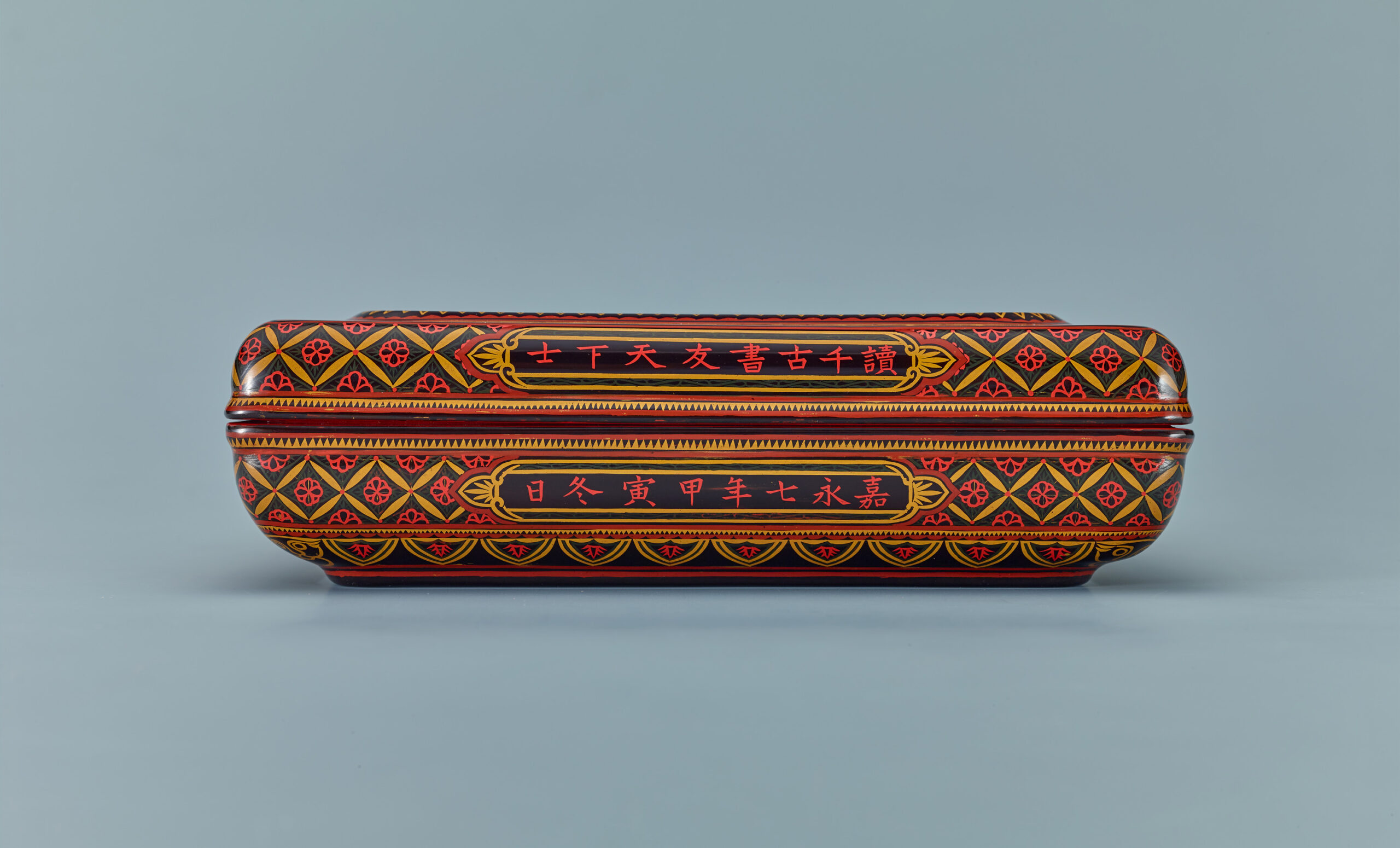
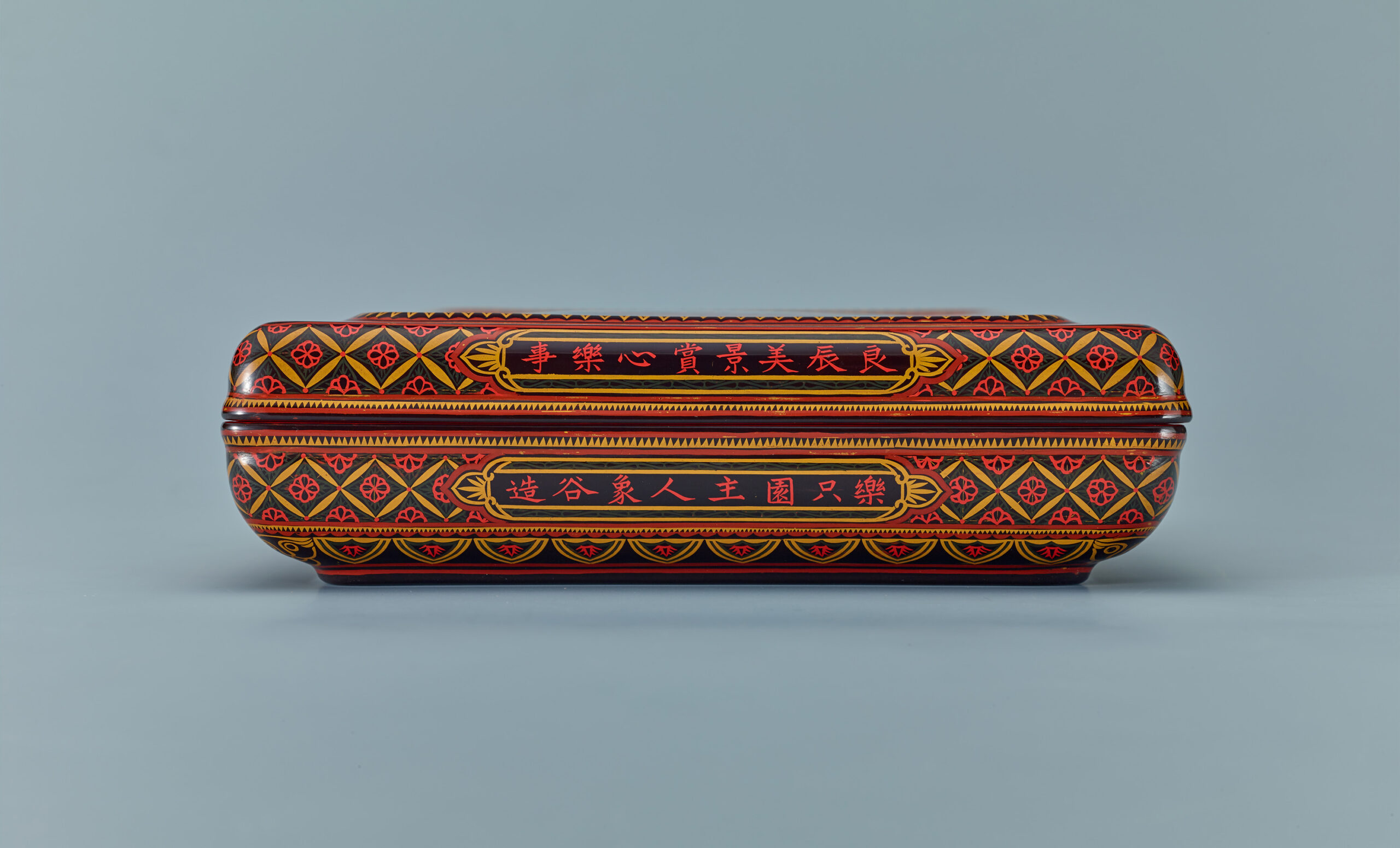
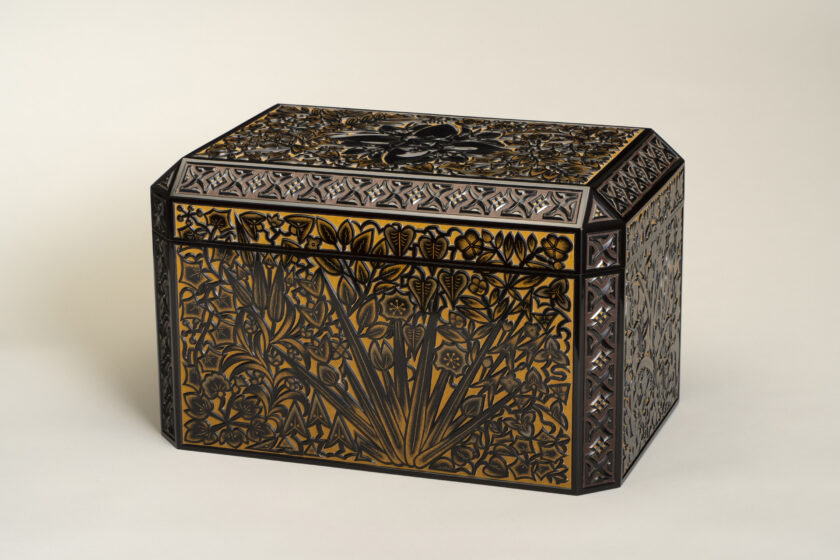
Description
Tamakaji Zōkoku was a lacquer artist who served three successive lords of the Takamatsu Matsudaira family, Yorihiro (the ninth lord), Yoritane (the tenth lord), and Yoritoshi (the eleventh lord). Studying lacquerware introduced from China and Southeast Asia and drawing on his own carving virtuosity, he laid the foundation for three Kagawa lacquer techniques: chōshitsu (carved lacquer), kinma (engraved-and-filled lacquer) and zonsei (incised polychrome lacquer).
Kinma is a technique for carving designs using a special small knife called a ken. The carved grooves are then filled with colored lacquer and polished flat to reveal the patterns.
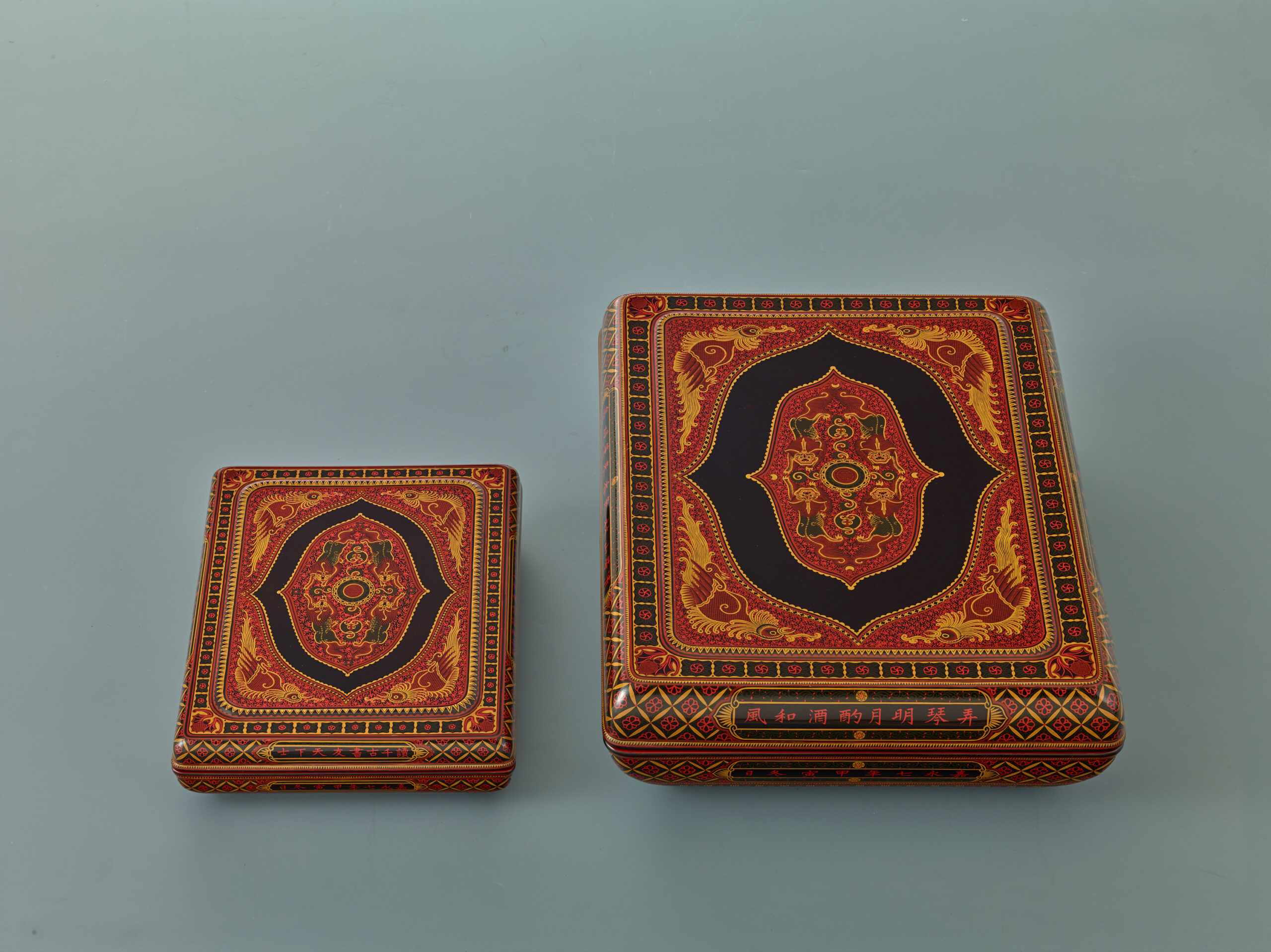
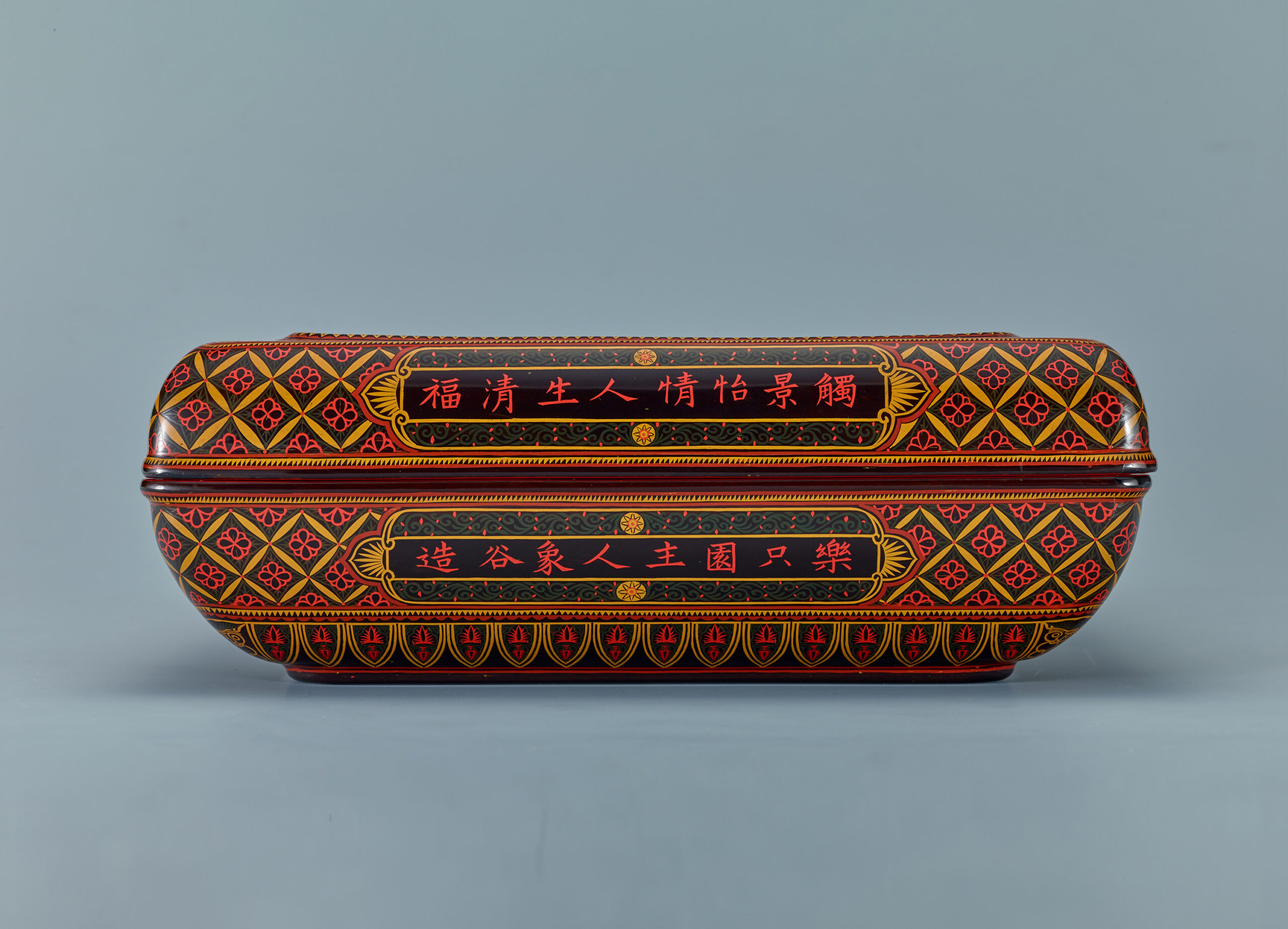
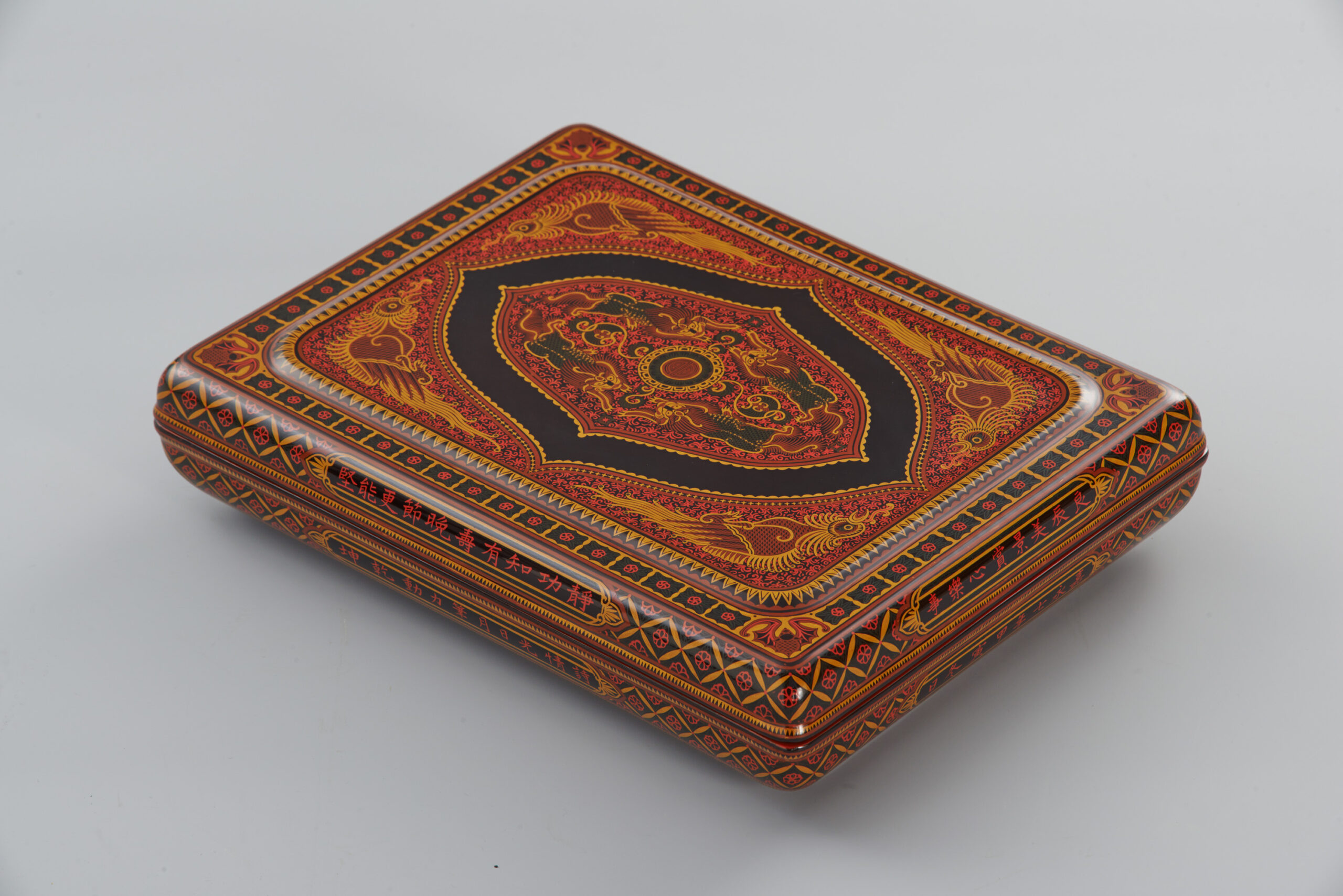
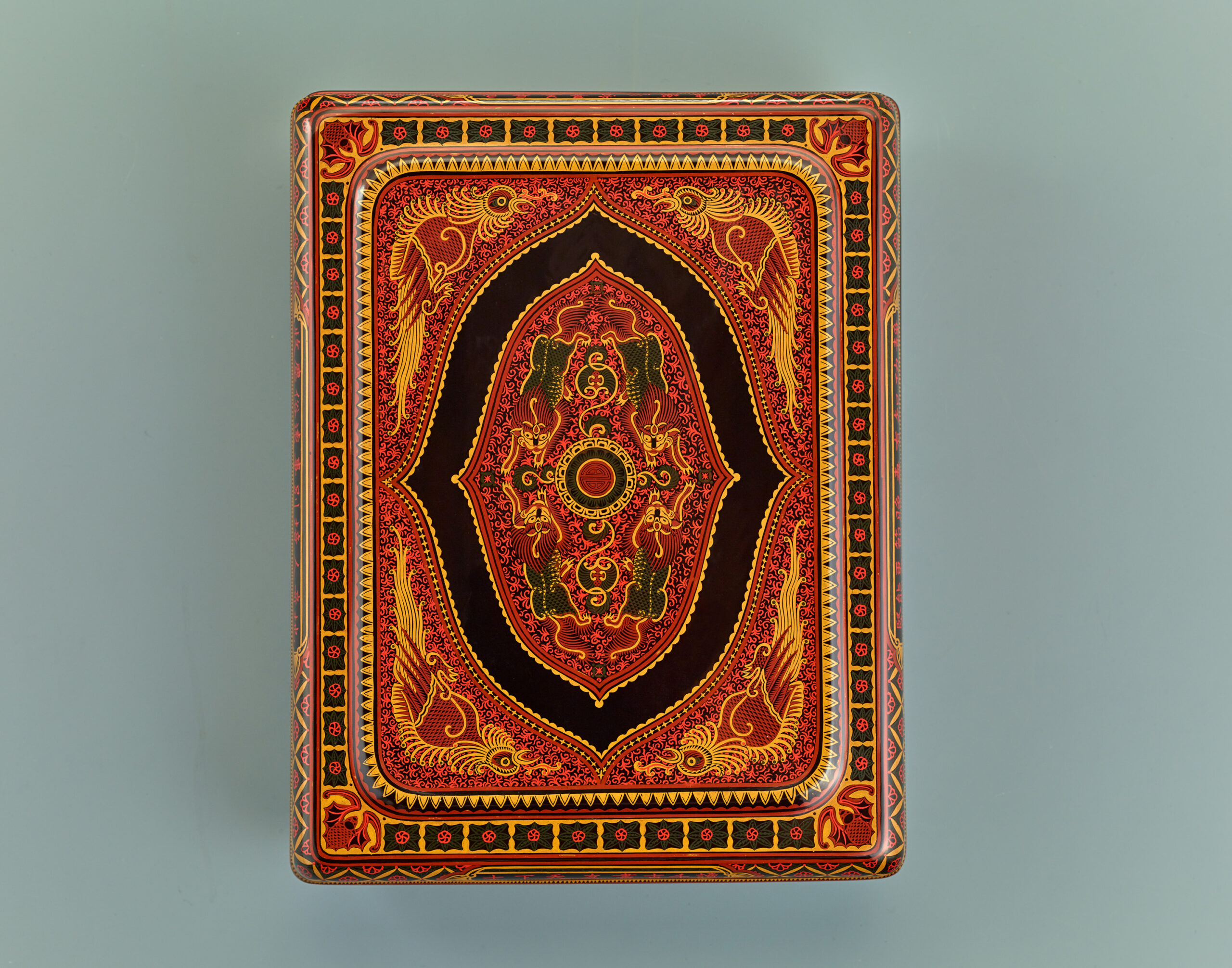
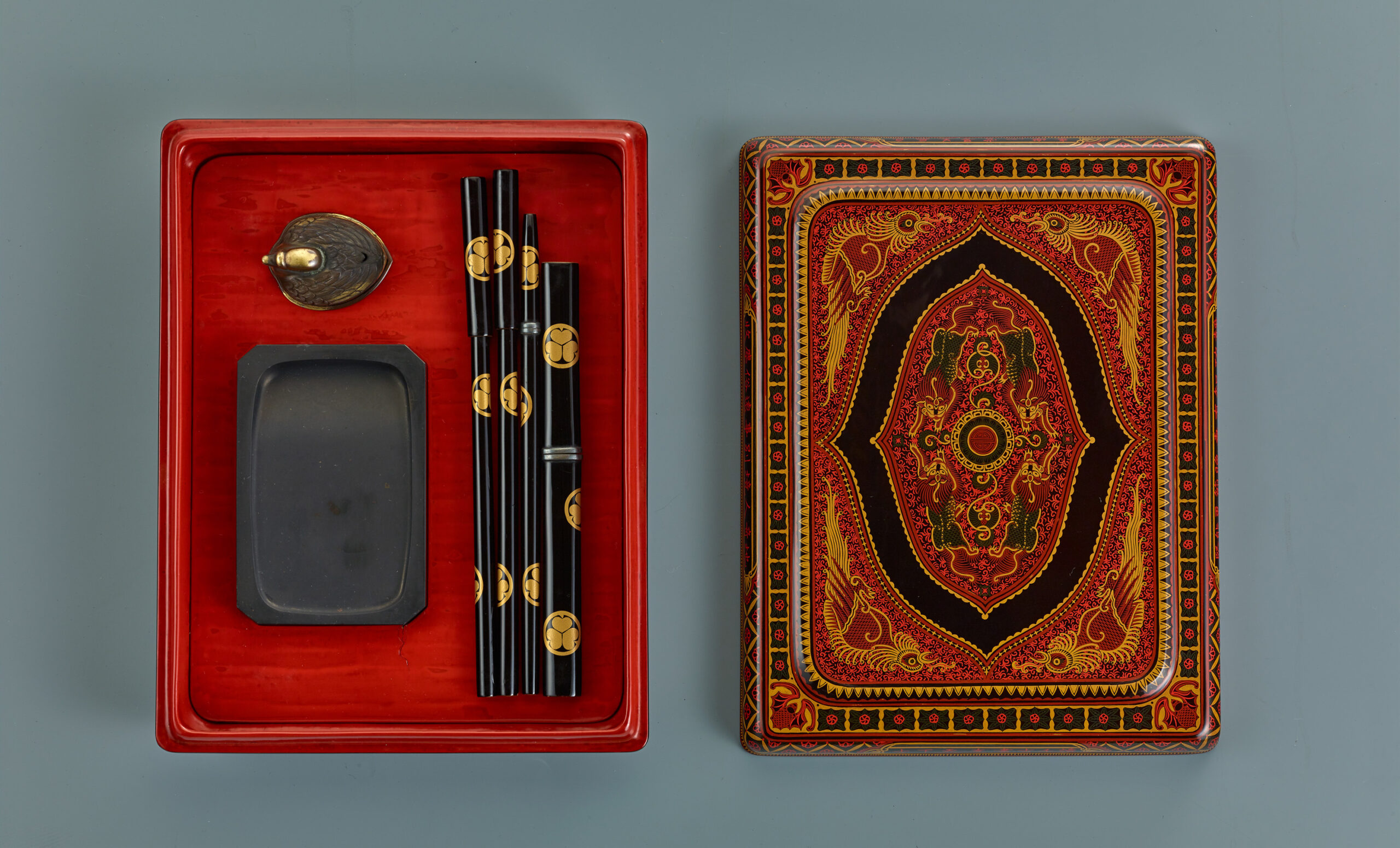
This set includes a paper box for storing letter paper and an inkstone box for holding writing implements such as an inkstone and brushes. It was created for Lord Yoritane. Inside the inkstone box is a gesui-ita (baseboard), upon which an inkstone, a duck-shaped water dropper, and a set of writing tools, including a small knife, an awl, and two brushes, are placed. They are all decorated with hollyhock (aoi) crests in gold maki-e lacquer on a black lacquer background.
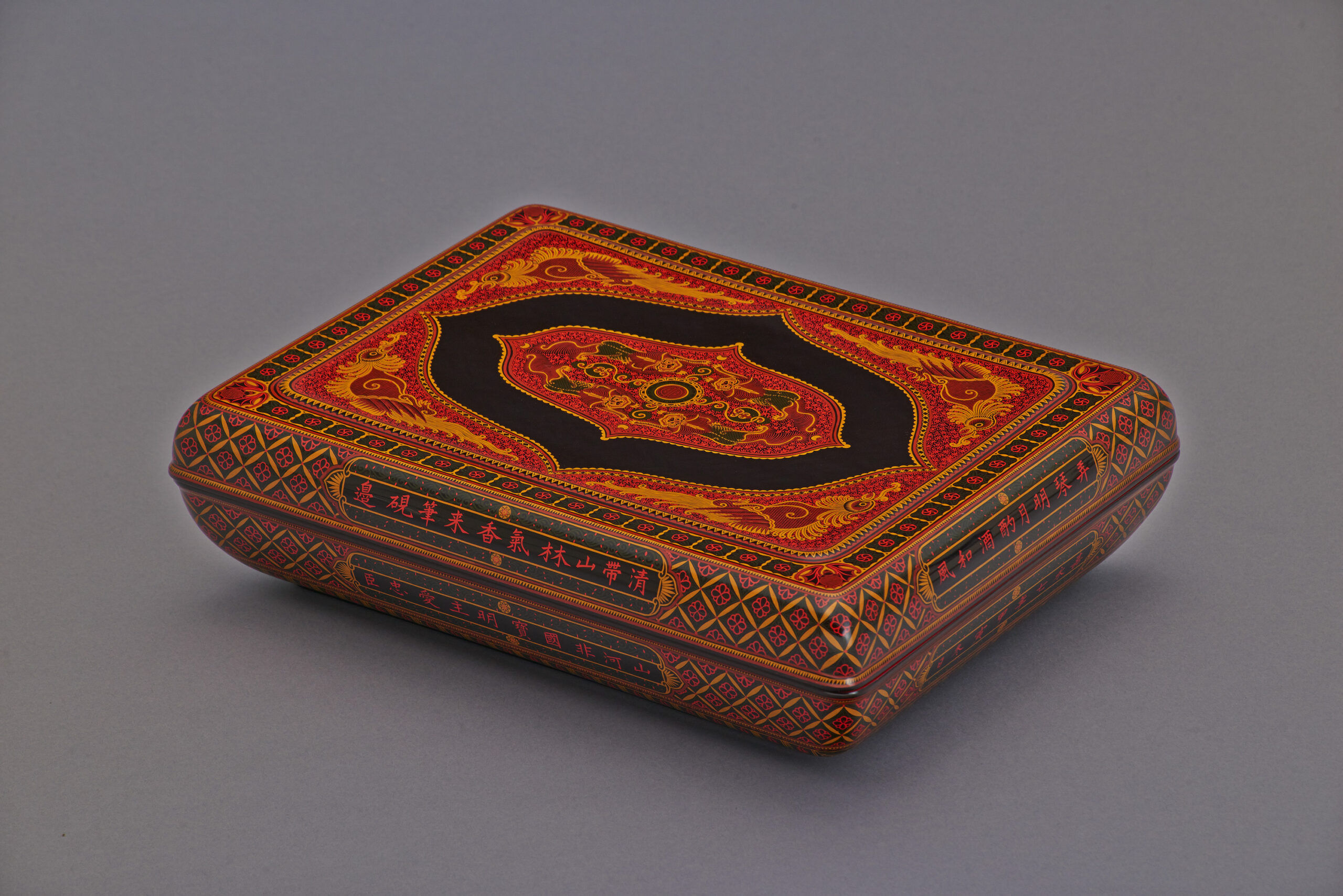
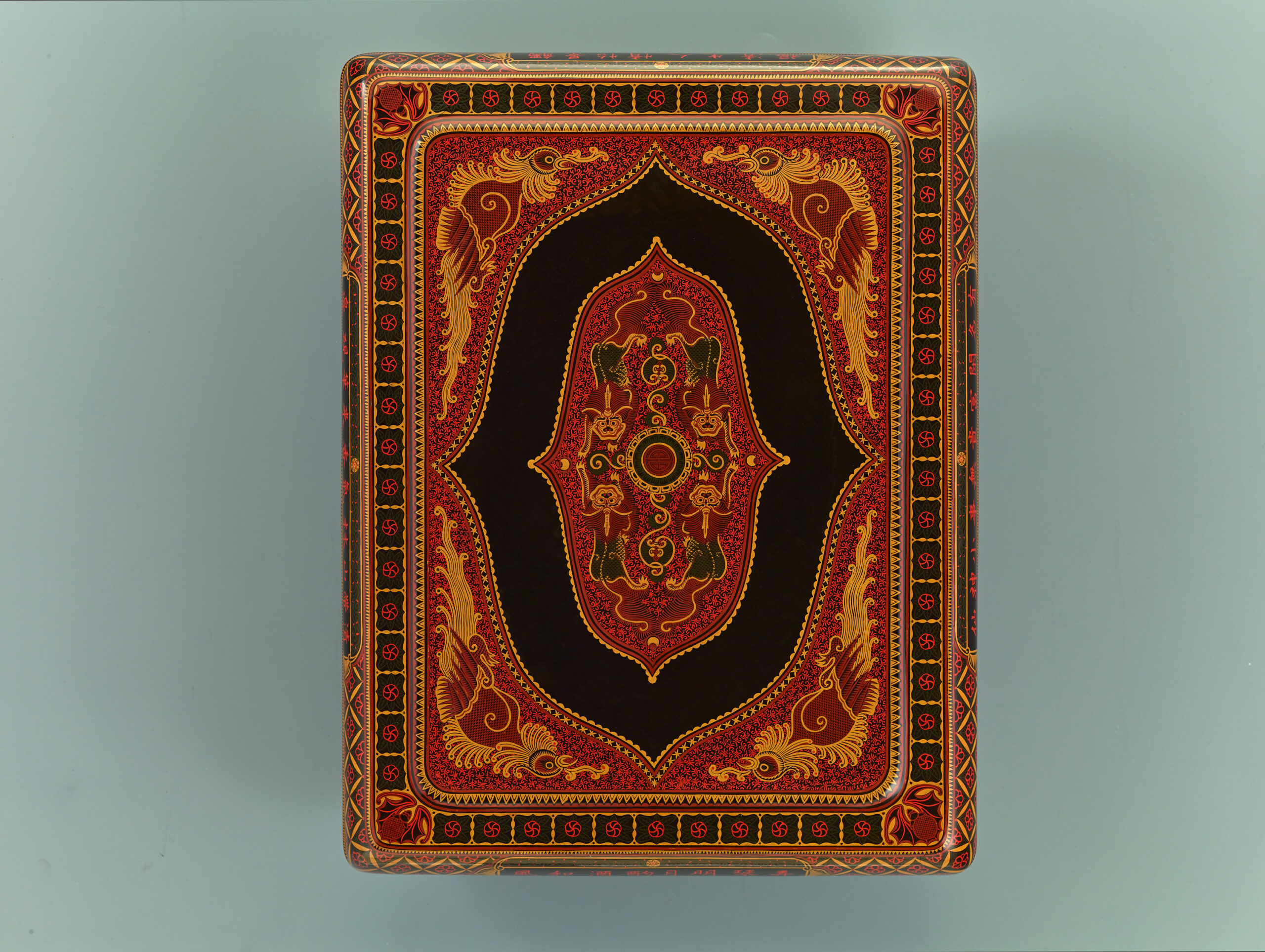
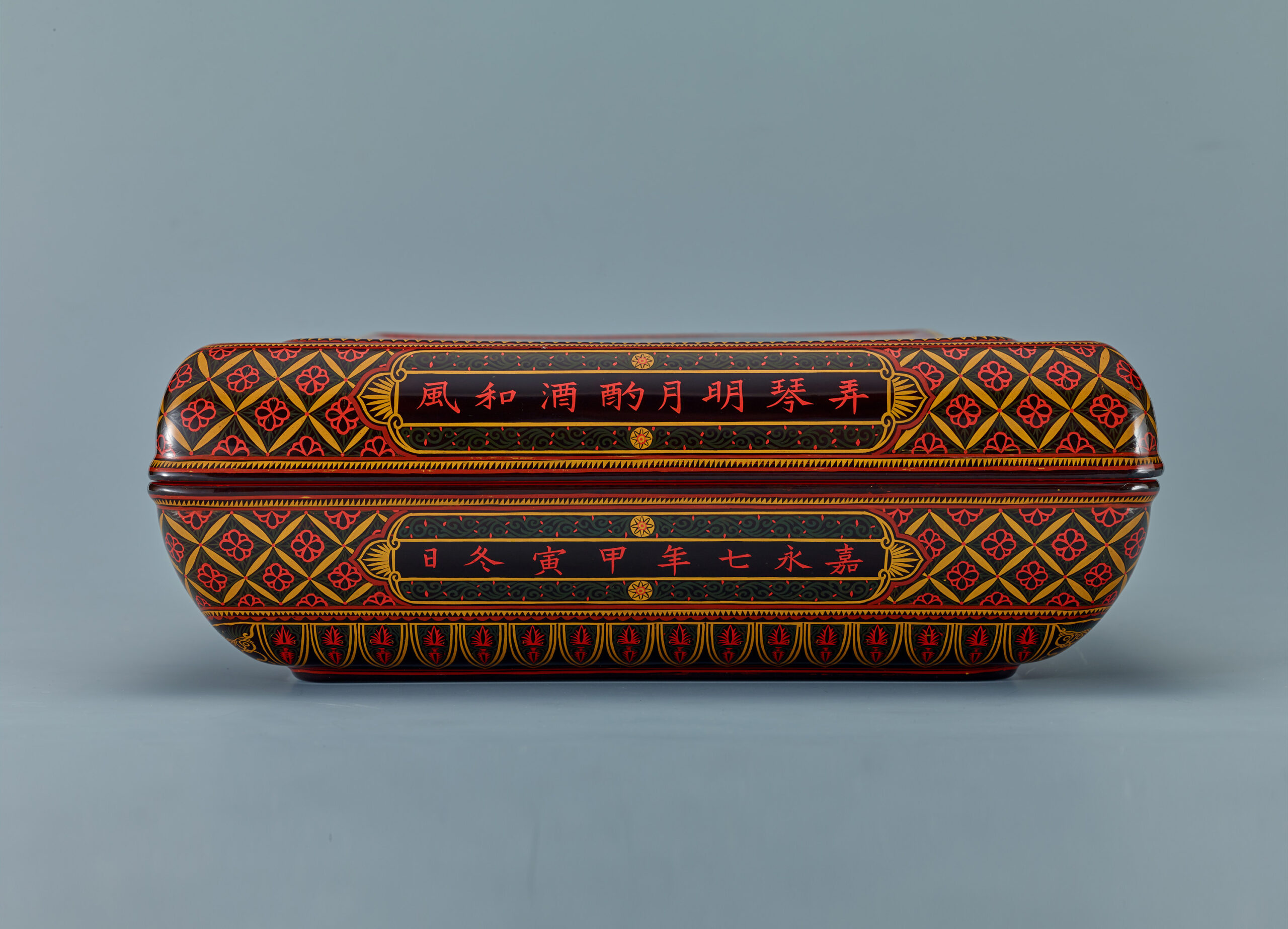
The core structure is rantai, made by attaching woven bamboo ajiro onto a wooden frame. The exterior is a black lacquer base decorated with a rich variety of motifs using red, yellow, green, and brown lacquers. Sacred creatures such as lions and phoenixes, auspicious symbols including the character for longevity, the sun and moon, and bats, together with plant motifs, sawtooth patterns, linked-arc designs and other geometric patterns are intricately combined in the overall composition of the work.