


Sketchbook (Shasei Gajō) — from the Takamatsu Matsudaira Family Natural History Albums
- Artist
-
‐
- Period
-
Edo period, 18th century
- Quality and quantity
-
Color on paper, folding album format, 3 volumes
- Size (cm)
-
Vegetables: H 33.1 × W 48.2
- Category
-
Painting (Japan)
- Classification
-
Designated by the prefecture
- Accession number
-
MY0#01083
Description
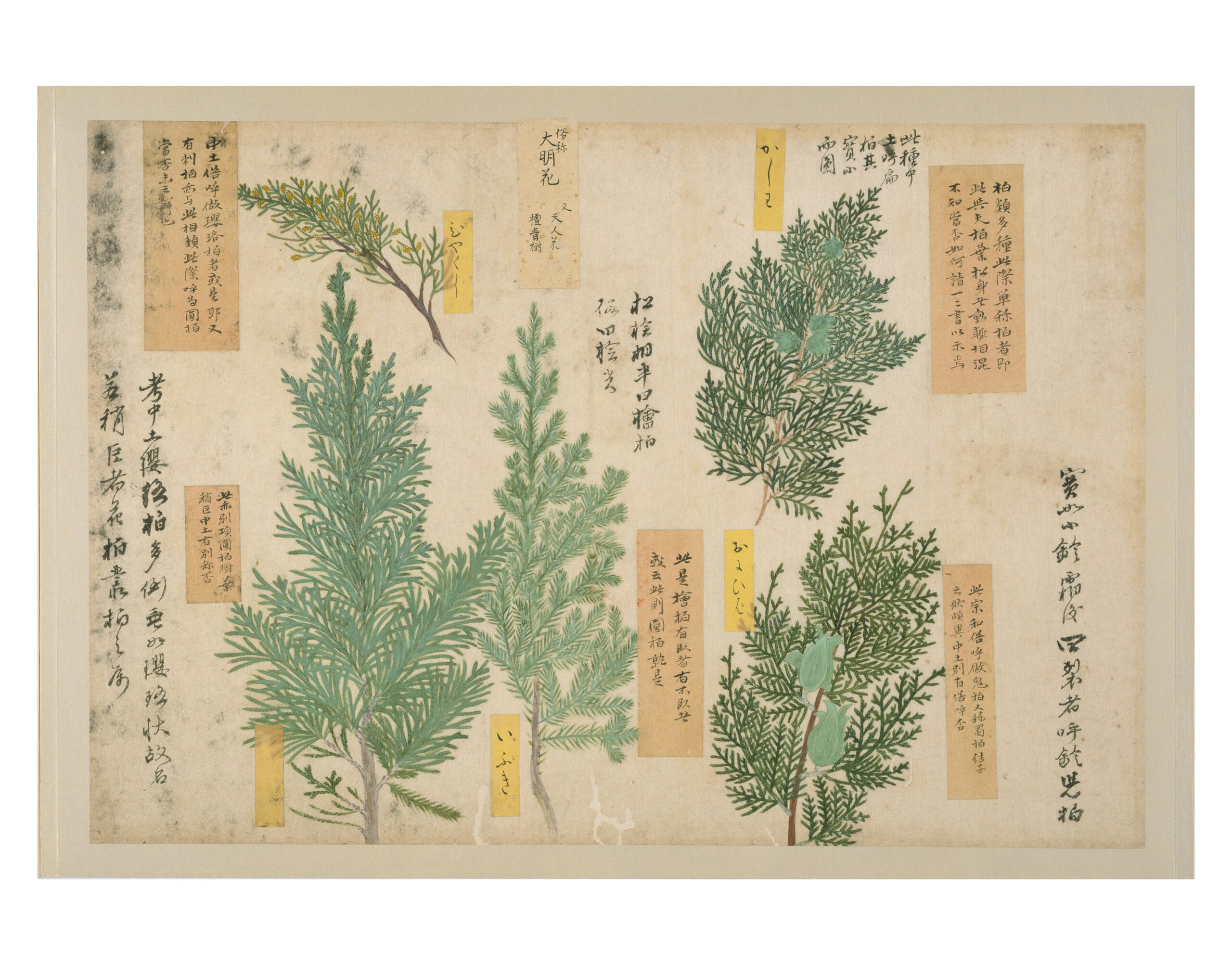
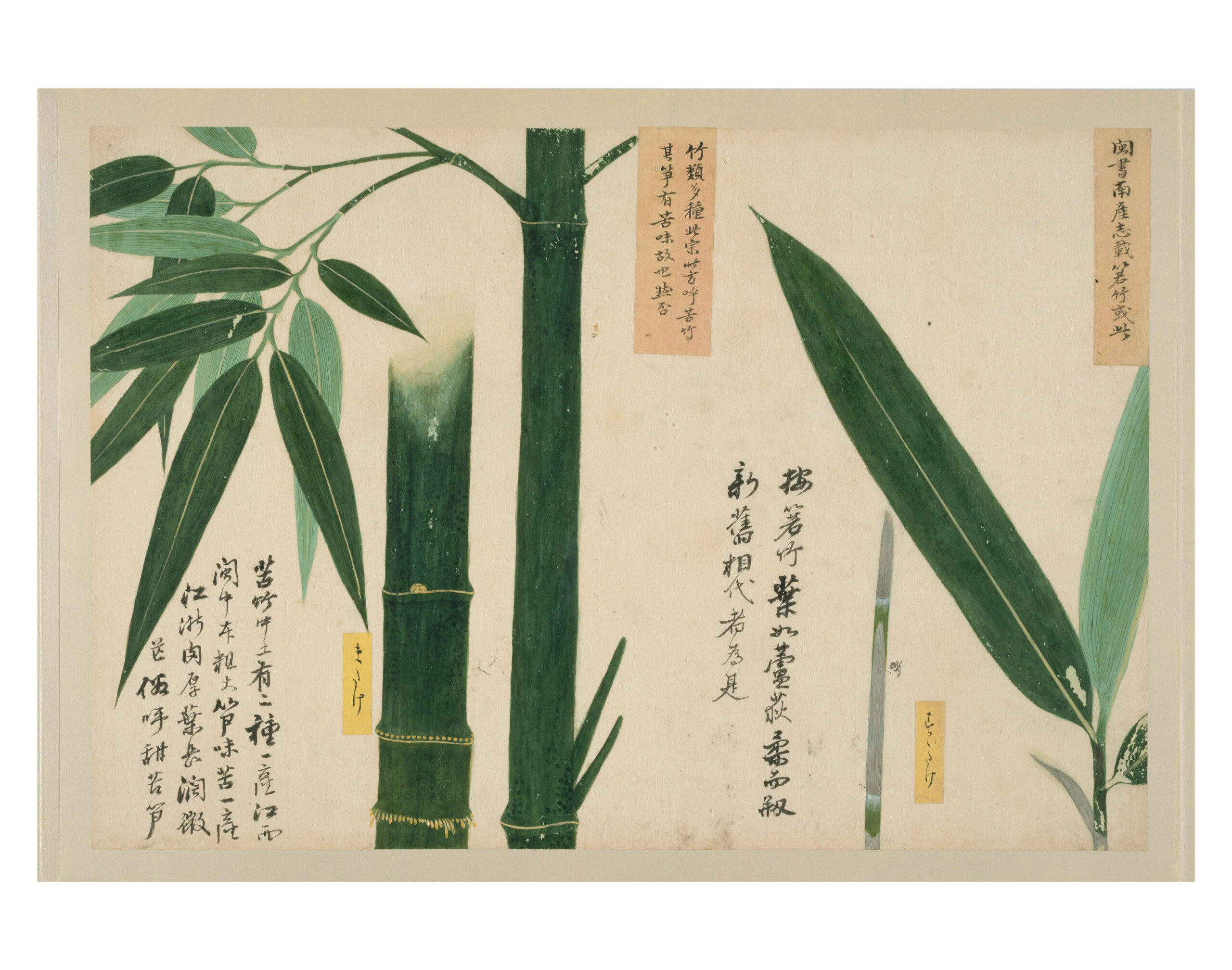
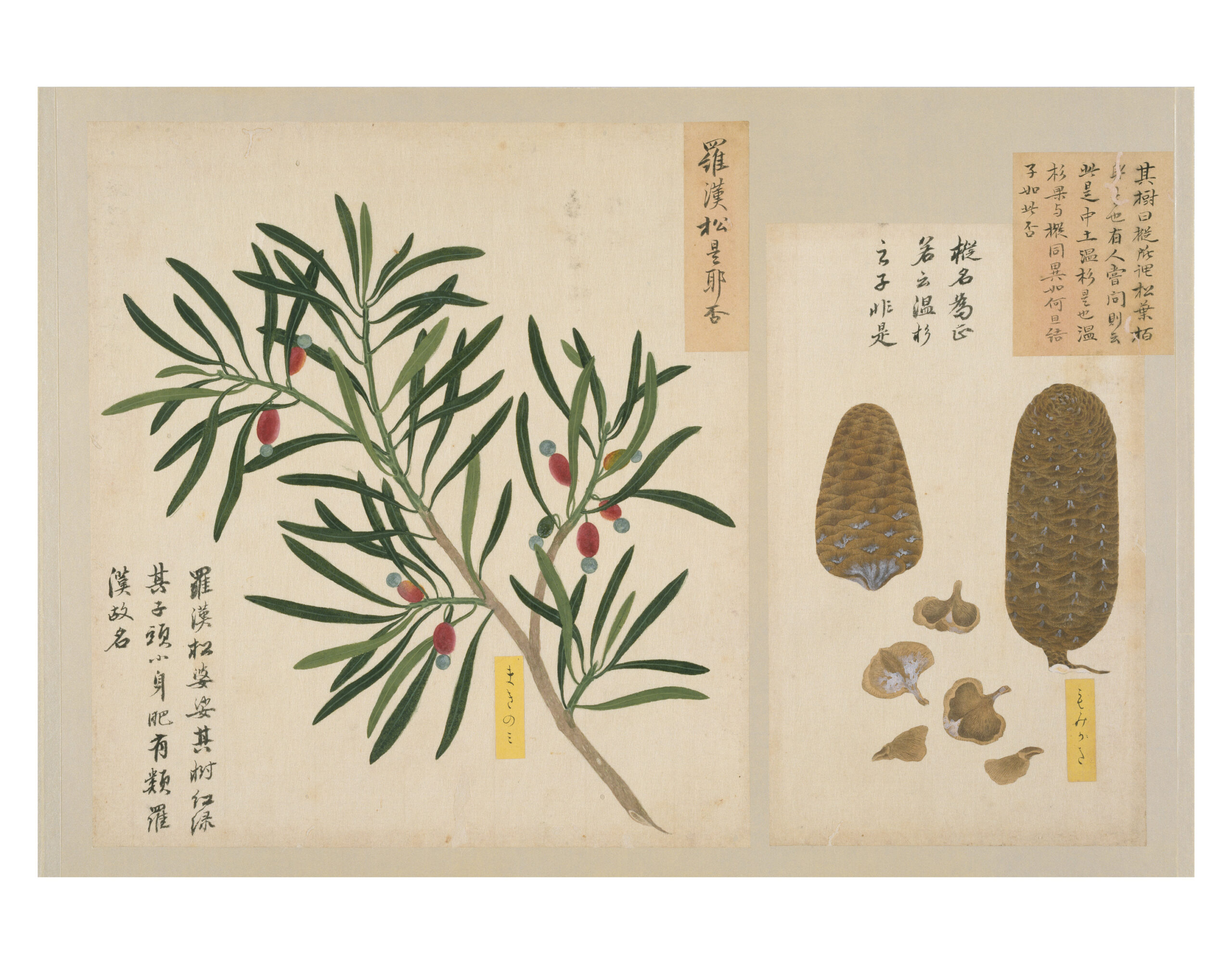
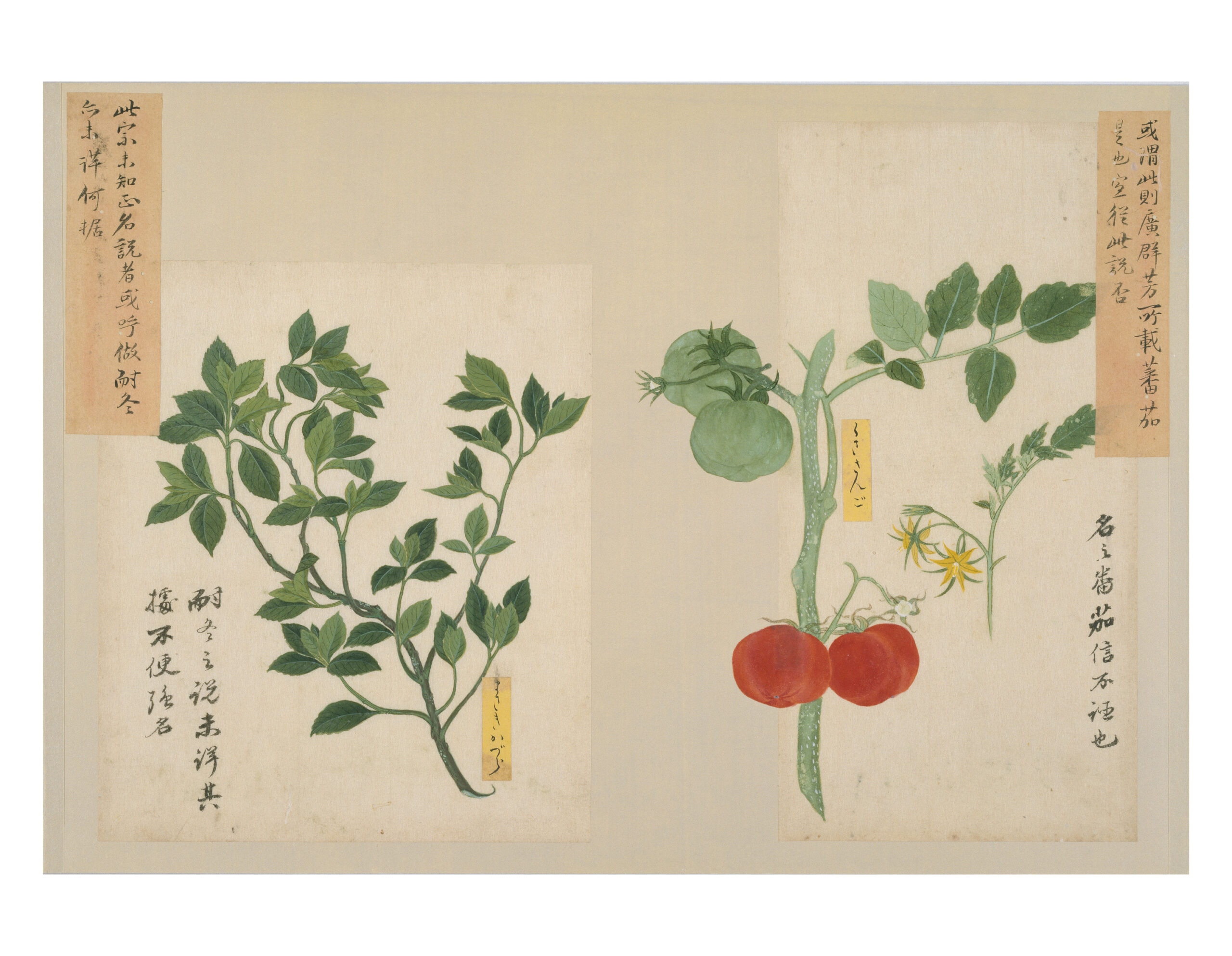
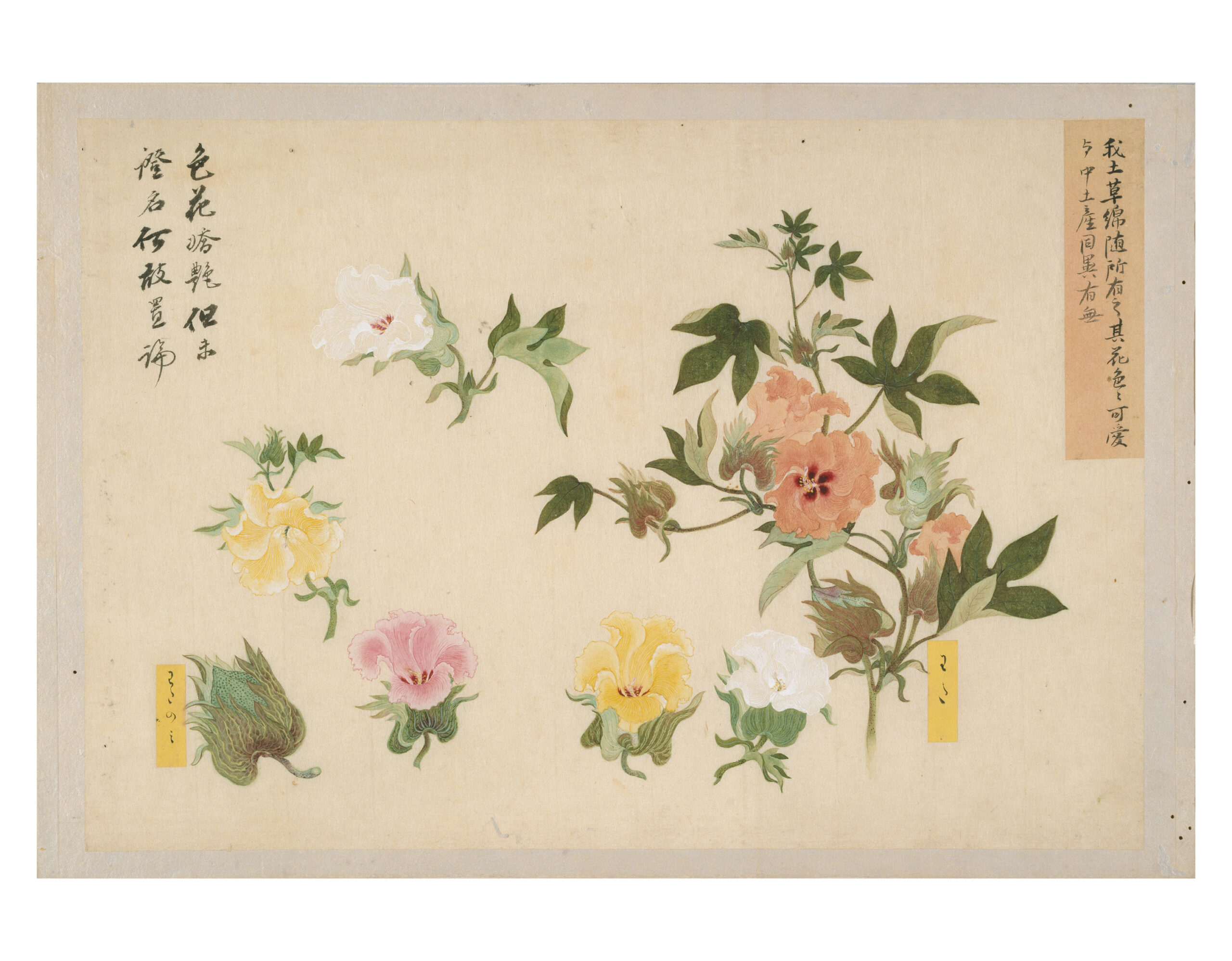
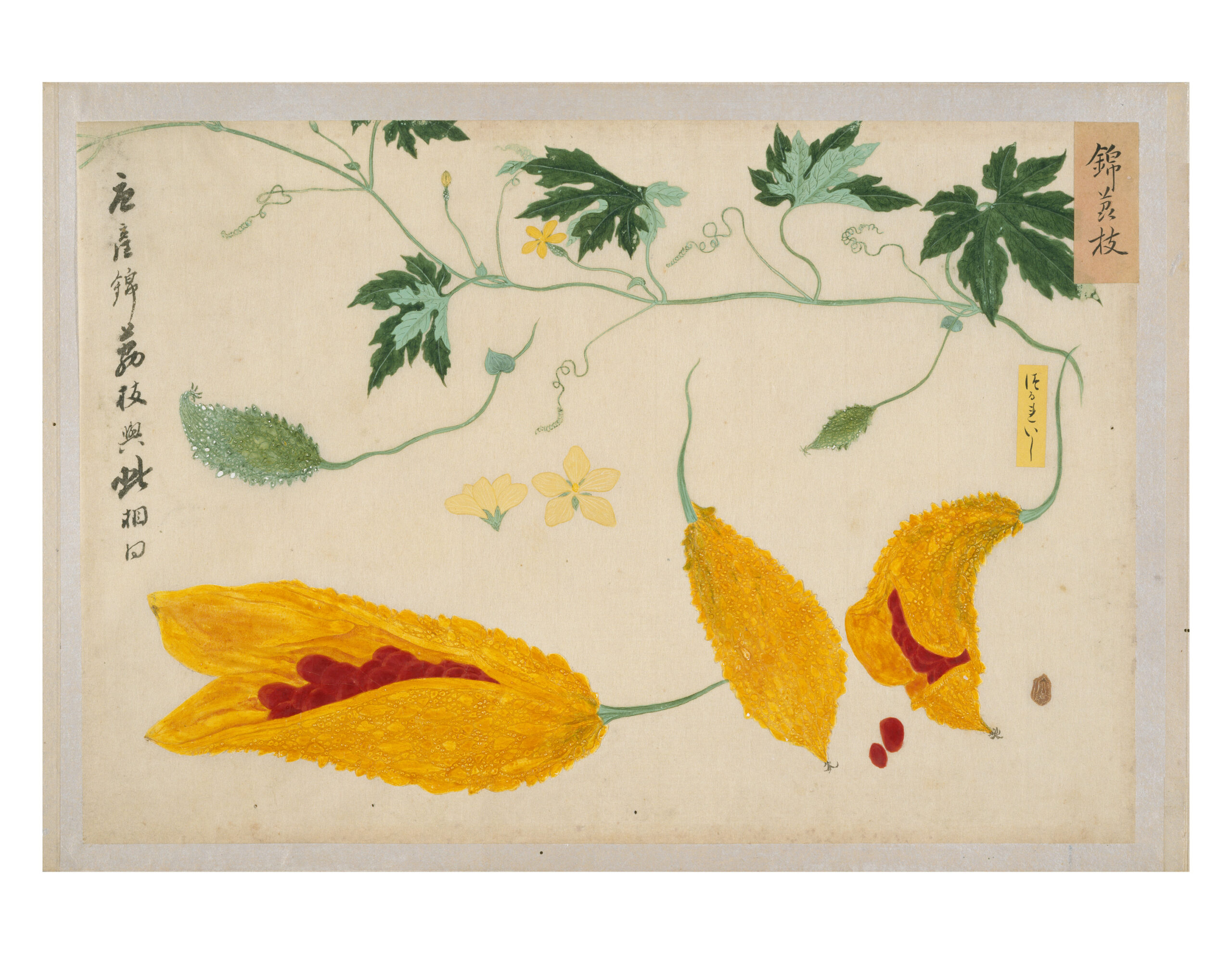
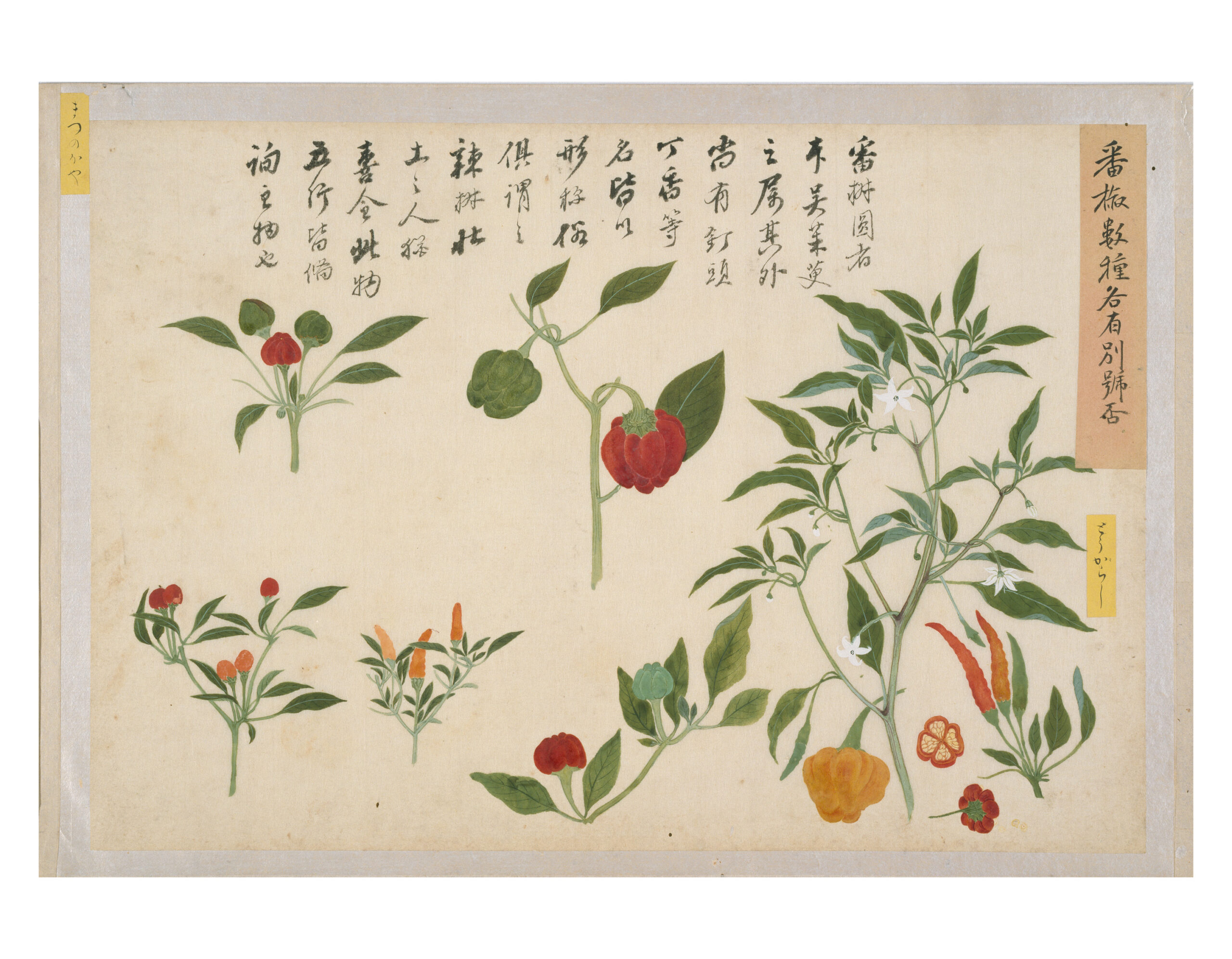
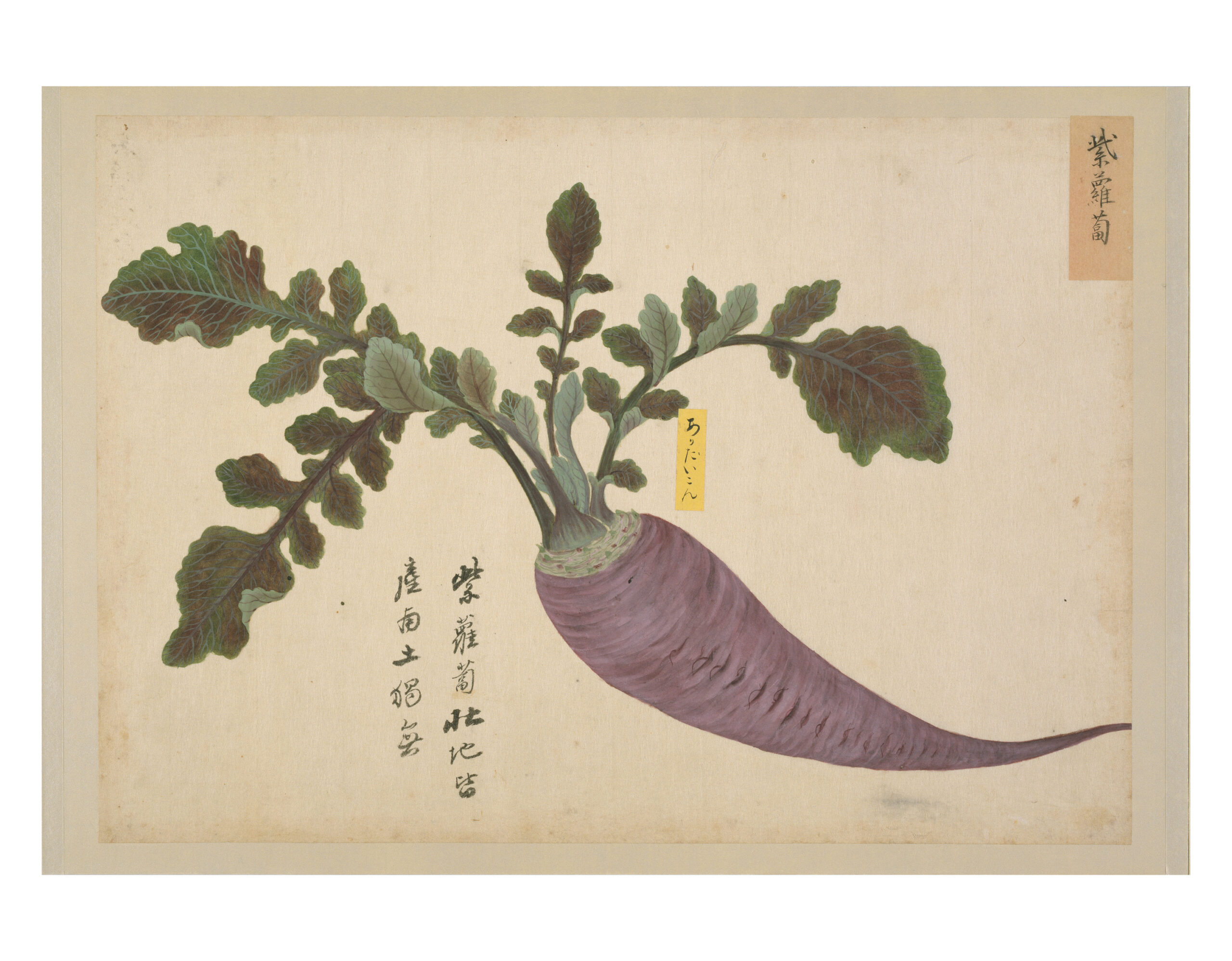
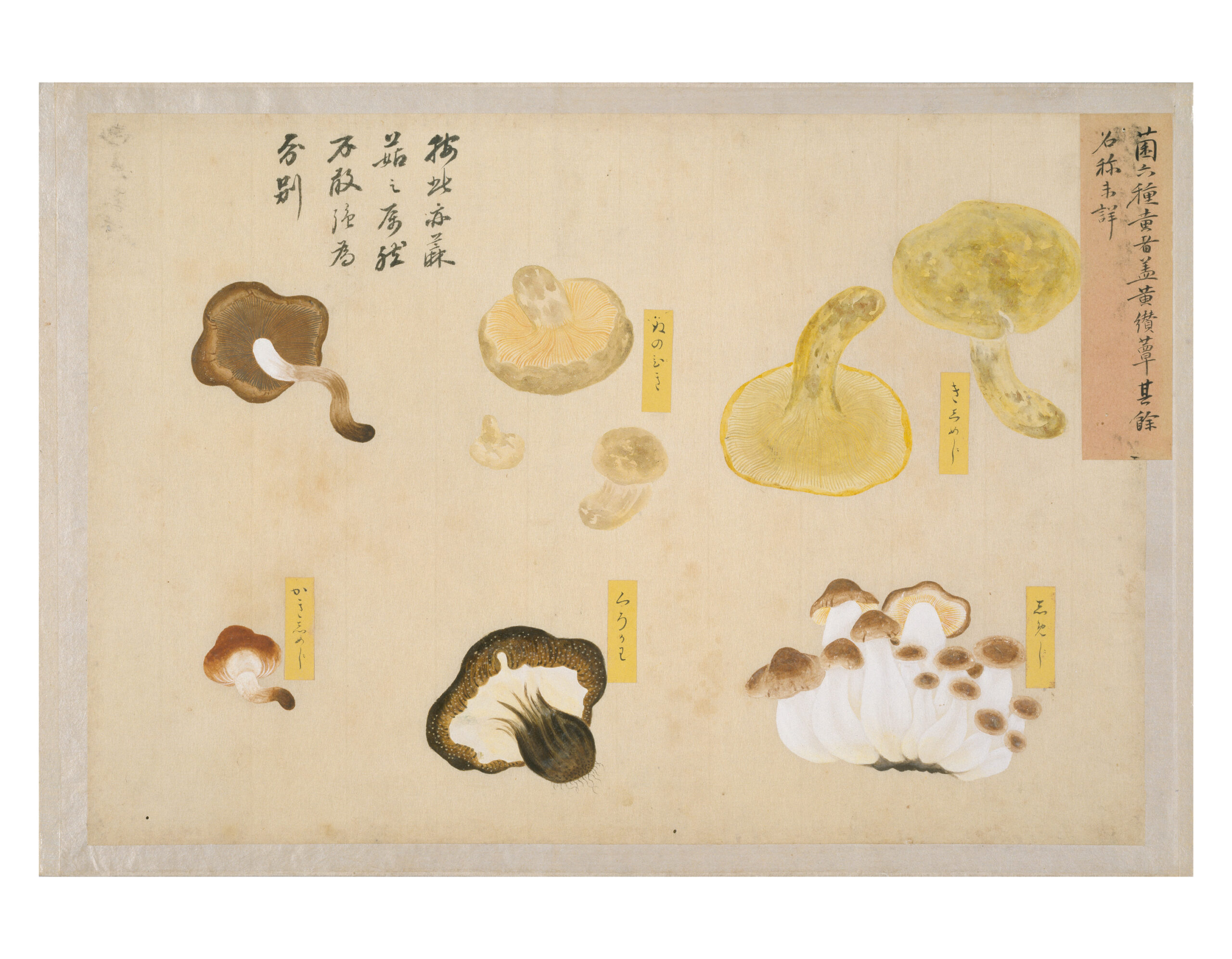
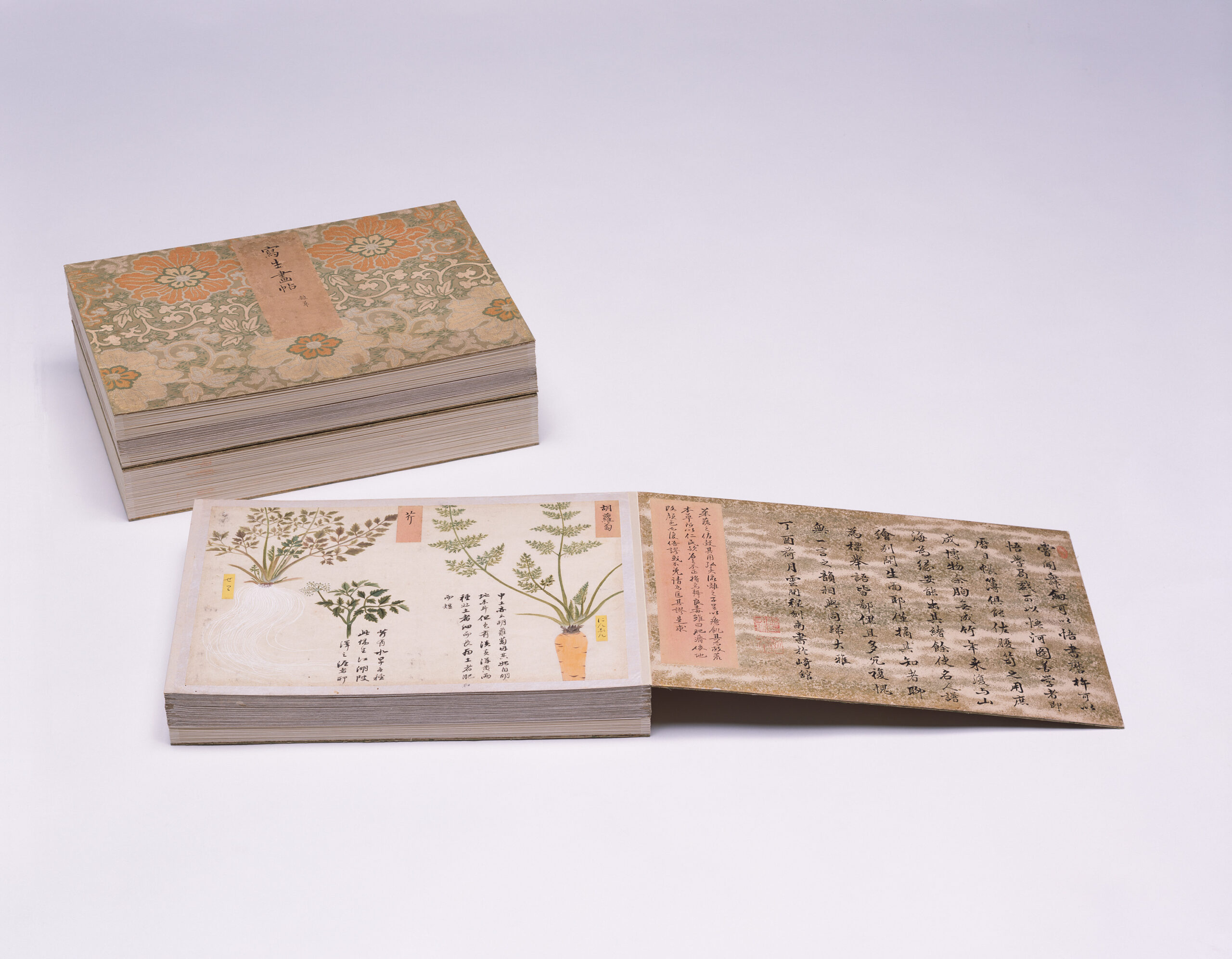
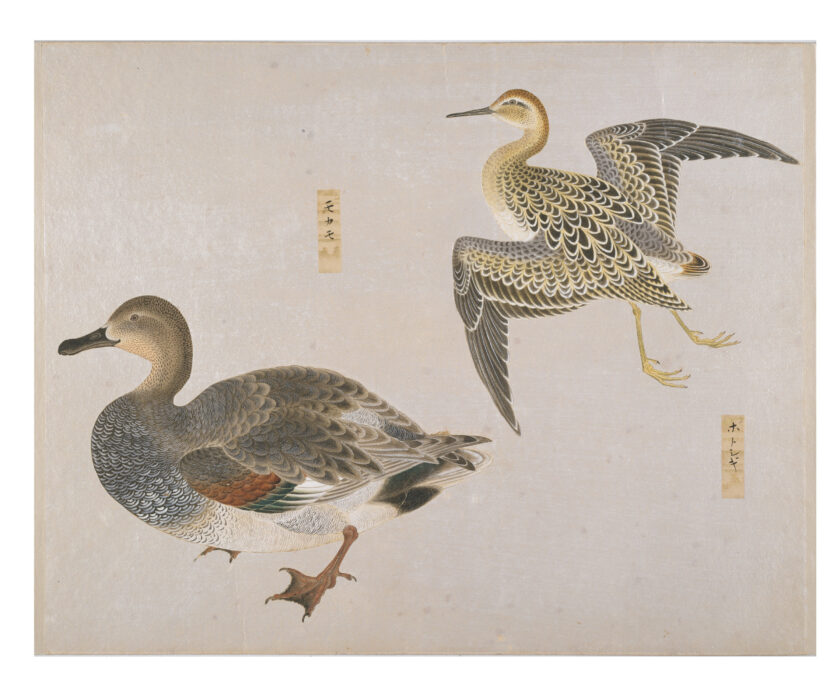
Shasei Gajō is one of the four illustrated natural history albums that make up a thirteen-volume set preserved by the Takamatsu Matsudaira family. The three-volume botanical compendium consists of Saiso (Vegetables), Zassō (Wild Grasses), and Zatsuboku (Miscellaneous Trees).
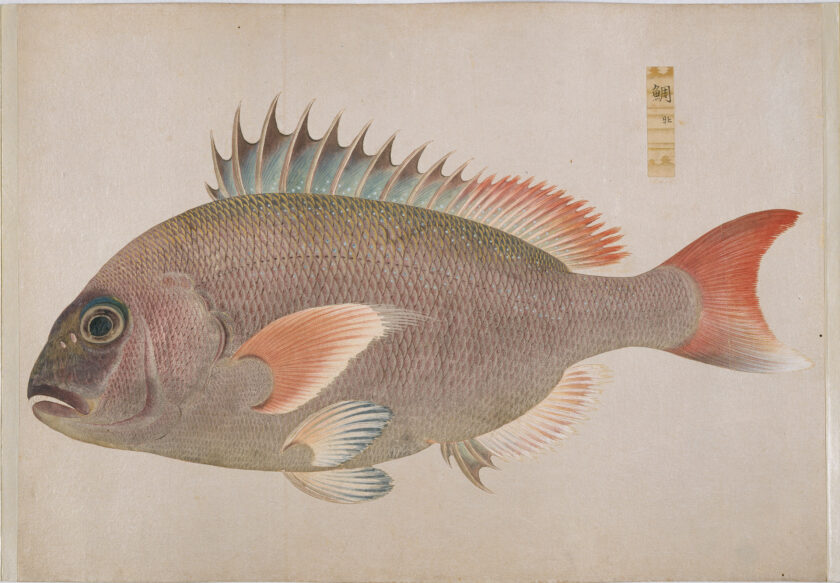
Each illustration captures leaves, roots, flowers, and fruit with meticulous precision. Mica is applied to create a subtle luster, while raised pigments add texture and three-dimensionality. Executed on kōzo paper and mounted onto accordion-fold album pages, some illustrations even have leaf tips and other extremities cut along their contours to enhance the naturalistic impression of the work.
Many of the illustrations have attached labels that identify the plants. Shasei Gajō was taken to Nagasaki together with the second volume of Shurinzu, where Chinese scholars then visiting Japan were consulted about the Chinese names of the depicted species and other details. The ink inscriptions on the red paper slips are thought to record explanations and questions posed by members of the Takamatsu Matsudaira family, whereas the inscriptions on the mounts and inner covers represent the responses provided by the Chinese scholars.
The work is thought to have been produced in the mid-eighteenth century under the direction of Matsudaira Yoritaka (1711–1771), the fifth lord of the Takamatsu domain who was known for his keen interest in natural history, and Hiraga Gennai, a naturalist who served the domain at the time, is also believed to have been involved.
The artist has not been definitively identified, though candidates include Kusumoto Sekkei of the Nanpin School and his disciple Miki Bunryū from Sanuki Province.