


Yuga-shiji-ron (Yogacārābhūmi), Fascicle 61
- Artist
-
Toneri no Kunitari
- Period
-
Nara period, 744 (Tenpyō 16)
- Quality and quantity
-
Ink on paper, one booklet
- Size (cm)
-
H 23.6 × L 1003.3
- Category
-
Calligraphy
- Classification
-
Important art object
- Accession number
-
B98000001
Description
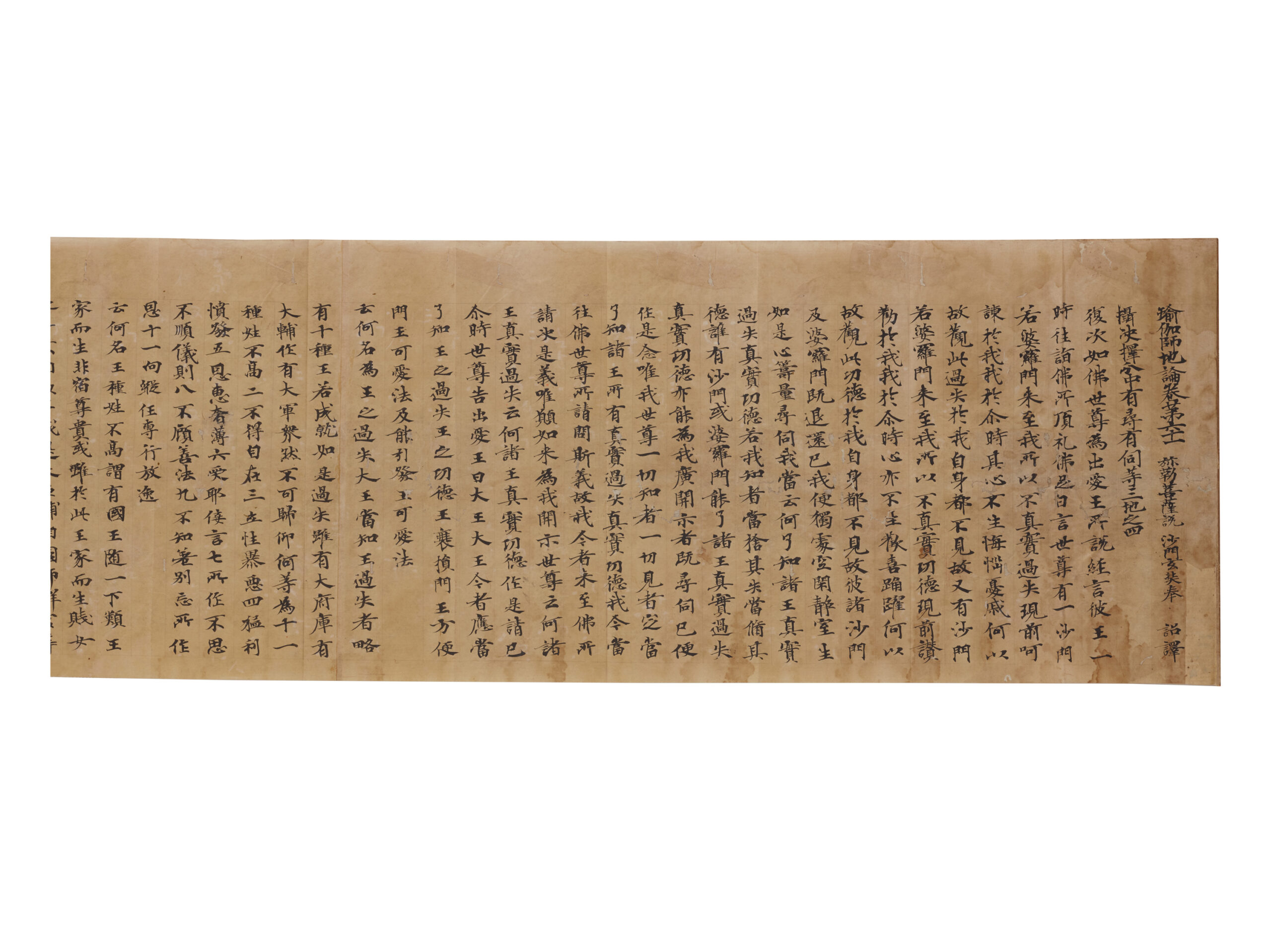
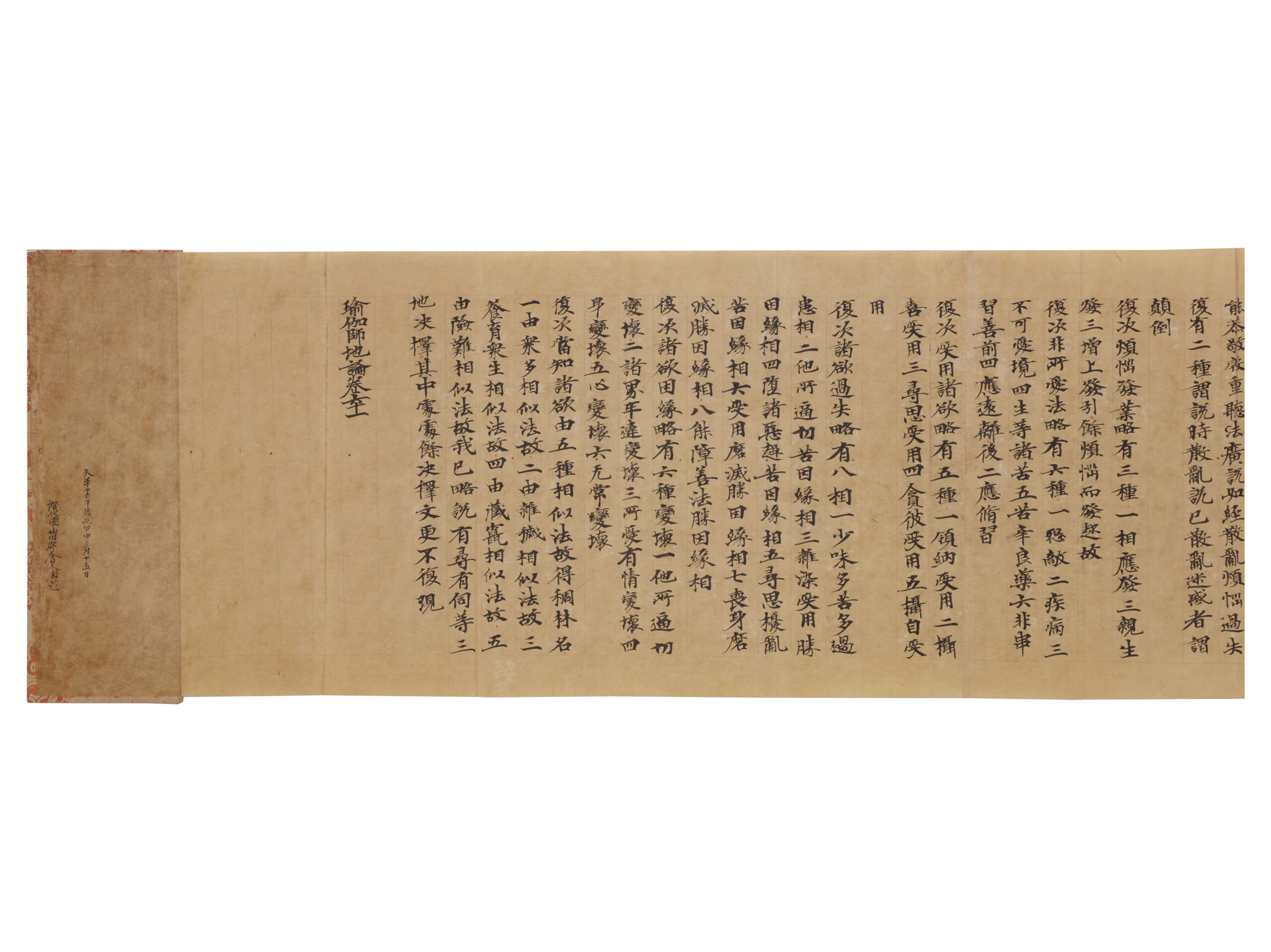
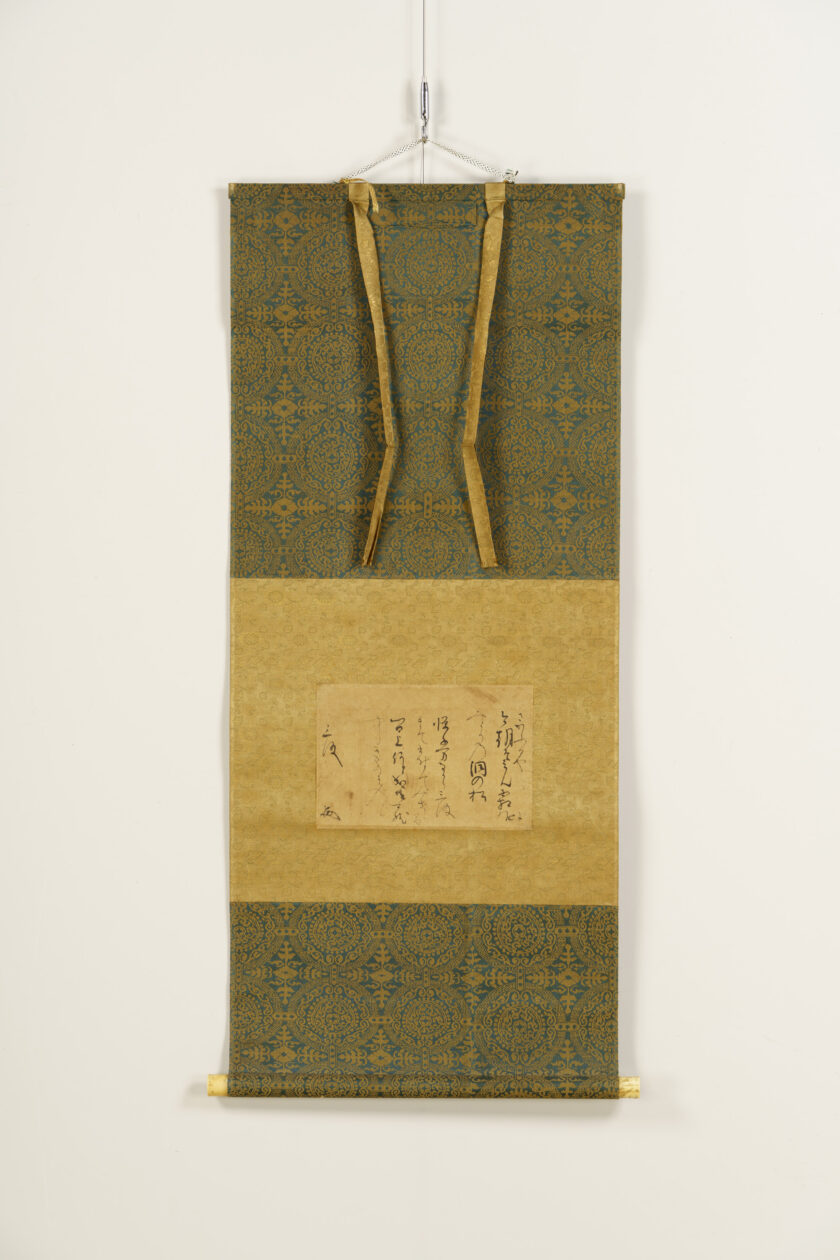
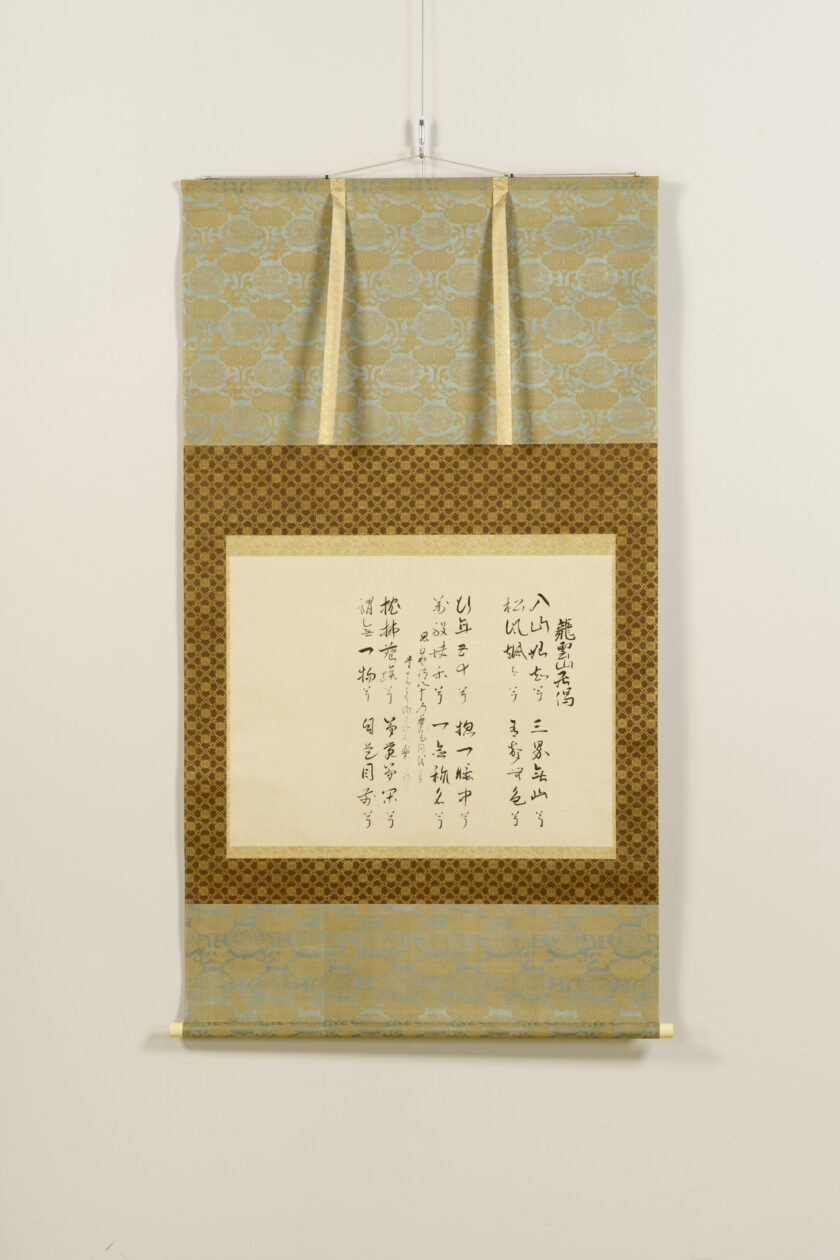
The Yuga-shiji-ron (Sanskrit: Yogacārābhūmi), comprising one hundred fascicles, is a major scripture of the Hossō school that outlines the methods and principles of Buddhist practices. According to the colophon, this manuscript was copied by multiple individuals to fulfill a vow made by Toneri no Kunitari, who is believed to have been a prominent local clan leader in the Yamada District of Sanuki Province. At the time, the copying of Buddhist scriptures was a large-scale undertaking that required numerous people to transcribe, proofread, and bind the work, as well as a source text (honkyō) and a substantial supply of paper.
Differences in the methods used to correct scribe’s errors suggest that the manuscript was produced not at the official scriptorium in Heijō-kyō but rather in Sanuki. However, the type of kunten marks (reading guides) added to interpret the Chinese classical text indicates that by the early Heian period it had likely been deposited at a temple in the vicinity of Tōdai-ji Temple. It was later placed in the Ishiyamadera Issaikyō collection by the monk Nensei.
Today, manuscripts of the Yuga-shiji-ron bearing the name of Toneri no Kunitari are held in several institutions, including Ishiyamadera Temple, the Kyoto National Museum and the Kyushu National Museum.