


Ikkaku Inrō
- Artist
-
Tamakaji Zōkoku (1806–1869)
- Period
-
Edo period, 1839 (Tenpō 10)
- Quality and quantity
-
Narwhal tusk and rhinoceros horn, two-piece set
- Size (cm)
-
H 8.6 × W 5.5 × D 2.9
- Category
-
Craftwork
- Classification
-
Important art object
- Accession number
-
BK1#01413
Description
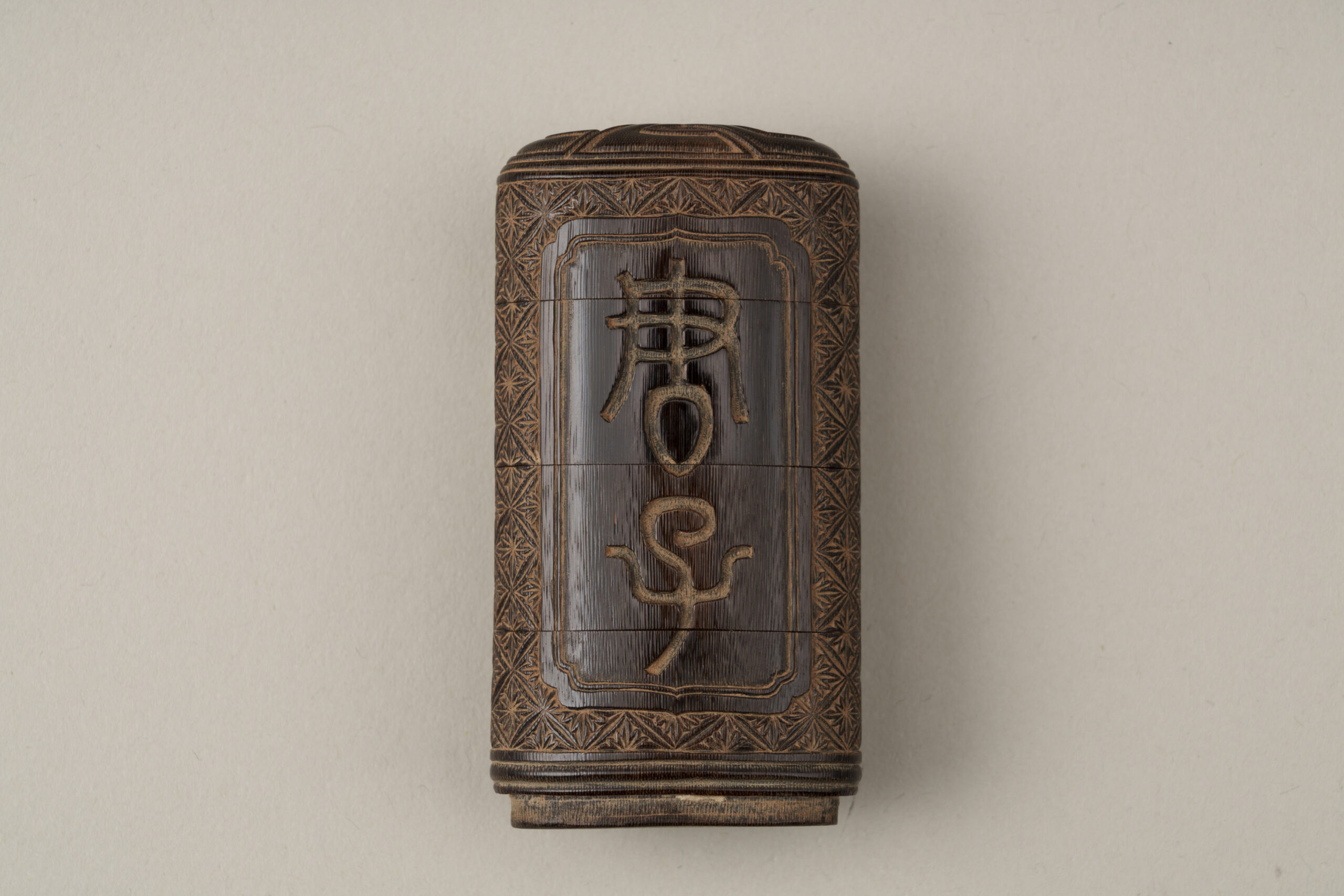
Tamakaji Zōkoku was a lacquer artist who served three successive lords of the Takamatsu Matsudaira family, Yorihiro (the ninth lord), Yoritane (the tenth lord), and Yoritoshi (the eleventh lord). Studying lacquerware introduced from China and Southeast Asia and drawing on his own carving virtuosity, he laid the foundation for three Kagawa lacquer techniques, chōshitsu (carved lacquer), kinma (engraved-and-filled lacquer) and zonsei (incised polychrome lacquer).
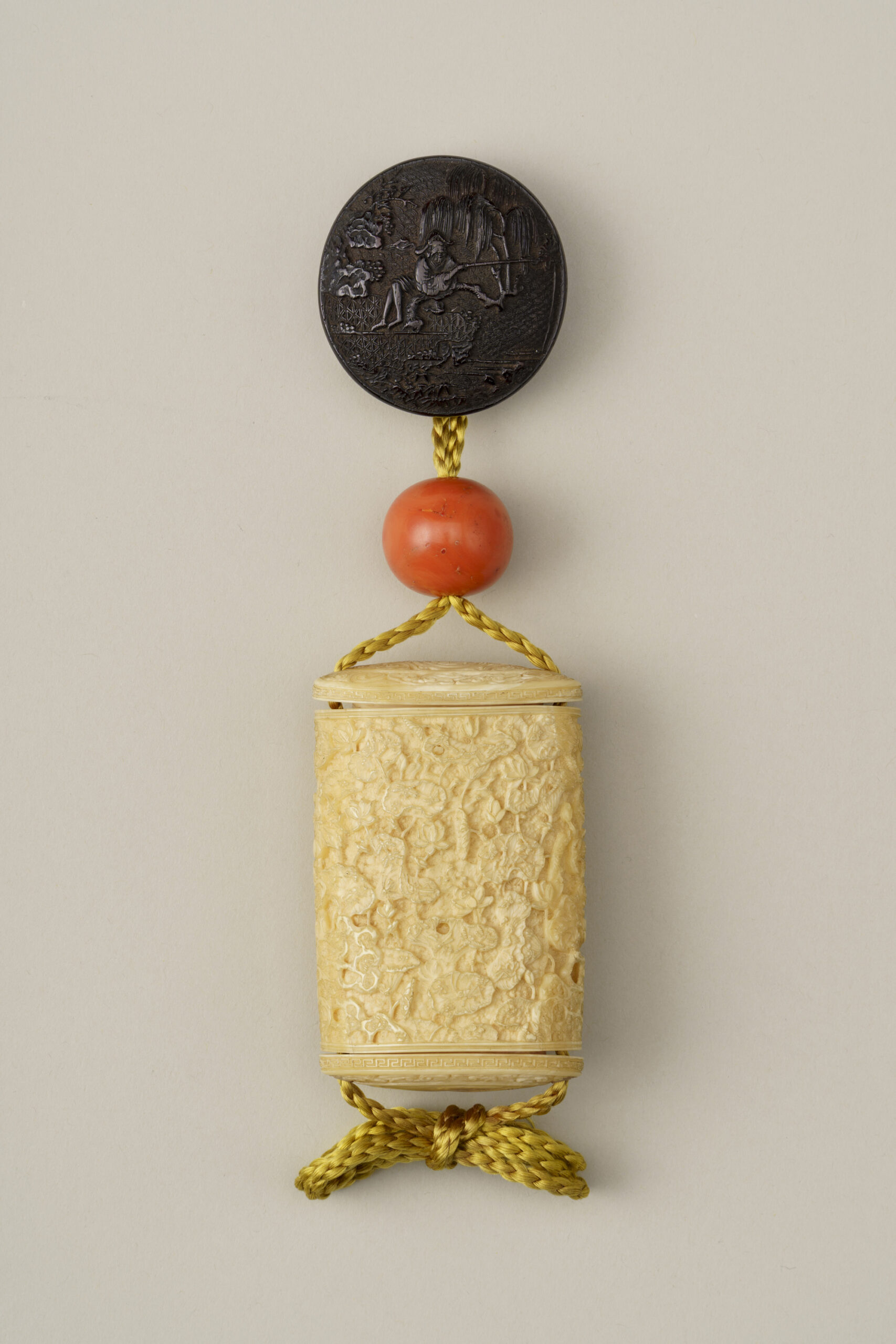
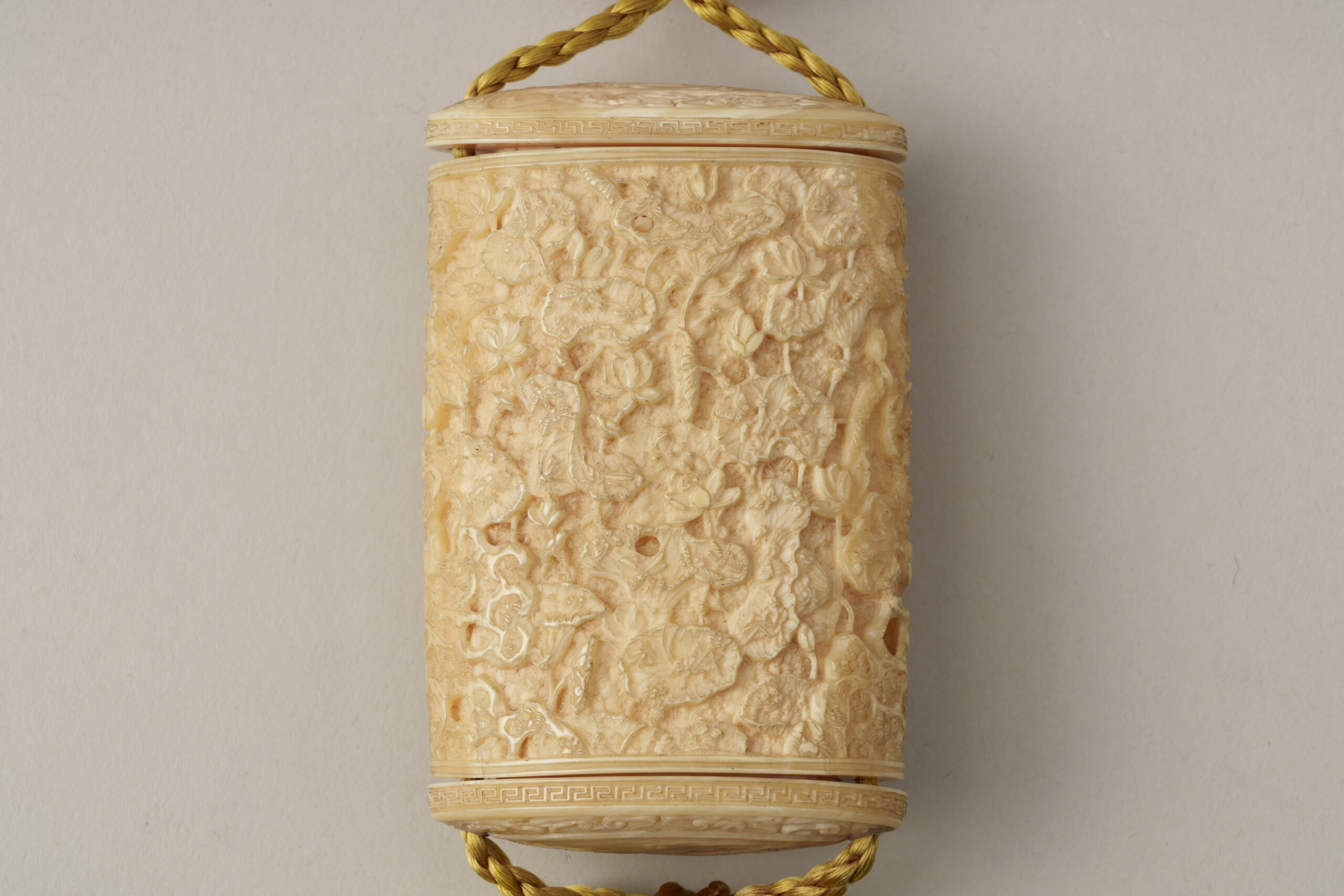
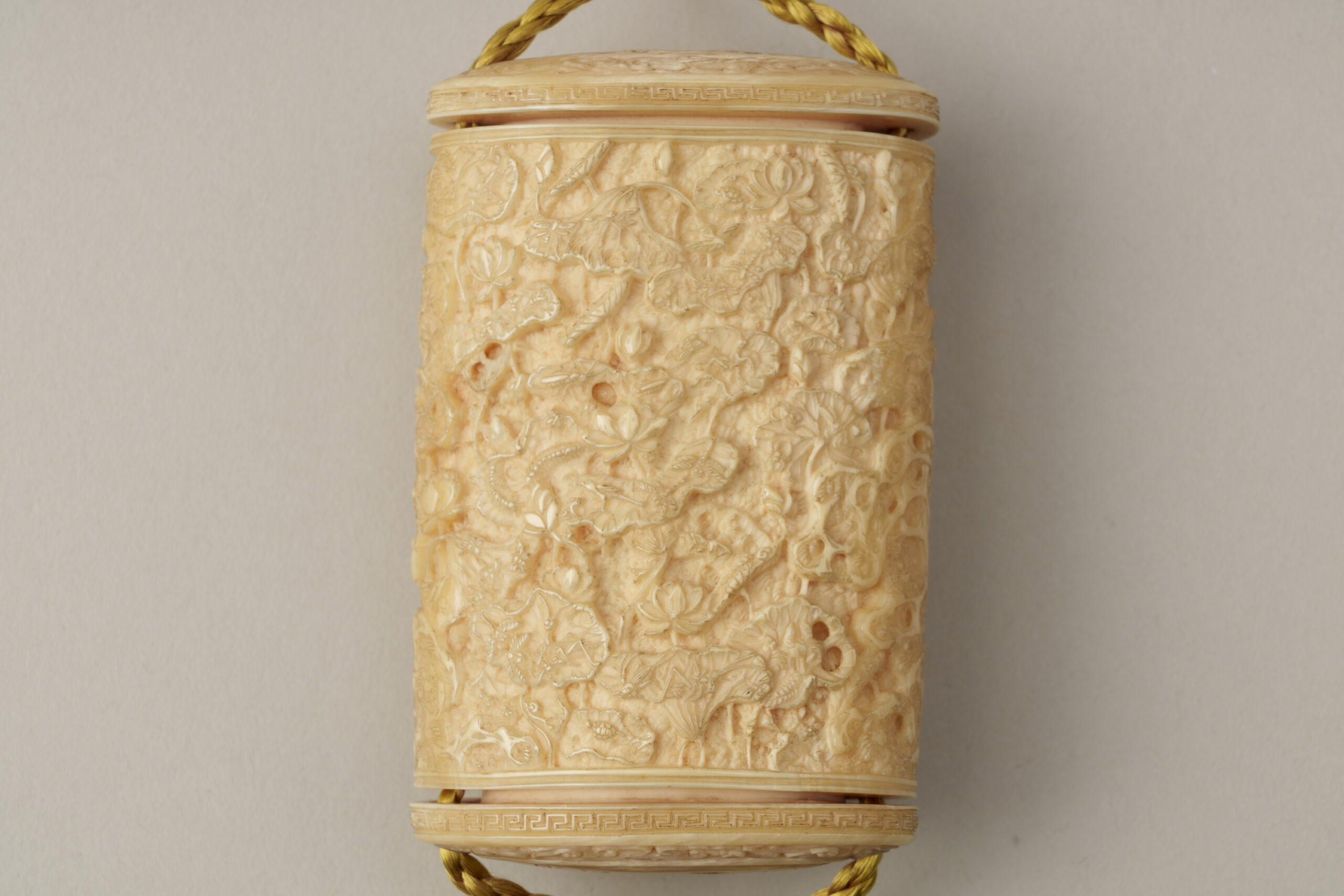
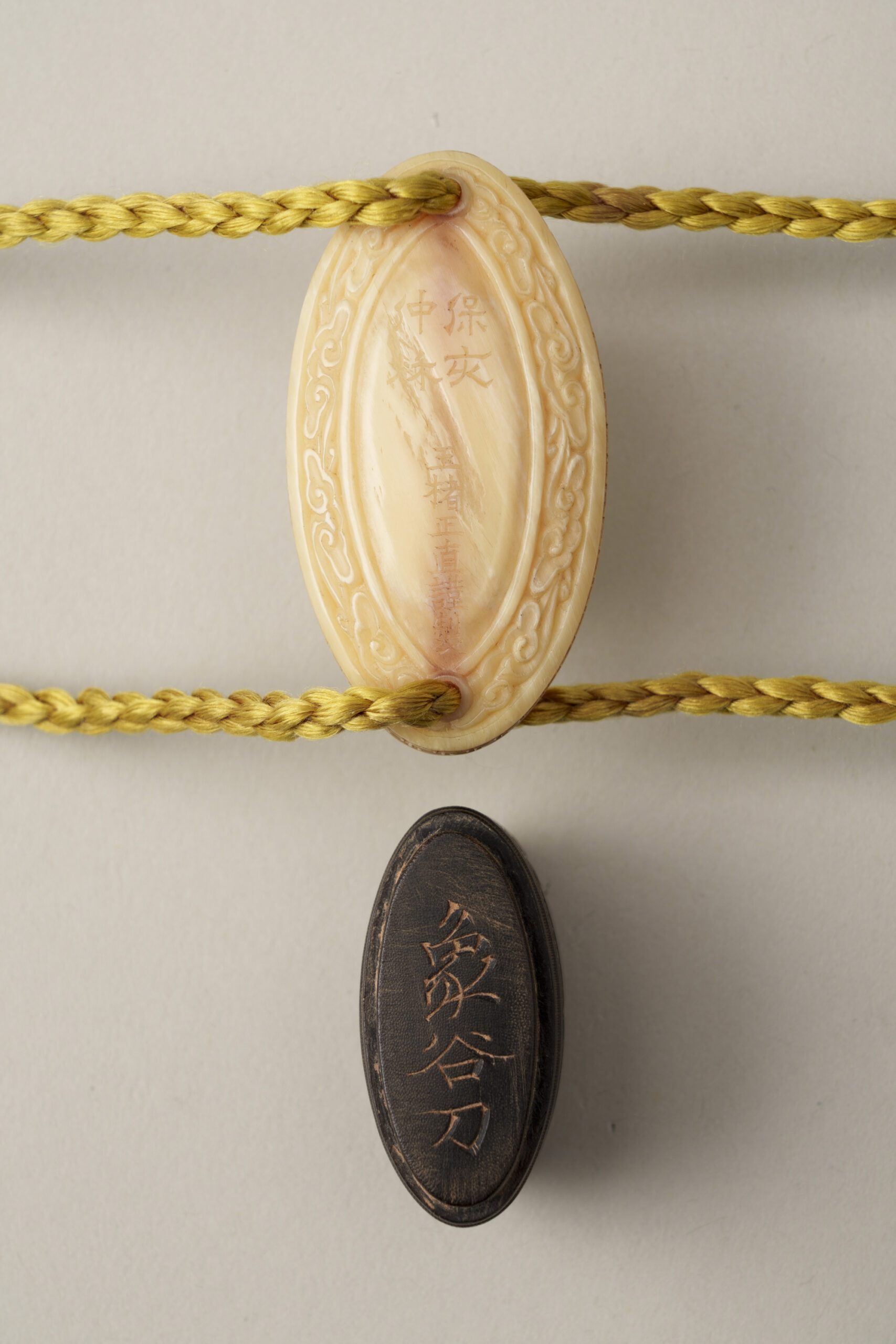
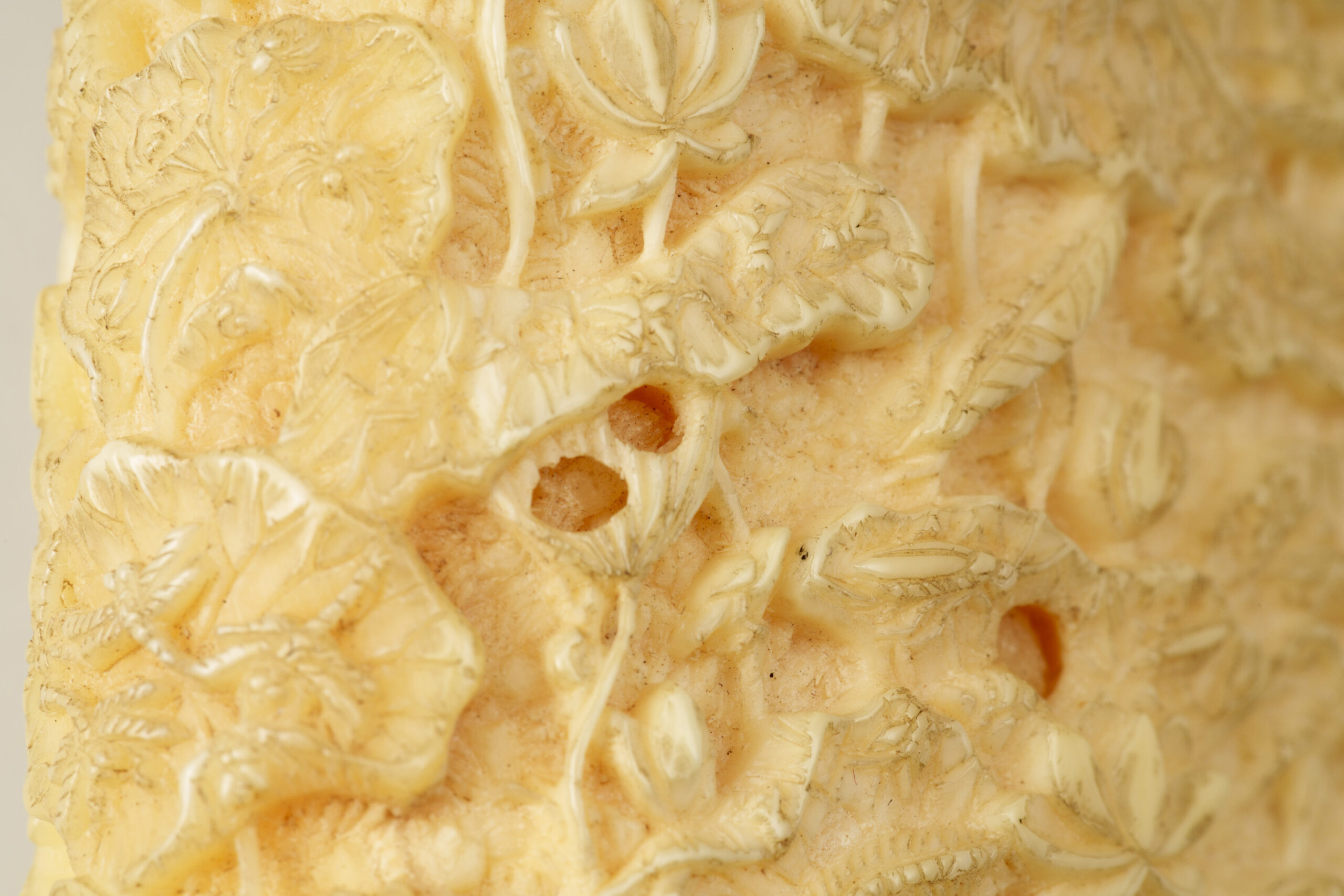
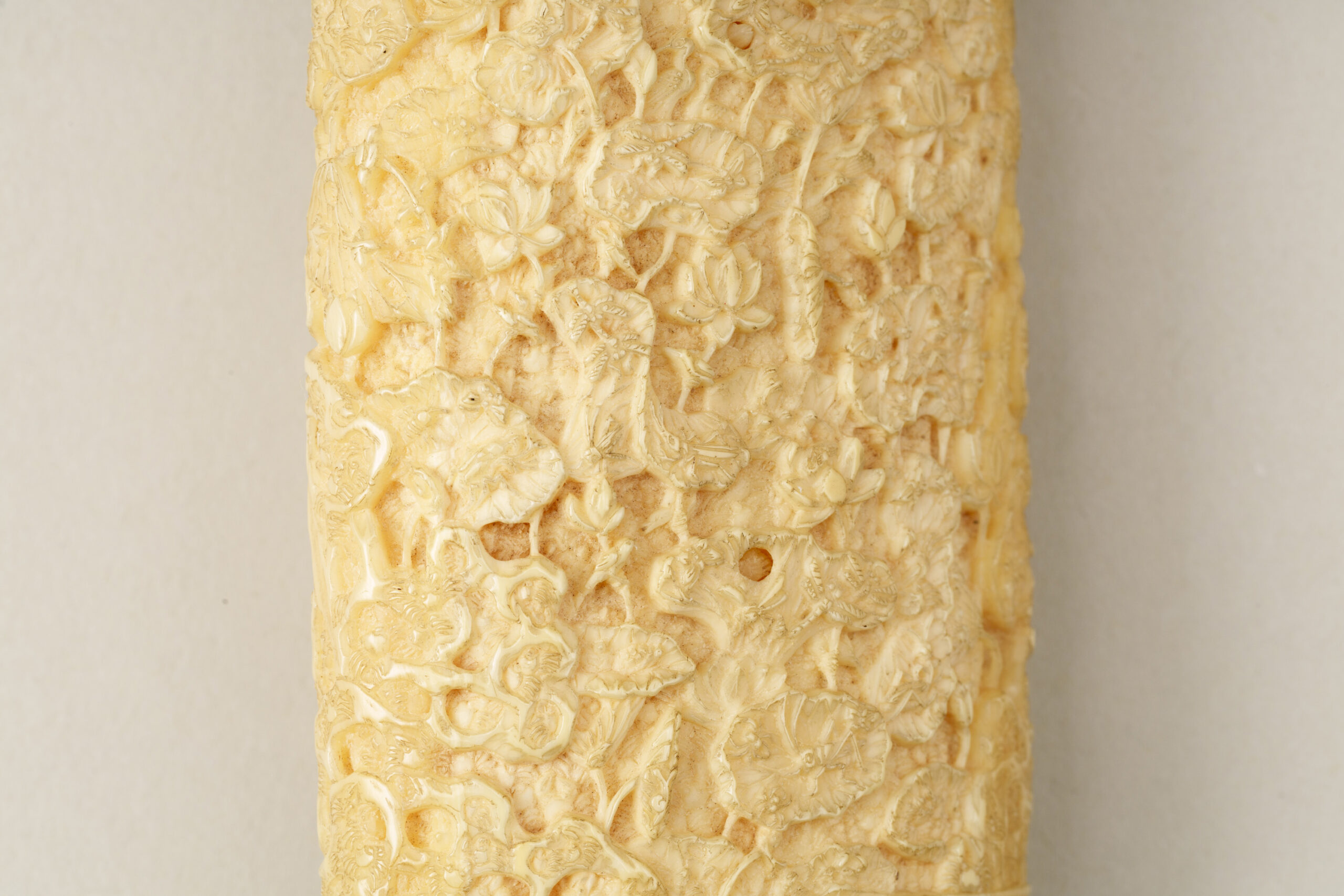
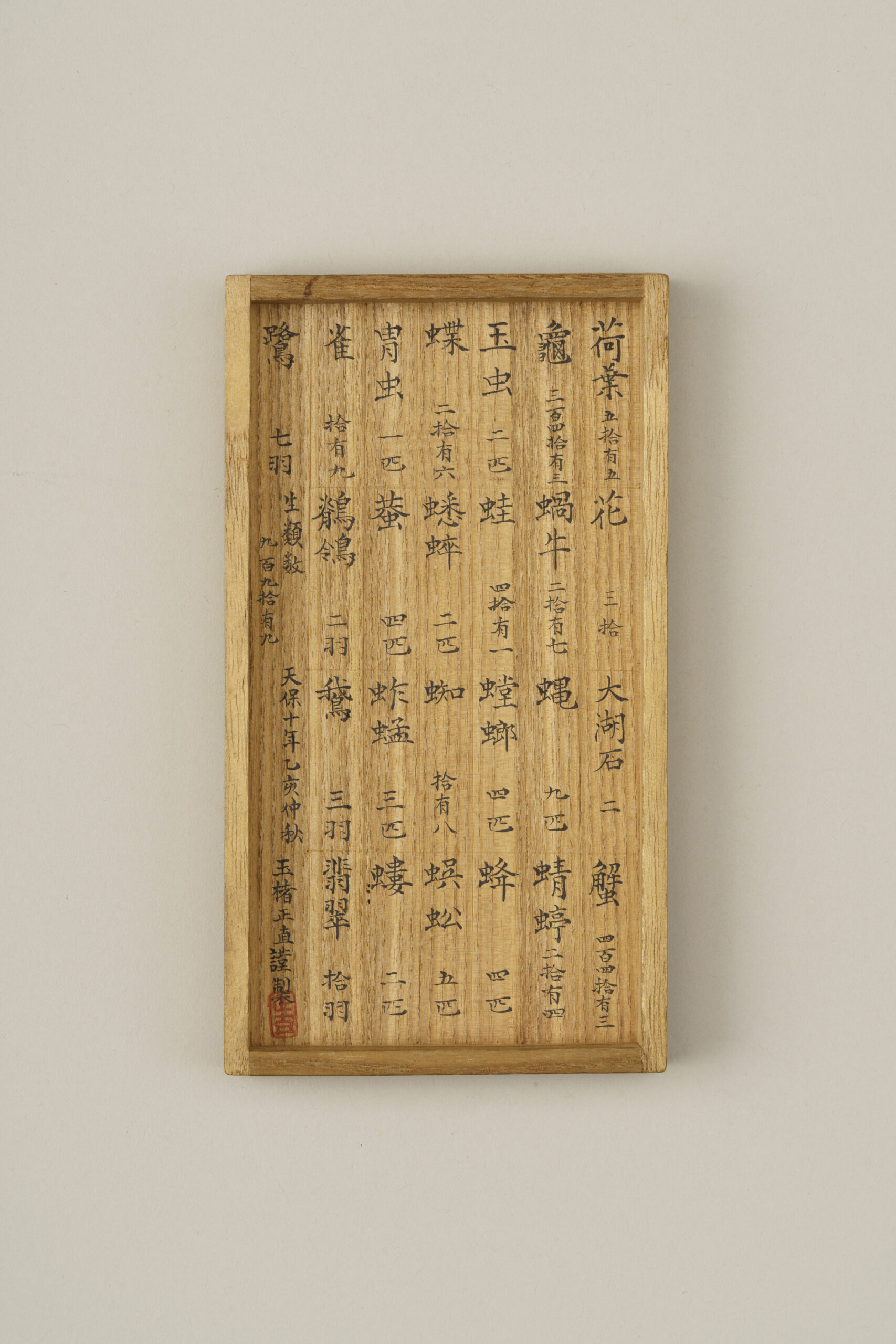
This inrō was created using a narwhal tusk prepared by Lord Yorihiro, to which Zōkoku contributed the “labor of carving.” With astonishing precision, he carved lotus leaves and blossoms, Taihu rocks, and a remarkable variety of flora and fauna, including crabs, turtles, dragonflies, and sparrows. According to Zōkoku’s ink inscription on the inside of the storage-box lid, there is a total of 1,086 carved motifs, 999 of which represent living creatures.
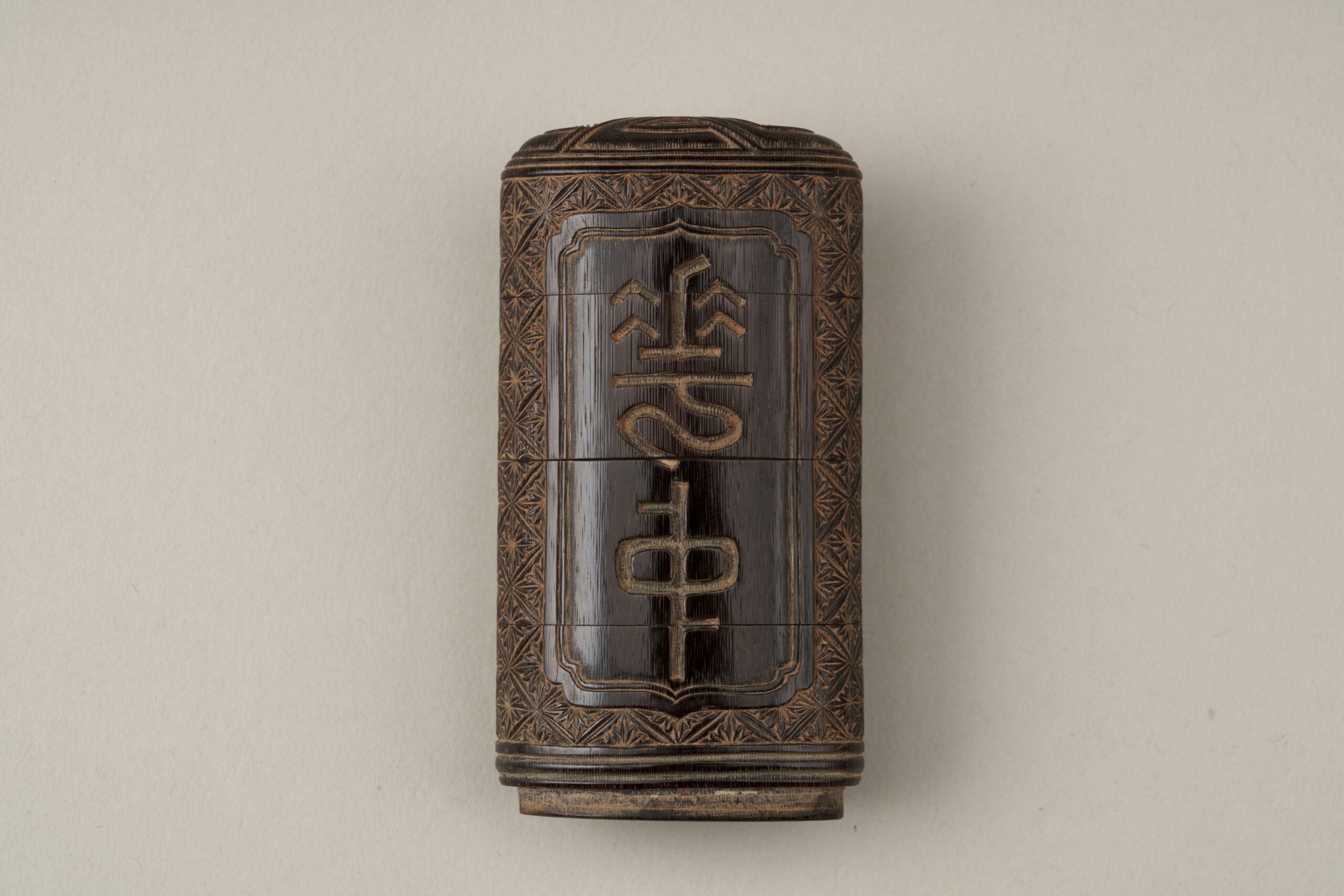
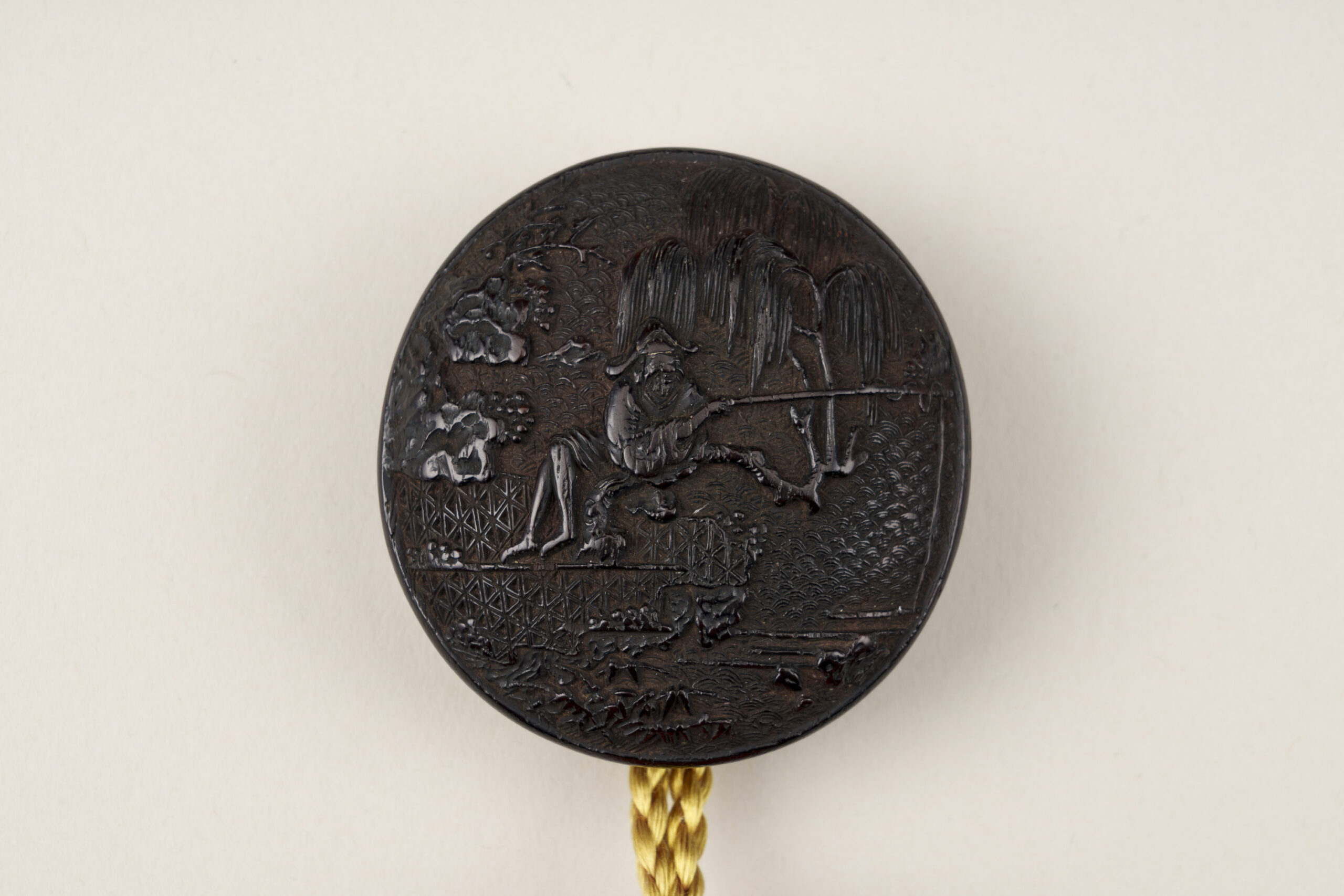
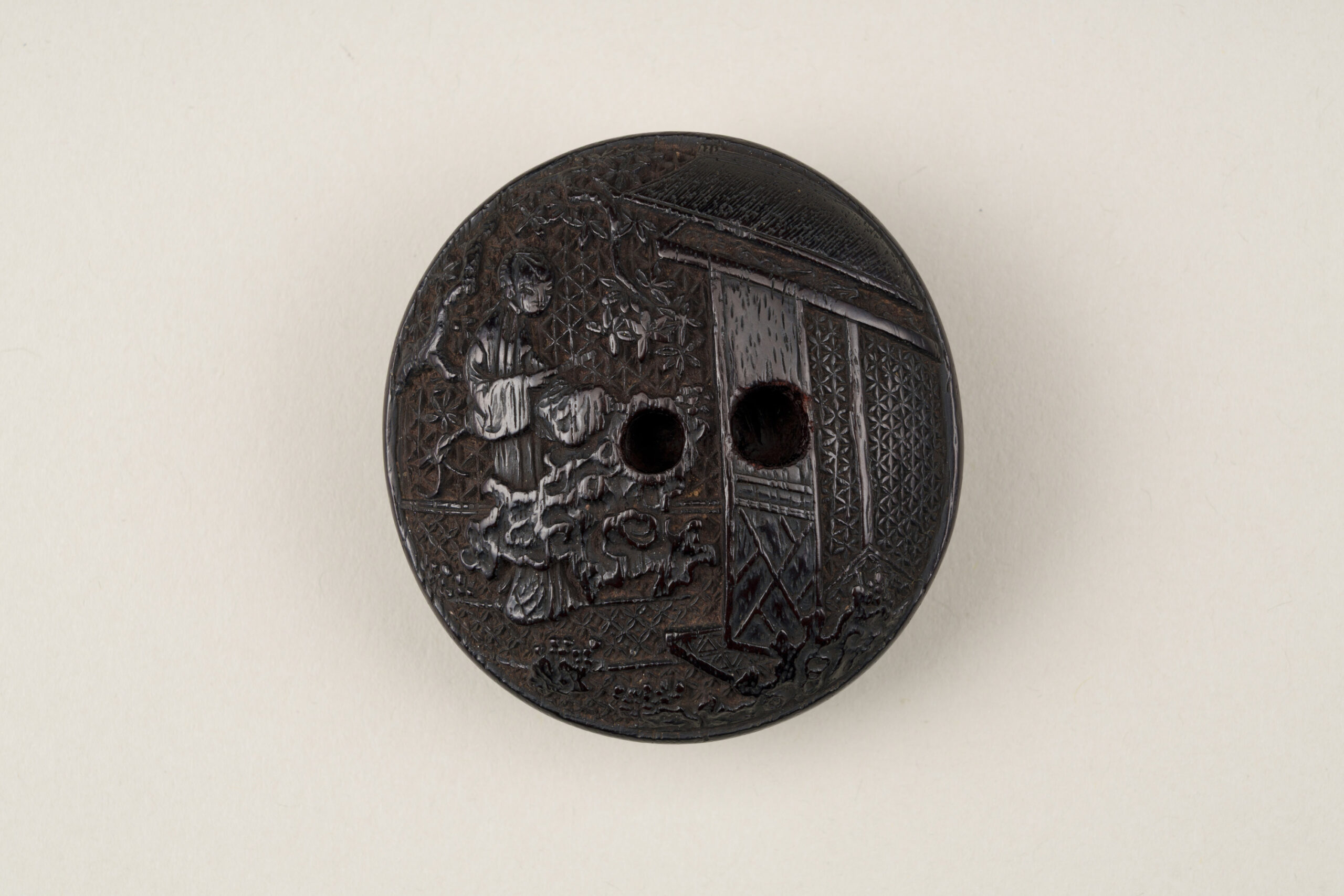
The inscription engraved on the inner container made of black rhinoceros horn reads “Kachū Kunshi,” a phrase that alludes to the purity of the lotus. Taikōbō, an ancient Chinese sage famed for his love of fishing was also carved by Zōkoku on the accompanying netsuke. This work stands as one of his finest masterpieces, demonstrating his extraordinary carving prowess.