


Emperor Kōgon Imperial Handwriting (Shinkan) — Devotional Heart Sutra
- Artist
-
Emperor Kōgon (1313–1364)
- Period
-
Nanbokucho period, 1336 (Engen 1)
- Quality and quantity
-
Ink on paper, three scrolls
- Size (cm)
-
Individual scrolls: H 24.4 × L 48.3
- Category
-
Calligraphy
- Classification
-
Important cultural property
- Accession number
-
MY0#00006

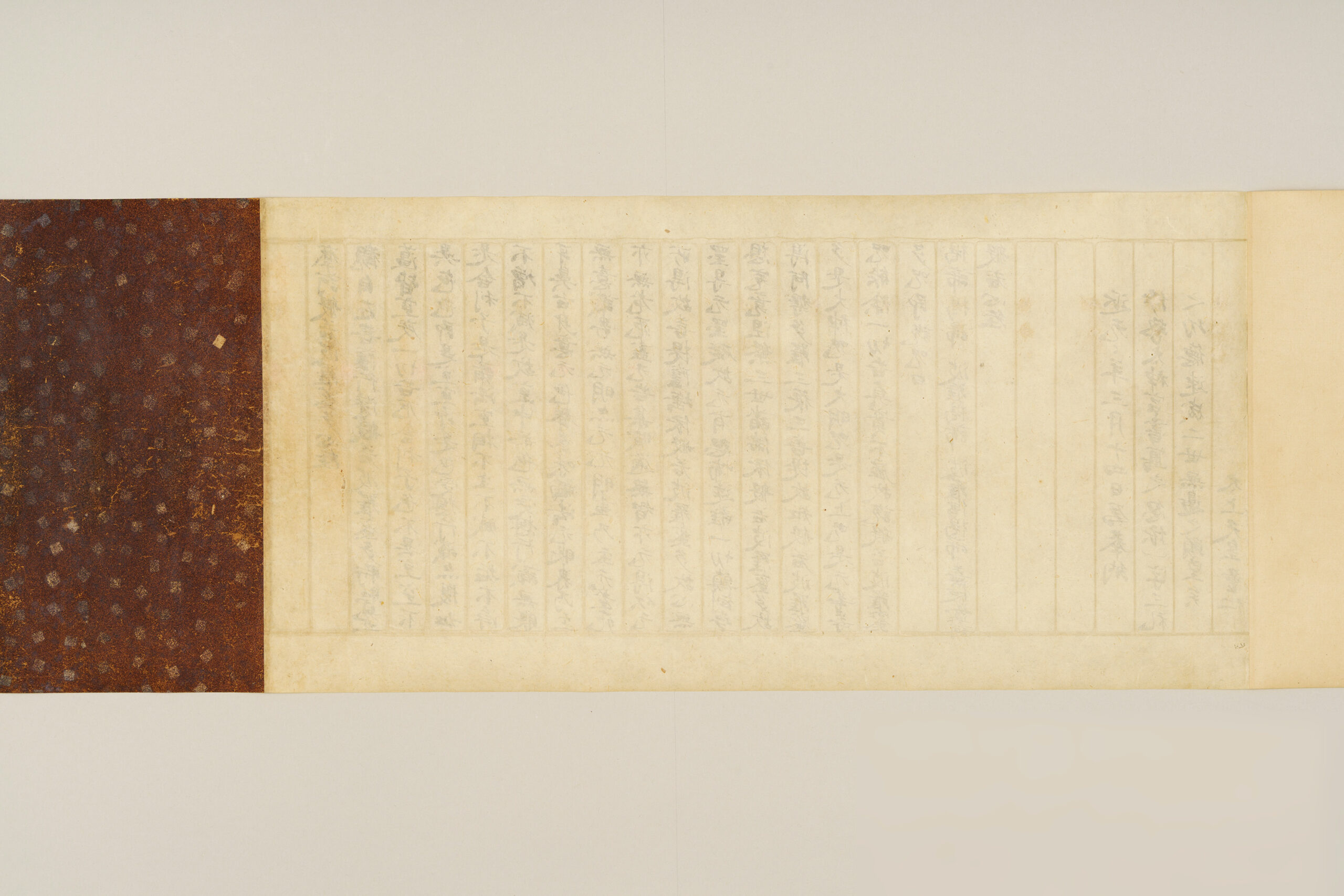
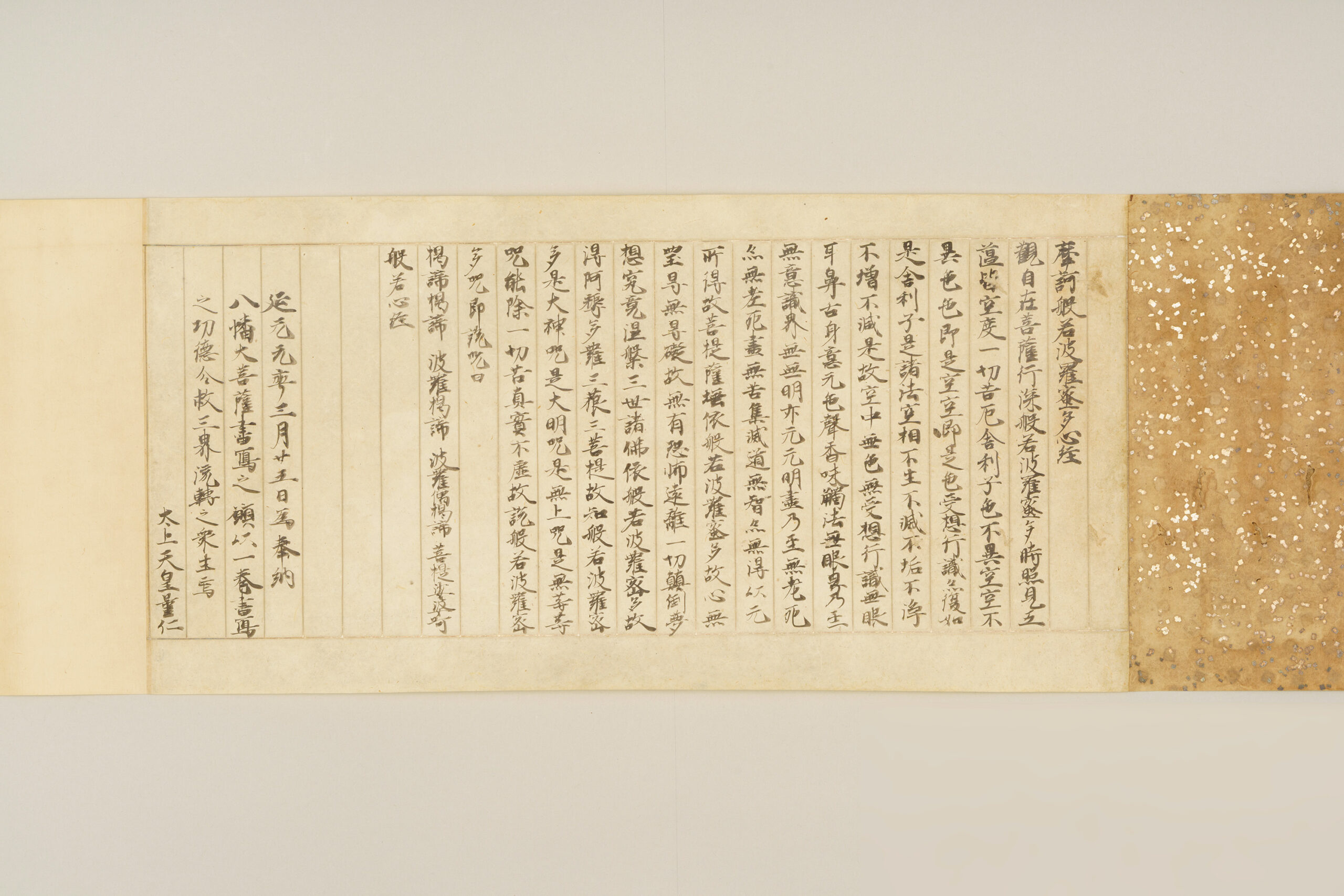
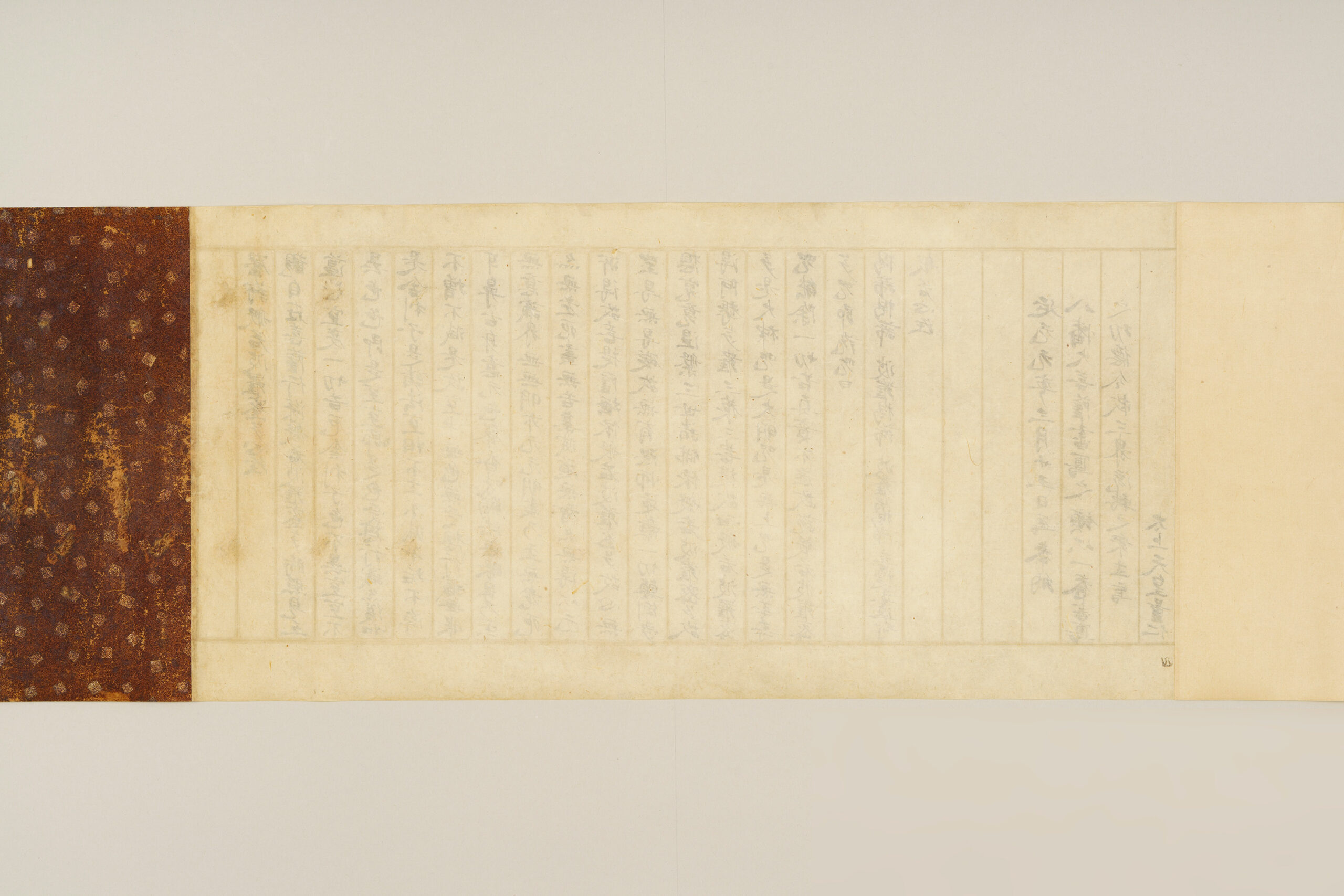
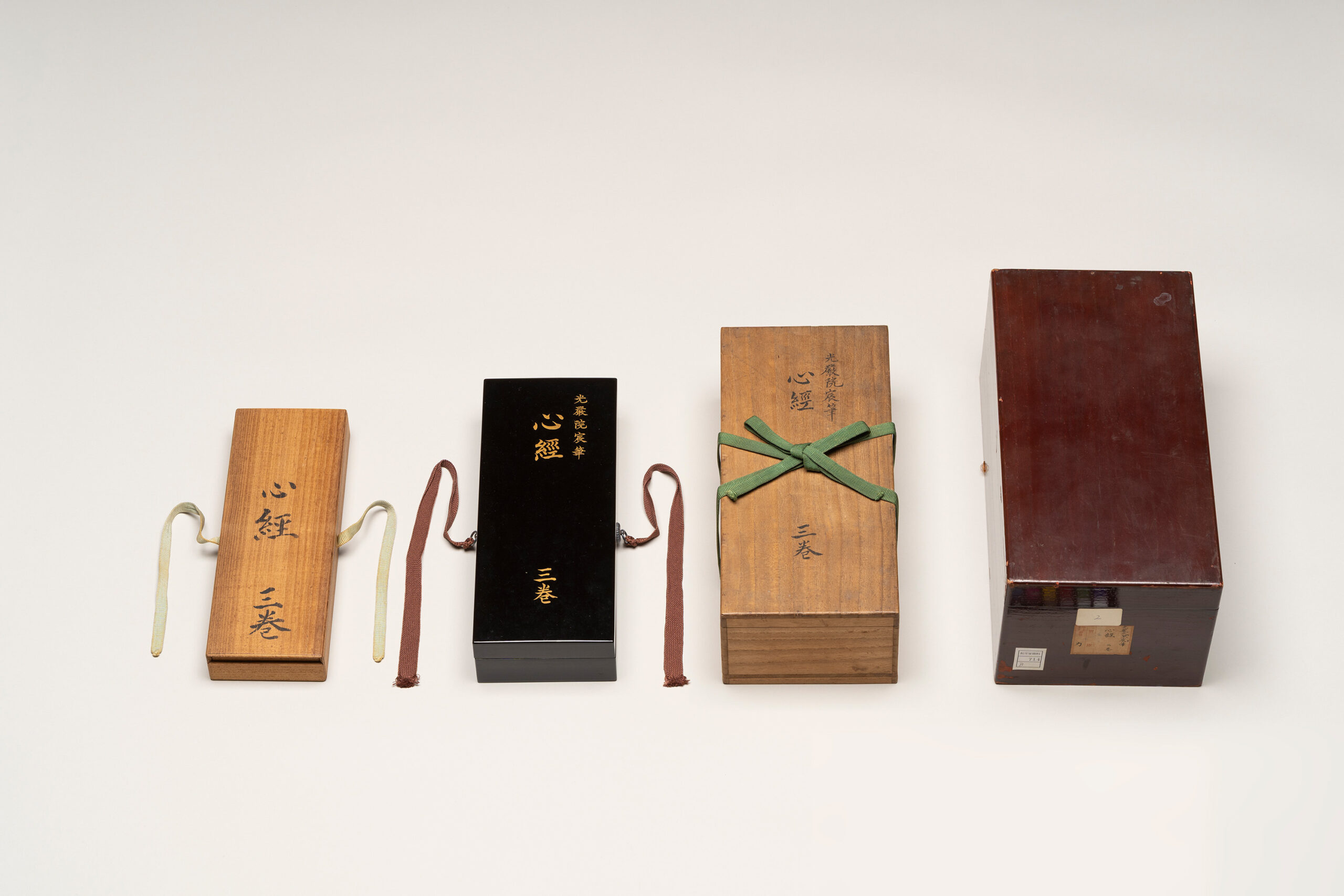
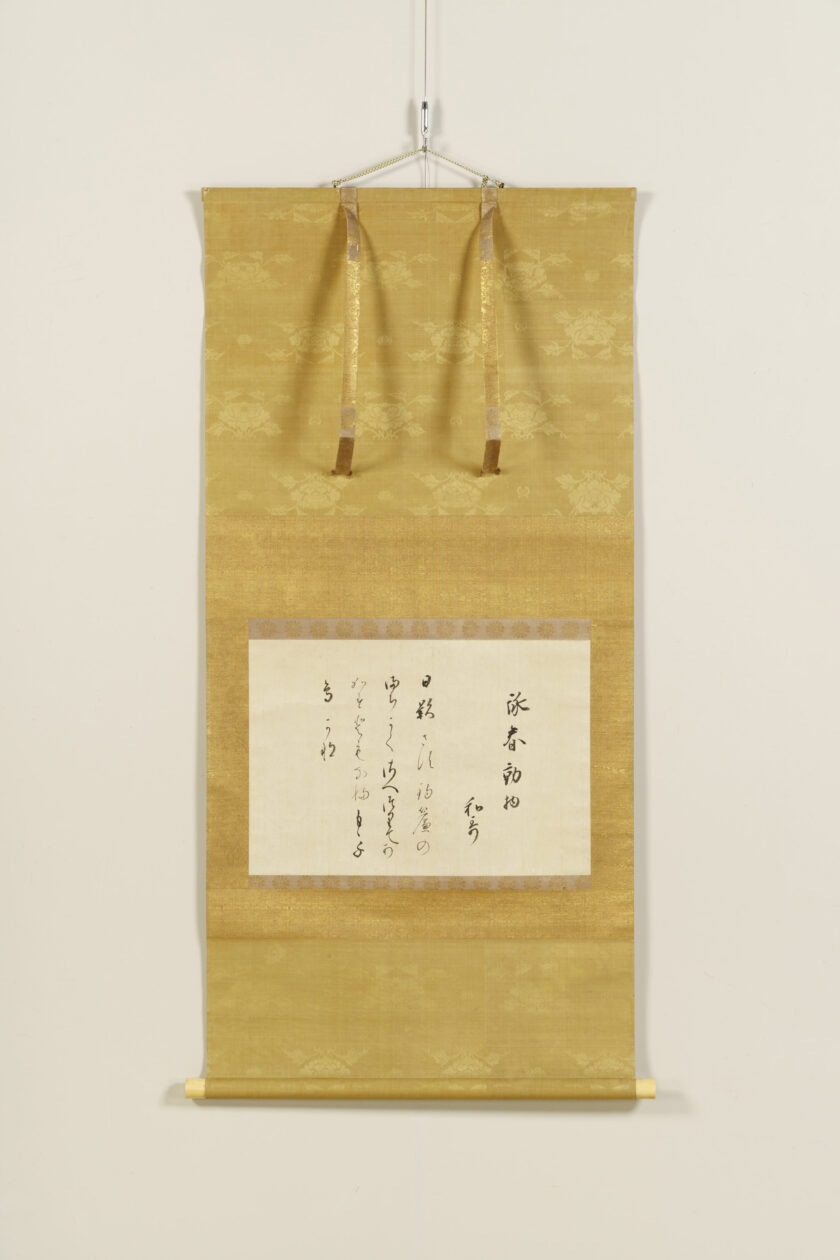
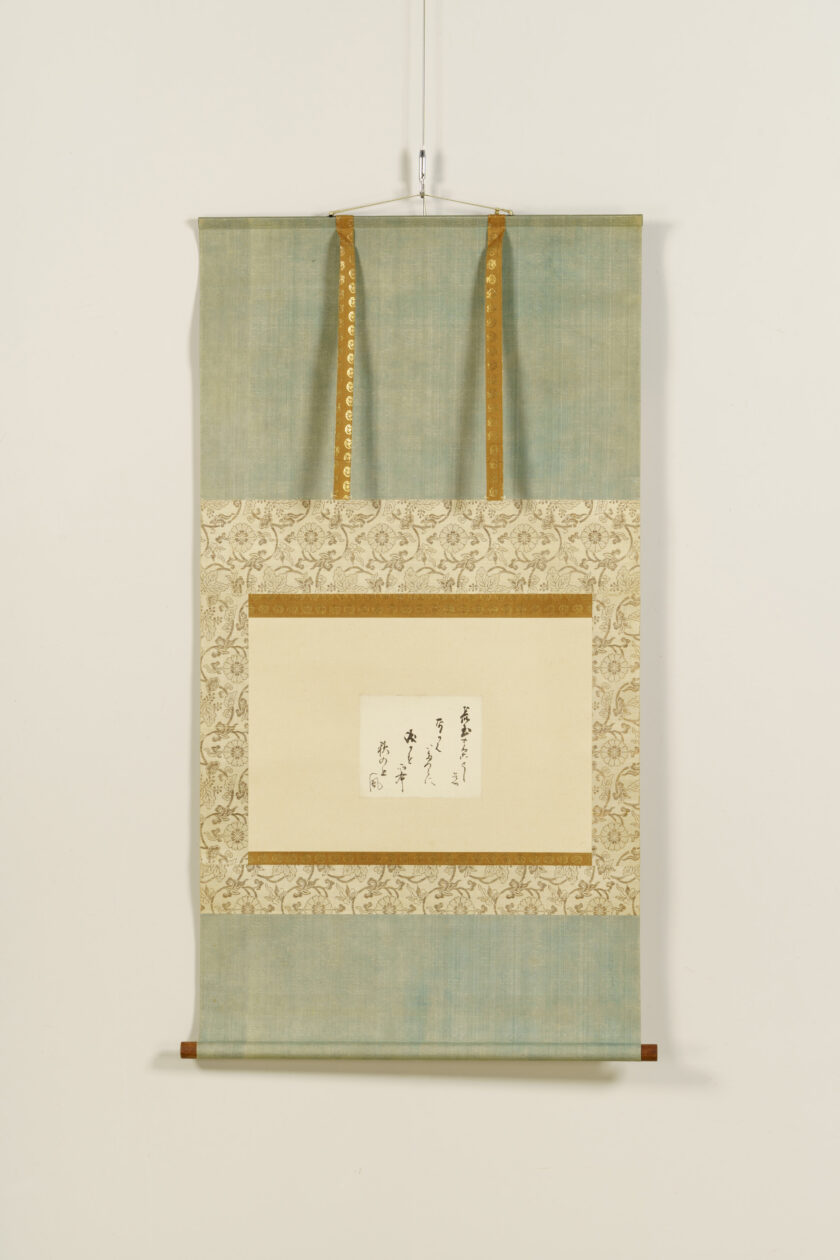
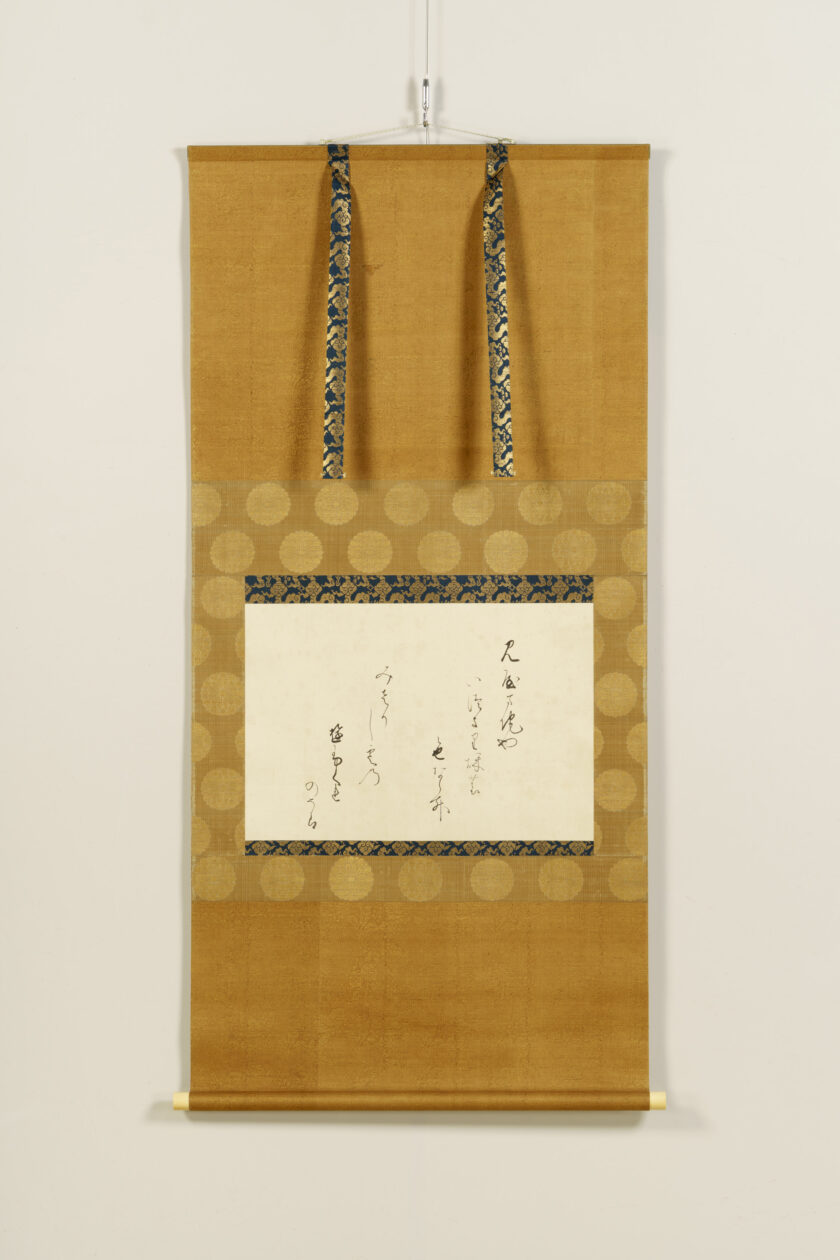
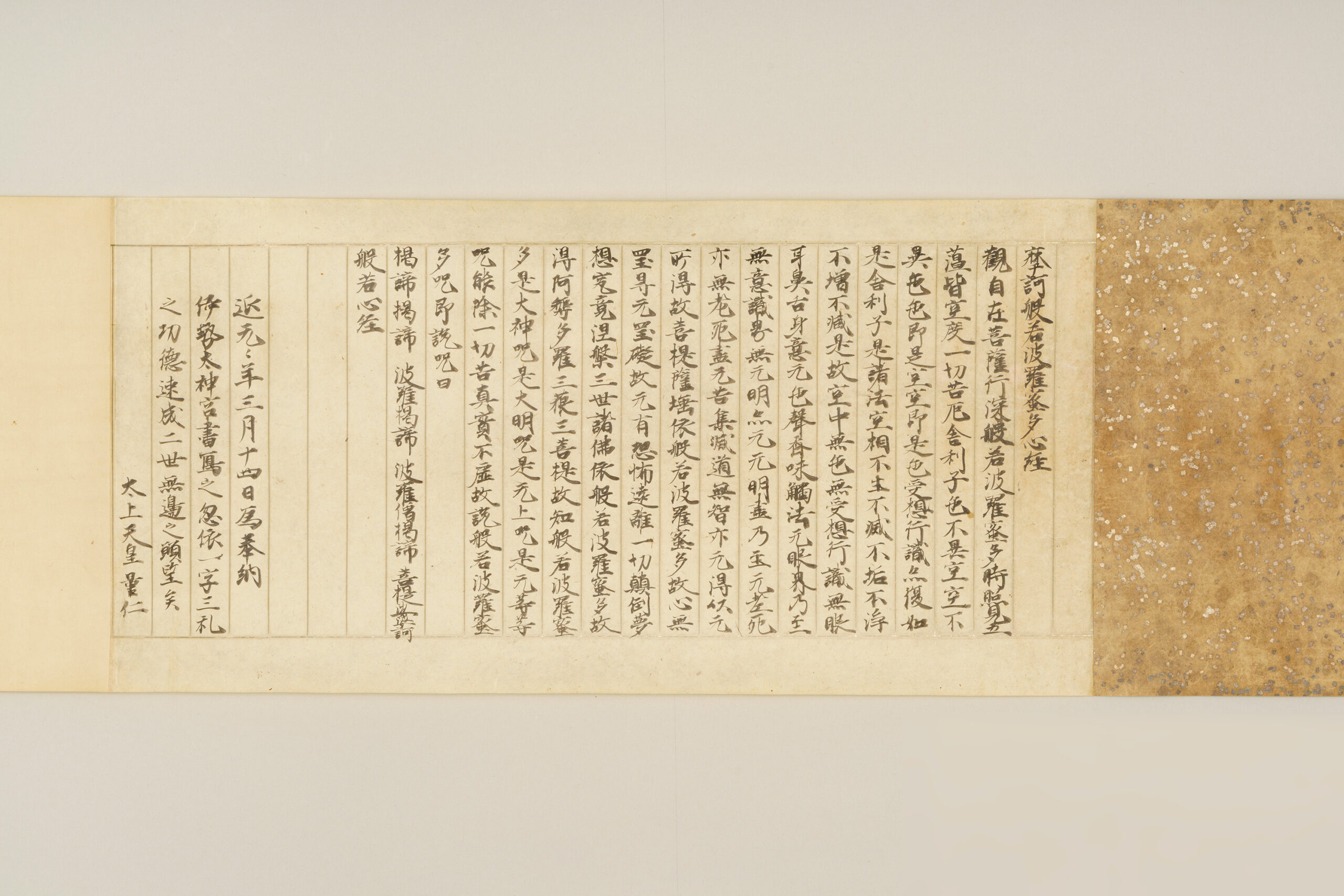
Description
Emperor Kōgon was the eldest son of Emperor Go-Fushimi. During the Genkō War in 1331, Emperor Go-Daigo was exiled to Oki, and Kōgon ascended to the throne. After the fall of the Kamakura shogunate and Go-Daigo’s return to power, Kōgon was forced to abdicate. He was later received into the camp of Ashikaga Takauji and ultimately became the founding emperor of the Northern Court.
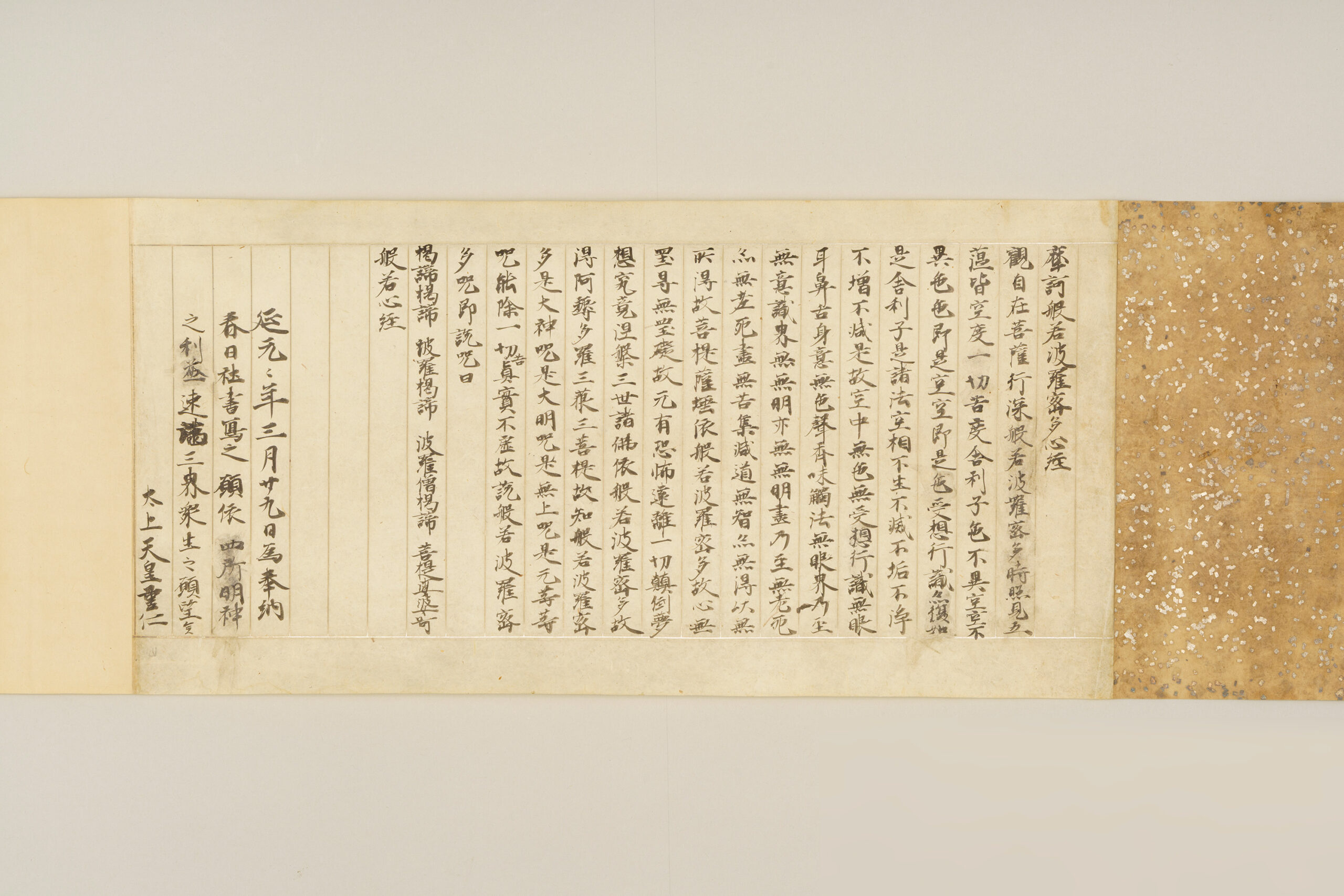
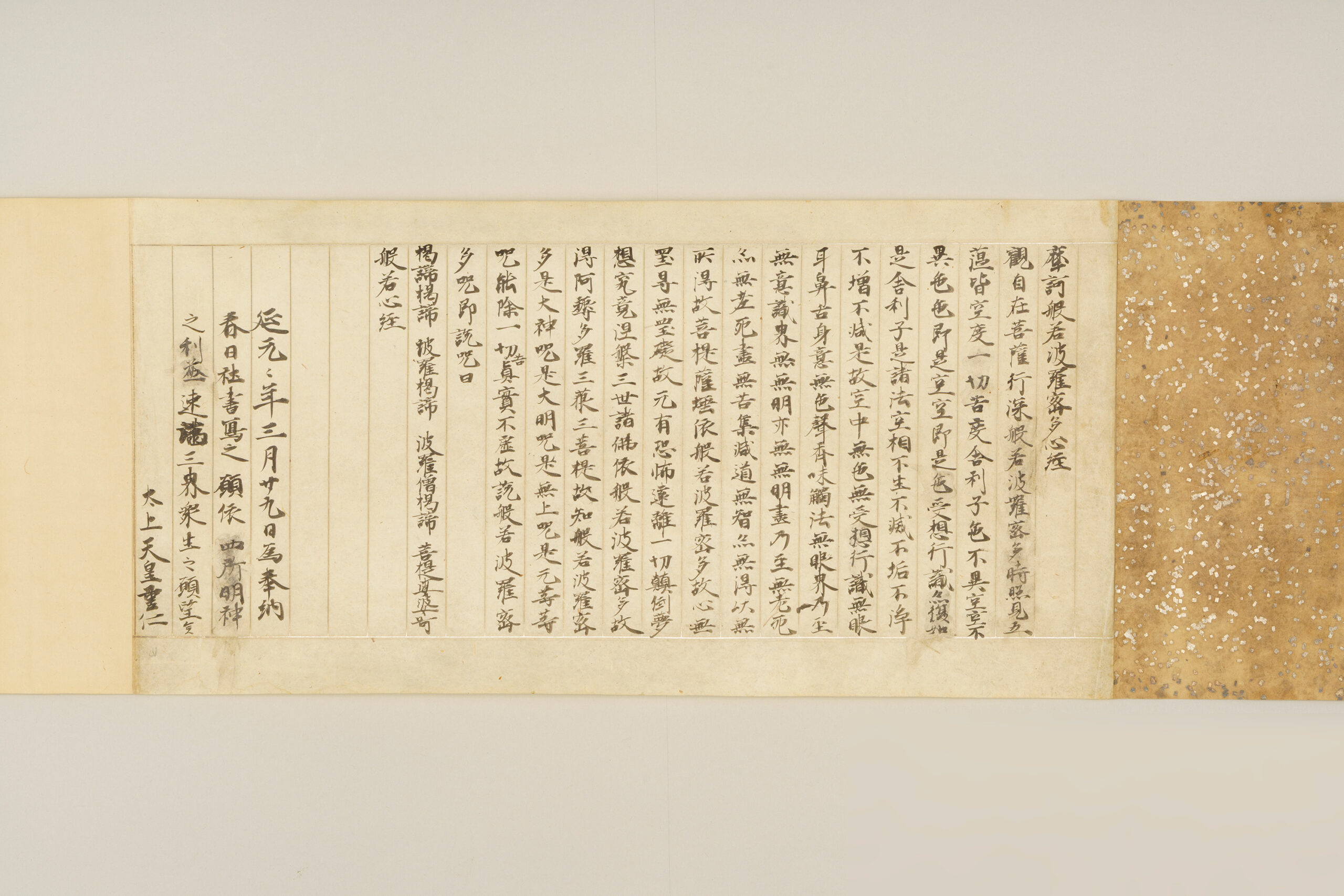
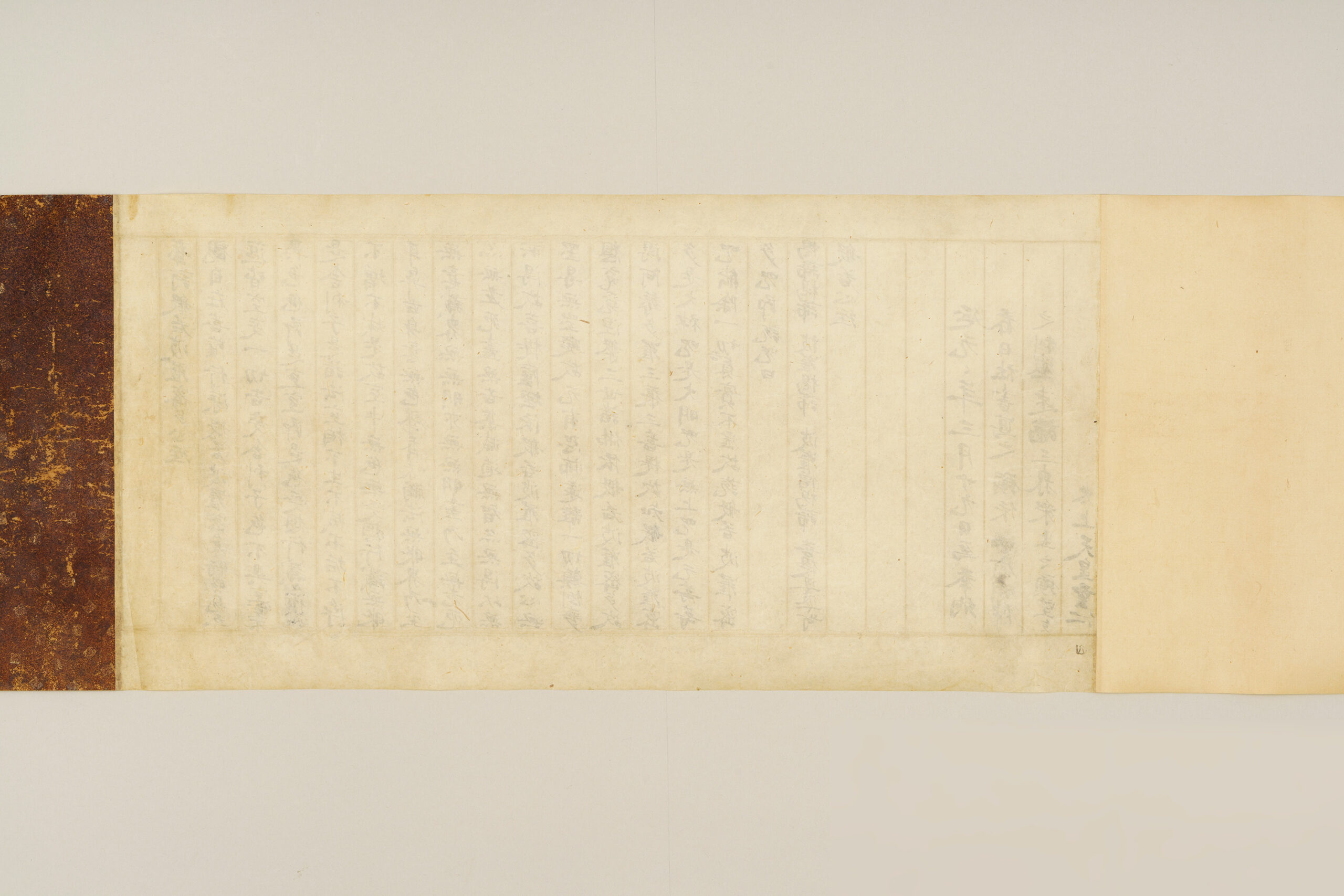
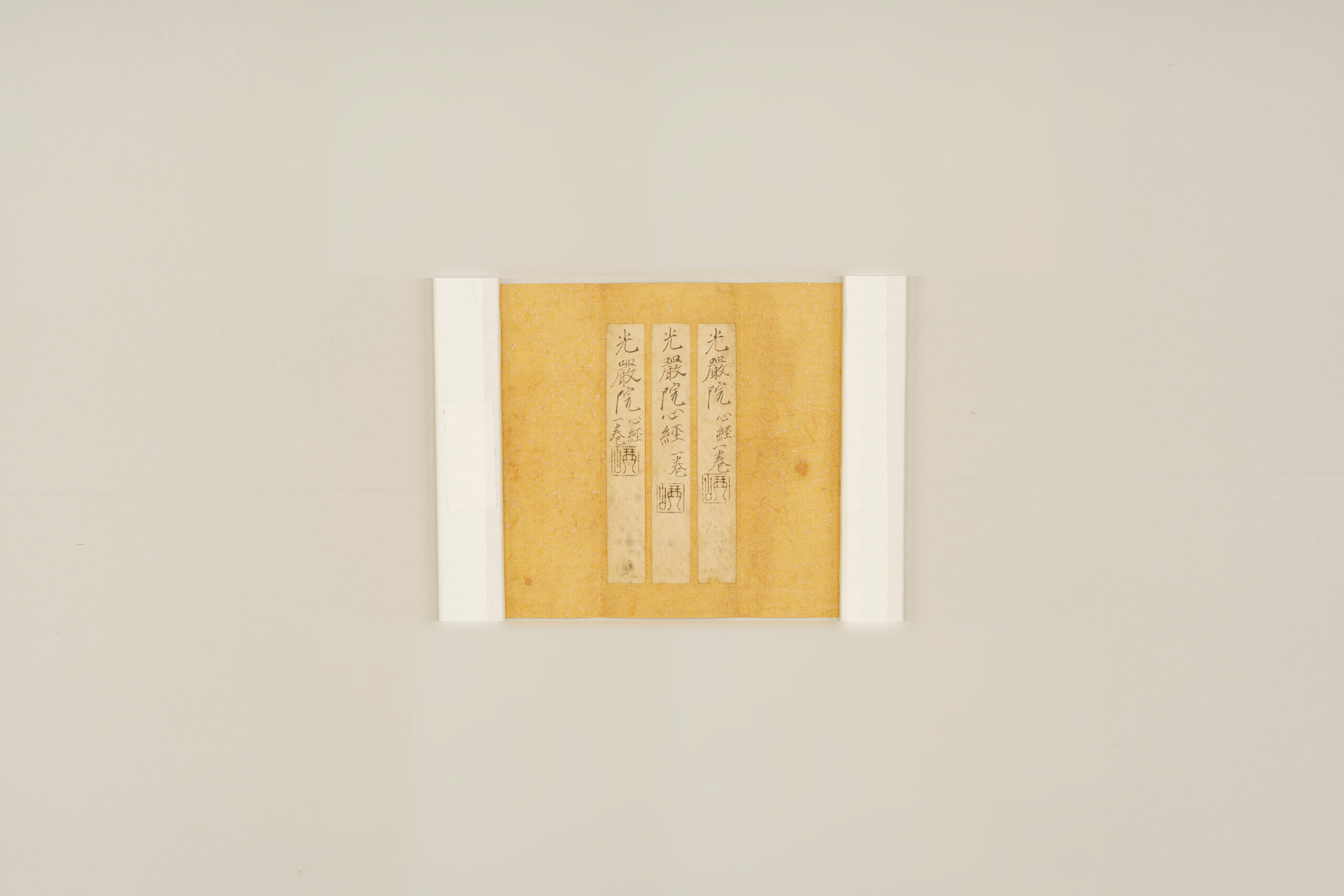
This work consists of copies of the Heart Sutra (Hannya Shingyō) transcribed by Emperor Kōgon for dedication to three major shrines, Ise Jingū, Iwashimizu Hachimangū and Kasuga Taisha. The colophon records that the sutras were copied following the devotional practice of ichiji sanrei, in which each character is written with three prostrations, and that the offerings were made in prayer for the salvation of the people by the deities of the respective shrines.
The date of the transcription is a moment when Ashikaga Takauji was advancing from Kyushu toward Kyoto, shortly before Emperor Kōgon formally established the Northern Court. Although intended for dedication to the three shrines, the scrolls were never actually offered and instead came into the possession of the Mito domain of the Tokugawa family, from whom they were later presented to the Takamatsu Matsudaira family.