


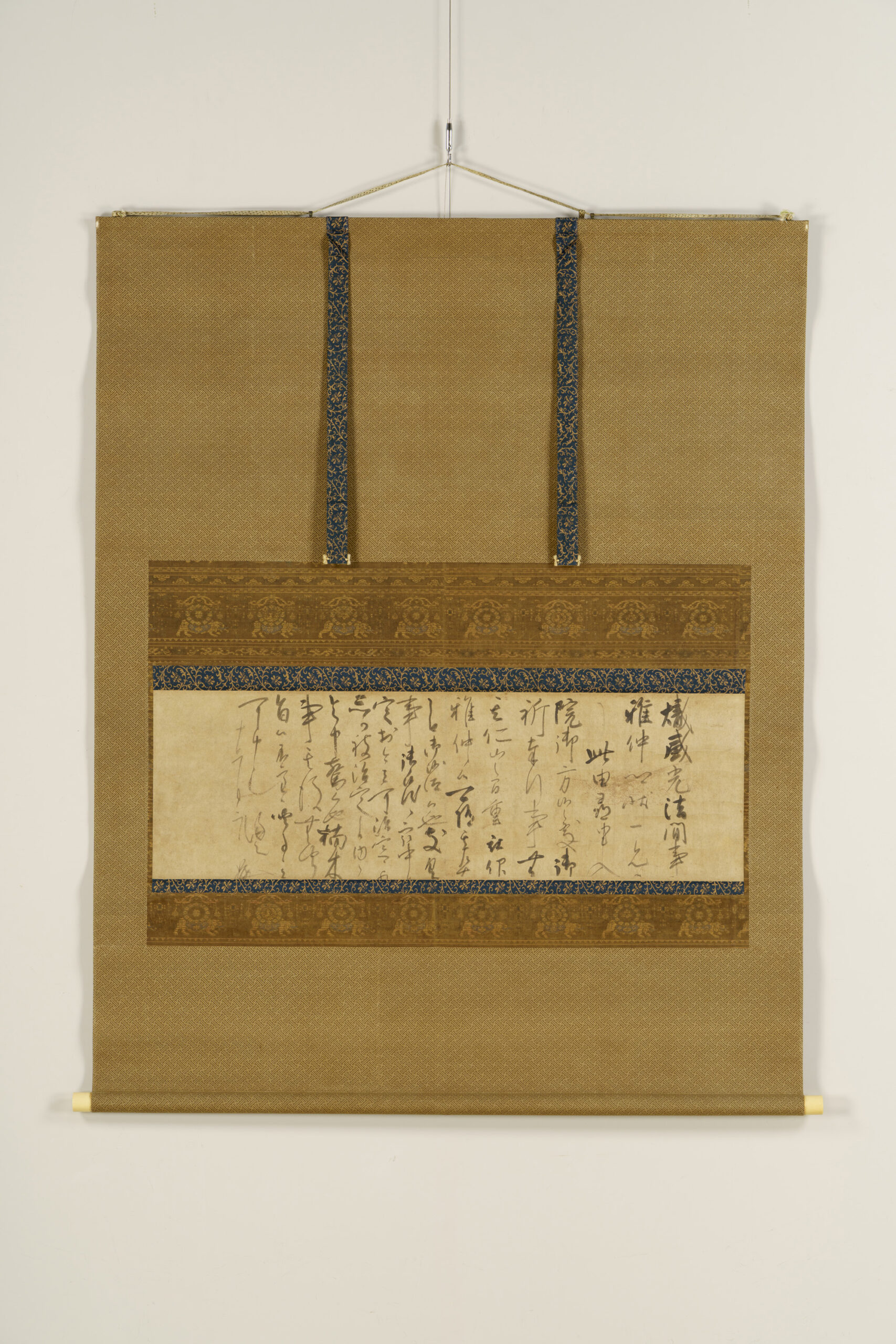
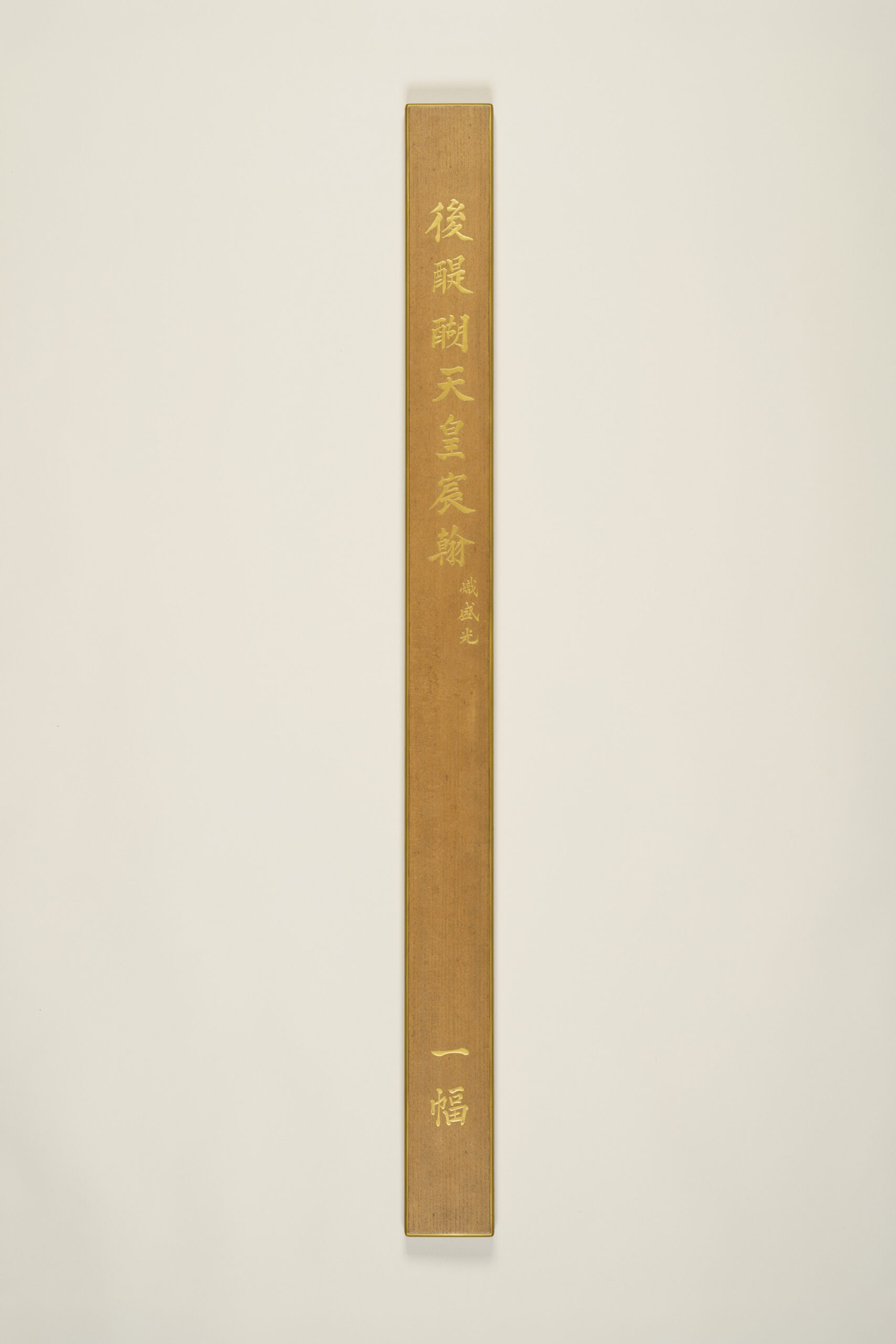
Emperor Hanazono Imperial Handwriting (Shinkan) — Letter
- Artist
-
Emperor Hanazono (1297–1348)
- Period
-
Kamakura period, 1332 (Shōkyō 1)
- Quality and quantity
-
Ink on paper, one hanging scroll
- Size (cm)
-
H 29.0 × W 91.0
- Category
-
Calligraphy
- Classification
-
Important cultural property
- Accession number
-
MY0#00005
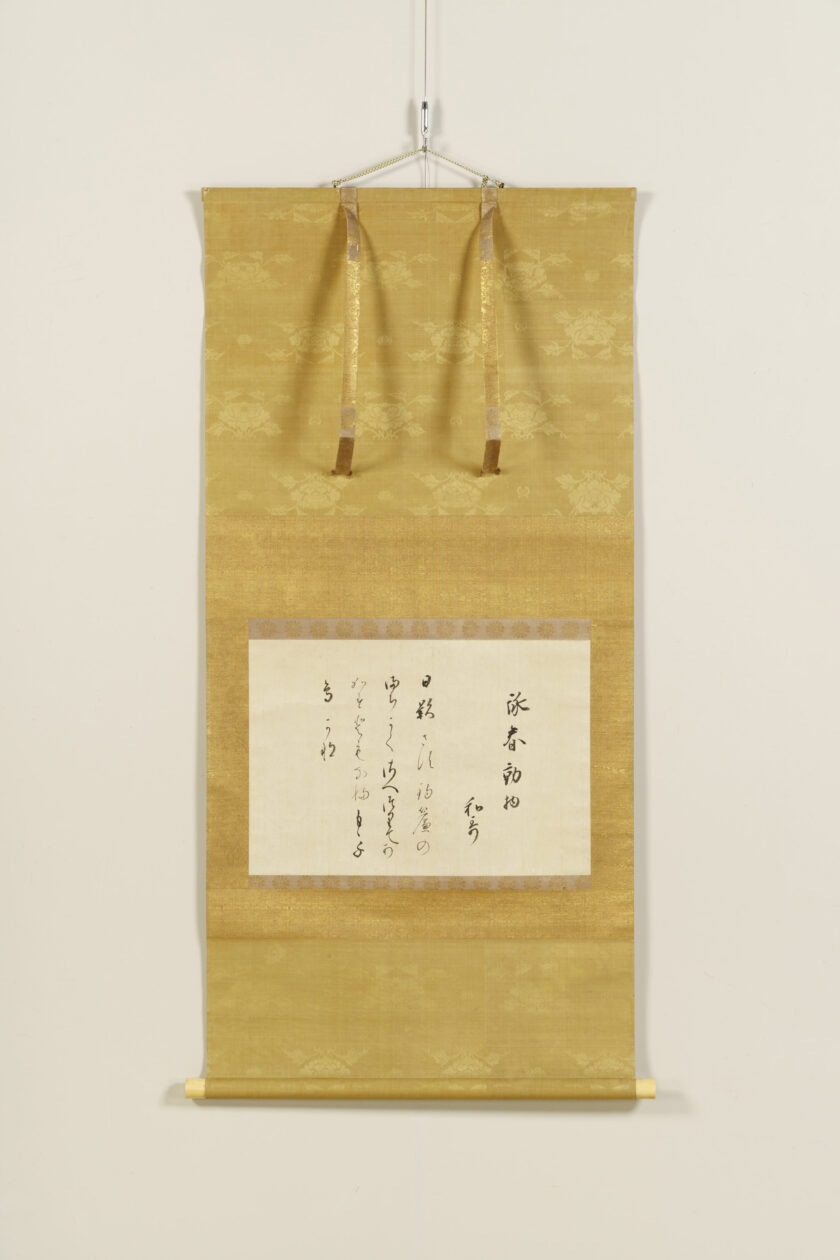
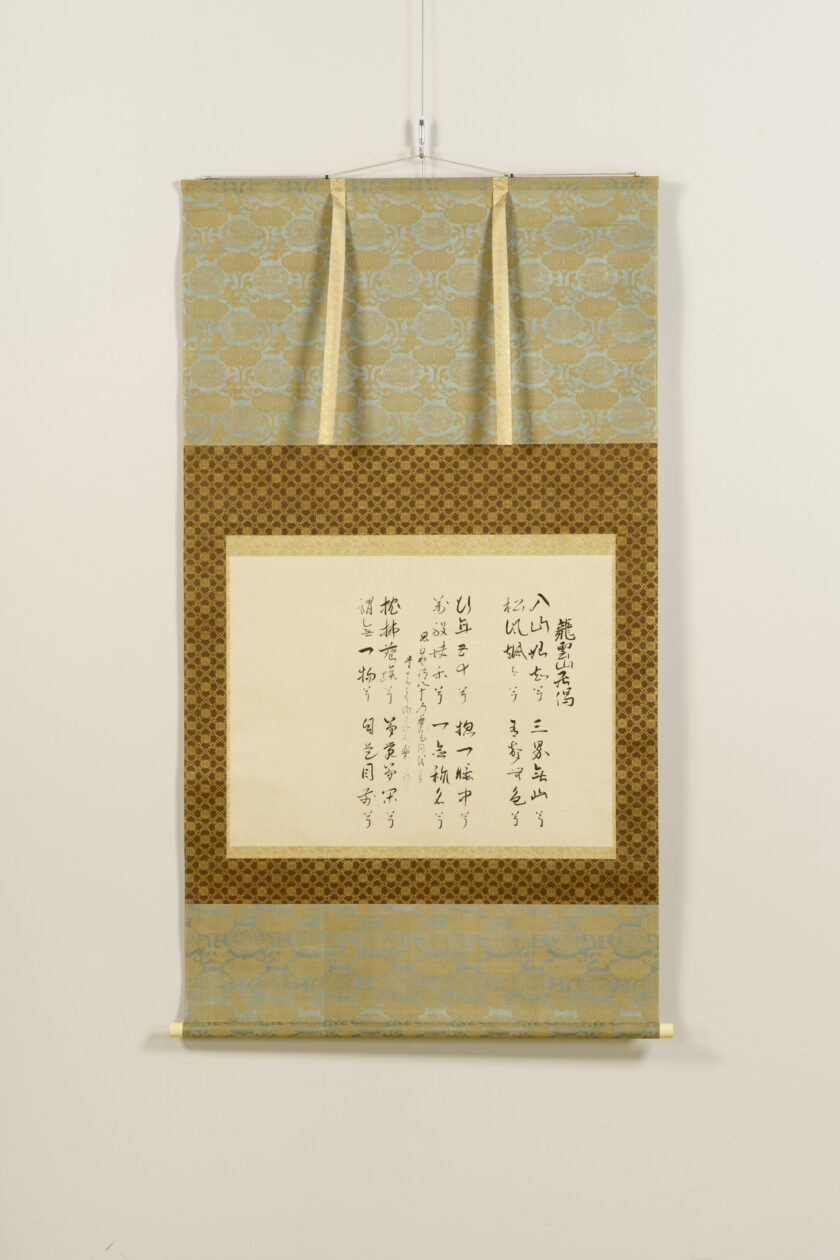
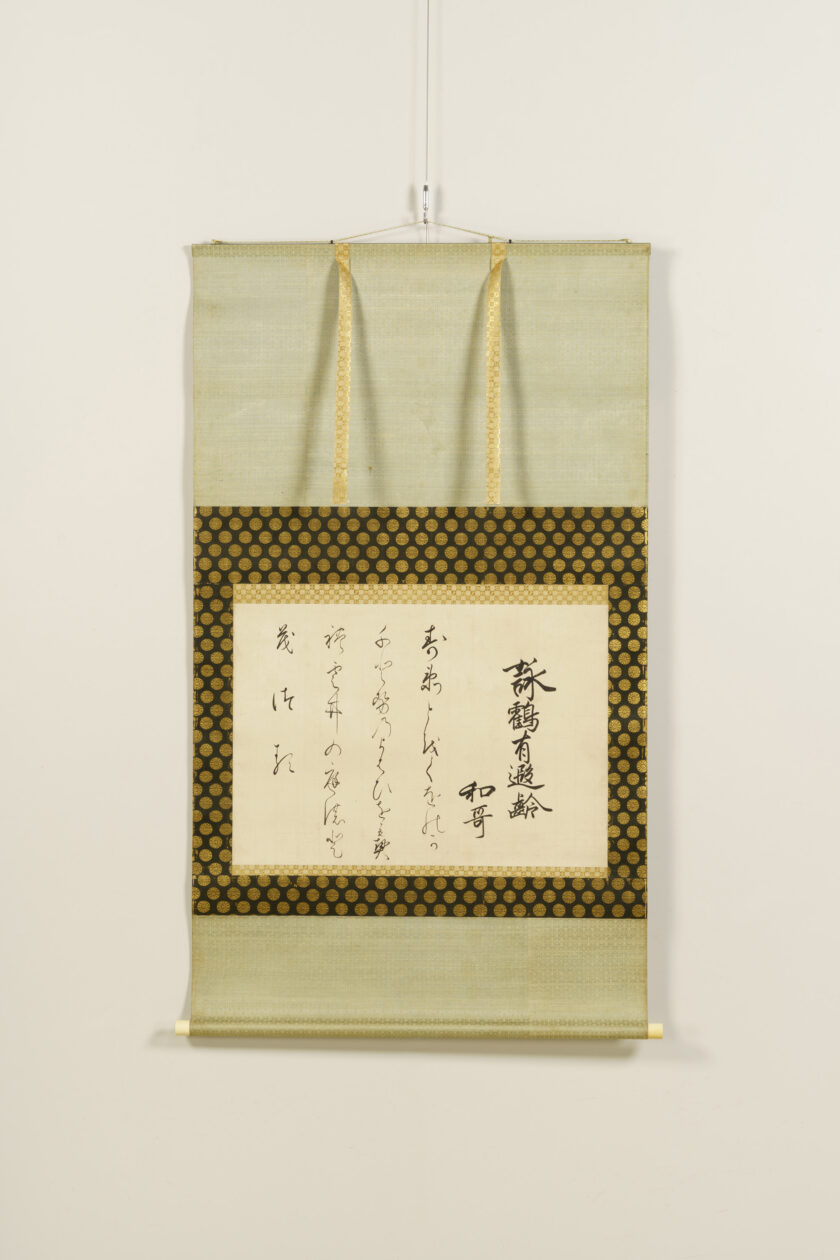
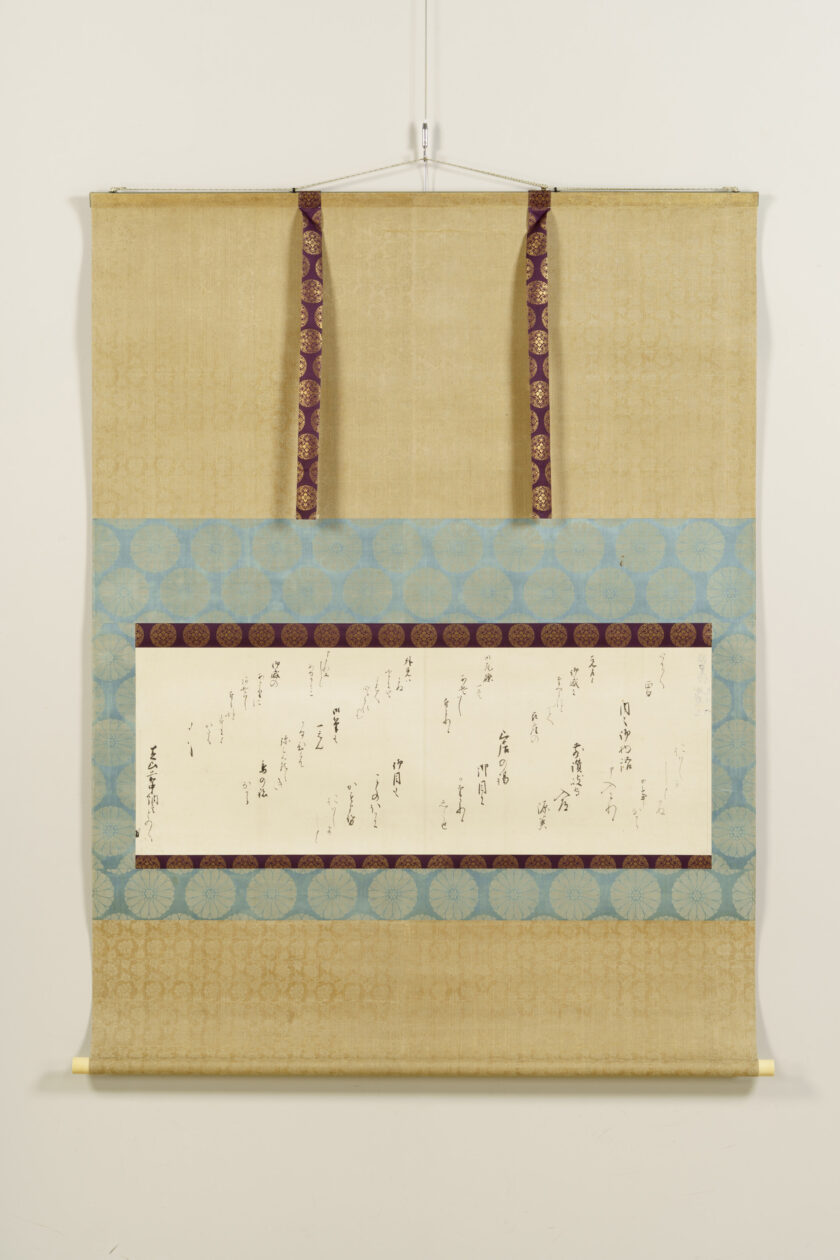
Description
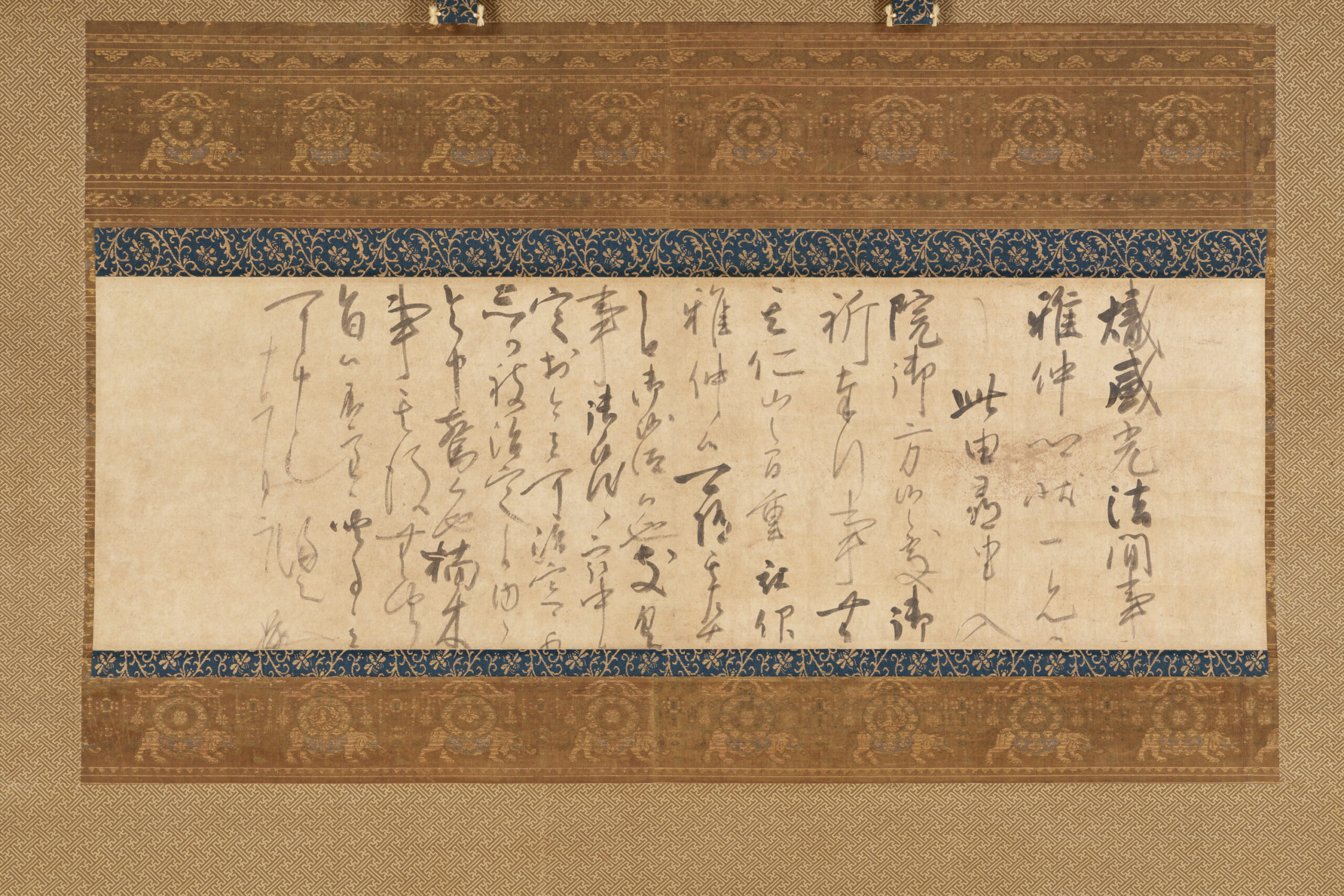
Shinkan refers to calligraphy personally written by an emperor. Emperor Hanazono was the third son of Emperor Fushimi, who is celebrated for his exemplary calligraphy. Emperor Hanazono was himself highly accomplished in the art and deeply versed in Japanese and Chinese classics as well as Buddhism.
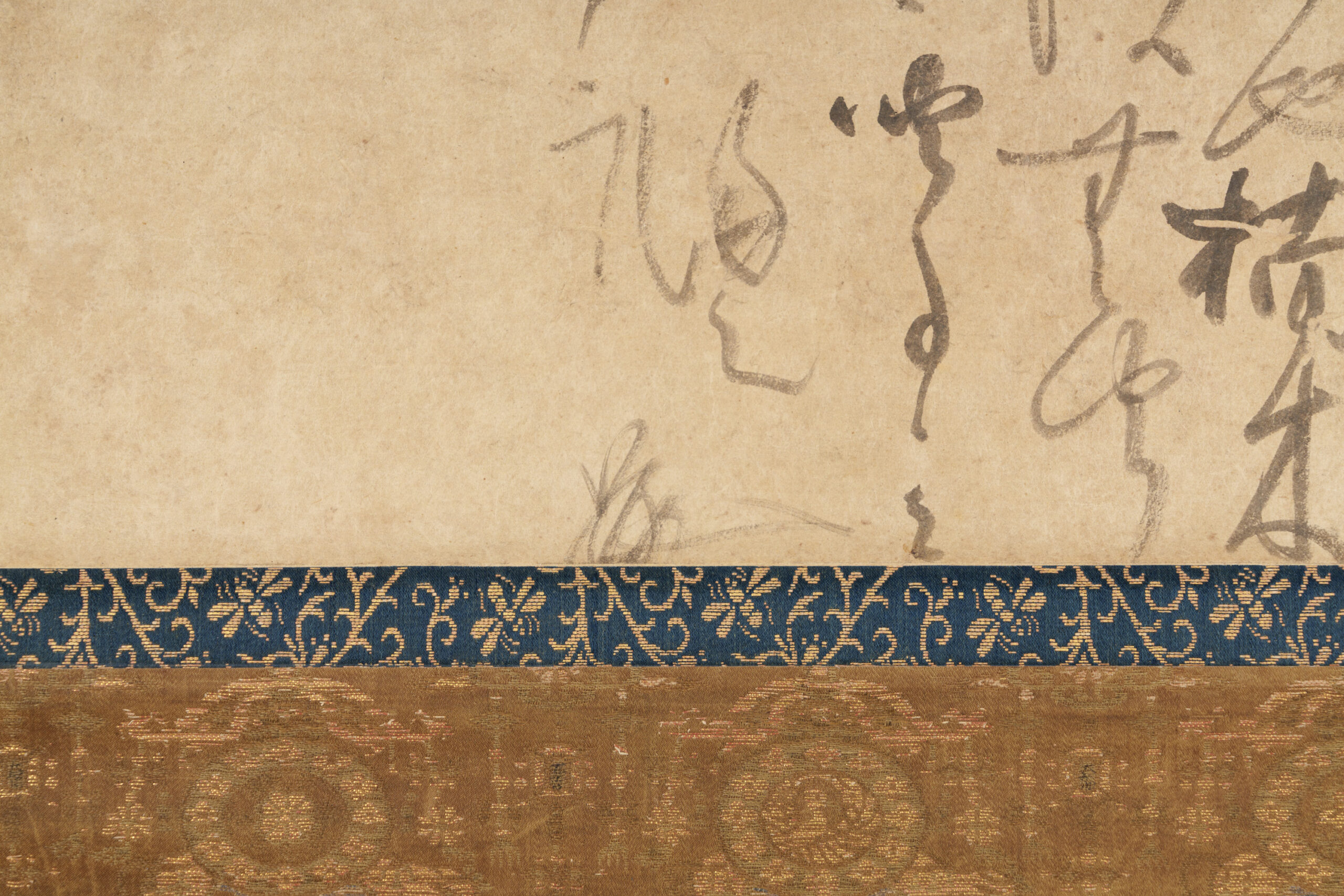
This work is a letter written in his own hand concerning preparations for the Buddhist rite known as the Shijōkō-hō, performed to quell the unrest of the period, including an uprising led by Kusunoki Masashige. Based on the timing of the ritual and other circumstances, it is believed to have been addressed to his younger brother, Prince Son’en, in 1332 (Shōkyō 1). Its date and content suggest that it forms a group with the Sanchō Shinkan, a national treasure in the Maeda Ikutokukai collection.
The piece is said to have been among the items presented by Tokugawa Mitsukuni, the second lord of the Mito Tokugawa family, to his elder brother Matsudaira Yorishige, the first head of the Takamatsu Matsudaira family.