


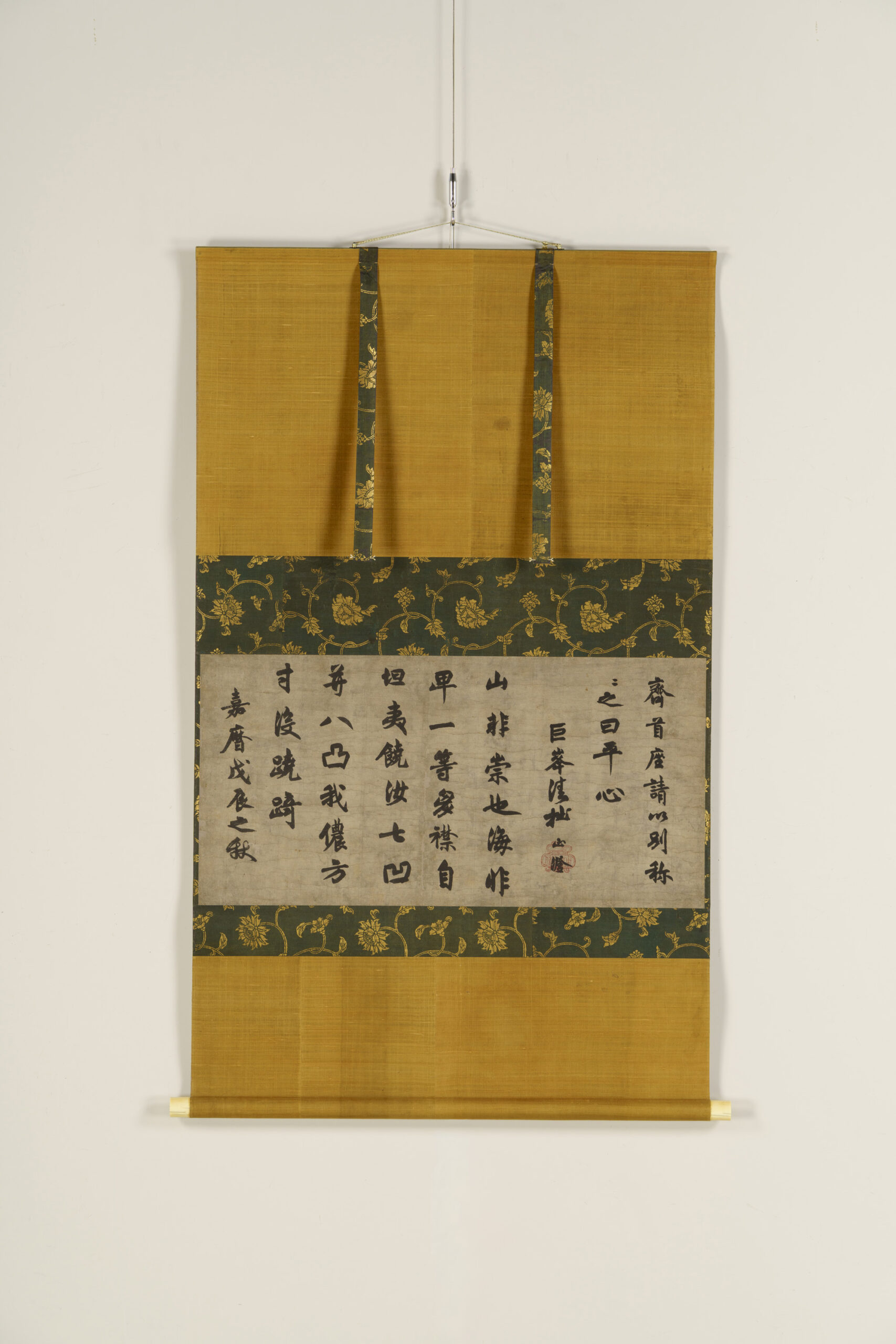
Seisetsu Shōchō Ink Traces (Bokuseki) — Heishin Jigo
- Artist
-
Seisetsu Shōchō (1274–1339)
- Period
-
Kamakura period, 1328 (Karyaku 3)
- Quality and quantity
-
Ink on paper, one hanging scroll
- Size (cm)
-
H 31.5 × W 63.7
- Category
-
Calligraphy
- Classification
-
Important cultural property
- Accession number
-
MY0#00004
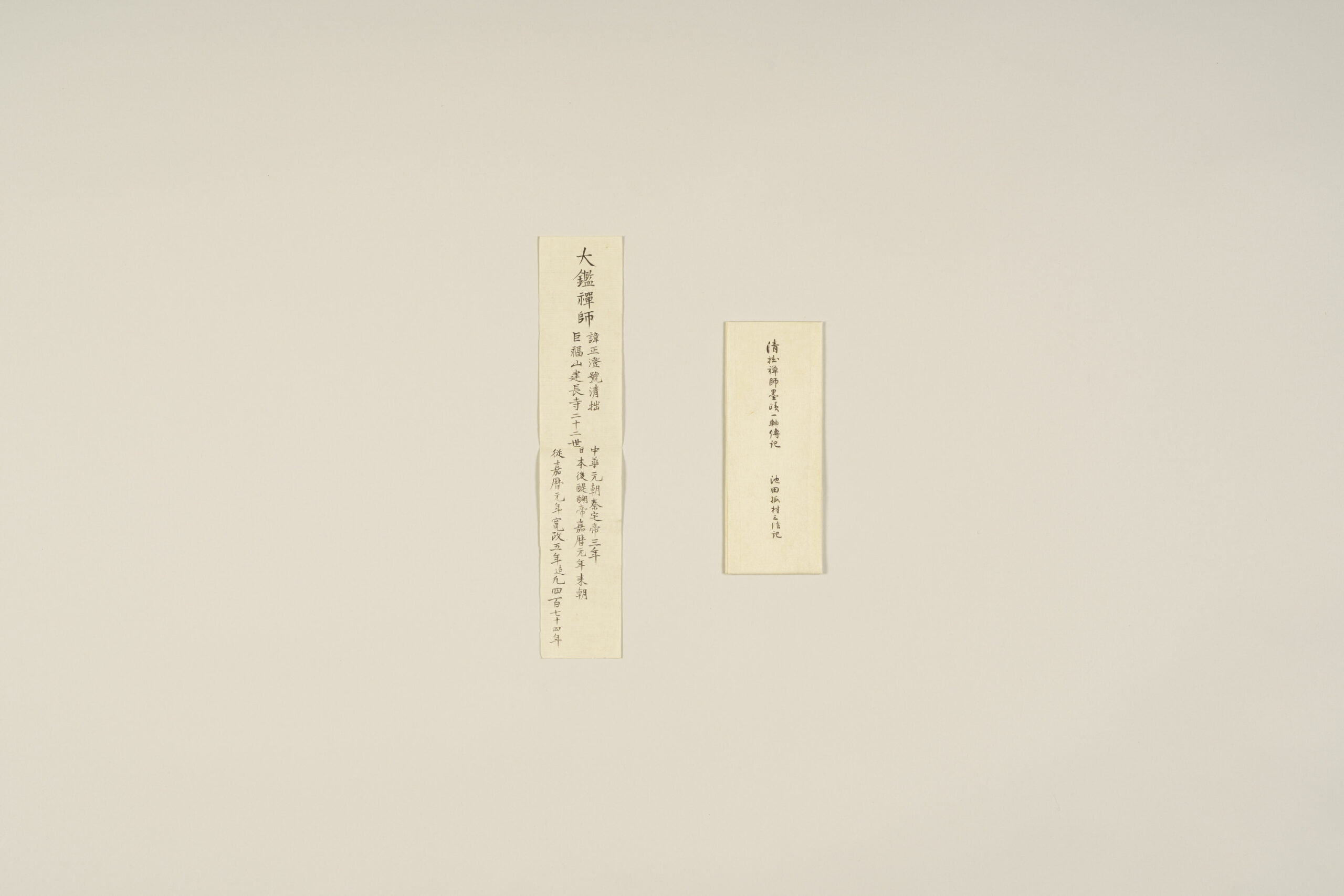
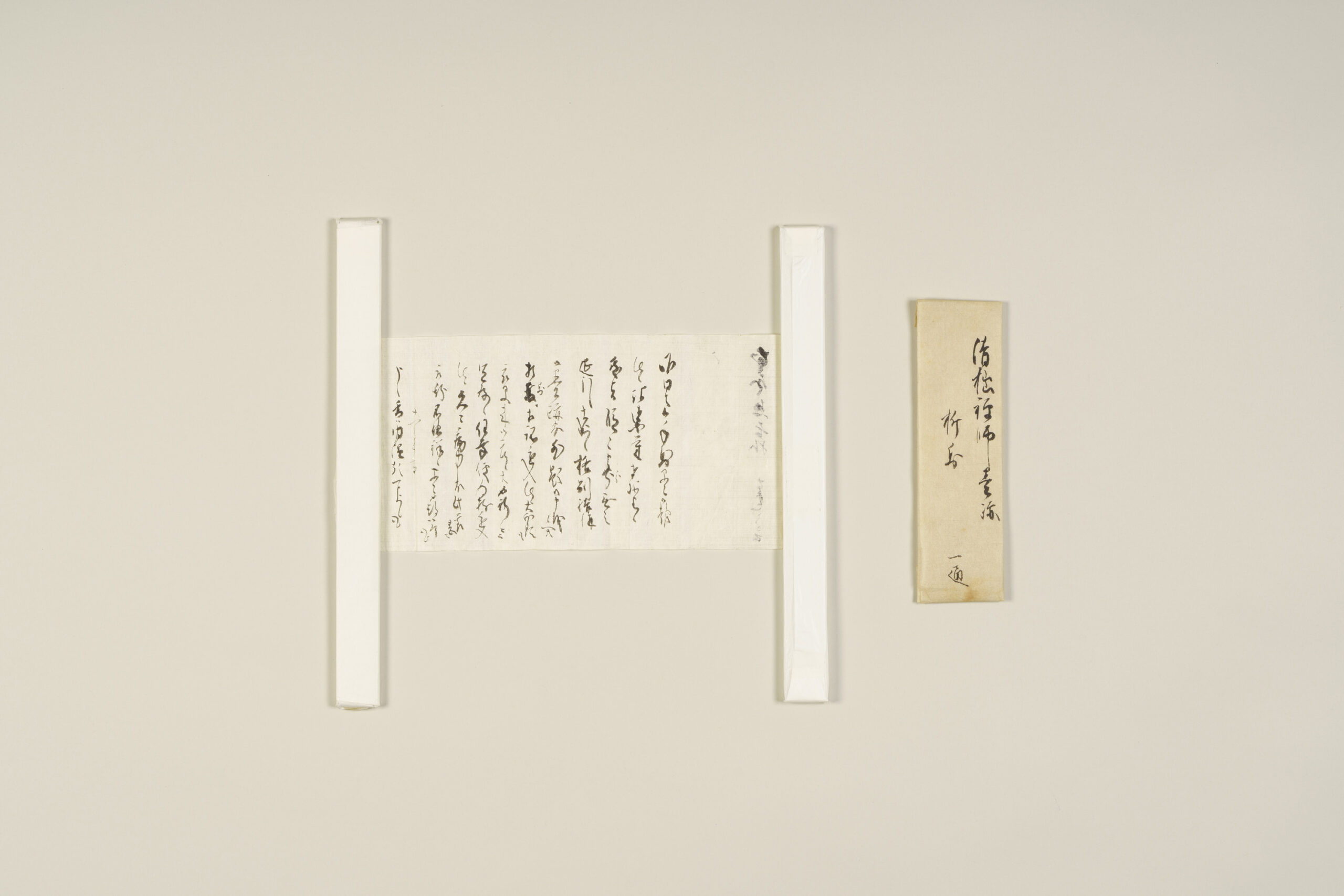
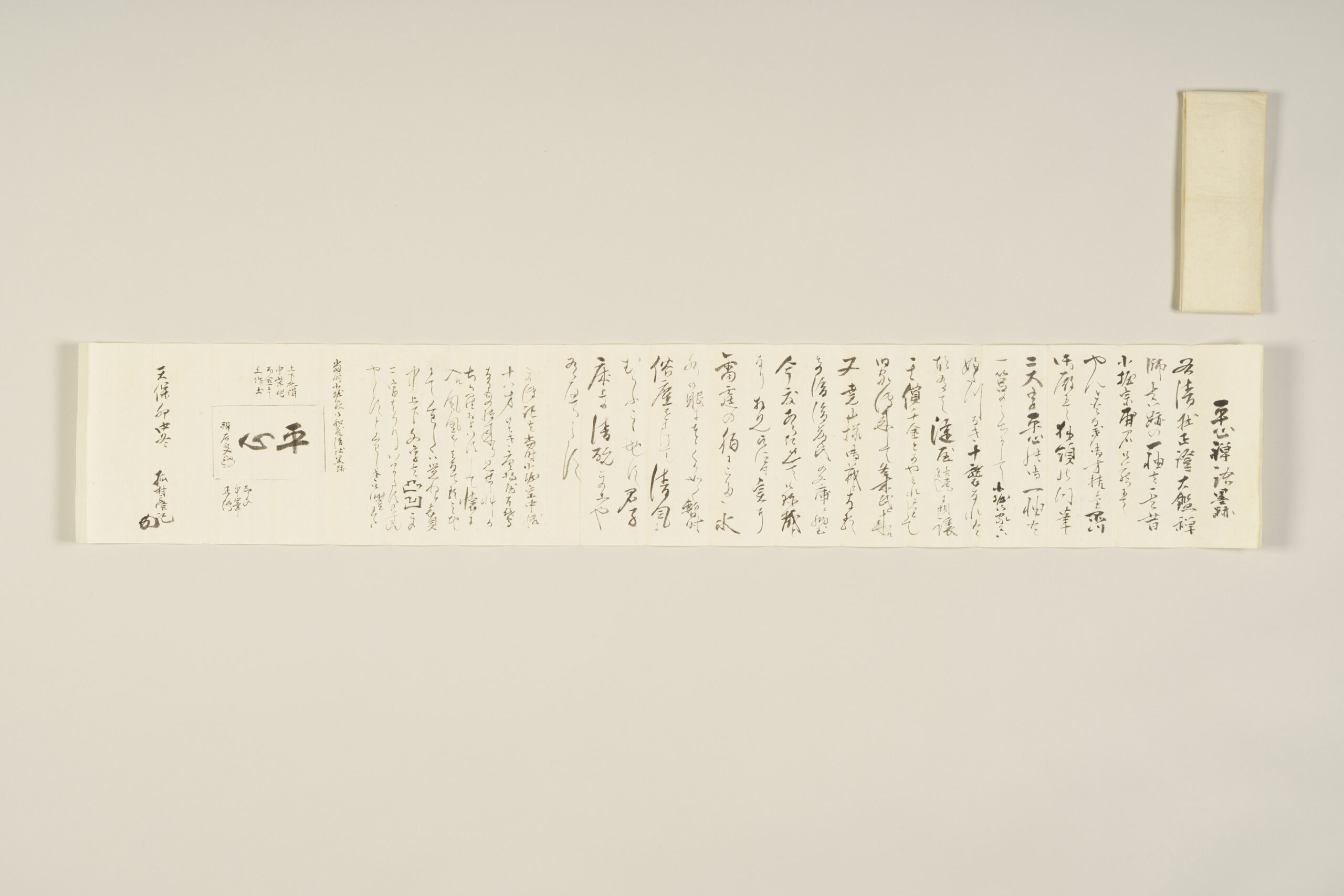
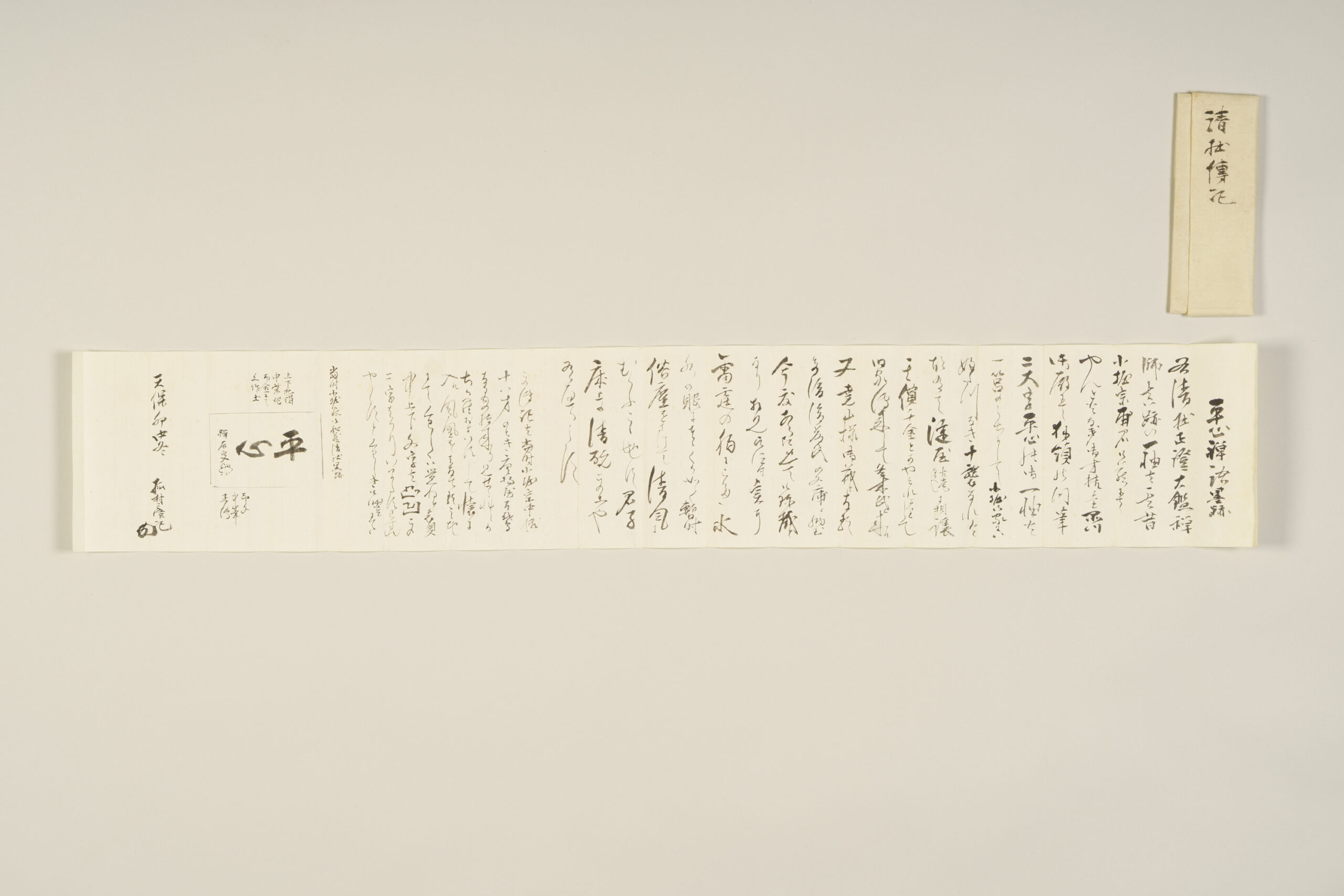
Description
From the late 13th to the late 14th century, many Zen monks from China were invited to Japan to teach. Seisetsu Shōchō, the younger brother of Gekkō Shōin, arrived in Japan in 1326 (Karyaku 1). Invited by the Hōjō clan, he was the abbot of the Kenchō-ji, Jōchi-ji and Engaku-ji. After the fall of the Kamakura shogunate, he was summoned by Emperor Go-Daigo to be the abbot of the Kennin-ji and Nanzen-ji.
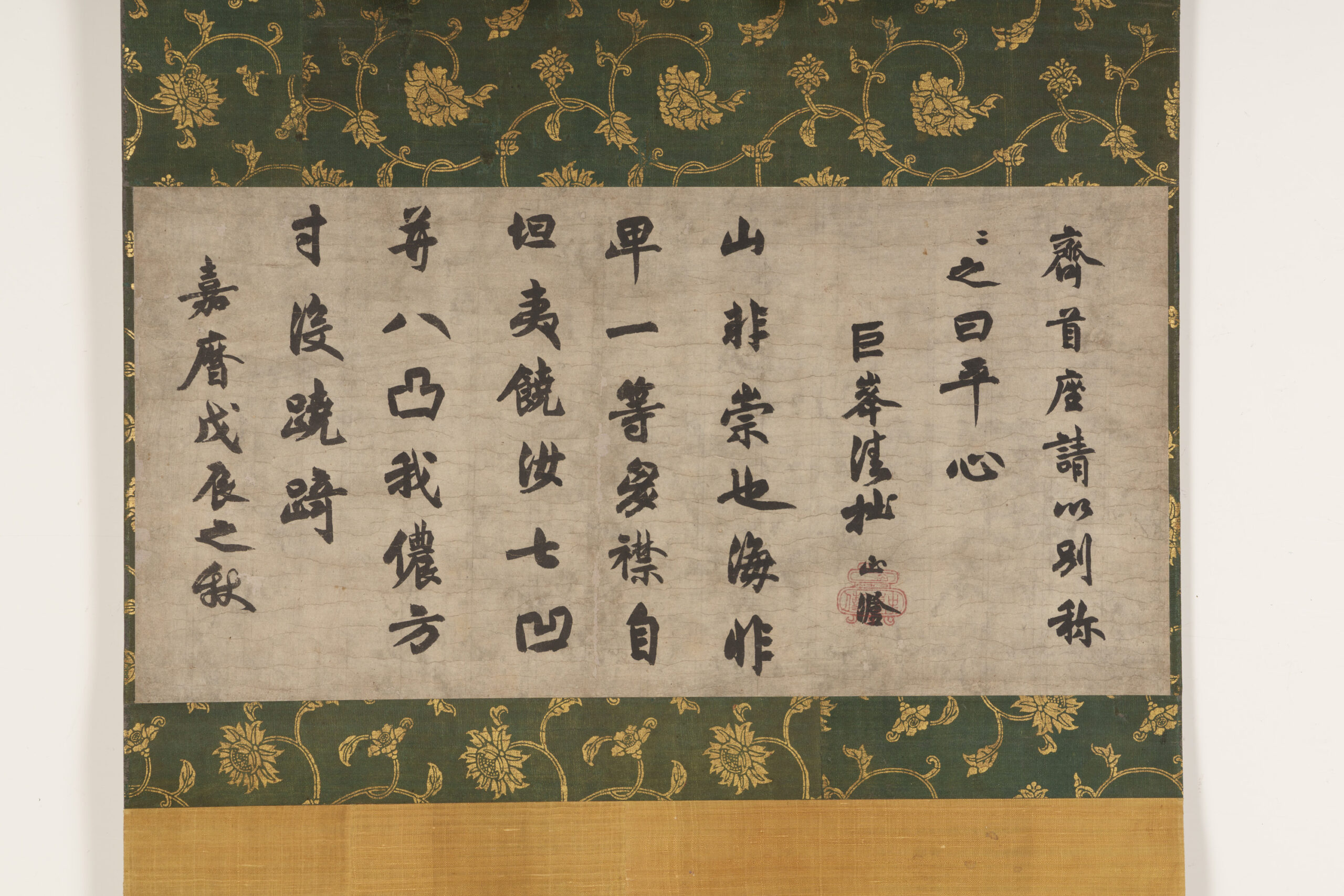
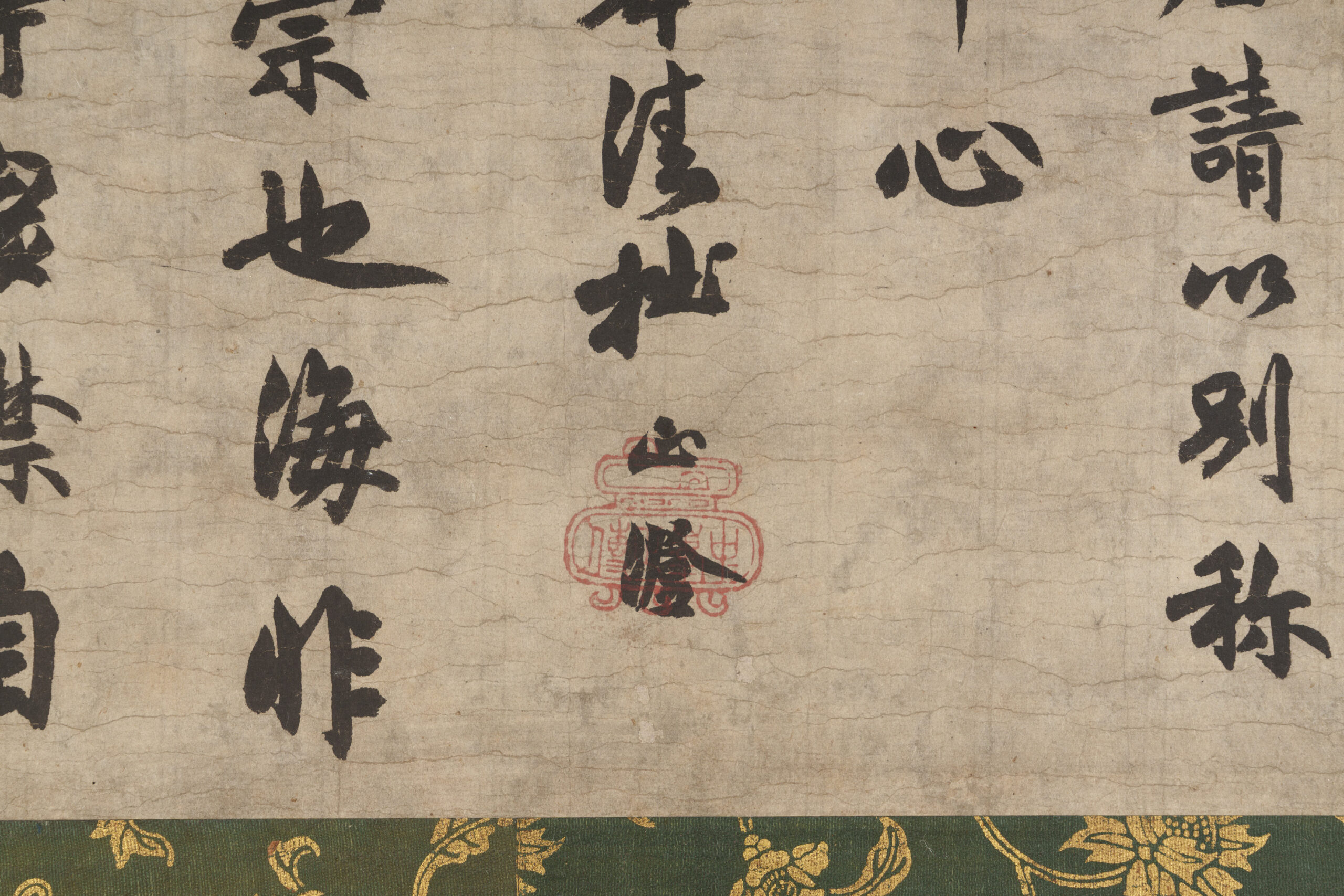
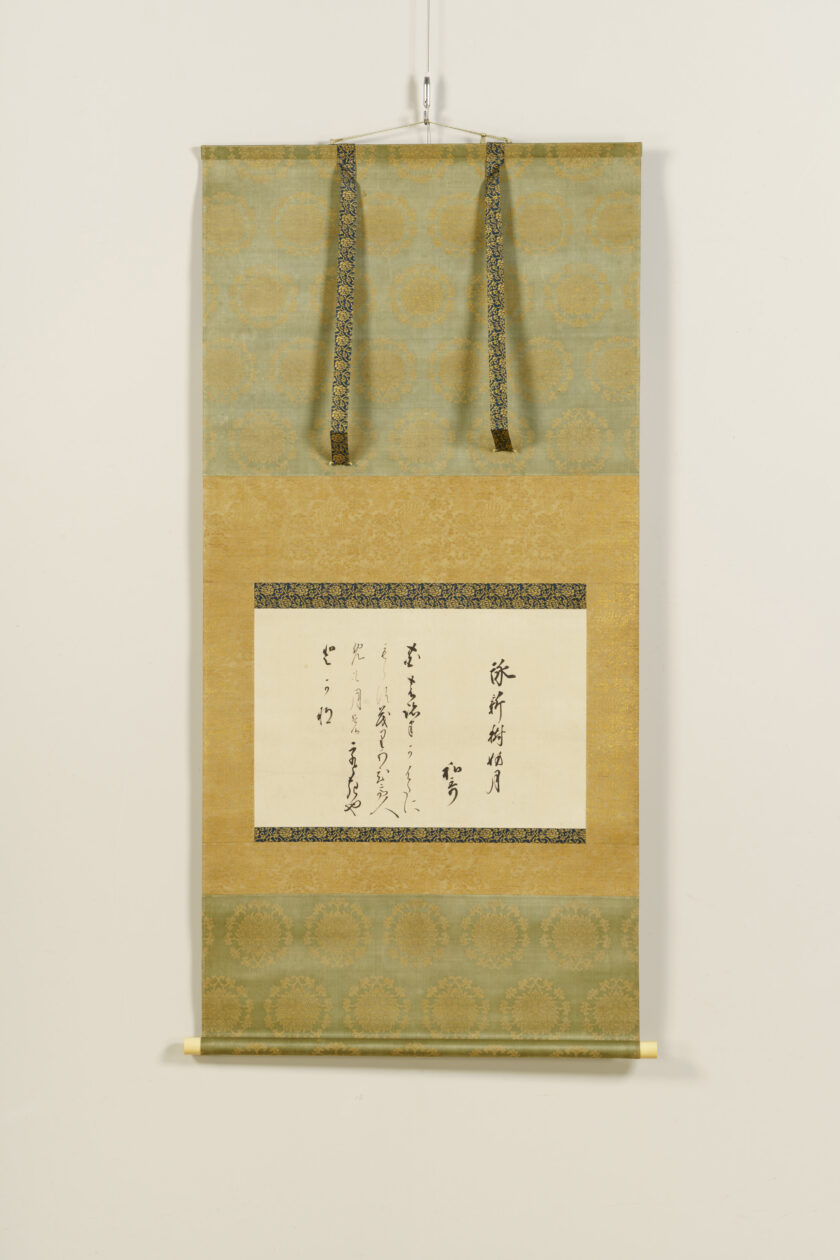
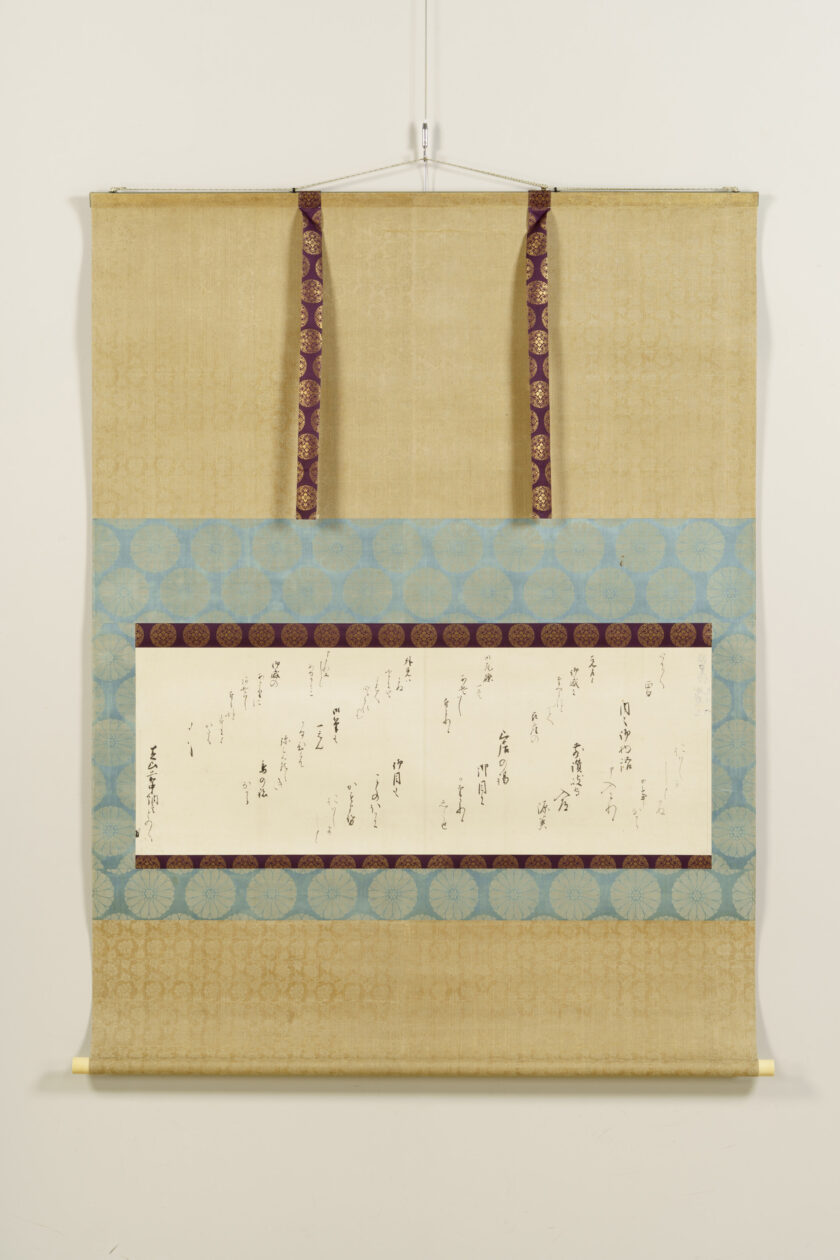
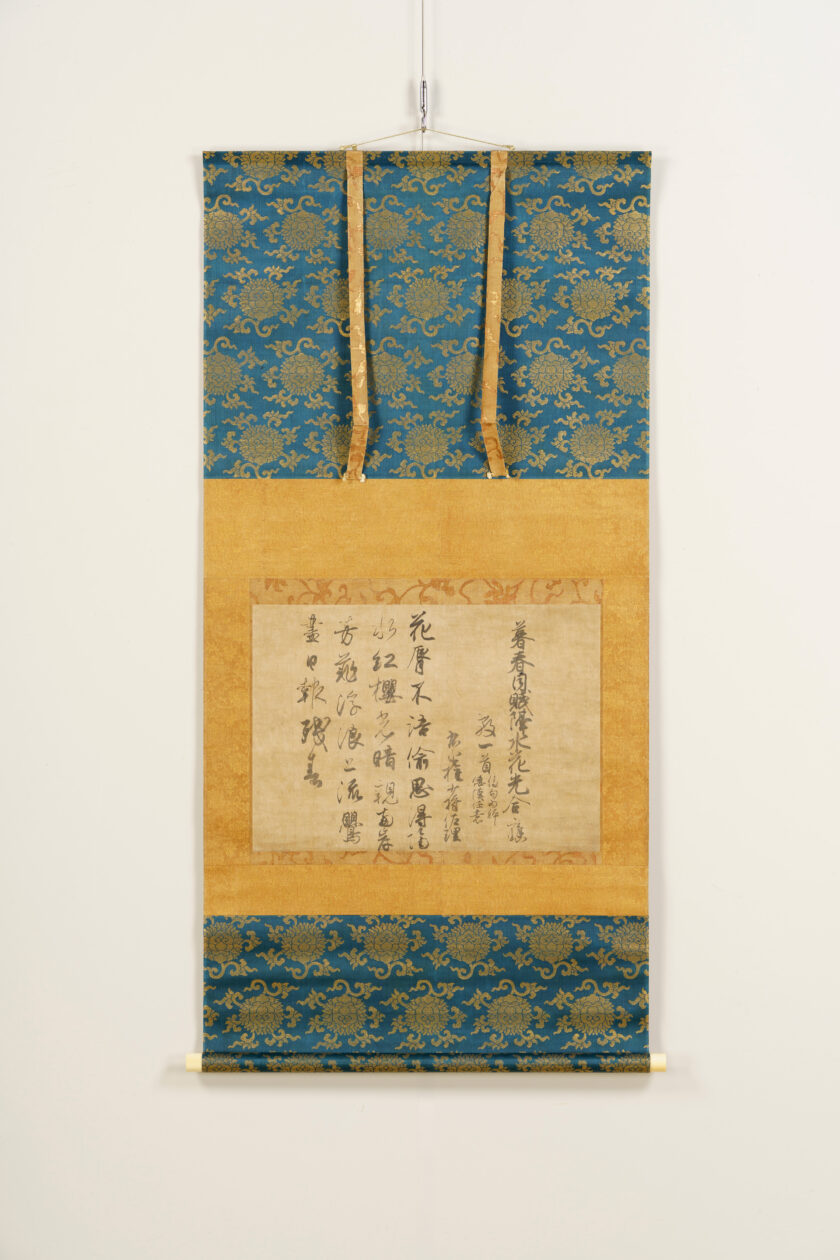
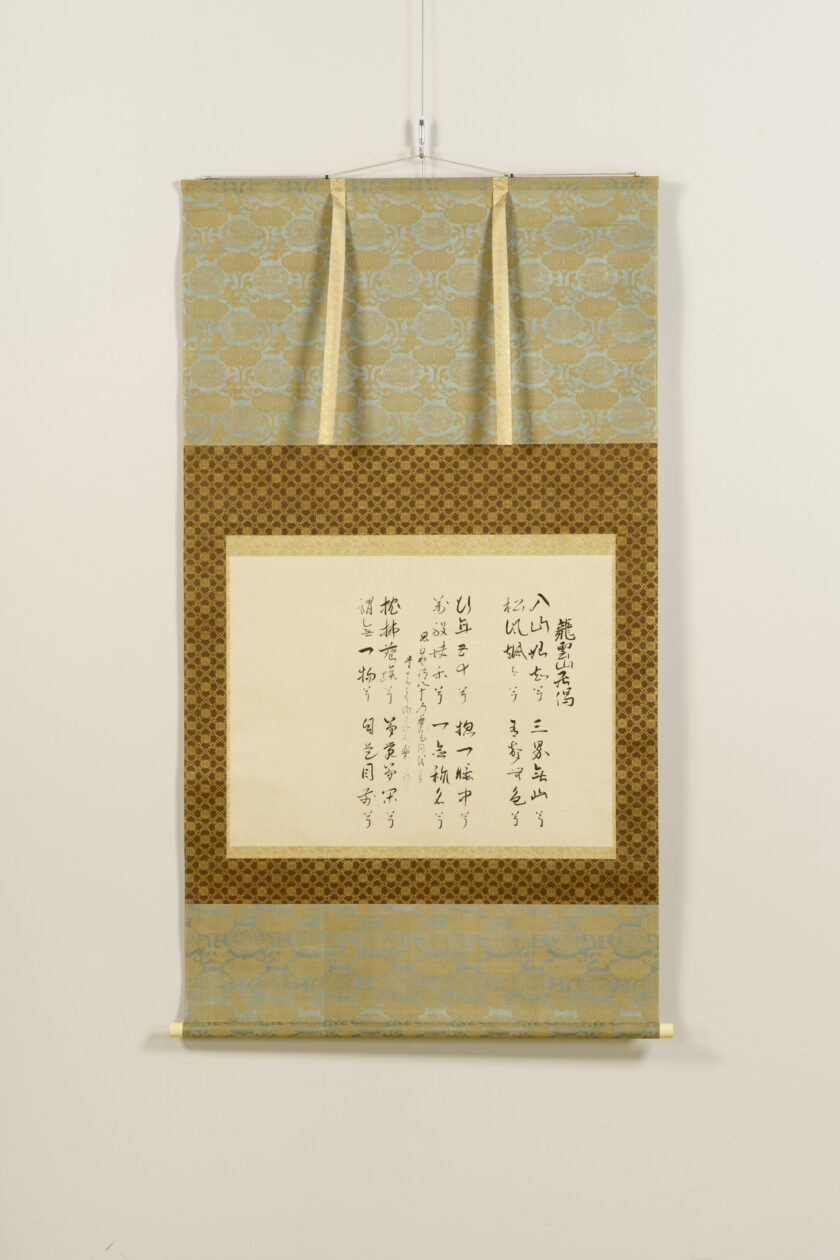
This work is the latter half of a jigō document written by Seisetsu for his disciple in which he bestowed a monastic name (gō) together with a verse detailing Buddhist teachings, known as a geju. The surviving portion contains the geju section following the monastic name “Heishin,” conferred upon his disciple Heishin Shosai (1287–1369).
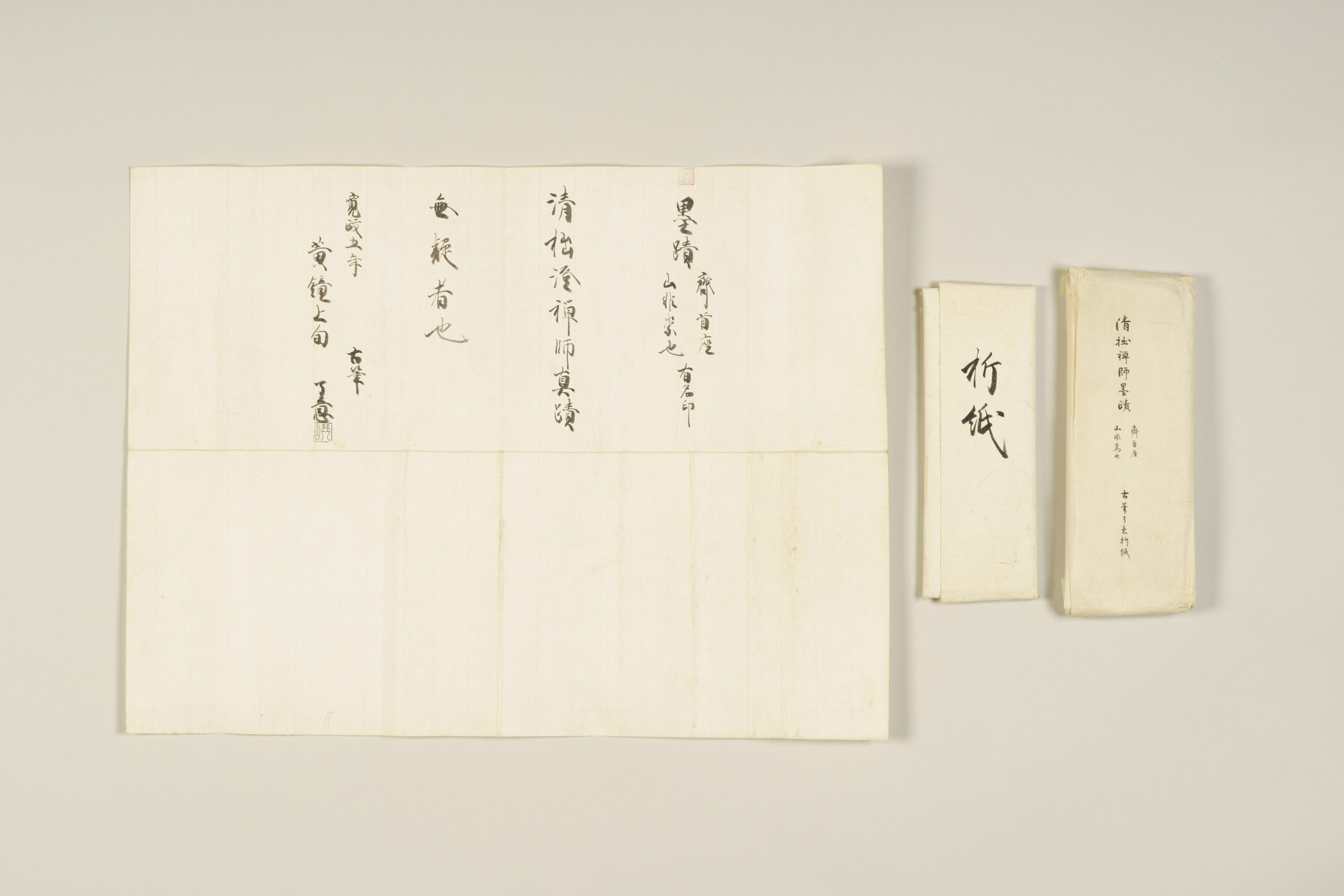
The piece was once part of the Tokugawa shogunate’s collection. In 1636 (Kan’ei 13), Tokugawa Hidetada, the second shogun, presented it to Kobori Masakazu, better known as Enshū, and it was later passed down through the Takamatsu Matsudaira family.