


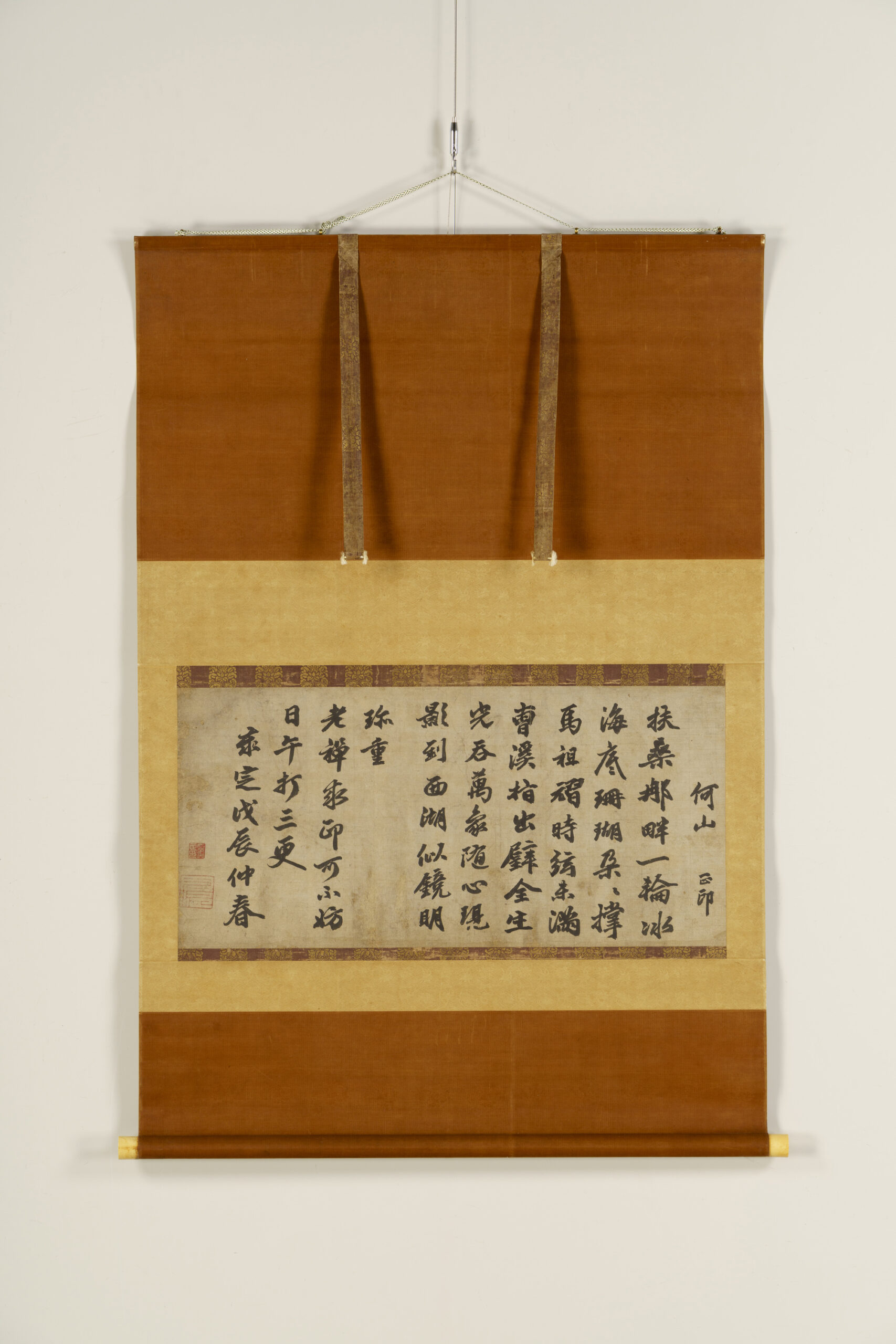
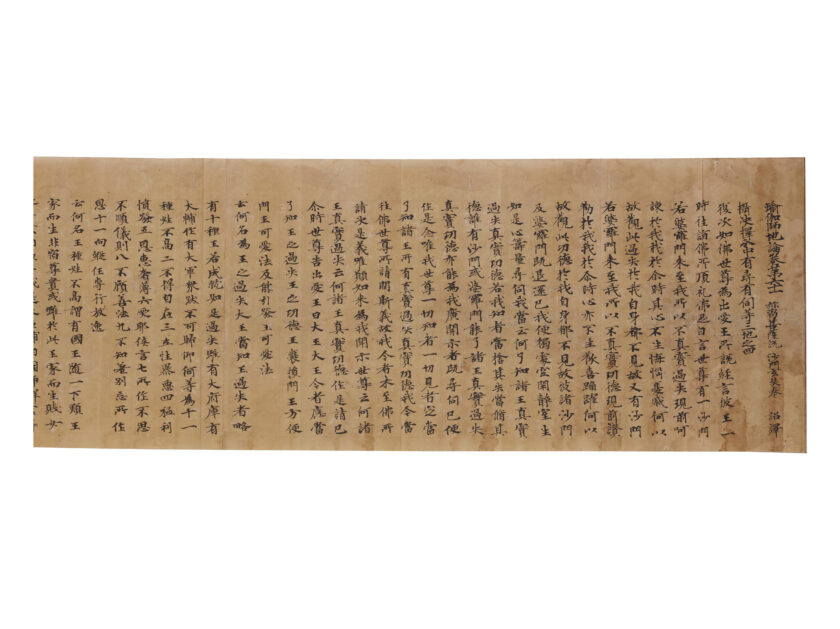
Gekkō Shōin Ink Traces (Bokuseki) — Inka-jō
- Artist
-
Gekkō Shōin (1267–?)
- Period
-
China, Yuan dynasty, 1328 (Taiding 5)
- Quality and quantity
-
Ink on paper, one hanging scroll
- Size (cm)
-
H 32.7 × W 69.3
- Category
-
Calligraphy
- Classification
-
Important cultural property
- Accession number
-
MY0#00003
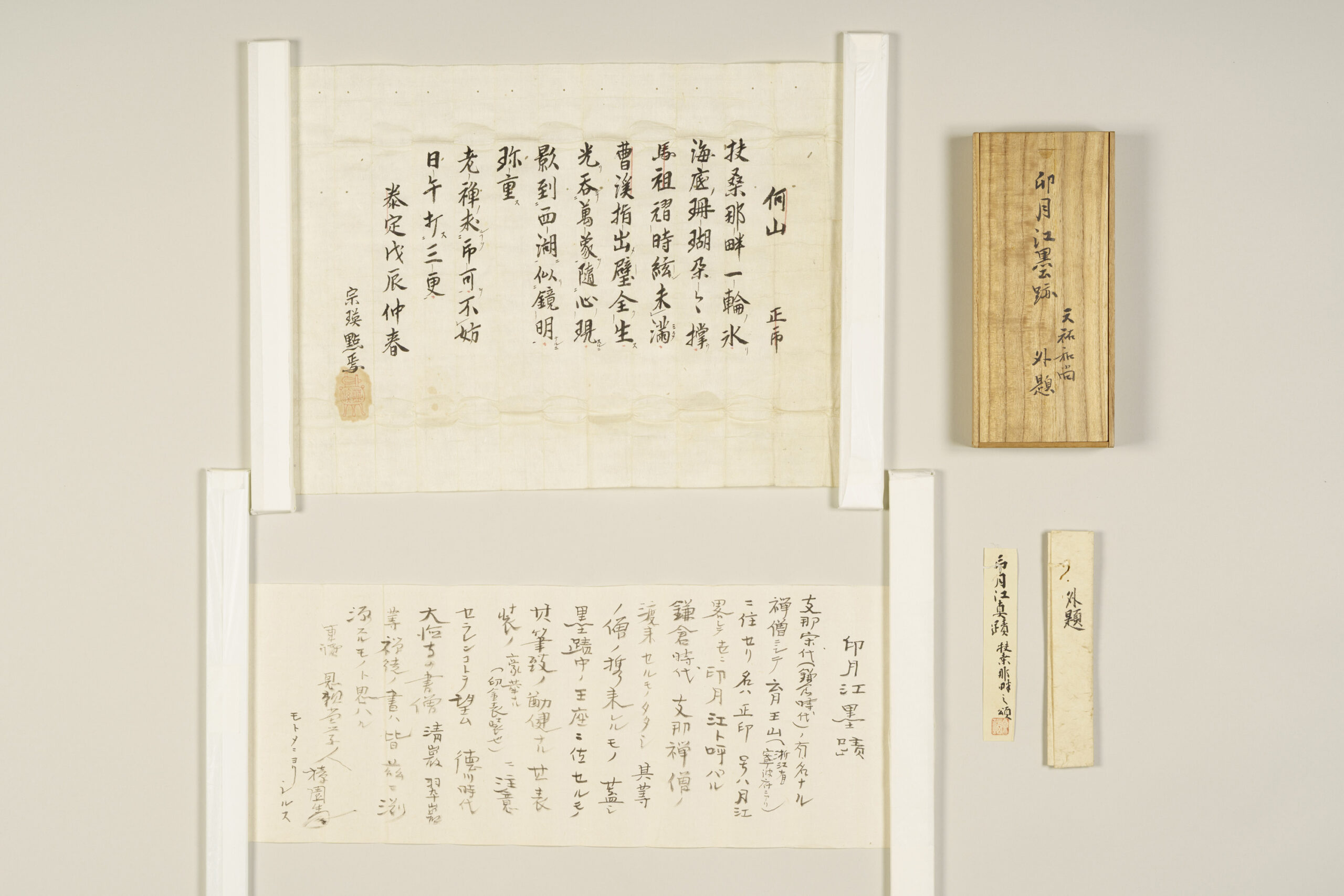
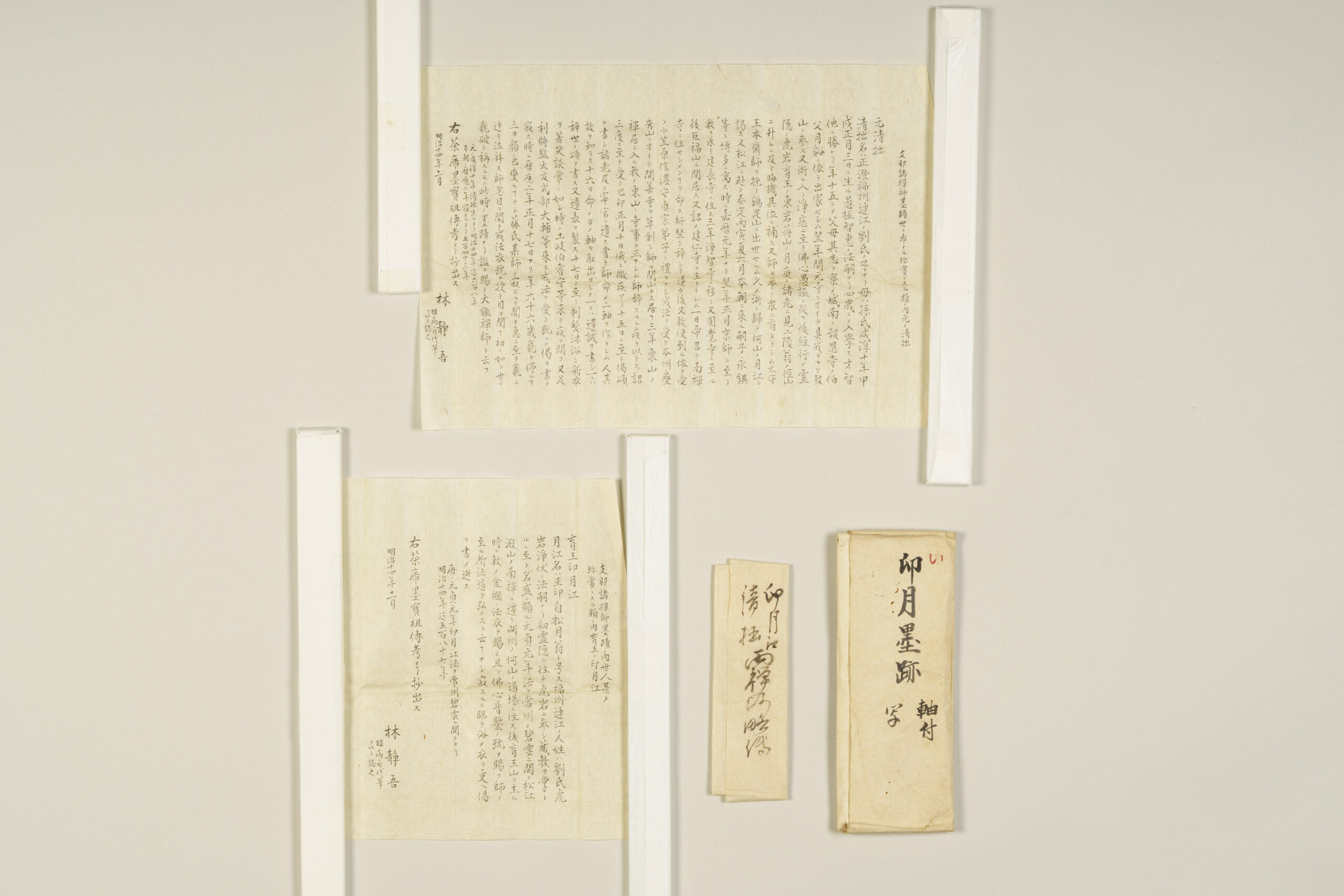
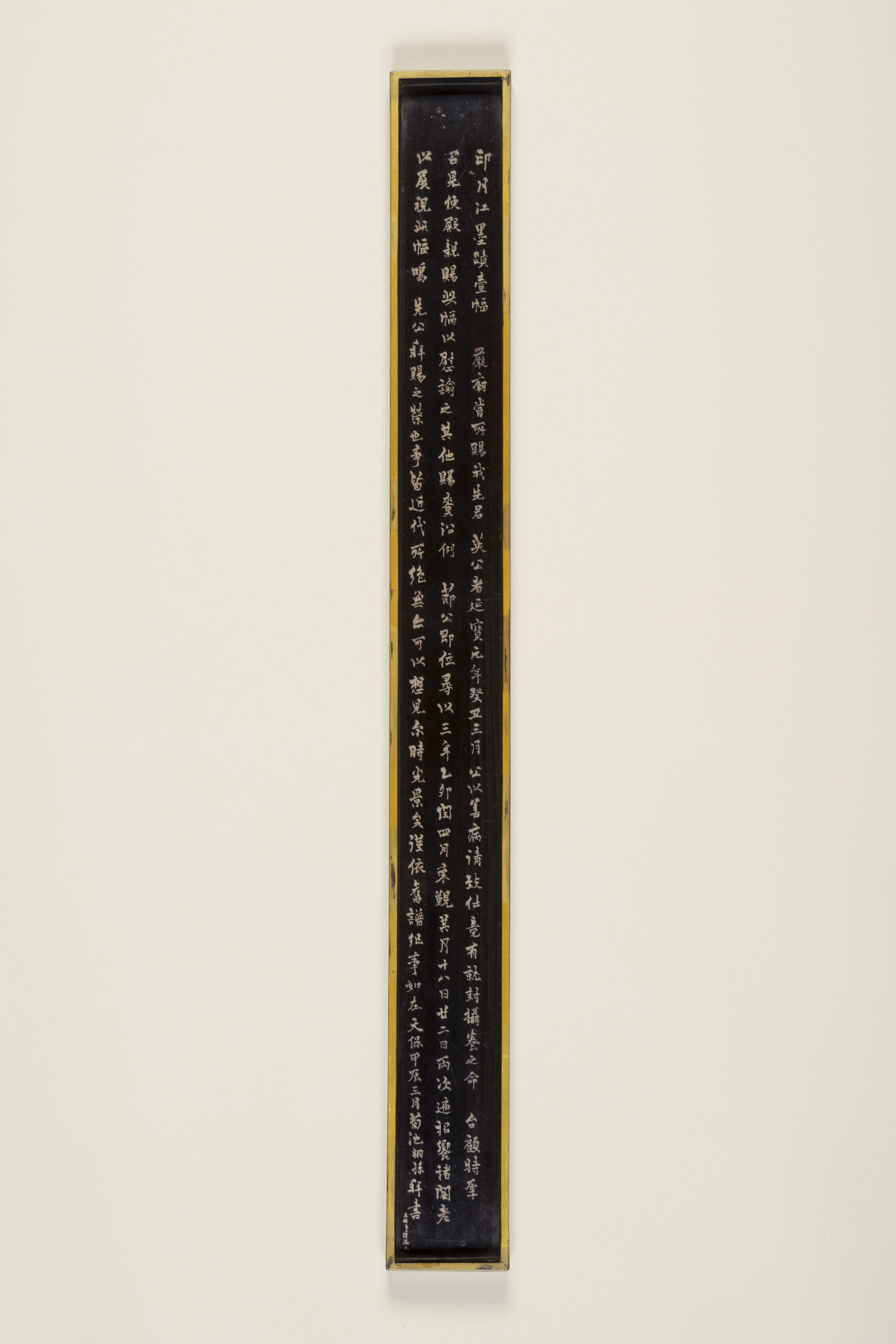
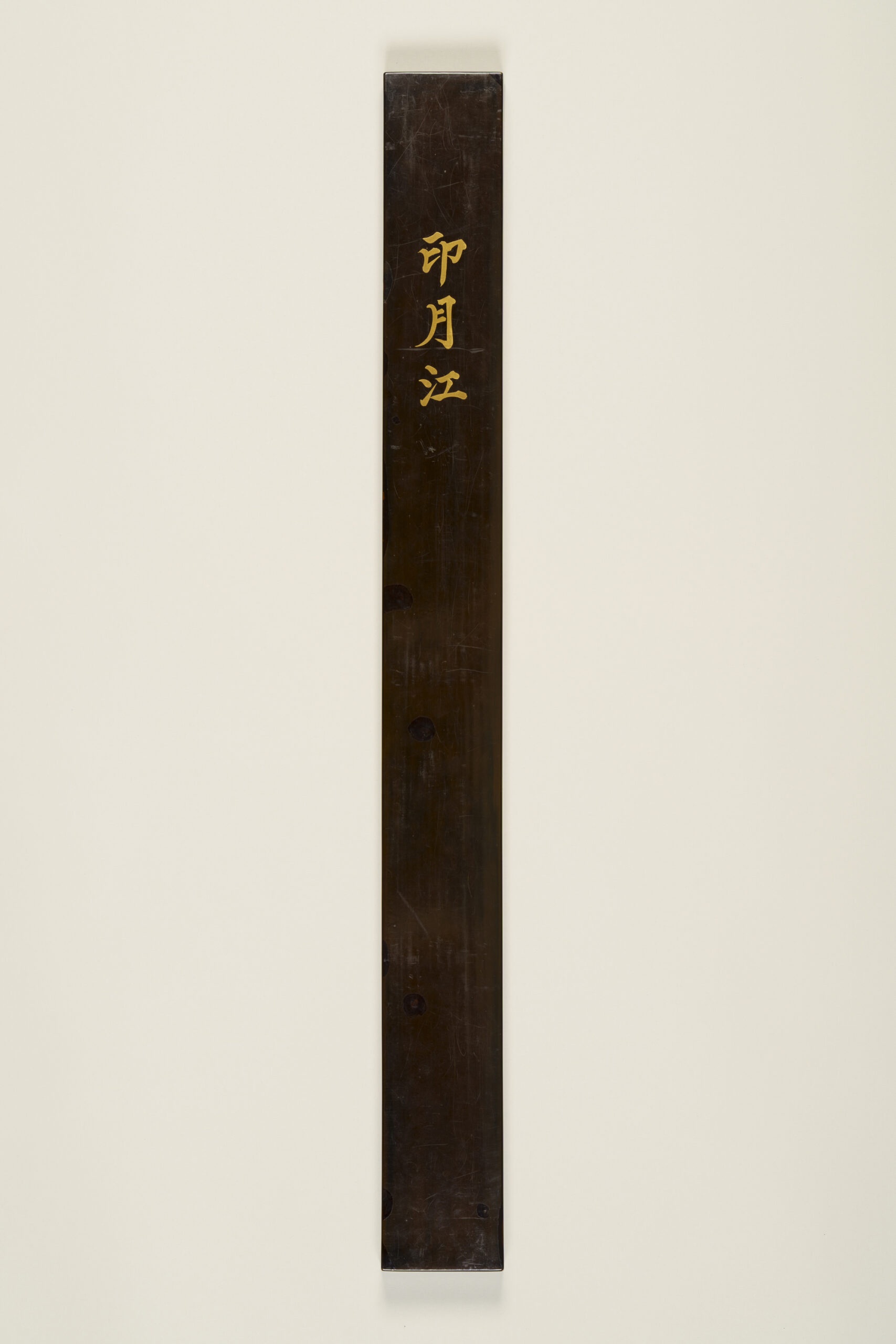
Description
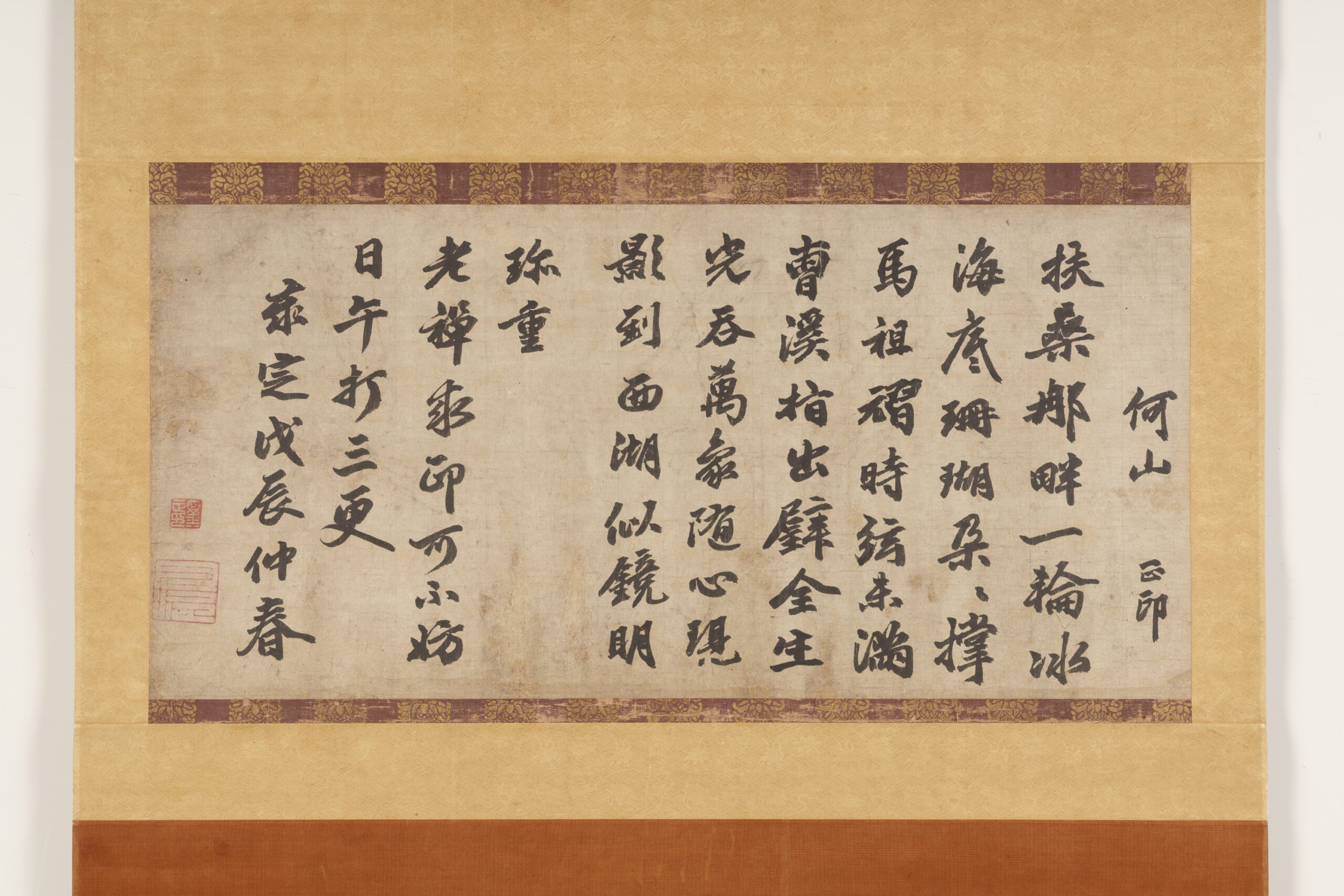
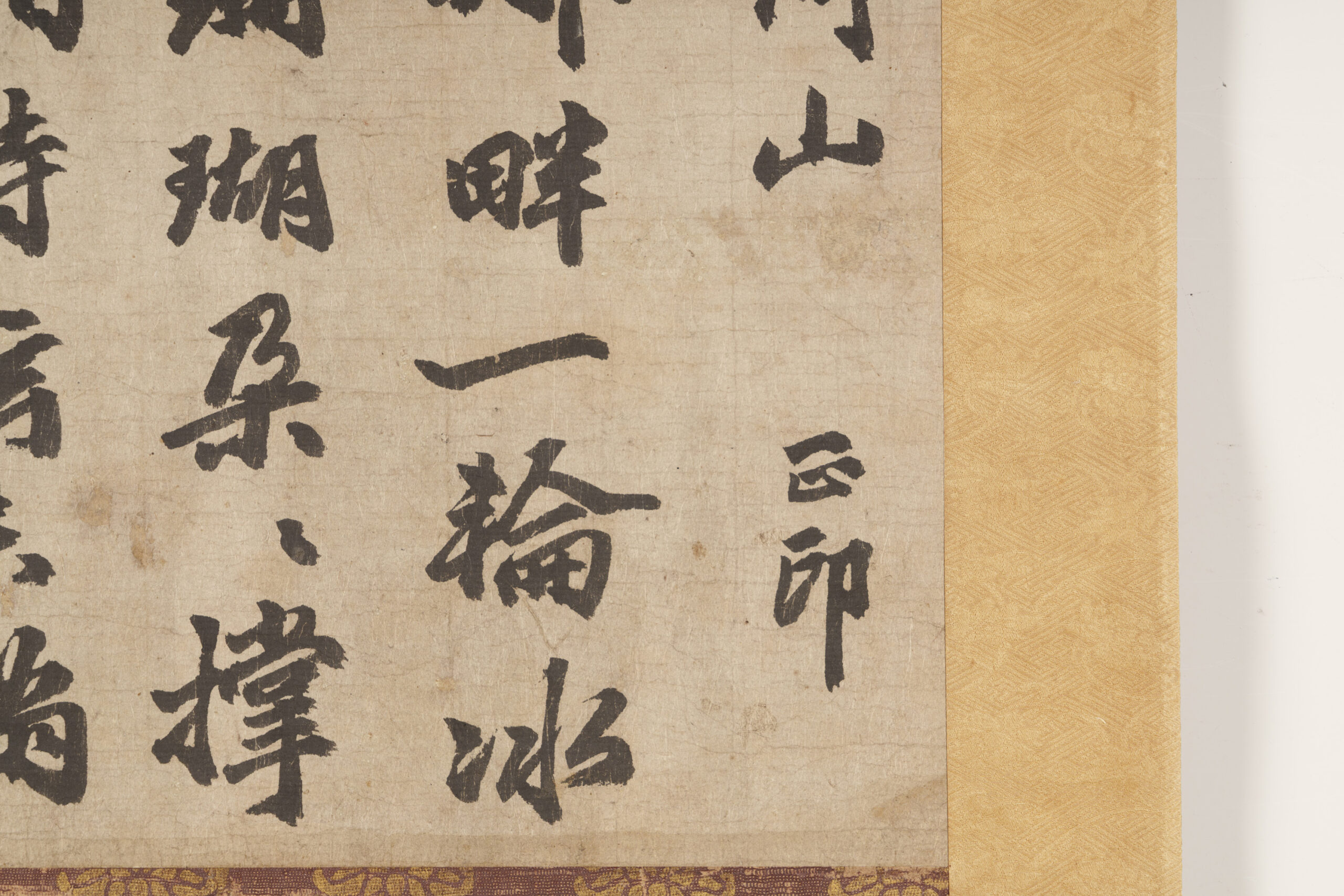
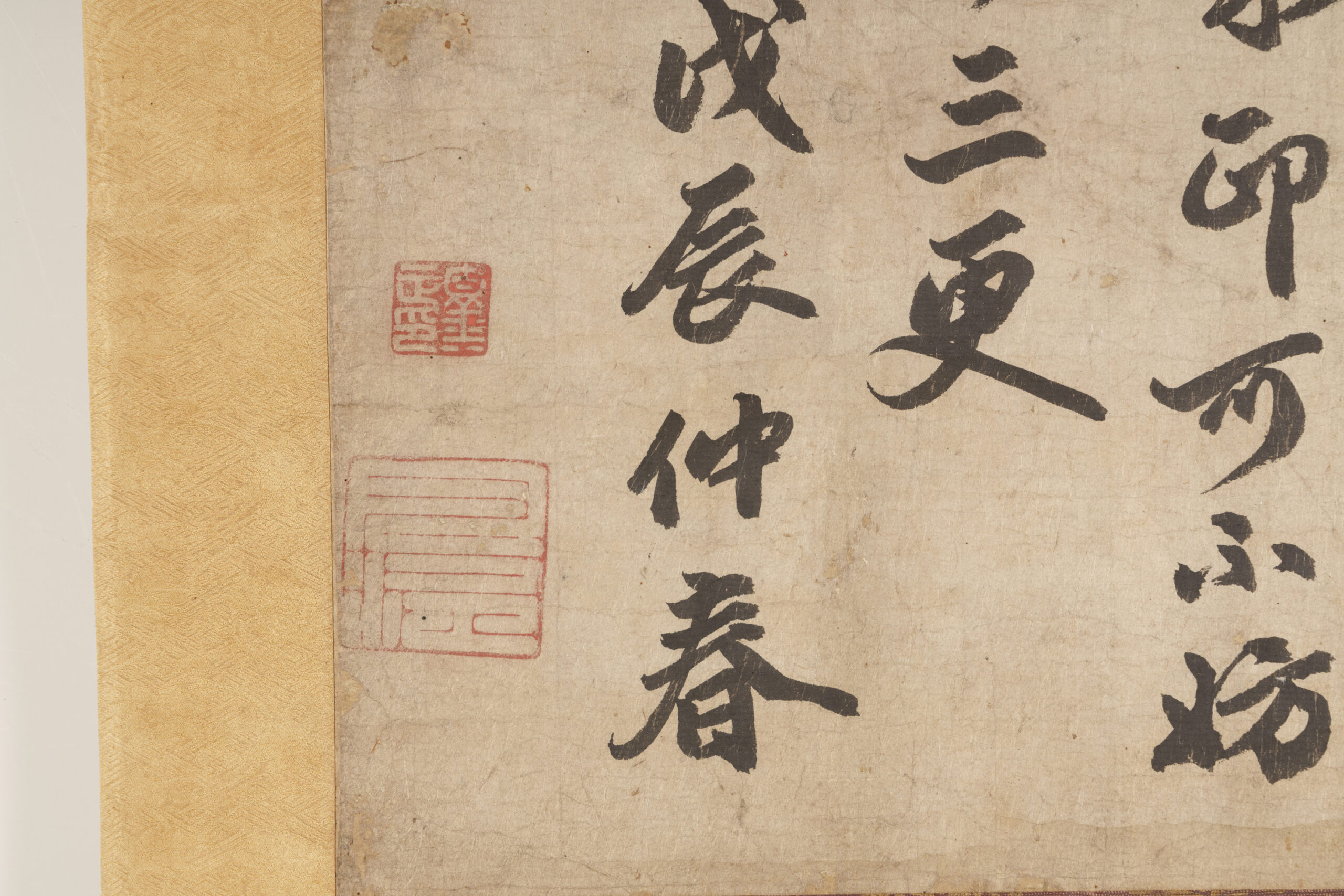
Although Zen Buddhism originally emphasized the transmission of its teachings without reliance on the written word, from the Song dynasty onward (10th–13th century), the calligraphy, paintings, and poetry of Zen monks came to be esteemed as expressions of the Zen spirit. Such calligraphy is known as bokuseki (ink traces), and among them, a document conferred by a master upon a disciple as a certificate of completed training is called an inka-jō.
This is an inka-jō that prominent Yuan dynasty Zen monk Gekkō Shōin bestowed upon his disciple Rōzen. Many Japanese monks traveled to study under Gekkō in China, and Rōzen is thought to have been one of these Japanese disciples.
It is said that this piece was presented to Matsudaira Yorishige, the first head of the Takamatsu Matsudaira family, by Tokugawa Ietsuna, the fourth shogun, when Yorishige was permitted to retire due to illness in 1673 (Enpō 1). According to inscriptions on its storage box dated 1844 (Tenpō 15), it was later shown at a tea gathering hosted for senior shogunate officials in 1675 (Enpō 3). The box inscription was written by Kikuchi Gozan, a Confucian scholar of the Takamatsu domain, and rendered in silver lacquer by Tamakaji Zōkoku, who is regarded as the founder of Kagawa lacquer art.