


Lotus Sutra
- Artist
-
‐
- Period
-
Heian period, 12th century
- Quality and quantity
-
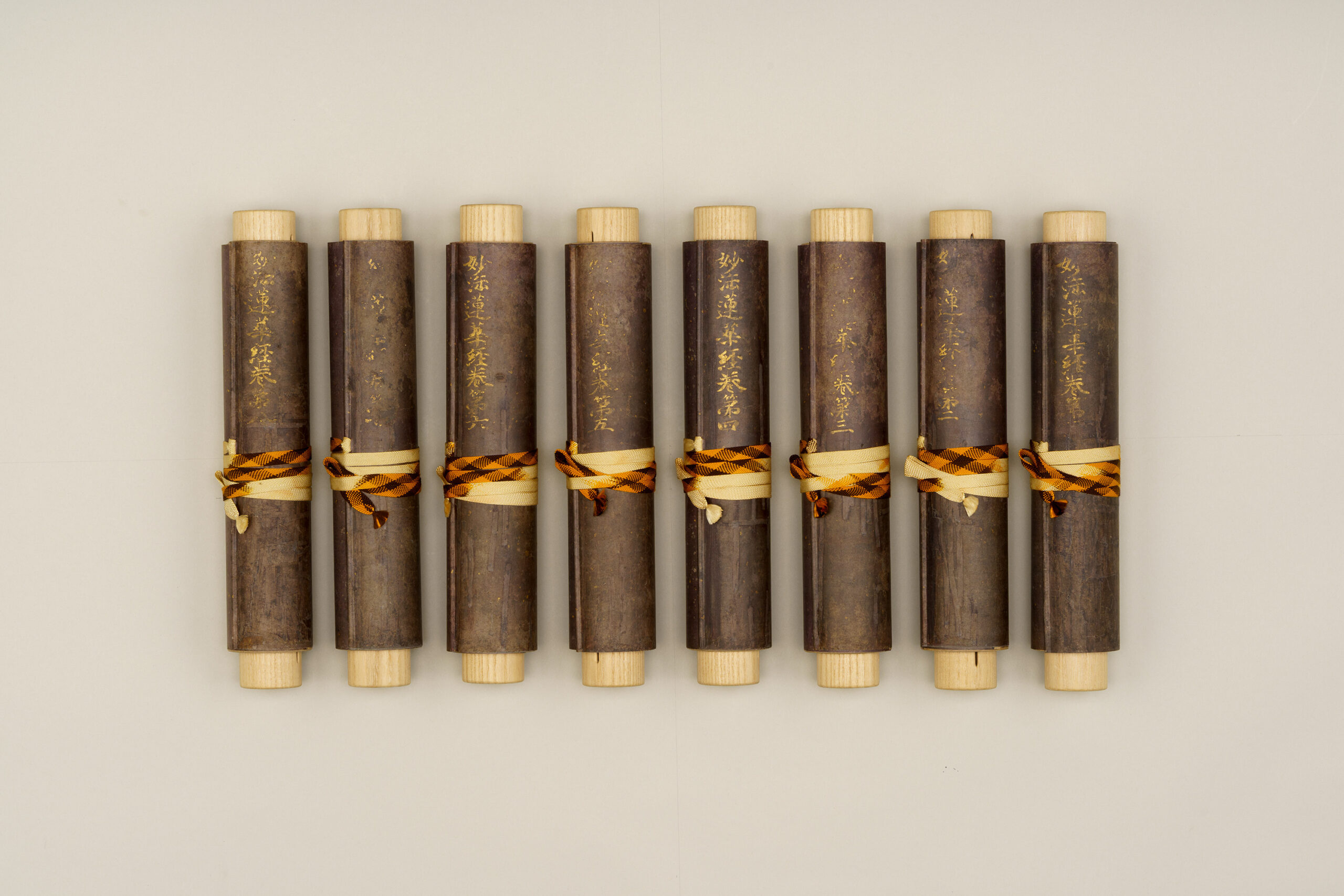
Ink on paper, (covers) purple-dyed paper with scattered silver foil, eight scrolls
- Size (cm)
-
Scroll 1: H 25.2 × L 954.5 Scroll 2: H 25.3 × L 1110.4 Scroll 3: H 25.4 × L 1042.3 Scroll 4: H 25.4 × L 917.0 Scroll 5: H 25.2 × L 992.2 Scroll 6: H 25.3 × L 961.3 Scroll 7: H 25.5 × L 894.0 Scroll 8: H 25.3 × L 802.4
- Category
-
Calligraphy
- Classification
-
Important cultural property
- Accession number
-
MY0#00002
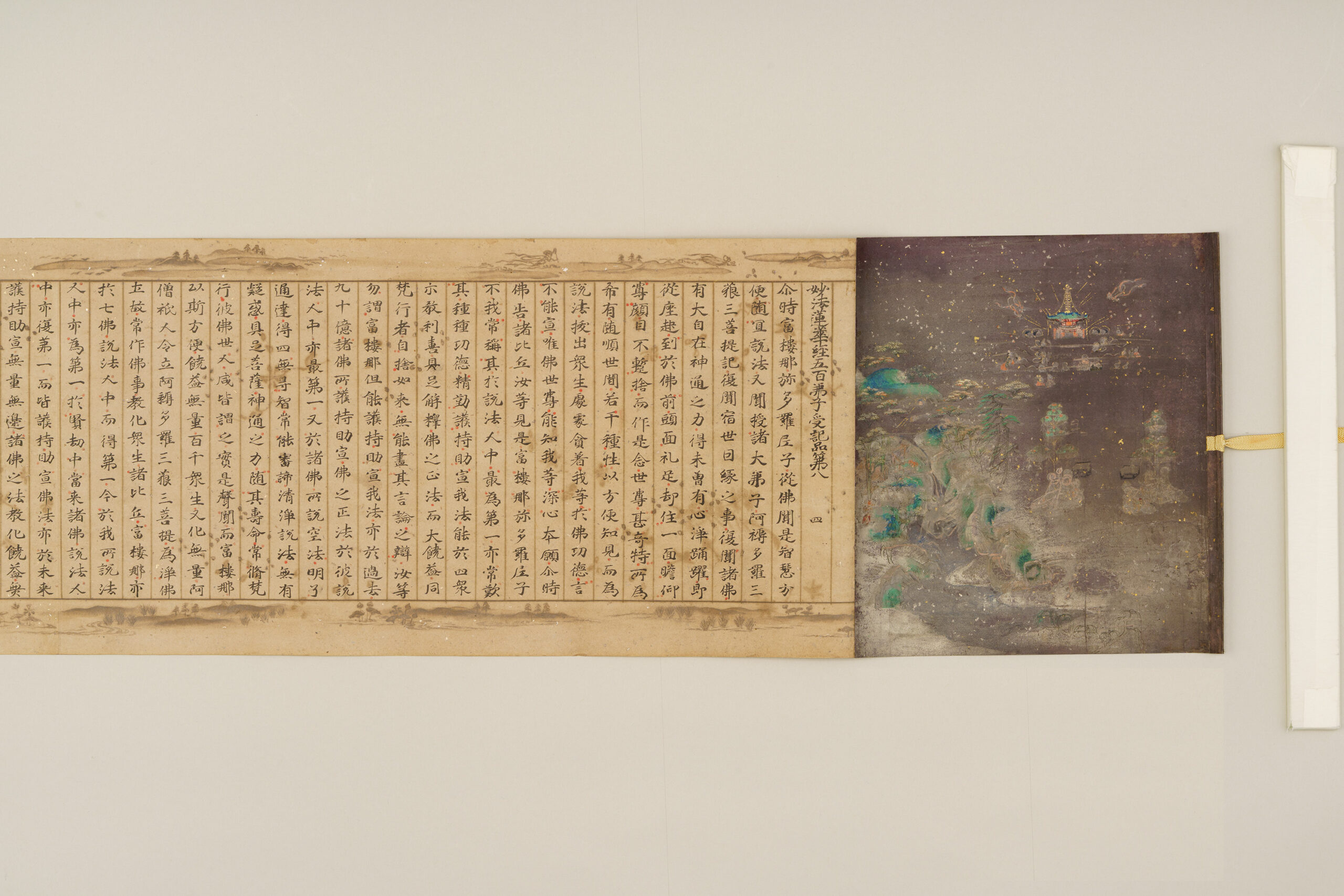
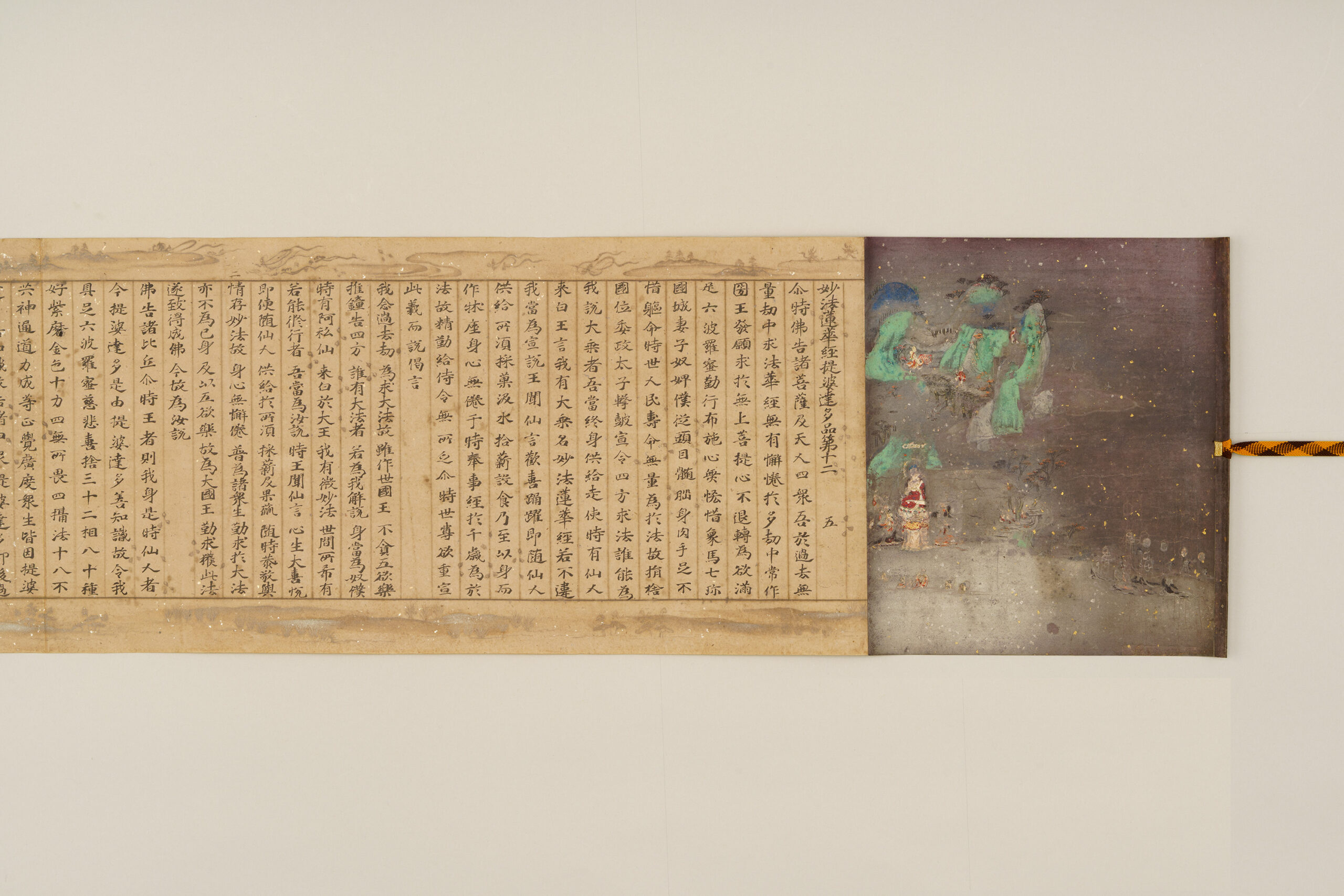
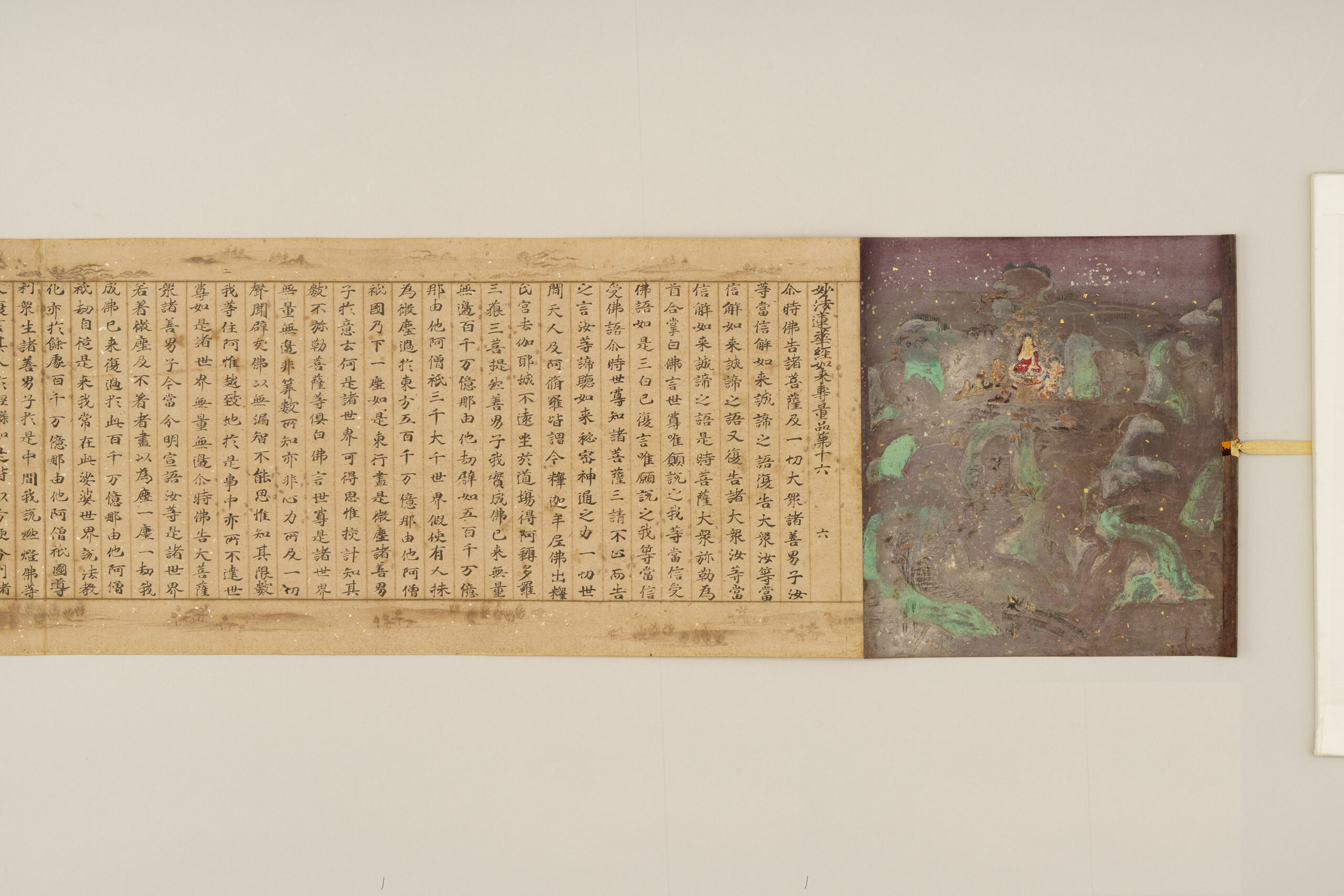
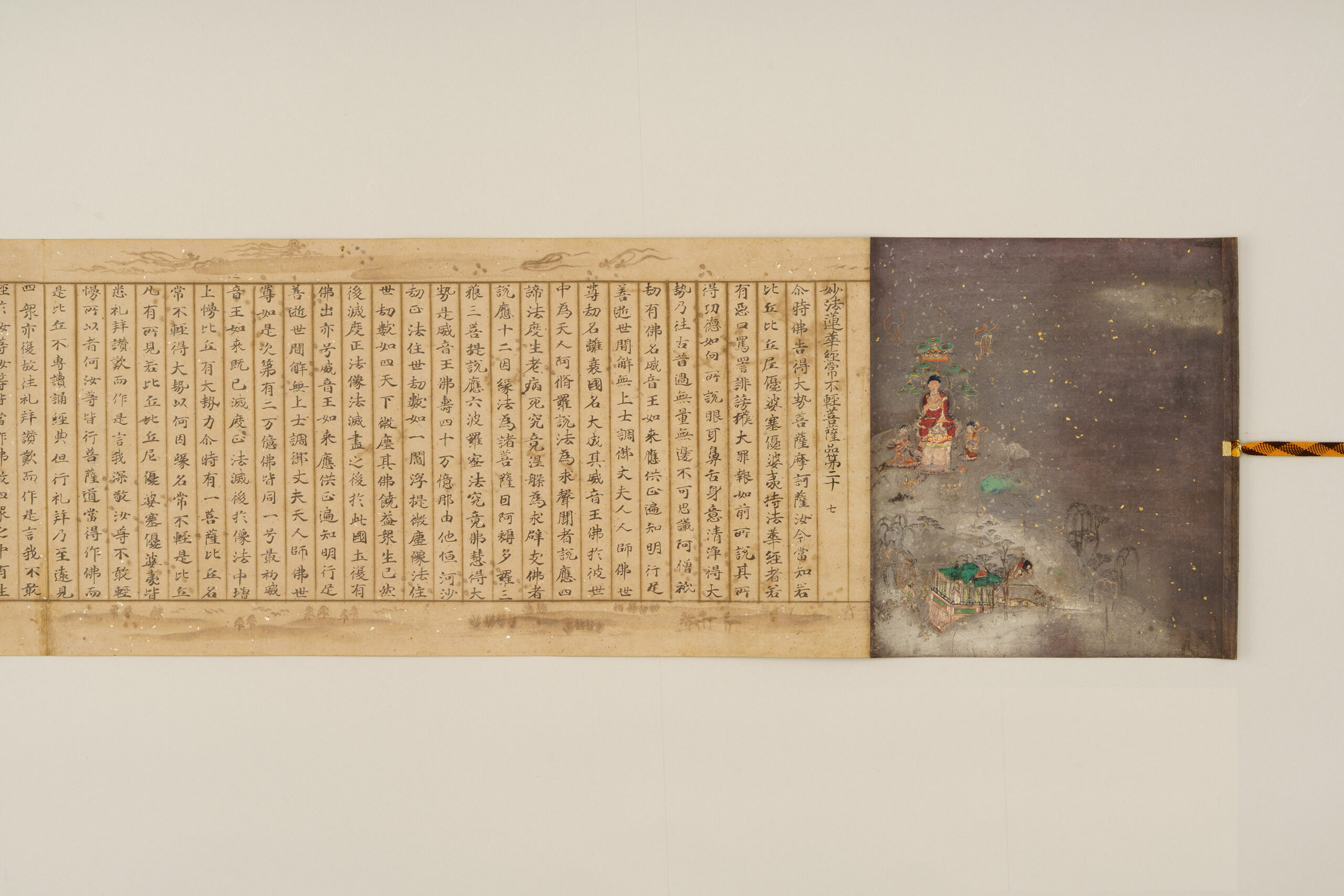
Description
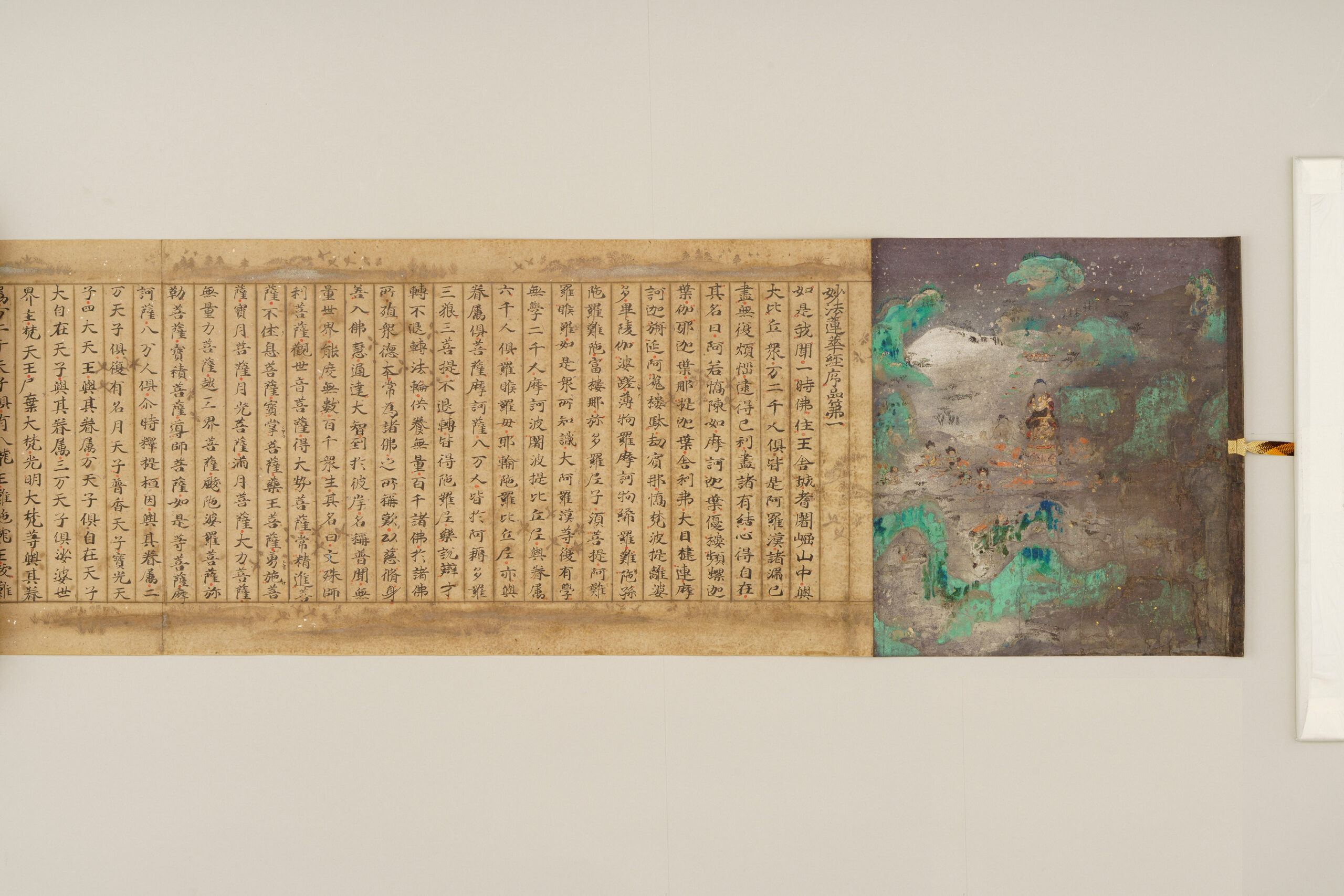
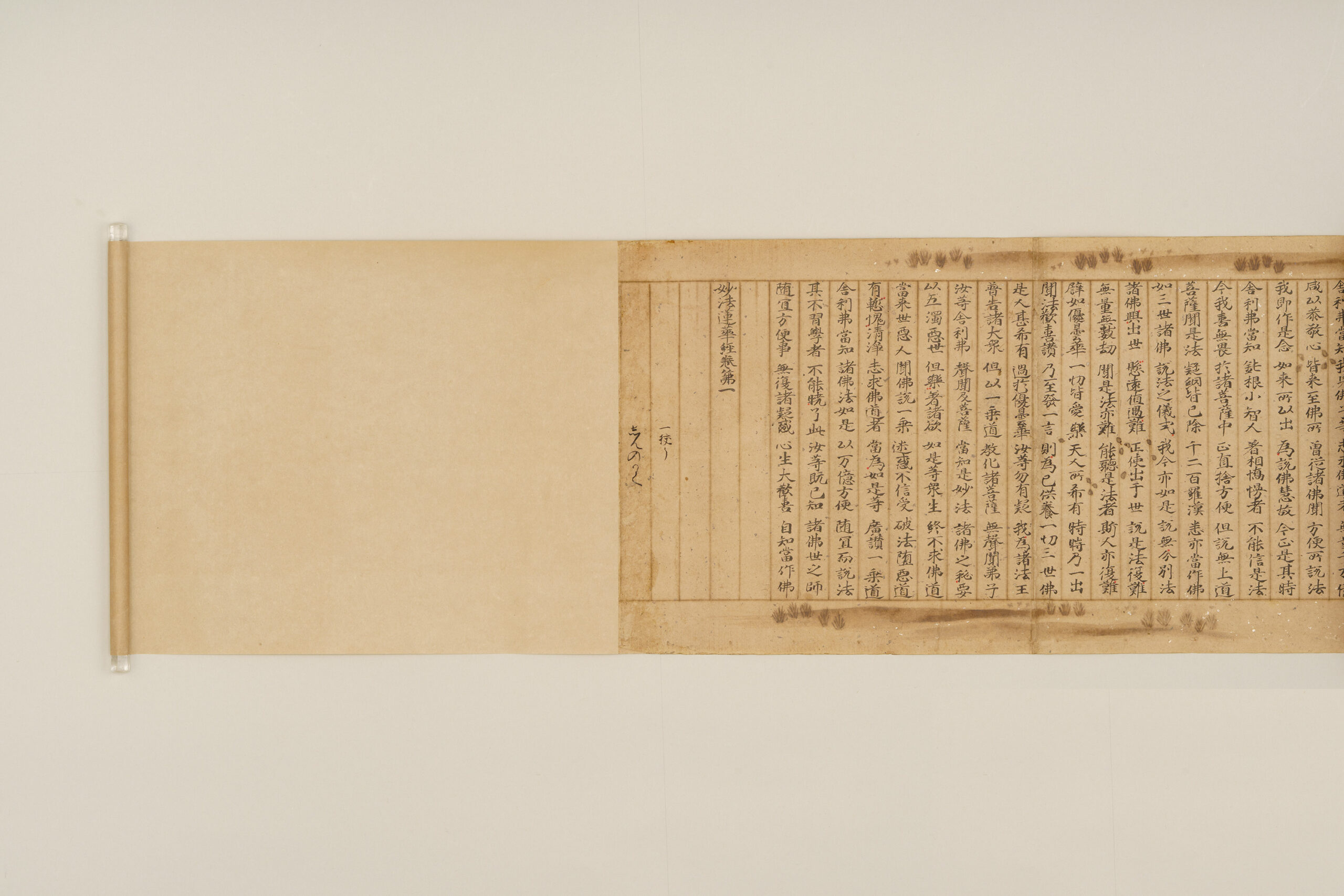
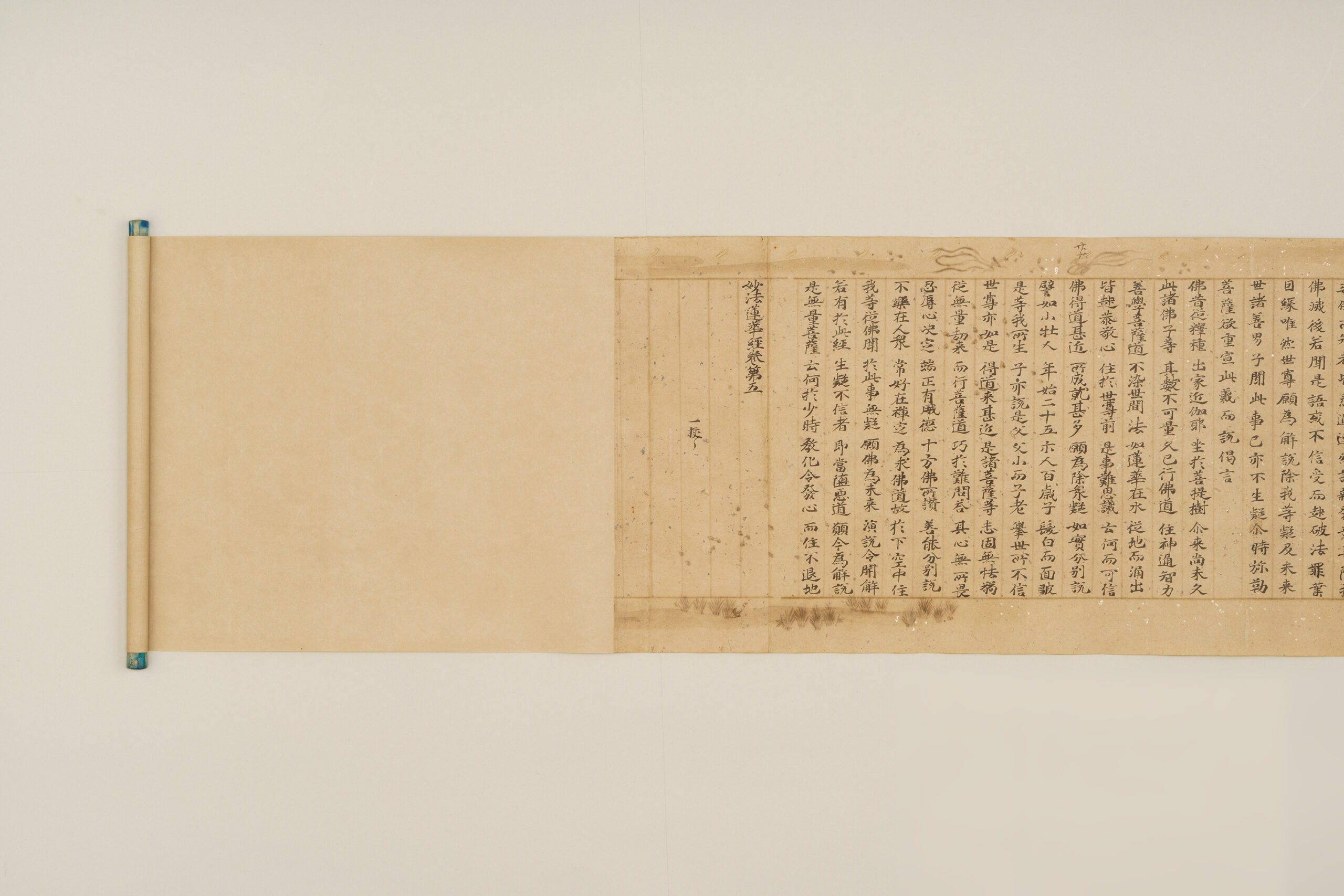
The Lotus Sutra, one of the major scriptures of Buddhism, was widely embraced by court aristocrats in the Heian period. In particular, its teaching that even evildoers and women can attain buddhahood strongly appealed to the faithful, and the transcription of sutras flourished. Producing these copies of the sutras was regarded as a meritorious act, and great expense was devoted to adorning them in splendid style. This set is a fine example, and it is especially valuable for having all eight scrolls preserved together.
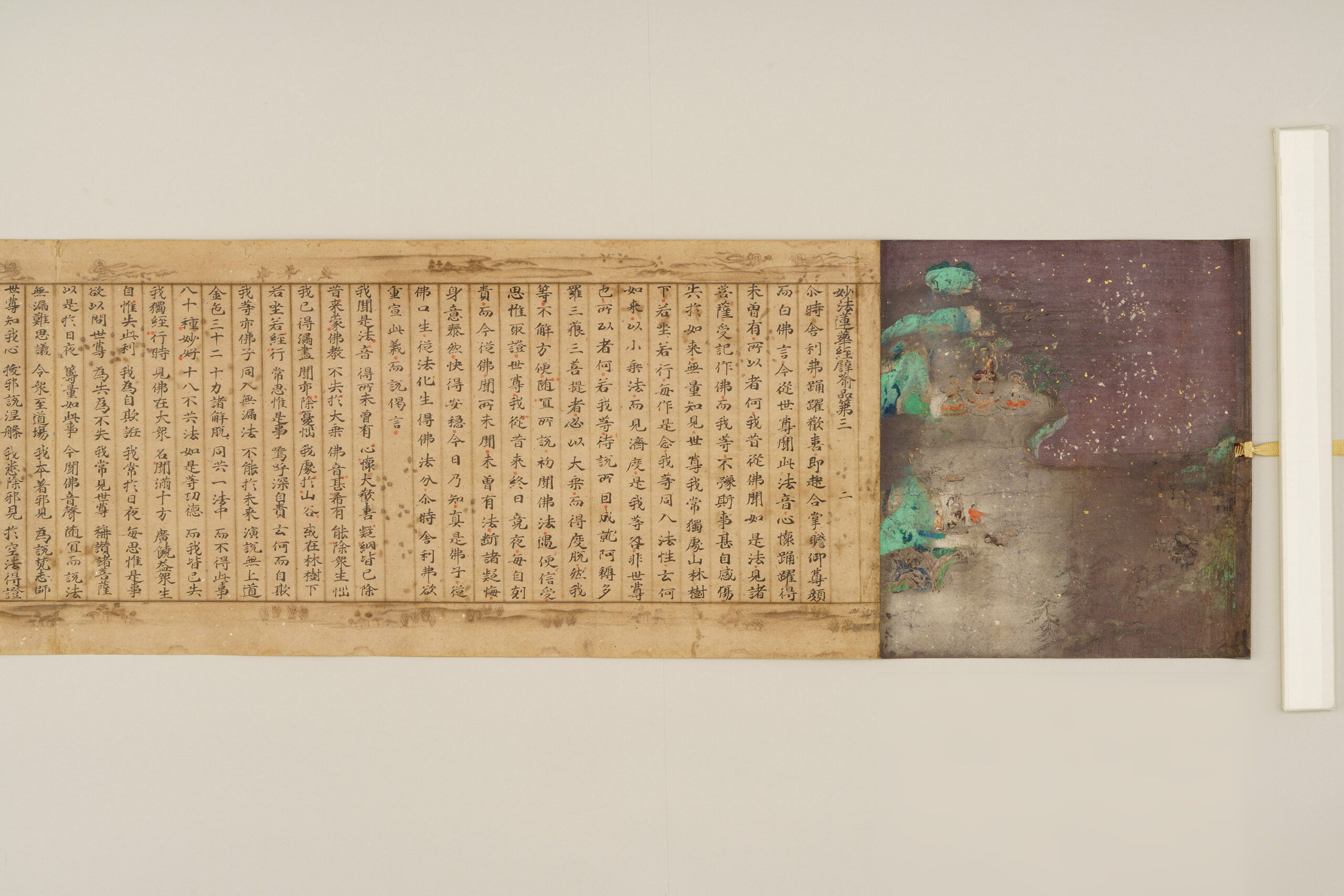
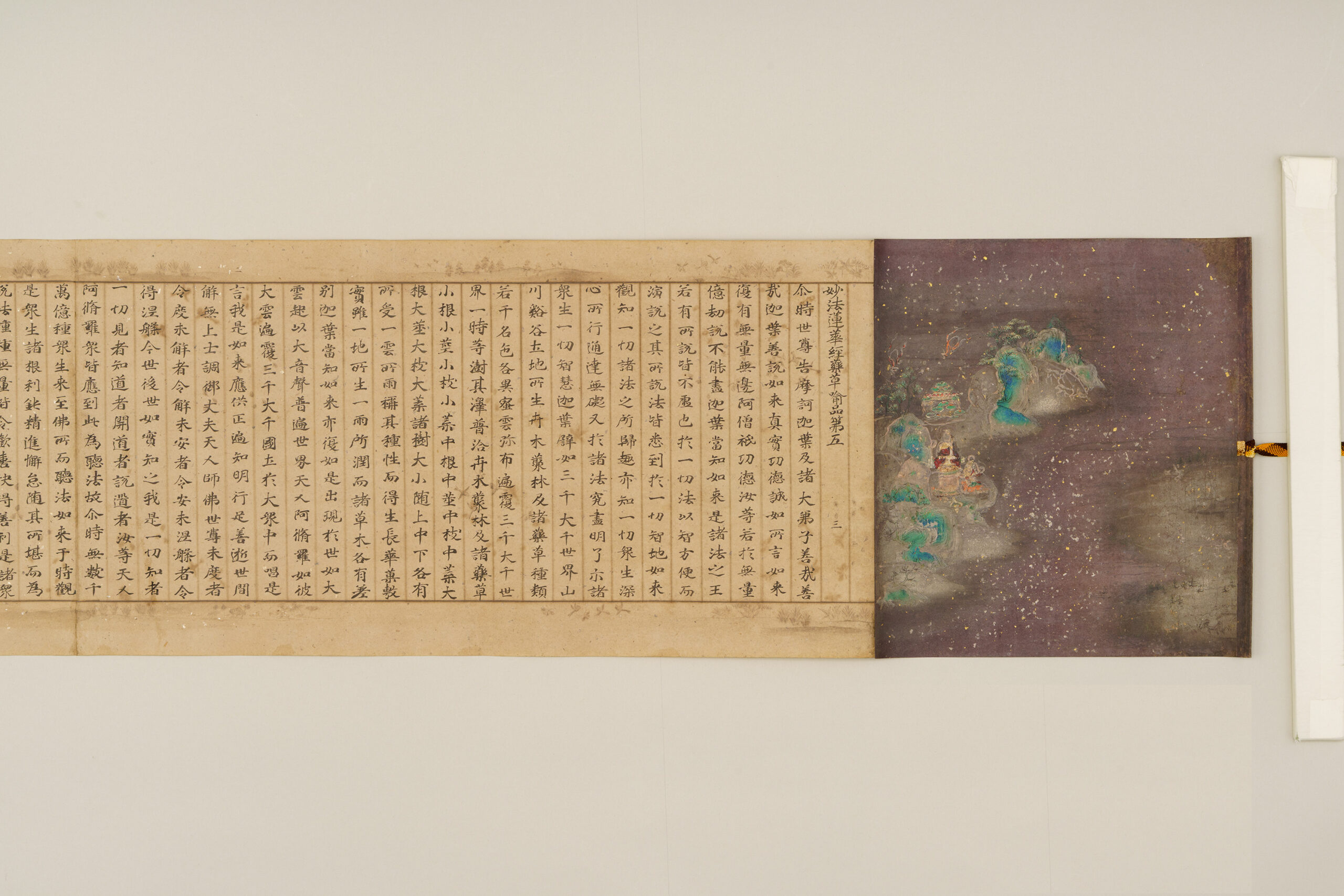
The sutra text is written on high-quality paper, framed within silver-ruled lines, each character executed with slender and disciplined brushwork. Celestial beings in flight, clouds of mist, lotus ponds, flowers and birds, and various plants are lightly painted in silver pigment in the margins above and below the text. Additional motifs containing plants, butterflies, birds, and windblown lotus petals are also painted beneath the text. Red punctuation marks and reading guides appear within the text, suggesting that the scrolls were used for recitations.
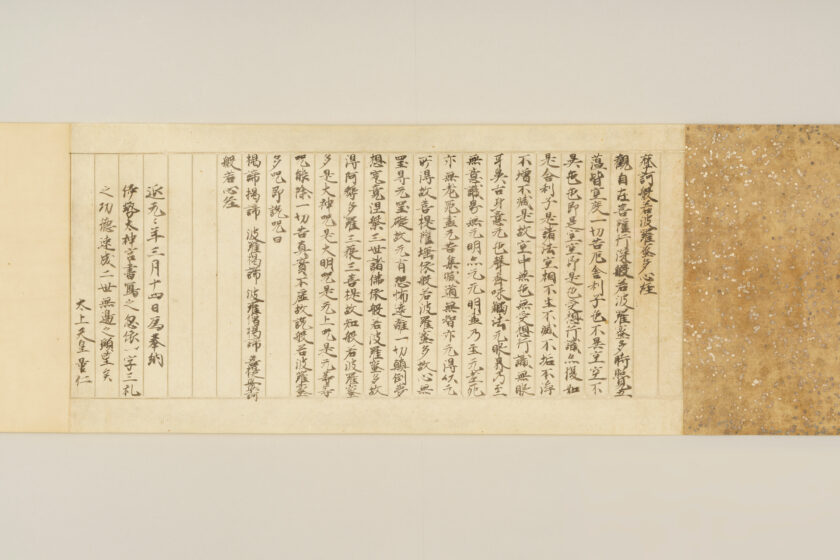
The purple-dyed frontispieces at the beginning of each scroll are decorated with scattered cut-gold and cut-silver foil. Within this foil, Buddhist narrative scenes, such as Shakyamuni preaching, are elegantly painted in silver and pigments, including white green, malachite green, ultramarine, and vermilion.
The colophons at the ends of the scrolls include inscriptions such as “Shinnyo kaku,” suggesting that women may have been involved in their production.
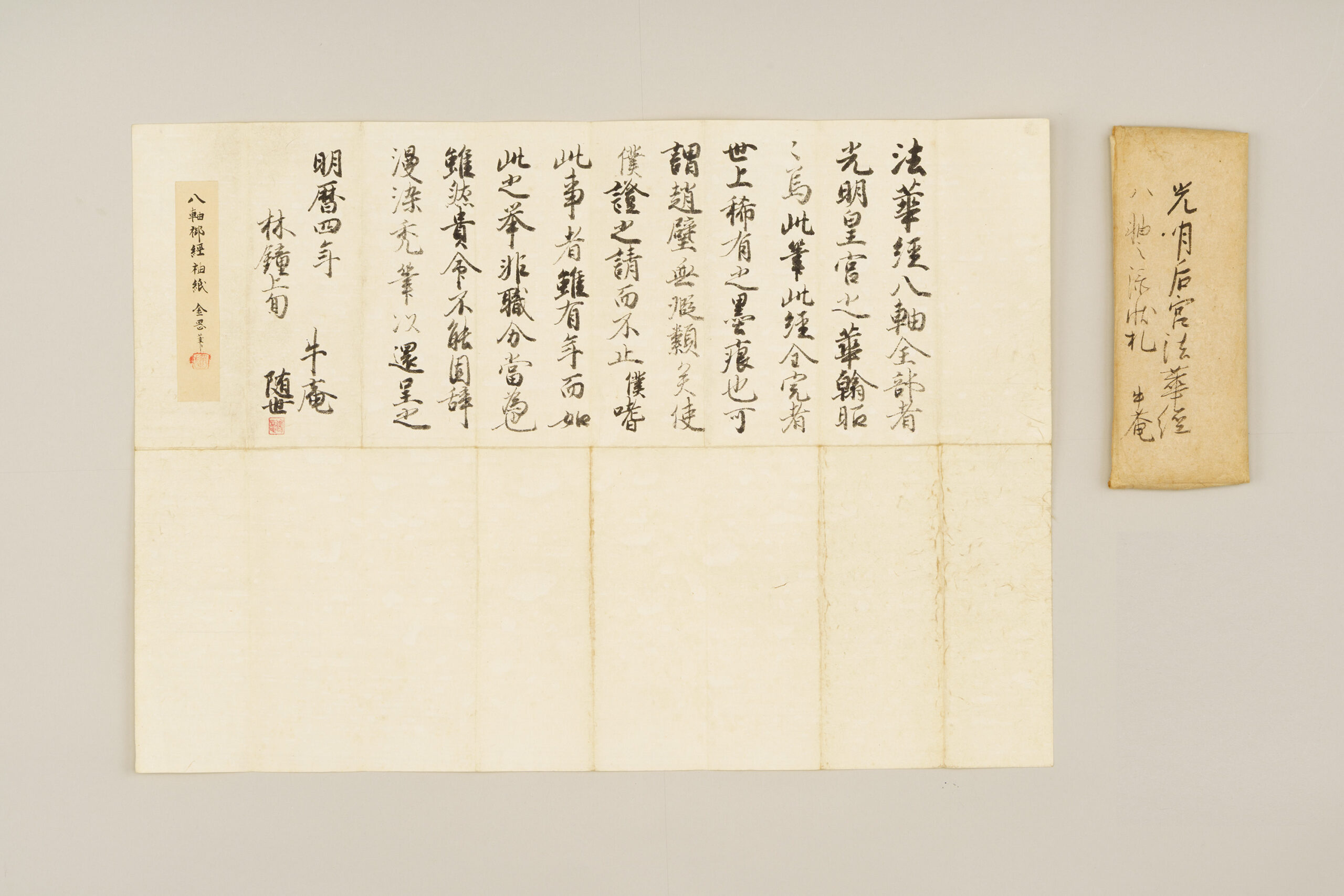
The work has been passed down within the Takamatsu Matsudaira family.