


Poetry Paper (Shikaishi) by Fujiwara-no-sukemasa
- Artist
-
Fujiwara Sari (944–998)
- Period
-
Heian period, 10th century
- Quality and quantity
-
Ink on paper, one hanging scroll
- Size (cm)
-
H 32.0 × W 45.0
- Category
-
Calligraphy
- Classification
-
National treasure
- Accession number
-
MY0#00001
Description
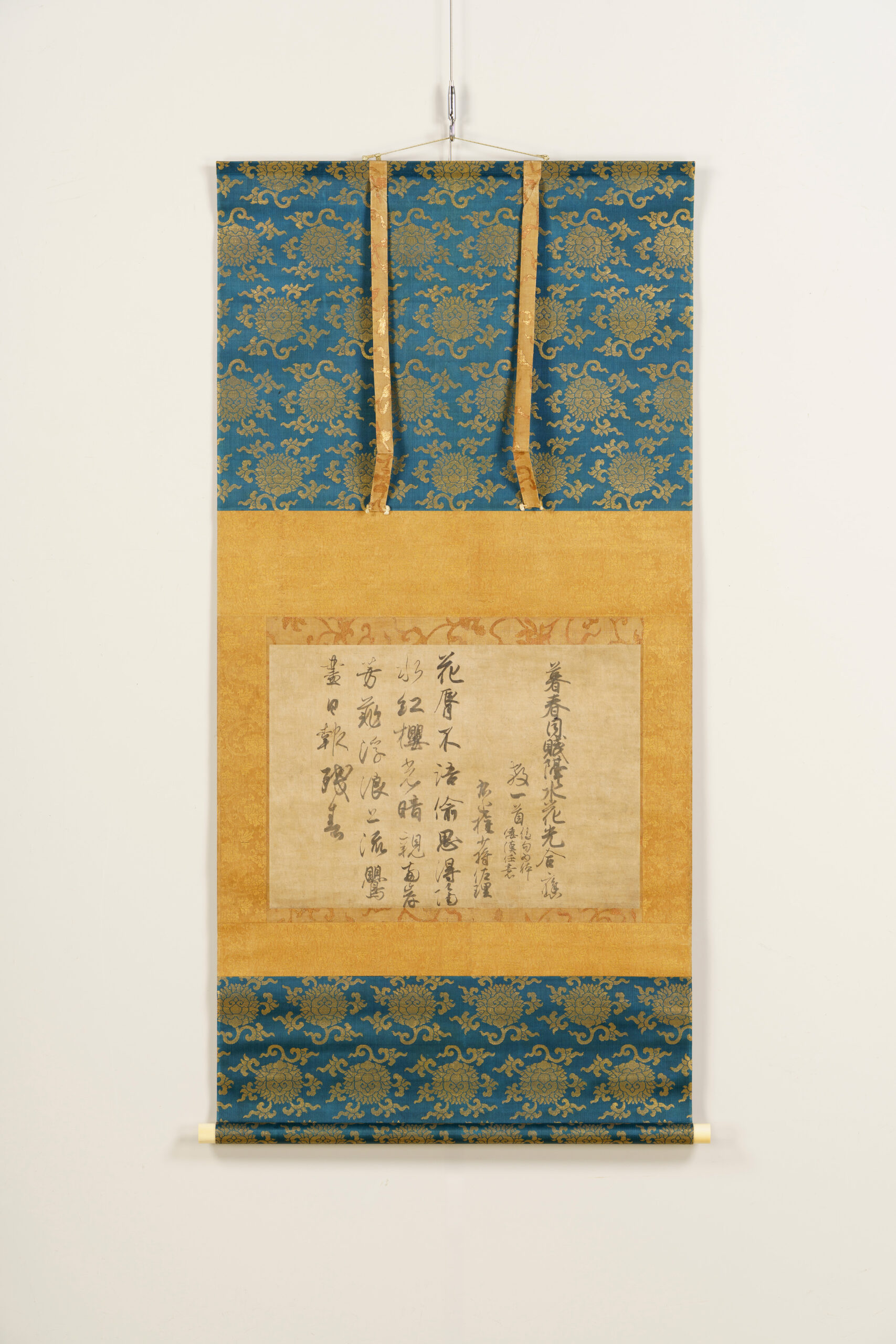
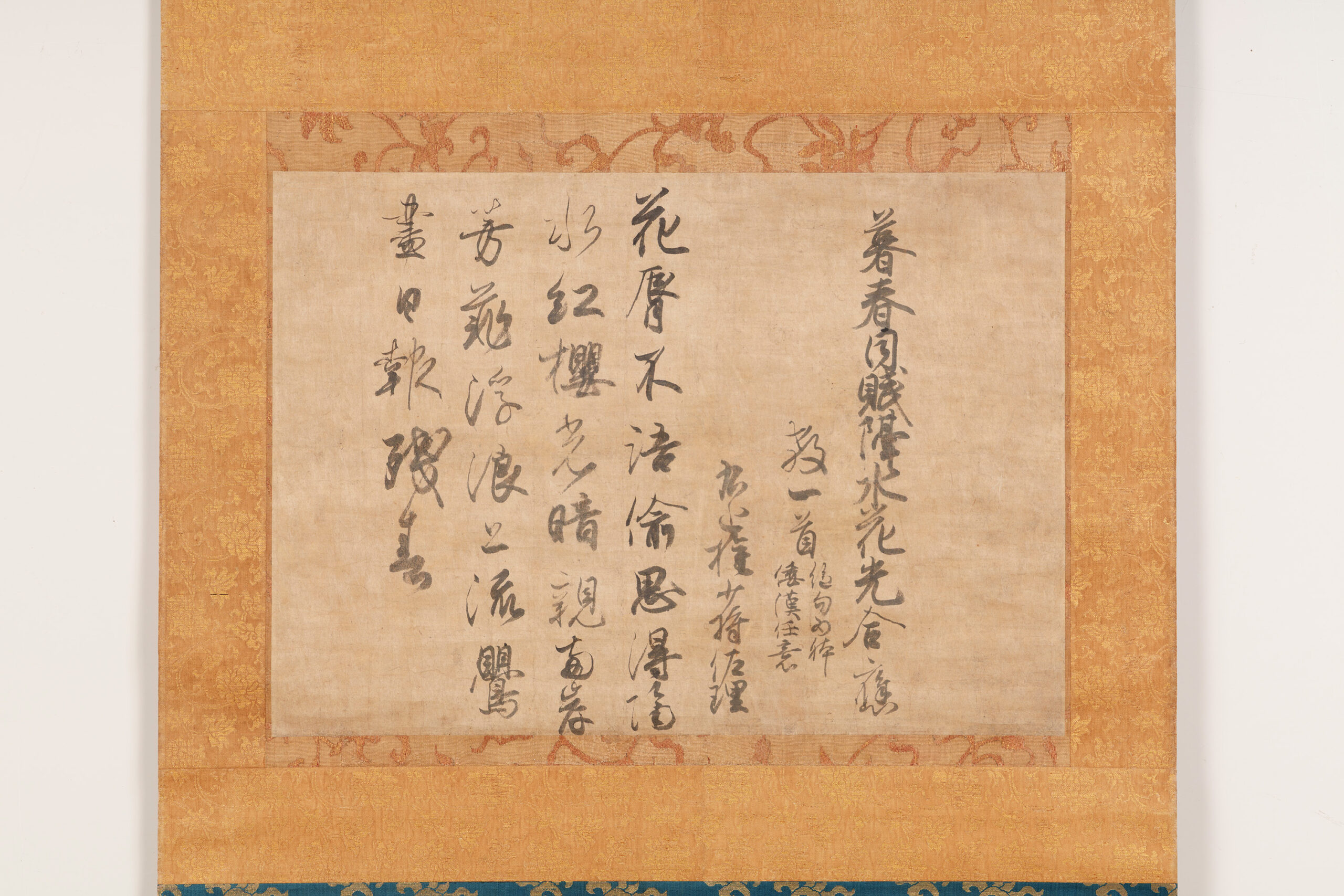
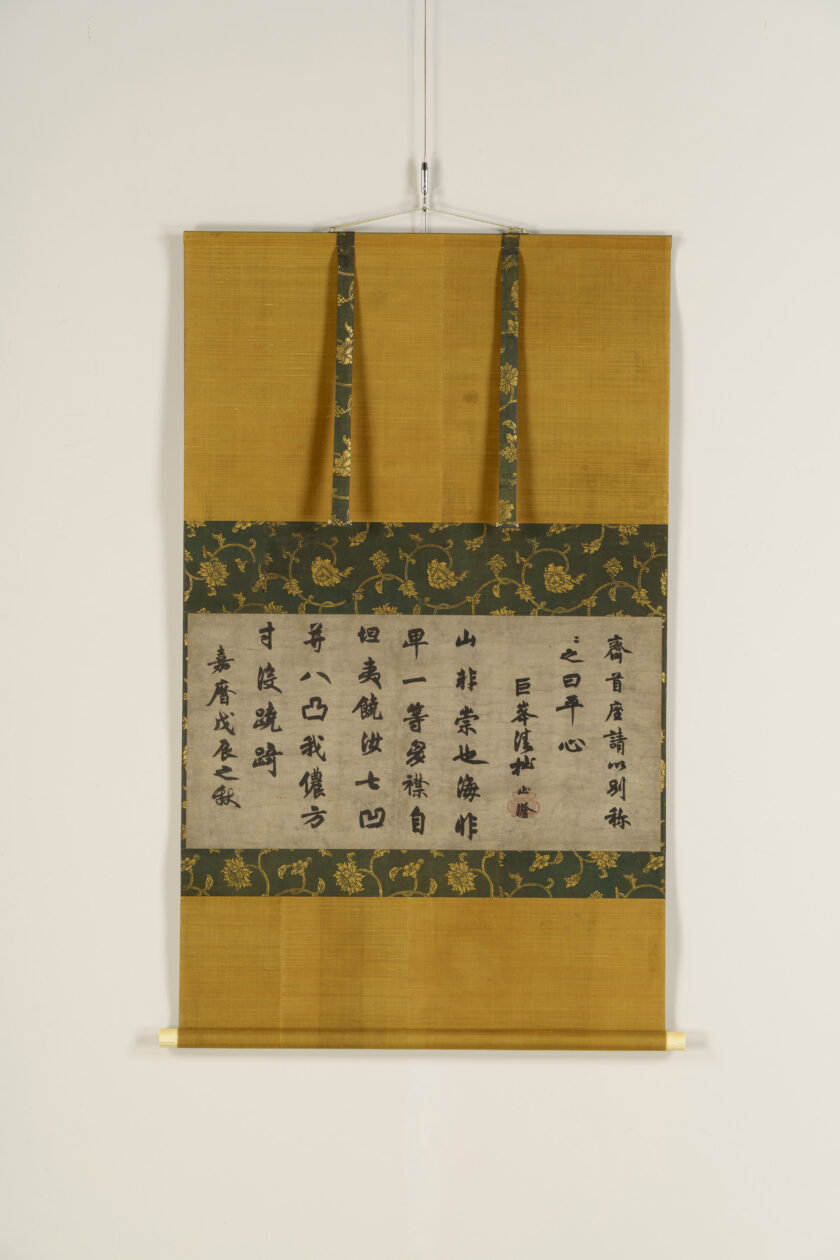
A kaishi is a sheet of paper carried in the front fold of a nobleperson’s garment. When used for writing poetry, it is called a shikaishi (poetry paper).
Fujiwara Sari, a celebrated master calligrapher who stands alongside Ono no Tōfū (Michikaze) and Fujiwara no Kōzei (Yukinari), composed a poem and committed it to paper on March 14, 969 (Anna 2), during a poetry gathering hosted by his grandfather, Fujiwara no Saneyori, the Grand Minister of State. The assigned theme was “Flowers and light meeting across the water,” and participants were free to compose poem in the wa-kan nini format, either in waka or in Chinese-style verse. Sari chose to write a seven-character quatrain depicting a spring scene of cherry blossoms reflected on the surface of water. He was twenty-six years old at the time. This piece is not only the earliest surviving example of Sari’s calligraphy, but also the oldest extant shikaishi. While influenced by the style of Ono no Tōfū, the slender and graceful brushstrokes already reveal the emergence of the Japanese calligraphic aesthetic. The work has been passed down within the Takamatsu Matsudaira family.