About The Kagawa Museum
The Kagawa Museum is a general museum which reopened in 2008 following the merger of the Kagawa History Museum and the Kagawa Cultural Hall art department.
It was established to create a place where people could learn about the history and culture of Kagawa in a structured way and to house a rare art collection that belonged to the Takamatsu Matsudaira family. By holding a variety of exhibitions and implementing studies, it has taught visitors about the culture of Kagawa.
There are two branches of the Kagawa Museum. The Seto Inland Sea Folk History Museum is focused on studying folklore in the region, and collecting and exhibiting related artifacts. The Kagawa Cultural Hall is a space that hosts cultural and artistic activities.
Features of the Kagawa Museum
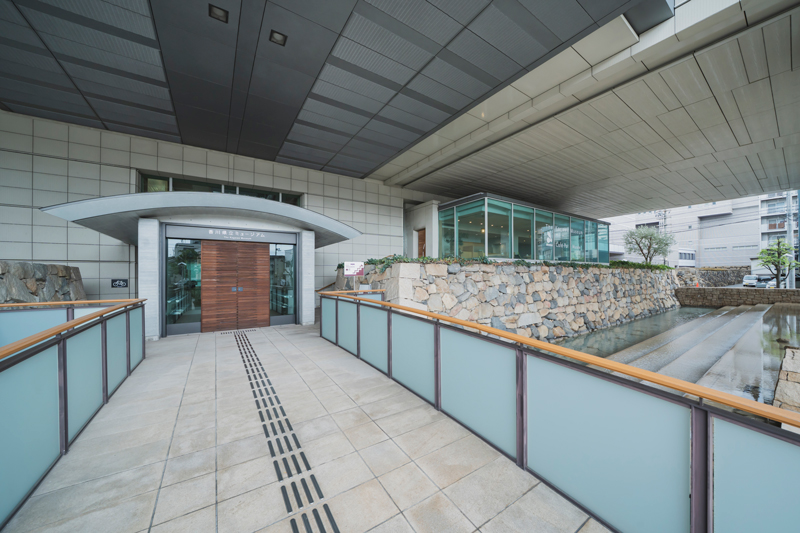
The stone walls of Takamatsu Castle’s Higashinomaru
The Museum was built in a place where Takamatsu Castle’s Higashinomaru bailey once stood. The stone walls of Takamatsu Castle were buried in the Taisho period, but they were rediscovered during excavation work preceding the construction of the Kagawa History Museum (the current Kagawa Museum). The lower part of the stone walls are the walls that were originally built in about 1671 and unearthed during the excavation. The upper part of the walls are a reproduction using nearby stone walls as a reference.
There is now a moat-like water feature by the stone walls.
Kukai
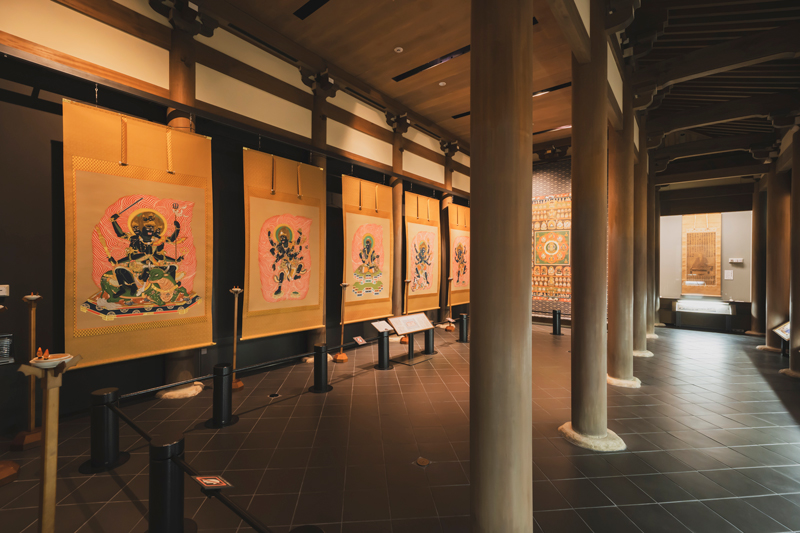
The Kukai exhibition room has a solemn atmosphere. It was built to imitate the Kanjo-in Hall in the Toji temple in Kyoto. The room provides visitors with a narrative overview of the life of Kukai, from his birth and his training in Esoteric Buddhism in China during the Tang dynasty to his achievements after returning to Japan. The exhibits include materials owned by the Museum and faithful reproductions of national treasures and important cultural properties. These accurate reproductions provide visitors with an opportunity to closely admire the beauty and functionality of ritual implements of Esoteric Buddhism.
Isamu Noguchi
Isamu Noguchi, a world-renowned sculptor, was attracted to Mure-cho, Takamatsu, Kagawa, a place known for quality stone. He built a studio in Mure-cho. After building his studio, he spent the majority of his time in Japan in the studio, working. The Museum houses a collection of his works comprising 23 sculptures, some of which he created in his 20s and others that he created in his later years, and 33 products. They are regularly exhibited in a corner of the library and in the permanent exhibition room.
Entrance Hall
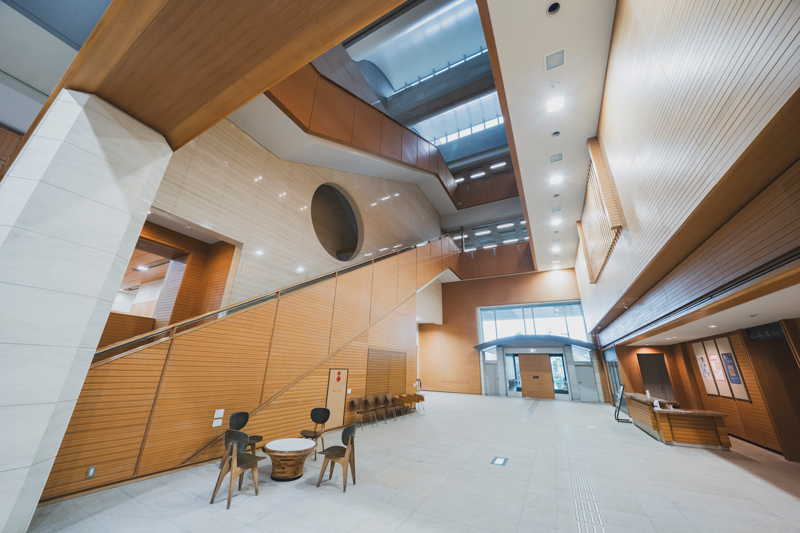
When you enter via the east or west entrance, you enter an open entrance hall that extends from the ground floor to the third floor. The interior design of the wood lobby is calming, featuring elements of traditional Japanese architecture, such as lattices and circular windows. Furniture in the lobby for visitors to use has been designed by the architects Hiroshi Oe and Junzo Sakakura, pioneering figures in modernist architecture in Japan, and by interior designer Isamu Kenmochi.